
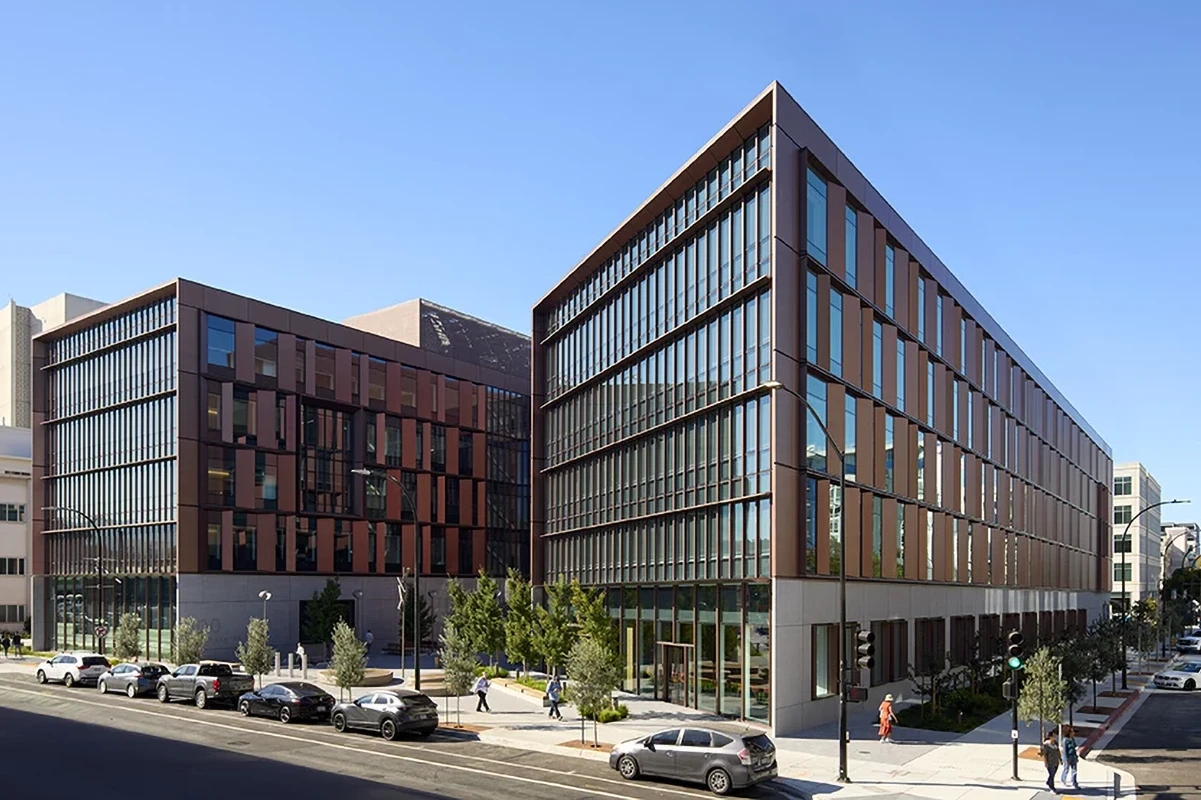
500 County Center

COB SOM DaveBurk copy feature

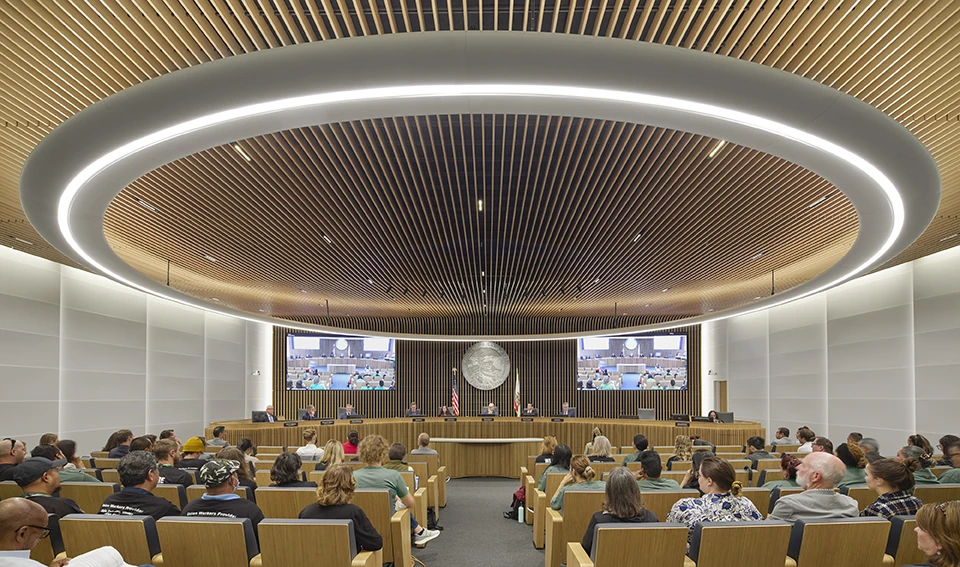
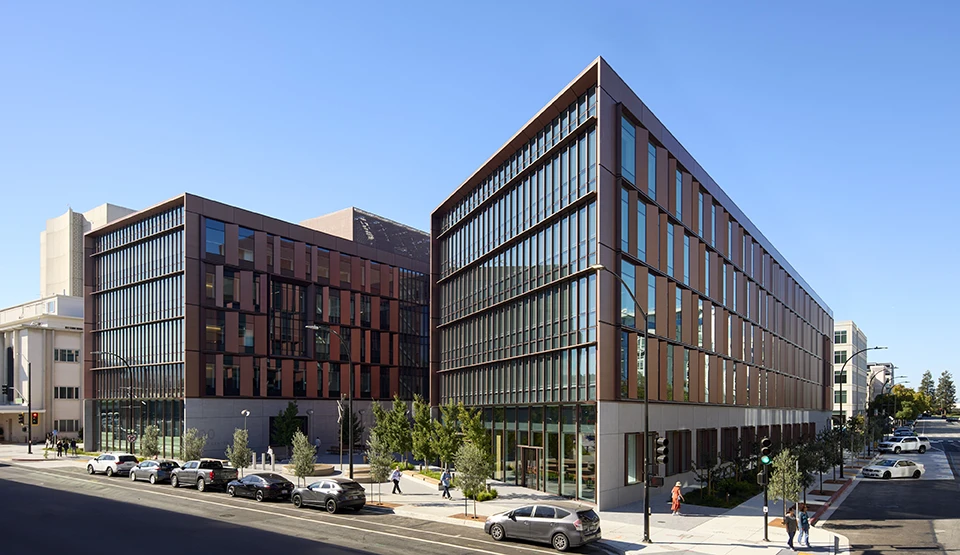
Setting a new benchmark for sustainable public architecture, 500 County Center is the first Net Zero Energy civic building constructed with mass timber in the U.S. The new 5-story ulta-low carbon headquarters houses several San Mateo County departments and the Board of Supervisors’ Chambers Auditorium—a central community meeting place.

Scheduled to receive LEED Platinum certification, the design was driven by ambitious sustainability goals addressing both embodied and operational carbon— leveraging an innovative timber structural system that reduces materials and systems on site. This mass timber structural design delivered an overall reduction in embodied carbon by 85% relative to conventional steel construction.

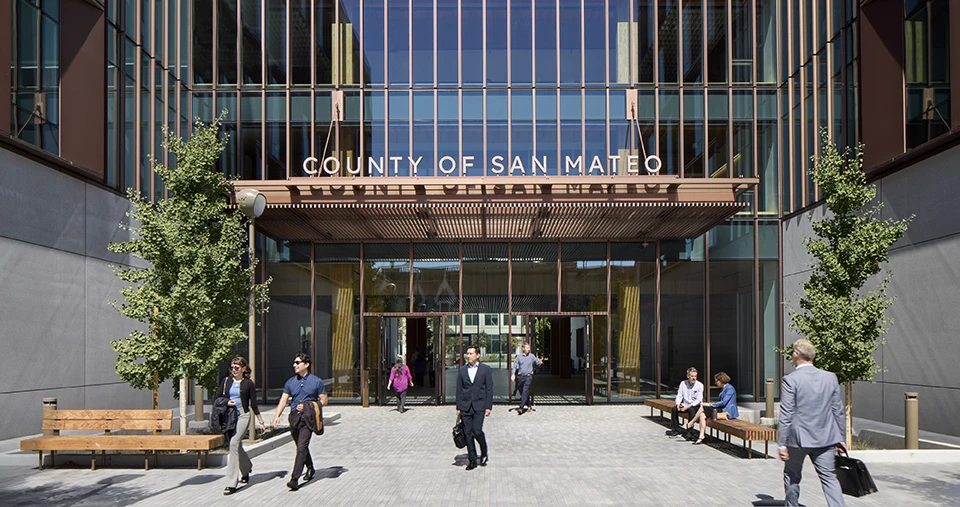
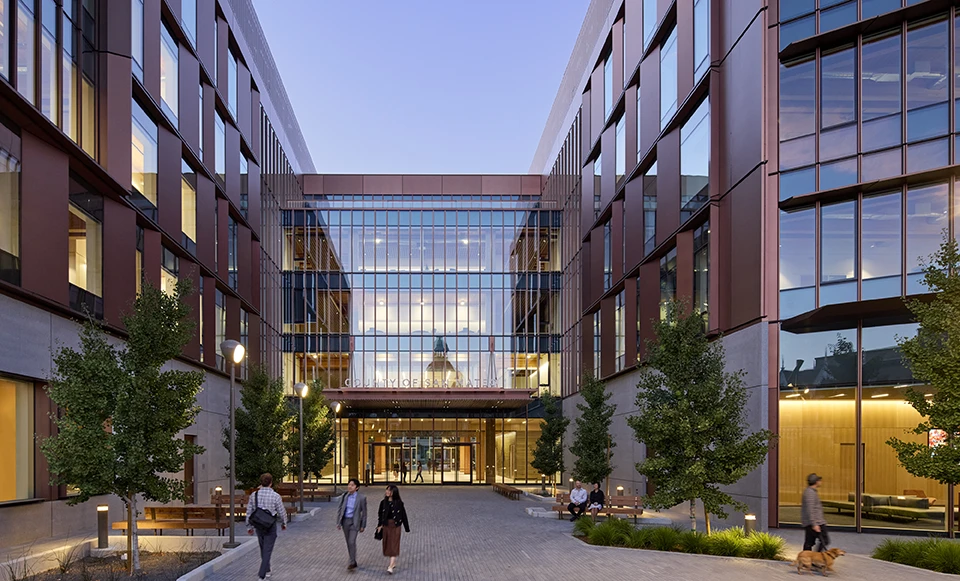
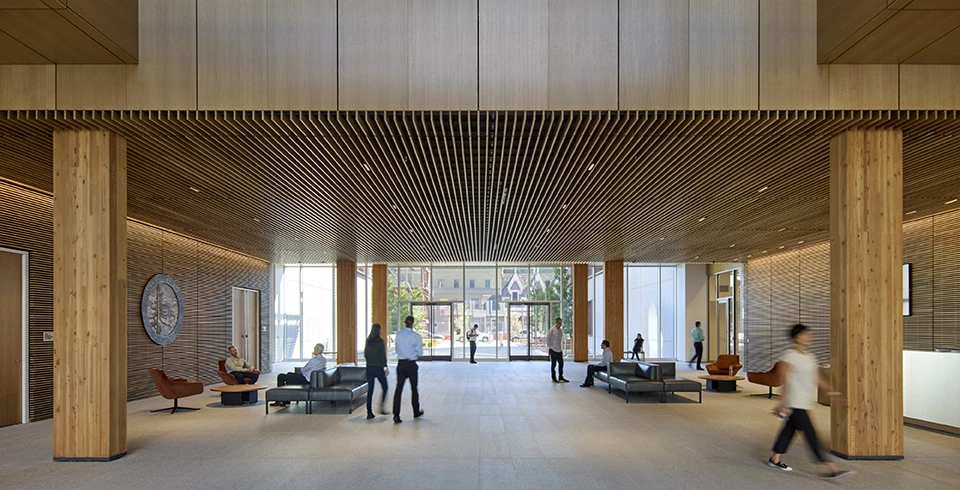
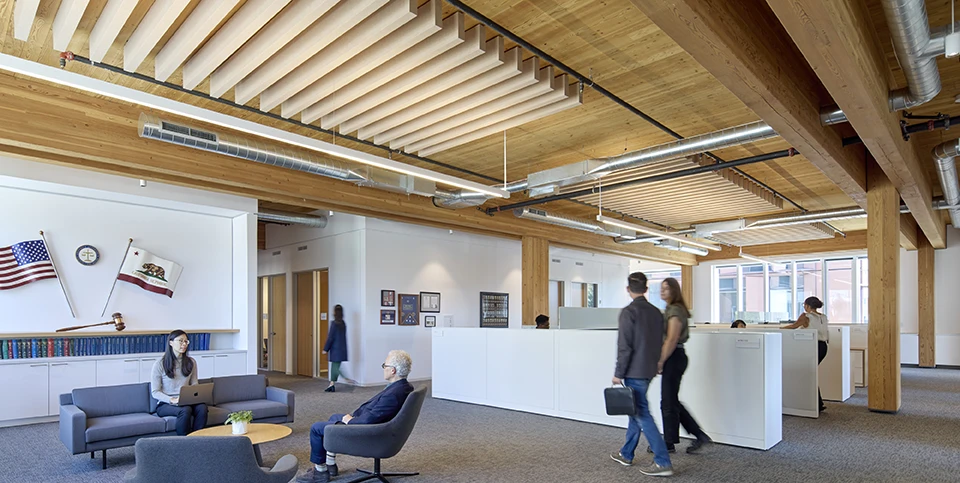
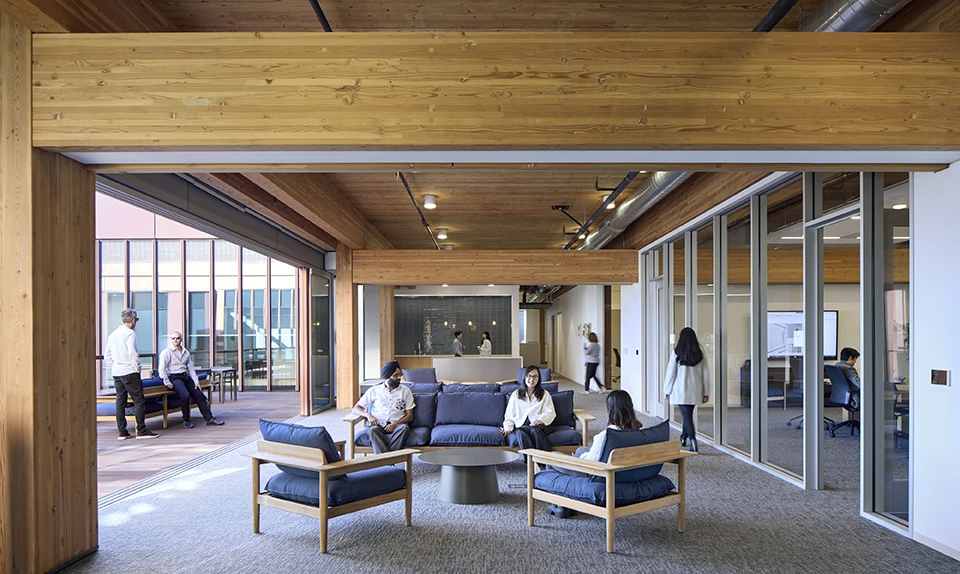
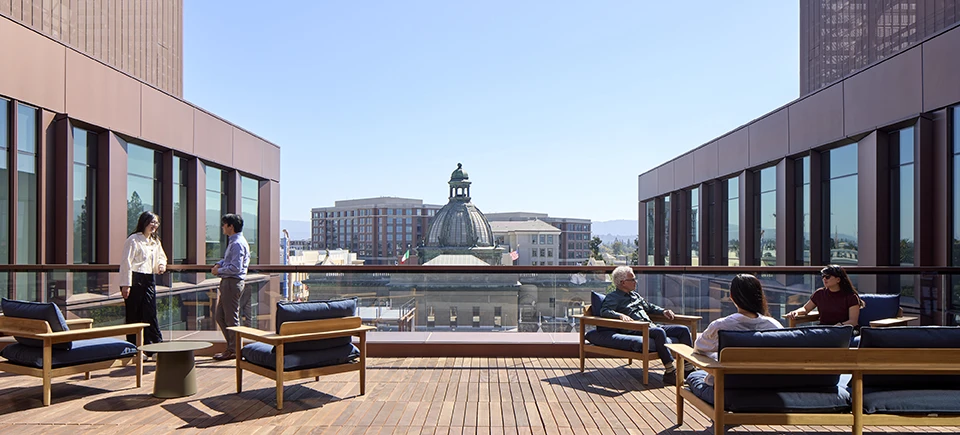
The building’s H-shaped volume links two distinct and previously disconnected neighborhoods of Redwood City: the civic campus to the east, and the downtown commercial core to the west. These create two new plazas that are linked by the glass- enclosed lobby that also acts as an event space, and a pre-function area that can serve as a pre- function and event space for the Board Chambers. All occupants benefit from a design approach centered on biophilia, primarily the result of the use of Cross Laminated Timber exposed ceilings, glulam beams and columns, creating a sense of connection to nature.

//jury comments

This project achieves excellence across the board, from its urban design and siting—creating a civic presence within an urban context—but also inviting and welcoming the public in. It elevates civic architecture to a very high level, while at the same time embracing innovative, resilient, sustainable technologies such as mass timber passive design. It really hangs together, both in terms of a piece of architecture, the interiors, and again, as a as a piece of civic architecture.
//framework for design excellence measures
Measure 1: Design for Integration
Every decision in construction detailing and structural design was motivated by the goal of diminishing the building’s carbon footprint. County leadership sought a contemporary and flexible workplace designed to respond to the ongoing effects of climate change—from massing to floor configuration, program distribution to façade design and detailing. To achieve Net Zero Energy, the building relies on energy entirely generated by extensive rooftop photovoltaic arrays, including panels atop a neighboring parking structure. The all-electric project is on track to achieve LEED Platinum certification with a design that lowered its embodied carbon by 75 percent compared to a standard building of its type. Wood wraps the lobby interior, and exposed wood elements continue throughout the building, echoing its structural frame. In addition to the biophilia and exposed wood throughout, the project includes several passive design strategies to reduce thermal loads. Operable windows provide natural cooling and maximize ventilation, while reducing the reliance on the mechanical system. A narrow floorplate configuration balances heat gain and natural lighting. COB3 creates a civic campus, adding public open space through two new fully-accessible public plazas with amenities activating street frontage and contributes to a strong public realm.
Measure 2: Design for Equitable Communities
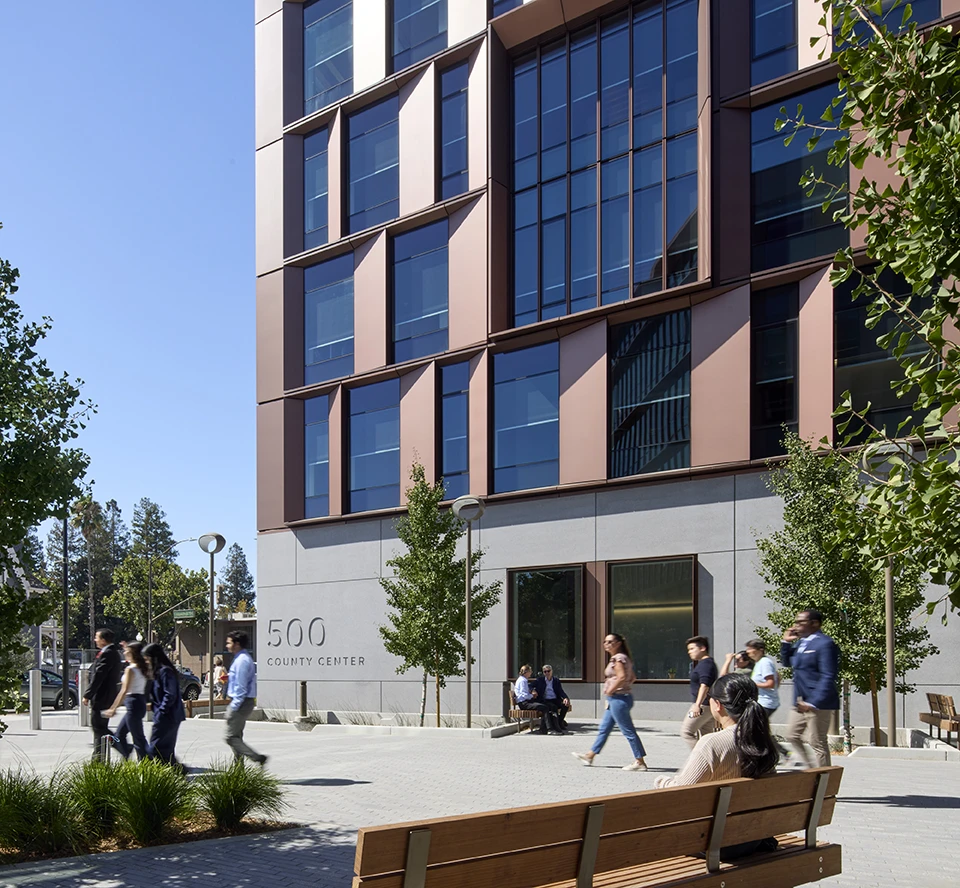
From the inception of the project, this county government building was sited and shaped to connect the community of the nearby commercial district to the county’s civic campus. The two new urban plazas joined by a light-filled lobby create a new civic space that is accessible, inclusive, and welcoming to all. The programming, planning, and finishing of the building strive to celebrate the San Mateo County values of environmental and social stewardship. Urbanistically, the building strengthens the public realm with two significant public spaces that unify previously disconnected communities and areas of the city.
Measure 3: Design for Ecosystems
The project transformed an existing surface parking lot into a functioning permeable site. The site design captures and treats rainwater and introduces native and climate appropriate plant palettes that provide critical habitat for native birds, insects, and fauna. Helping to connect the fragmented ecological corridors of the region. It incorporates seasonal shade trees, and lighter paving materials, which aid in reducing the urban heat island effect in the city. An exposed mass timber structure, along with images of nature and redwood trees reclaimed from the 2020 forest fires in San Mateo County underscore connections to nature.
Measure 4: Design for Water
Early energy and water analyses were completed, paired with cross-disciplinary collaboration to test, develop, and implement sustainability strategies. COB3 features several water conservation measures: including high efficiency fixtures, reducing indoor water use by 45% from baseline; outdoor water use is reduced by over 50% from baseline through the use of drought-tolerant plants and high-efficiency irrigation systems; 100% stormwater runoff is treated onsite. Landscaping includes several drought-tolerant attractor plants, designed to provide habitat to local pollinators and reduce water demand. The project is future-proofed (has purple pipe installed) to accept reclaimed water for reuse for irrigation and toilet flushing.
Measure 5: Design for Economy
Optimizing the timber frame system to use minimal wood fiber reduced structural materials, contributing significant cost and embodied carbon savings. All structural elements and modular unitized window-wall systems were pre-fabricated and designed to simplify field connections, reduce construction schedules, and reduce carbon associated with construction. Working with the contractor, structural members and connections were priced in real time. The design features a one-way structural system which increases the efficiency and reduces material components. This also allowed for the integration of MEPF systems parallel to beams. By using a CLT structural system, 60% of the acoustical ceilings were eliminated.
Measure 6: Design for Energy
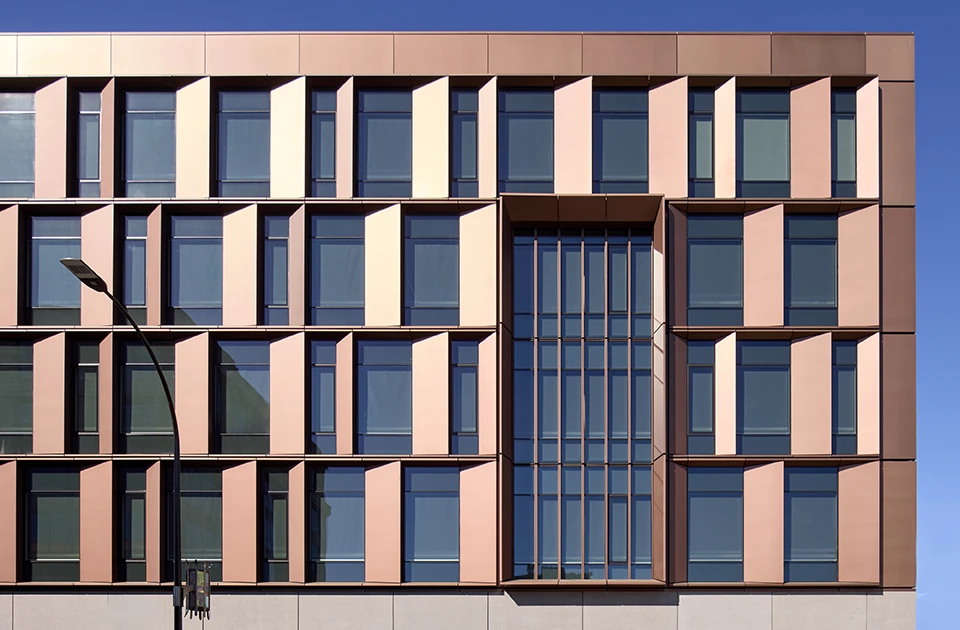
Designed to achieve Net Zero Energy, the building relies on energy entirely generated by extensive rooftop photovoltaic arrays (515,872 kWh), including panels atop a neighboring parking structure (1,003,600 kWh). The design integrates several energy efficiency measures, including balancing daylighting and solar heat gain with a performative exterior wall and efficient LED fixtures; high-efficiency HVAC system with a separate perimeter fan coil unit system; and the use of natural ventilation to night flush the building. The project features a performative facade consisting of 40% window-to-wall ratio, with vertical sun shading panels on the east and west facades.
Measure 7: Design for Well-Being
The predominance of natural wood creates a warm, biophilic environment that has had a healthy effect on users. Occupants have voiced how the new space has lifted their morale. The design incorporates passive design strategies including operable windows to provide natural cooling, reducing the reliance on the mechanical system while improving occupant wellbeing. The building floor plate and workspaces are configured to balance heat gain and natural daylighting and feature four naturally-lit stairs that connect all levels and encourage users not to use the elevators. Wind protected public plazas are designed to double as workspaces and informal work meeting areas.
Measure 8: Design for Resources
Material Health: low-VOC, healthy materials and products were selected for interior finishes, including paints, coatings, adhesives, sealants, composite wood, and flooring. Over 30 products include detailed material health disclosures and optimizations. Carbon: the mass timber structure reduced the embodied carbon of the structural system to 85% compared to conventional concrete or steel structure. By specifying other low carbon materials, the building achieved overall – a 75% reduction of embodied carbon compared to a conventional building. Sustainable Materials: the project selected sustainably harvested wood including FSC + SFI; and prioritized recycled materials and diverted more than 75% of construction waste from the landfill.
Measure 9: Design for Change
COB3 demonstrates that Net Zero Energy and low carbon building can be delivered on a lean budget typical of a government building. The building is designed for flexibility, easily adaptable for future uses over a long lifespan. With resilience in mind, the timber structure was detailed to allow for movement during a significant seismic event – it can accommodate 1” vertical movement in the partition design as the wood moves. The project used off the shelf products to make these achievable in the field. It also includes operable windows to provide passive survivability in the event of a power outage.
Measure 10: Design for Discovery
The building required an active and robust collaboration between the client, contractor, and designers which included testing, to validate the interface between CLT and the integration of the structural, MEPF and acoustical systems. Beyond a significant reduction in embodied carbon, the mass timber structure is exposed in the interior spaces – improving the wellness and quality of the space. The building is on track to achieve LEED Platinum; and pursuing LEED Zero to verify the Net Zero Energy goal is met in operations. Digital screens in the lobby and plazas will display the sustainability features and goals.
Skip to content