
843 N Spring Street

Spring Street Jeremy Bittermann dpi copy featured

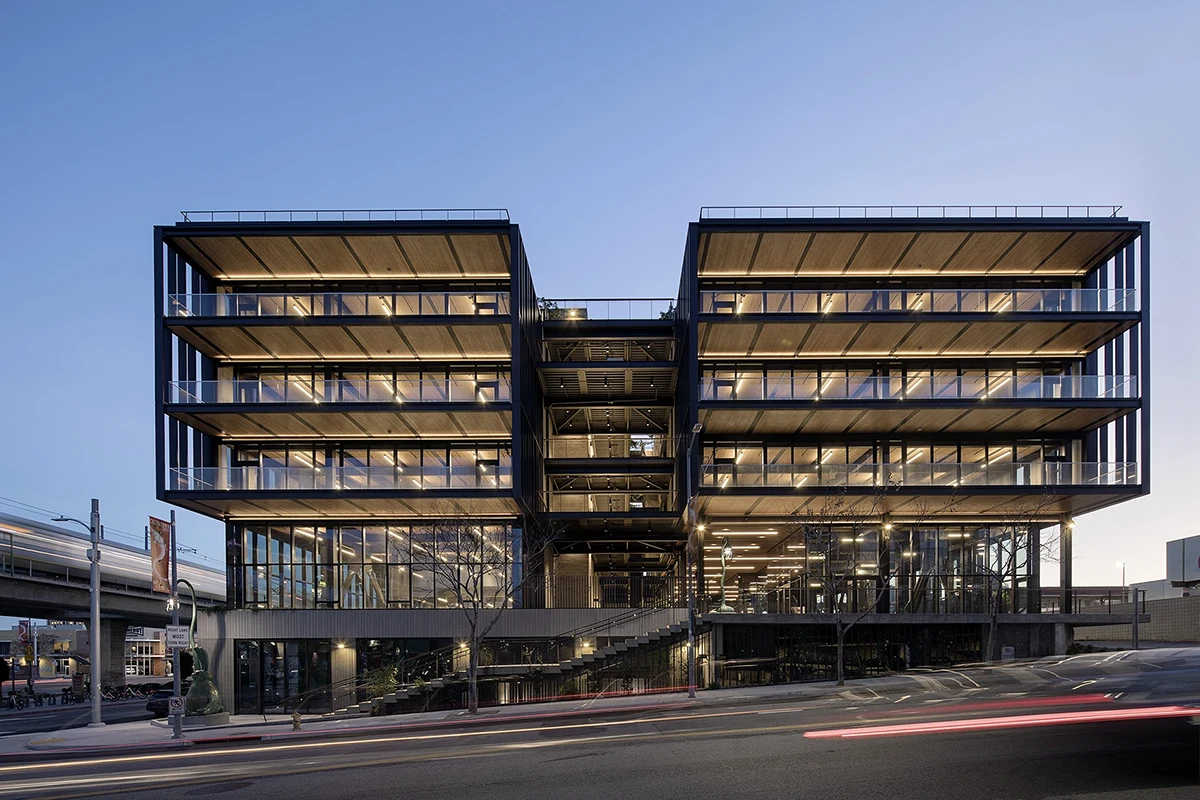
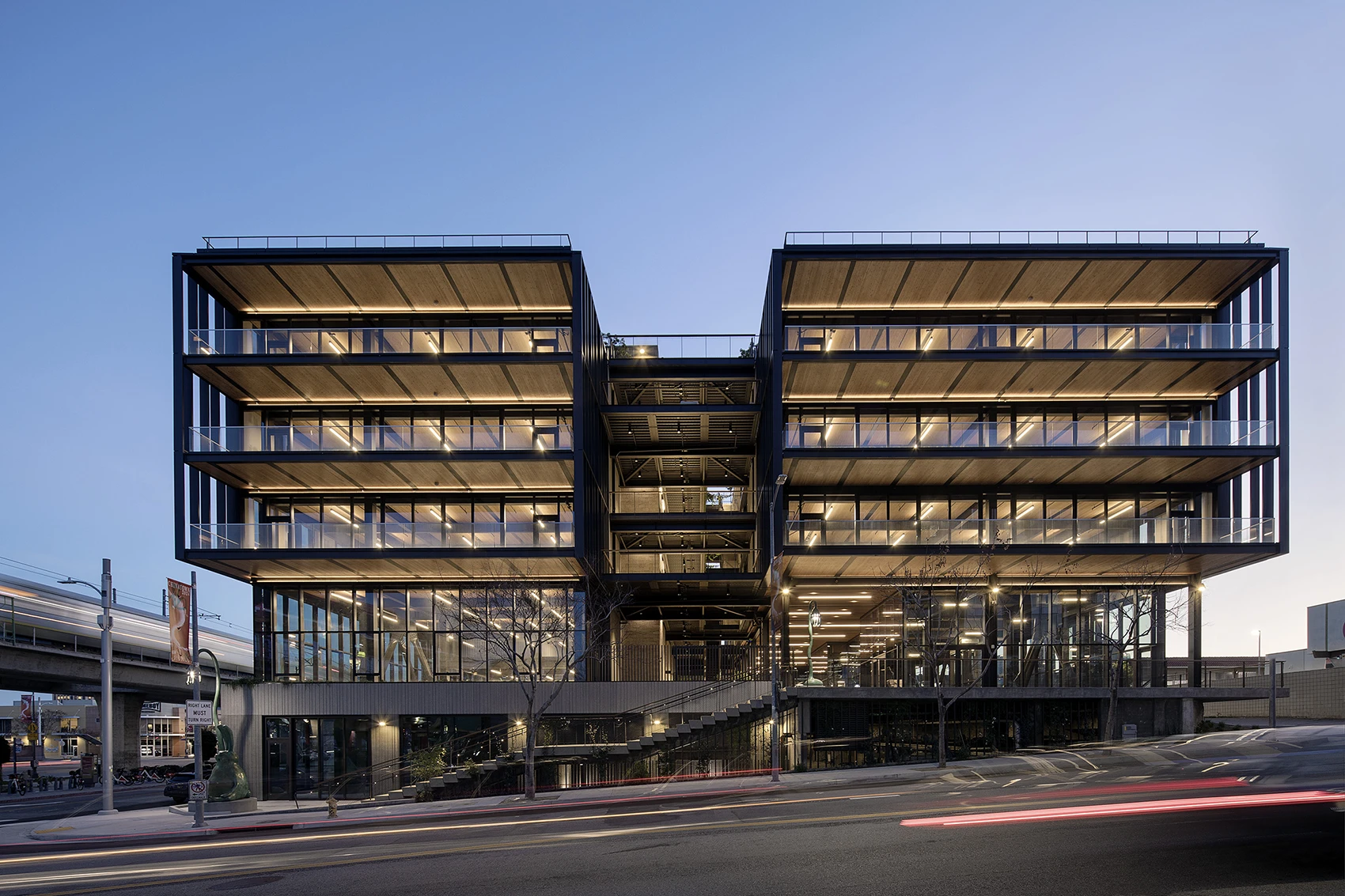
Set on a busy urban corner in Los Angeles’ Chinatown, Spring Street is a new type of office building that leverages the climate and landscape for which the city is known. Technically a renovation, the project takes a windowless, 1980s-era retail warehouse with a parking garage underneath and grafts a new structure on top of it, creating one of the first and largest hybrid CLT buildings in LA. Spring Street is also a hybrid of LA’s high-rise towers and low-rise bow truss warehouse culture—with a material palette of mass timber, steel, and concrete and a floor plan that integrates both outdoor workspace and biophilic design by providing access to the landscape at every level.

This 145,000 sf creative office development is located on a steeply-sloped site and prominent transit hub in the heart of downtown Los Angeles. The development will provide a unique office environment for next-generation creative tenants, while offering the community a public landscape experience in a high-density urban setting.

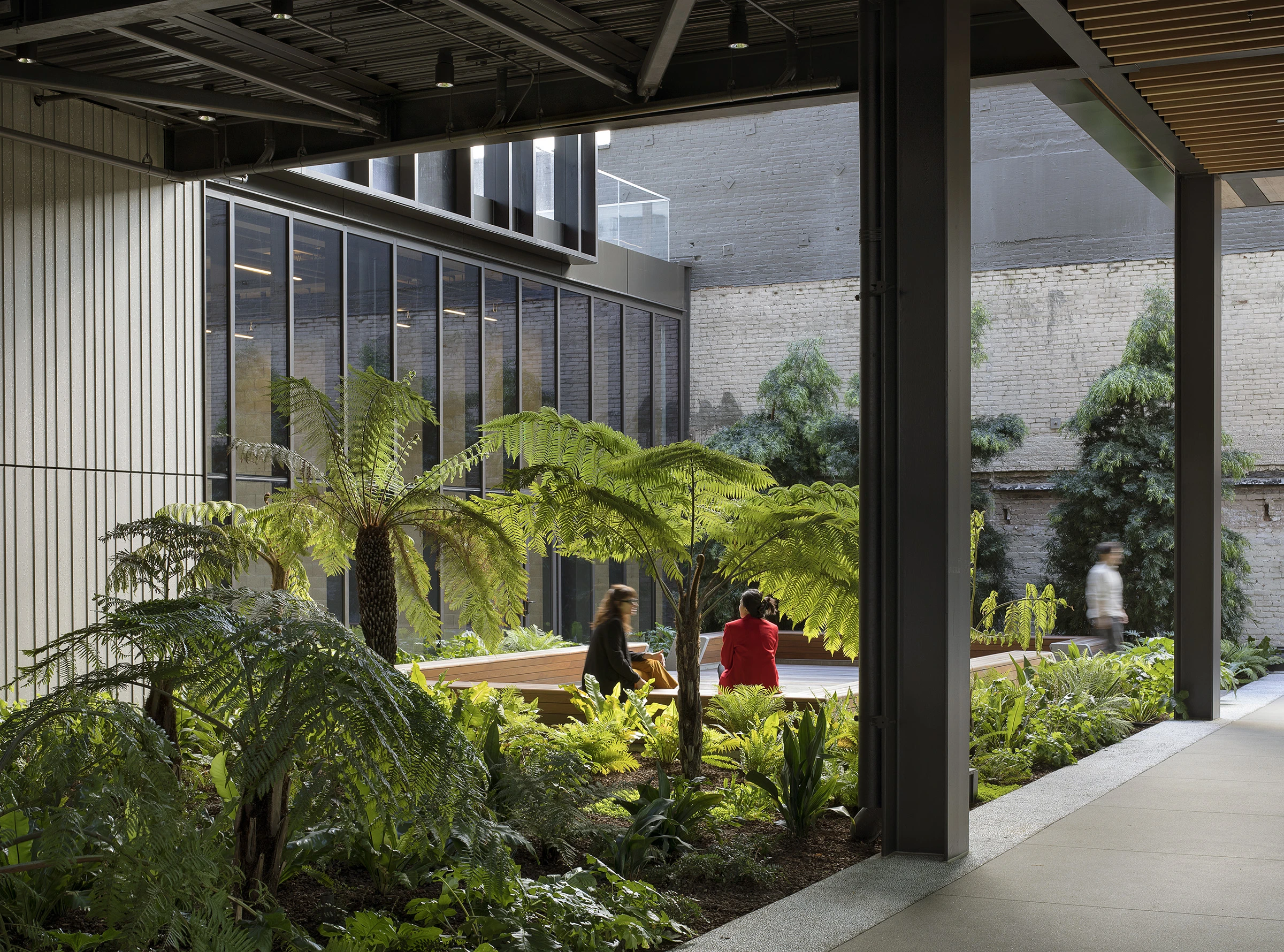
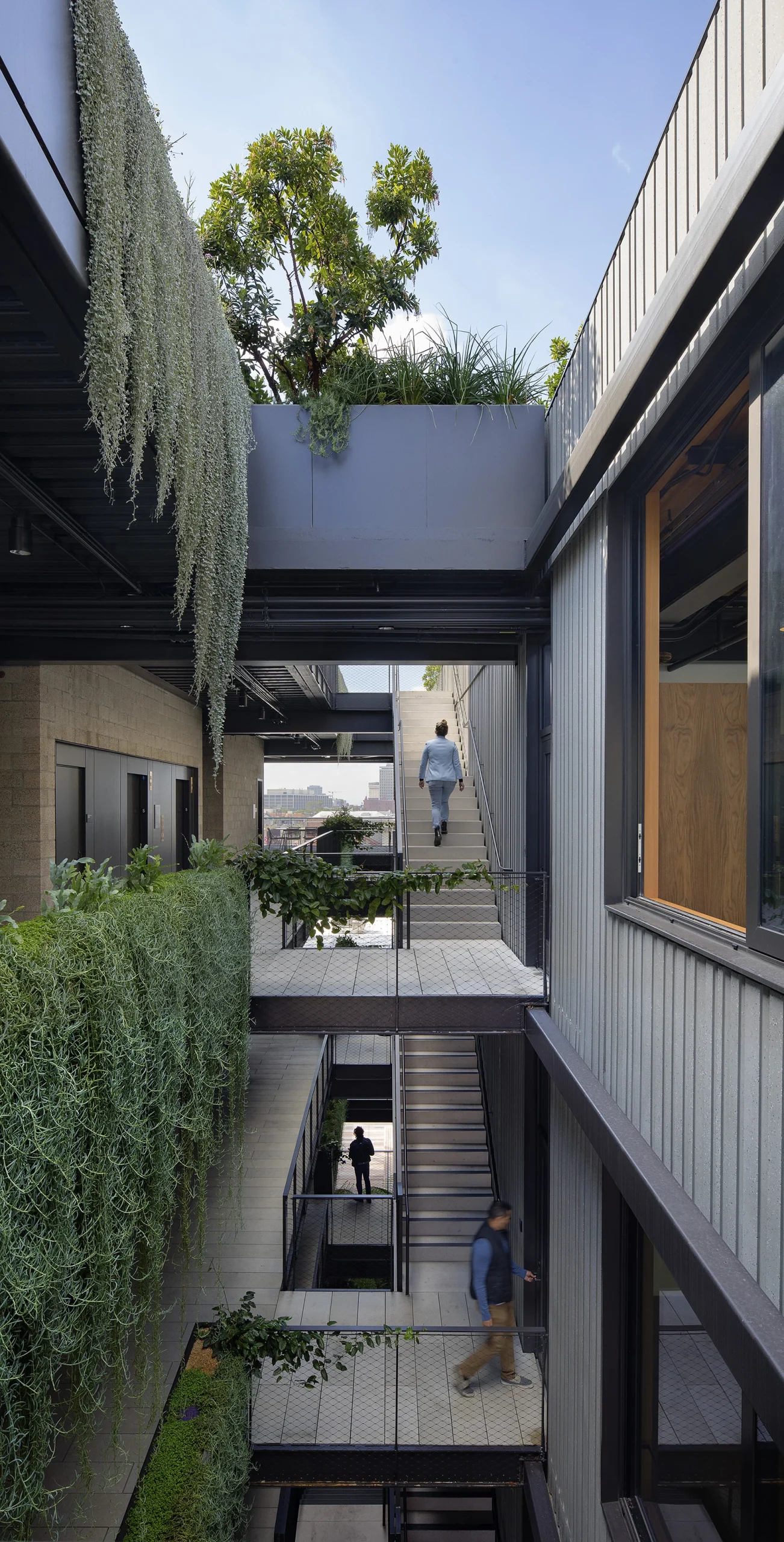
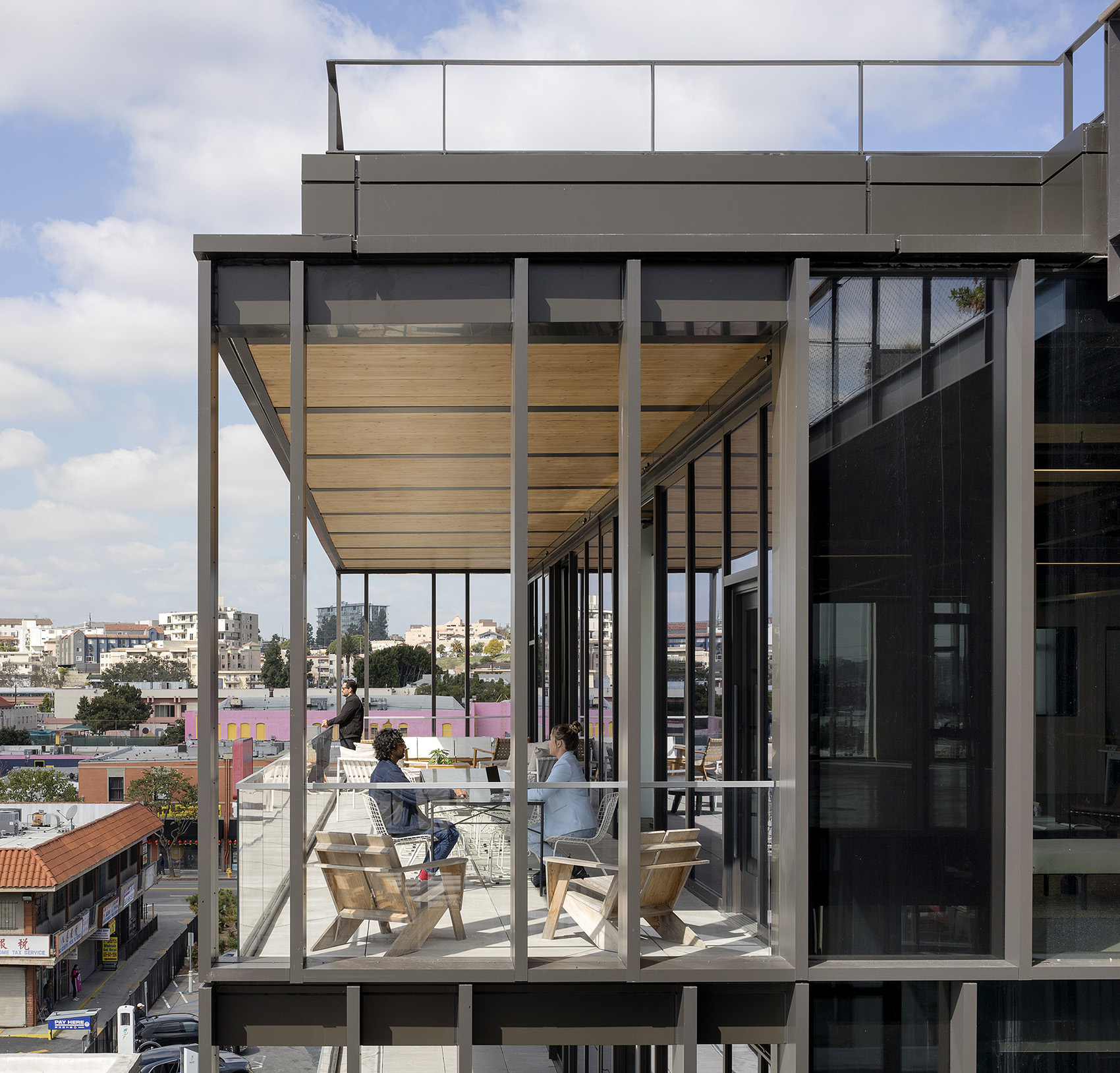
The landscape design bridges the gap between indoor and outdoor, and fully embrace the Los Angeles climate by maximizing outdoor area. The circulation spaces and courtyards, along with private balconies and a shared rooftop amenity deck, provide layers of outdoor connections to various users throughout the building.

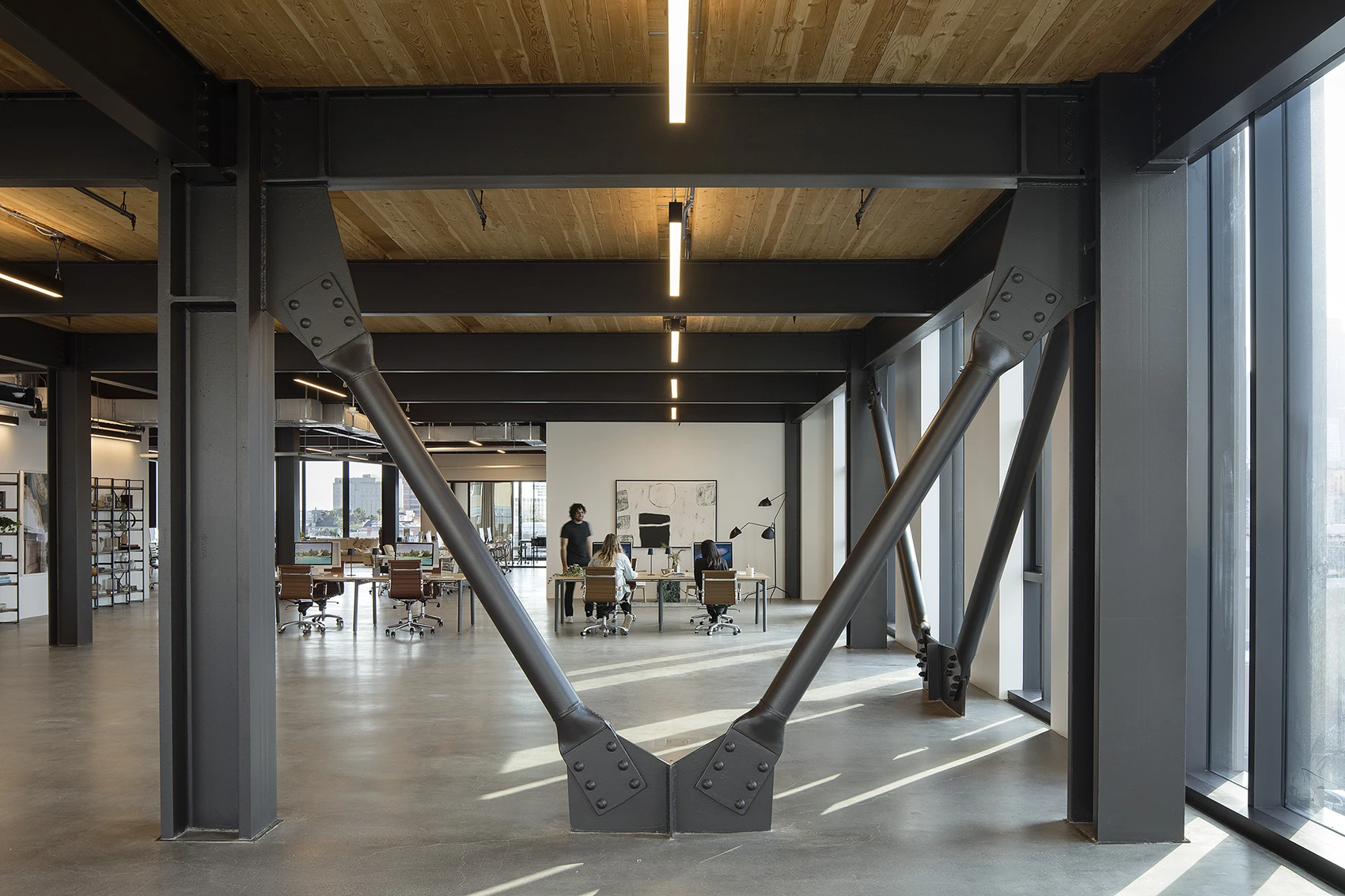
The structural system combines 5-ply CLT and concrete slab, with exposed steel columns and beams that account for the building’s gravity and seismic loads. Exposed timber panels cantilever over the balconies, and add a natural, warm aesthetic to the interior.

//jury comments

A very good example of a complete architectural statement, in the sense that it has a very clearly organized site plan and building plan, highly rational and an economical use of materials, and is very evident in how it’s made and how it’s constructed. It touches on all of the most important aspects of truly good architecture.
//framework for design excellence measures
Measure 1: Design for Integration
Spring Street works on multiple scales to lower its carbon footprint and feature sustainable strategies specific to the local climate. The design takes advantage of its location directly adjacent to the Chinatown Metro Station by opening up to the Station visually on the platform level. From a carbon perspective, the building’s hybrid structural system, which includes 3- and 5-ply Cross Laminated Timber (CLT) sequesters 930 metric tons of CO2. The design includes natural ventilation for all spaces, a rooftop solar PV array, EV charging stations, and 100% of rainwater is recycled in cisterns for re-use on site as landscape irrigation.
Measure 2: Design for Equitable Communities
The circulation was intentionally designed to allow for access to all workspaces without the need to be in an enclosed corridor. All tenant spaces have outdoor terraces that can be utilized as workspaces. All spaces have operable windows and large sliding doors that can be manually operated. The project takes advantage of the Mediterranean climate and provides the opportunity for passive ventilation and daylighting. With the threat of future pandemics still present, built-in access to outdoor space and natural ventilation is a form of resiliency.
Measure 3: Design for Ecosystems
The previous retail structure on the site had no windows or landscaping. Spring Street introduces a major landscape experience in a very dense urban environment that is publicly accessible on the facade and in the interior courts during business hours. The landscape features drought tolerant and native plants. The sunlight exposure of the terraces were carefully modeled and the landscape design evolved as more access to daylight is possible on the upper level, with the introduction of pollinator species at the roof level.
Measure 4: Design for Water
The project features rainwater capture and re-use, which is stored in a 15,000 gallon cistern below the garden decks, and filtered and re-used for landscape irrigation.
Measure 5: Design for Economy
The re-use of the existing below grade parking structure was a cost effective and sustainable strategy that guided the design. The structural column grid of the building was grafted directly on the existing parking grid using an innovative structural technique where the WF columns were cast into a large column that encased the existing structure. This strategy saved time, money, and diverted a significant amount of material from landfill.
Measure 6: Design for Energy
The team used daylight modeling to design the vertical 6” exterior glazing fins to significantly reduce the heat load at the facade. A Rooftop PV array covers the entire roof and produces 148 KW of on site electricity. The building is located directly across from the Gold Line’s Chinatown Station. Bicycles and Electric Vehicles prioritized over 200 bike stalls, locker and changing facilities for bike commuters, and convenient EV charging stations located in a secured garage. Spring Street also replaced 30% of parking required with bike parking and high density car stackers.
Measure 7: Design for Well-Being
Spring Street is an adaptive re-use of the existing two story warehouse structure on site that employs biophilic design strategies of access to the outdoors and landscape on every level. Cross Laminated Timber (CLT) panels are employed as the floor framing system, sequestering 930 metric tons of atmospheric carbon and providing a natural warmth to the building’s interior and exterior spaces. Access to landscape at all levels of the building with connections to a generous second floor garden, ‘canyon’ rooms, office patios and a roof top amenity deck.
Measure 8: Design for Resources
The utilization of engineered timber to sequester carbon in the project was a primary strategy. The total volume of wood products used is 36,443 cubic feet. U.S. and Canadian forests grow this much wood in 3 minutes. The Carbon stored in the wood is 936 metric tons of carbon dioxide and the total total potential carbon benefit: 1357 metric tons of carbon dioxide. This is the equivalent to taking 287 cars off the road for a year, or the energy to operate 143 homes for a year.
Measure 9: Design for Change
This building is inherently flexible due to the configuration of the tenant spaces arranged around common exterior spaces that link together separate tenant units via a landscaped circulation spine. The nature of the common spaces makes daily uses of the circulation core fundamental to the building and means that the future reconfiguration of tenants can blur the boundaries of any single rentable unit.
Measure 10: Design for Discovery
As one of the first major projects to employ Cross Laminated Timber in a hybrid structure in Los Angeles, the project is an innovative first step to explore the use of less carbon intensive material. The design is also an exploration of biophilic principles of how we can connect workspace to the landscape in ways that promote wellbeing and delight with a sustainable approach that include reuse of existing structure, natural ventilations, and a highly flexible structure.
Skip to content