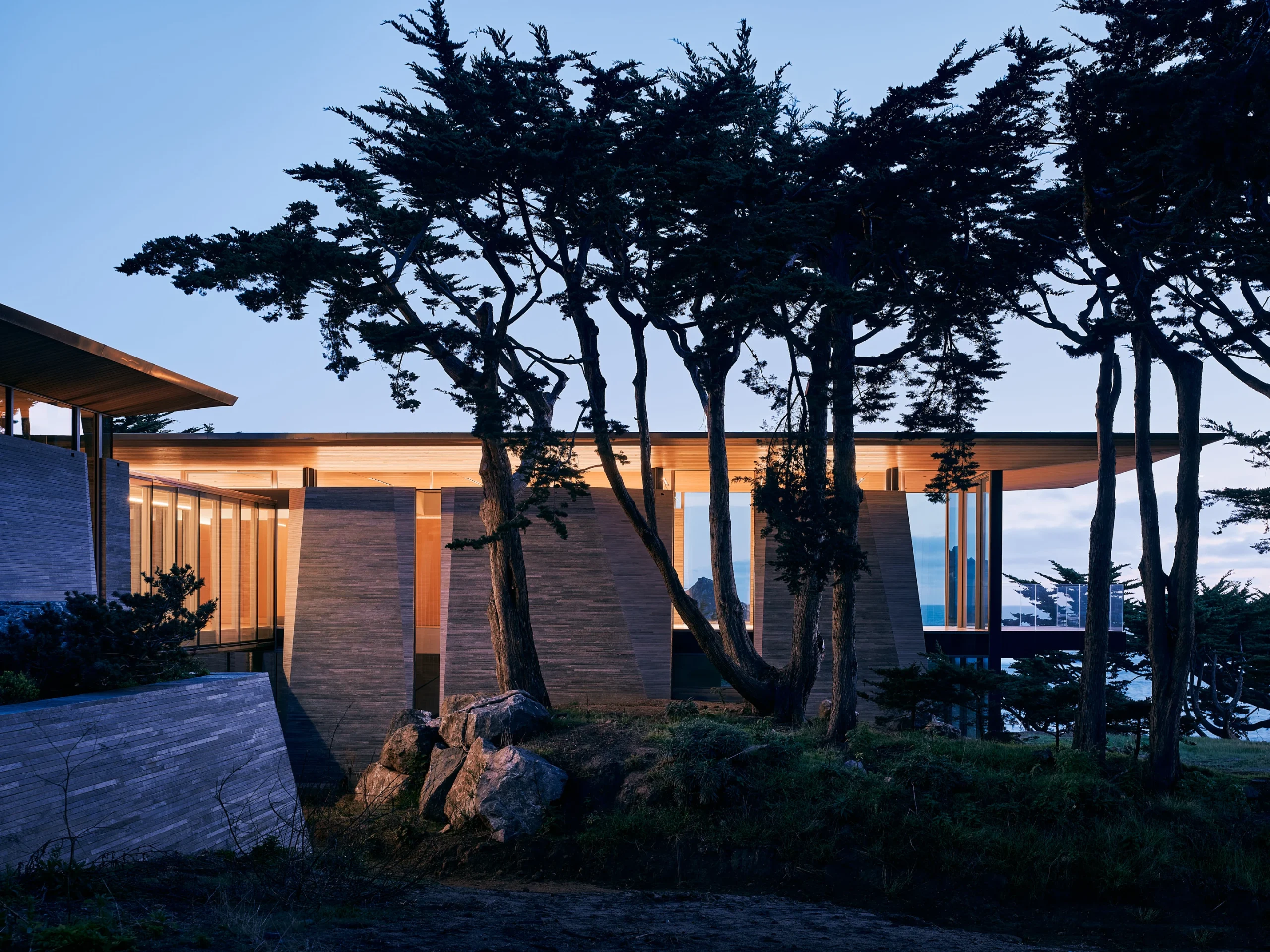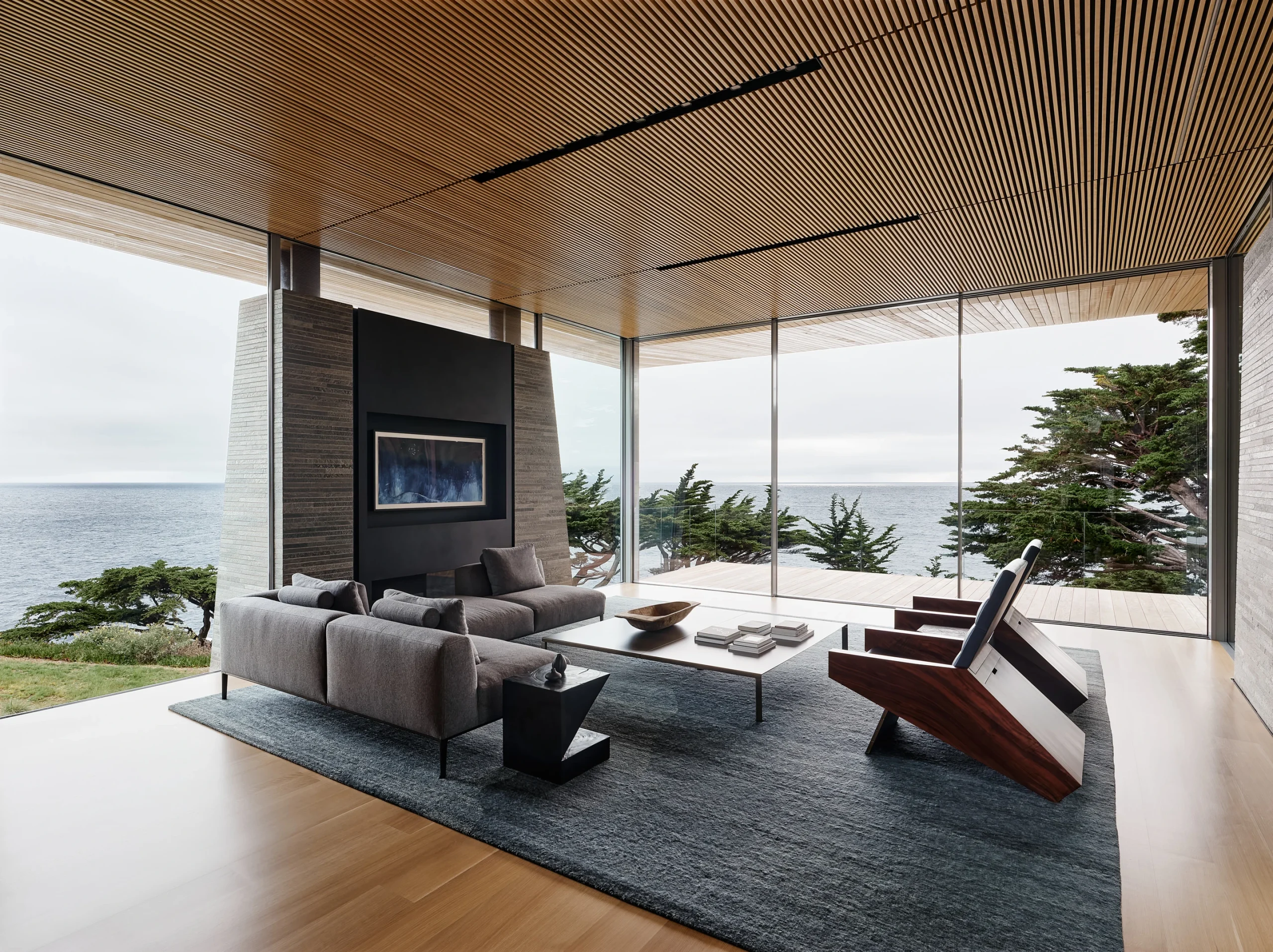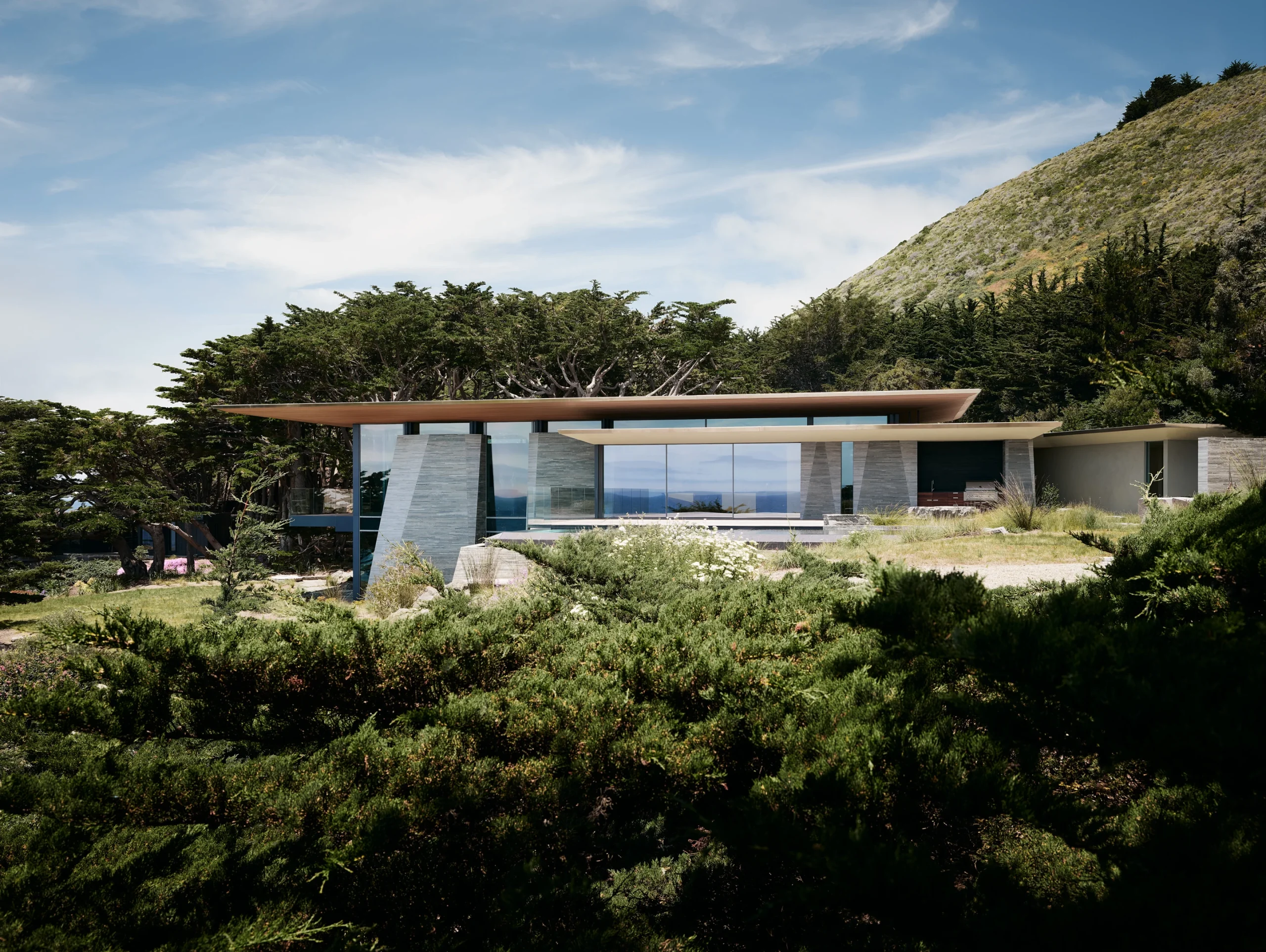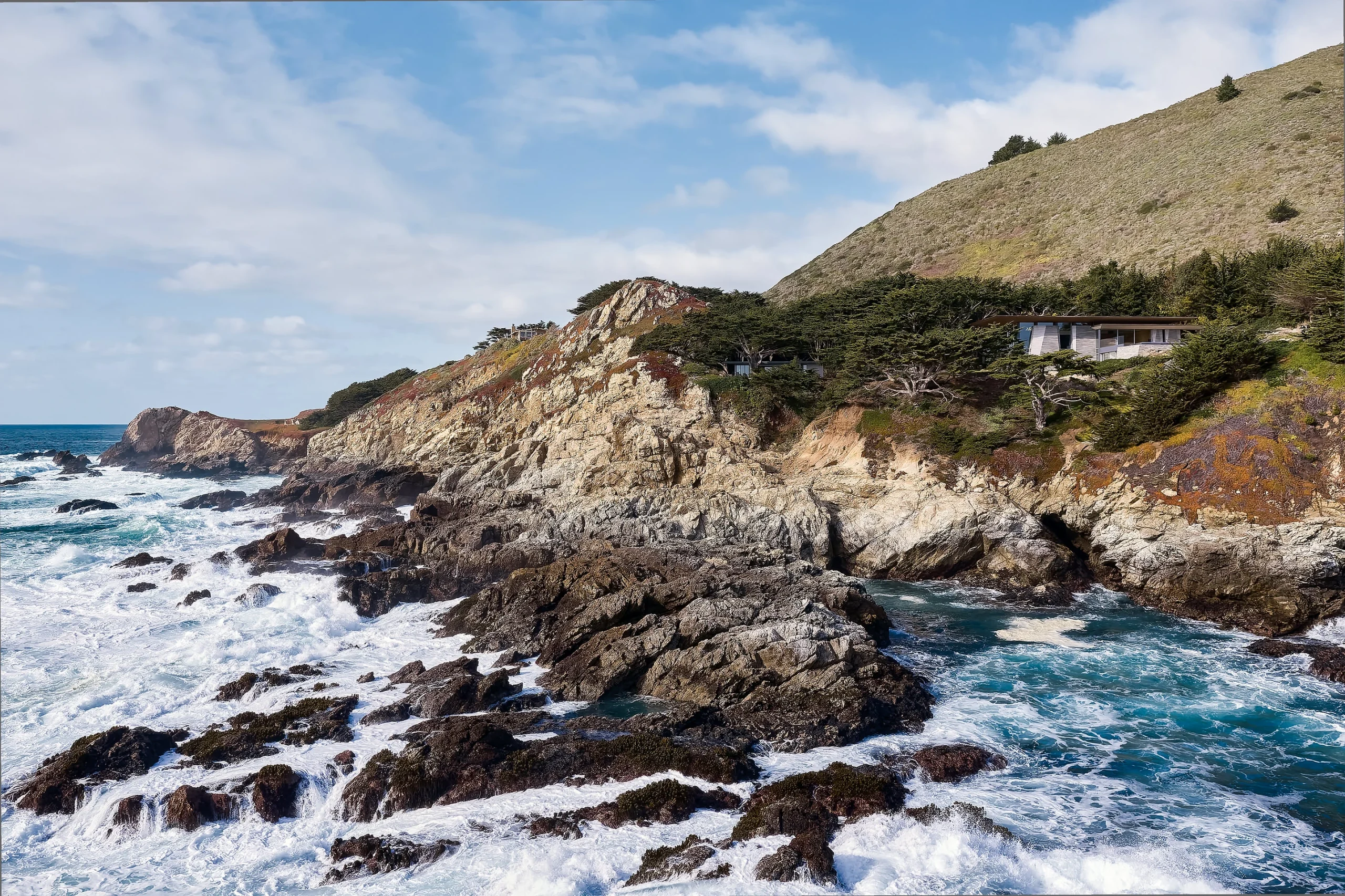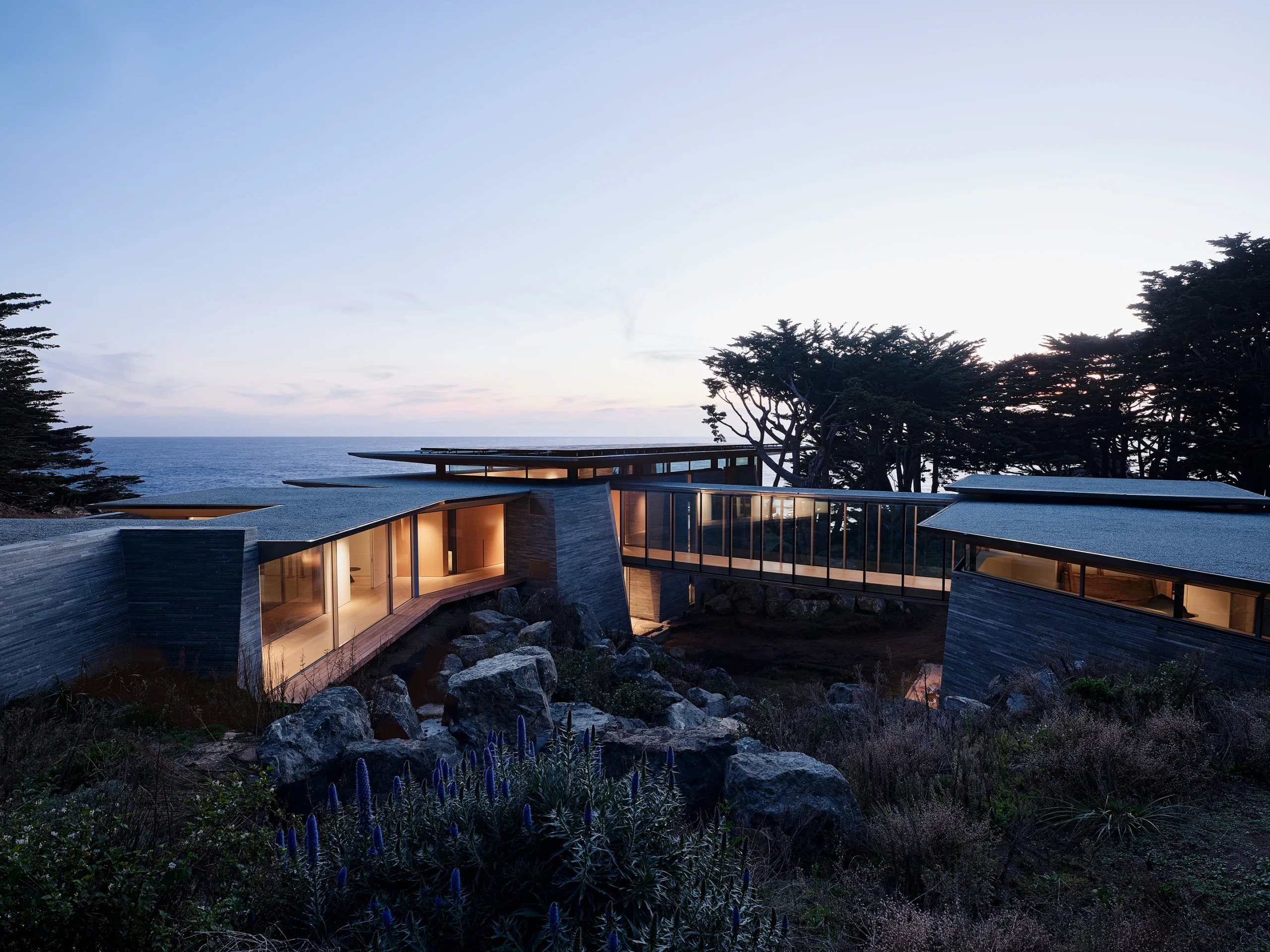

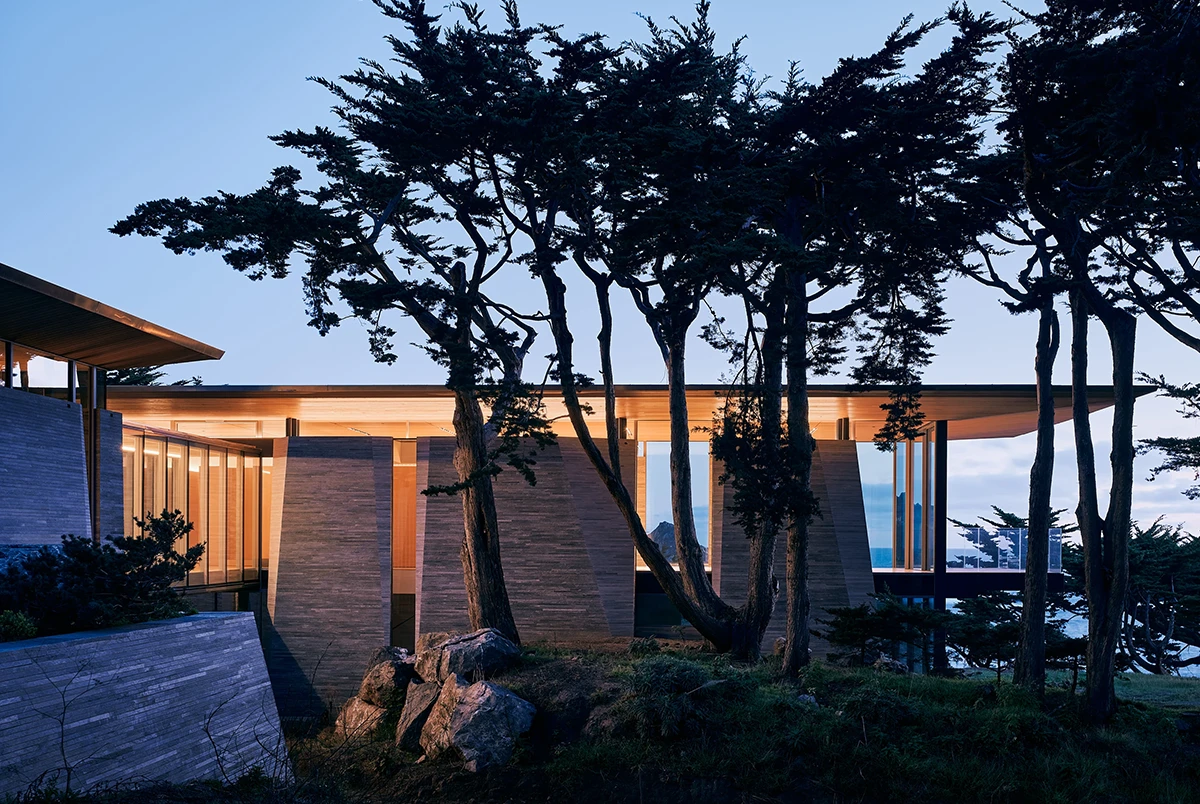
Situated on the California coast between the Santa Lucia mountains and the Big Sur cliffs, the home’s complex site presented an opportunity for a deep exploration of site geology and hydrology. Surveys revealed that the apparently flat site was in fact an infilled ravine housing a seasonal waterway. This discovery provided us with a new understanding of the topography and ecology of the site. No longer a plateau, the site had revealed itself to be a ravine.
From this point on, the guiding principle of the development of the site was the remediation of the watershed traveling through it. The building’s form is bifurcated by the ravine, linked with a bridge that provides visual connection to the restored intermittent coastal stream. Stringent fire-resistant measures were incorporated into the structure: ignition resistant, noncombustible wall materials, non-vented soffits, and class A roof with rock ballast.
The project fundamentally pushes for greater depth and understanding of site analysis, offering a forward-thinking approach to the analysis process that centralizes watershed health and in so doing, promotes long term ecological restoration as part of a symbiotic relationship with the architecture. The architecture protects the restoration of its site and ensures the long-term health of this watershed.
A truly exceptional project with an exemplary approach to site, massing, materiality, tectonic expression, and spatial choreography. The geometric organization in plan and section is well-crafted and the bifurcated pavilions beautifully allow for the passage of the coastal stream from the hillside to the ocean. The ambition to thoroughly bridge climate, ecology, and design result in a beautiful, architecturally significant home. The site is addressed beautifully.