
California College of the Arts Campus Expansion

CCA (c)Jason ORear copy

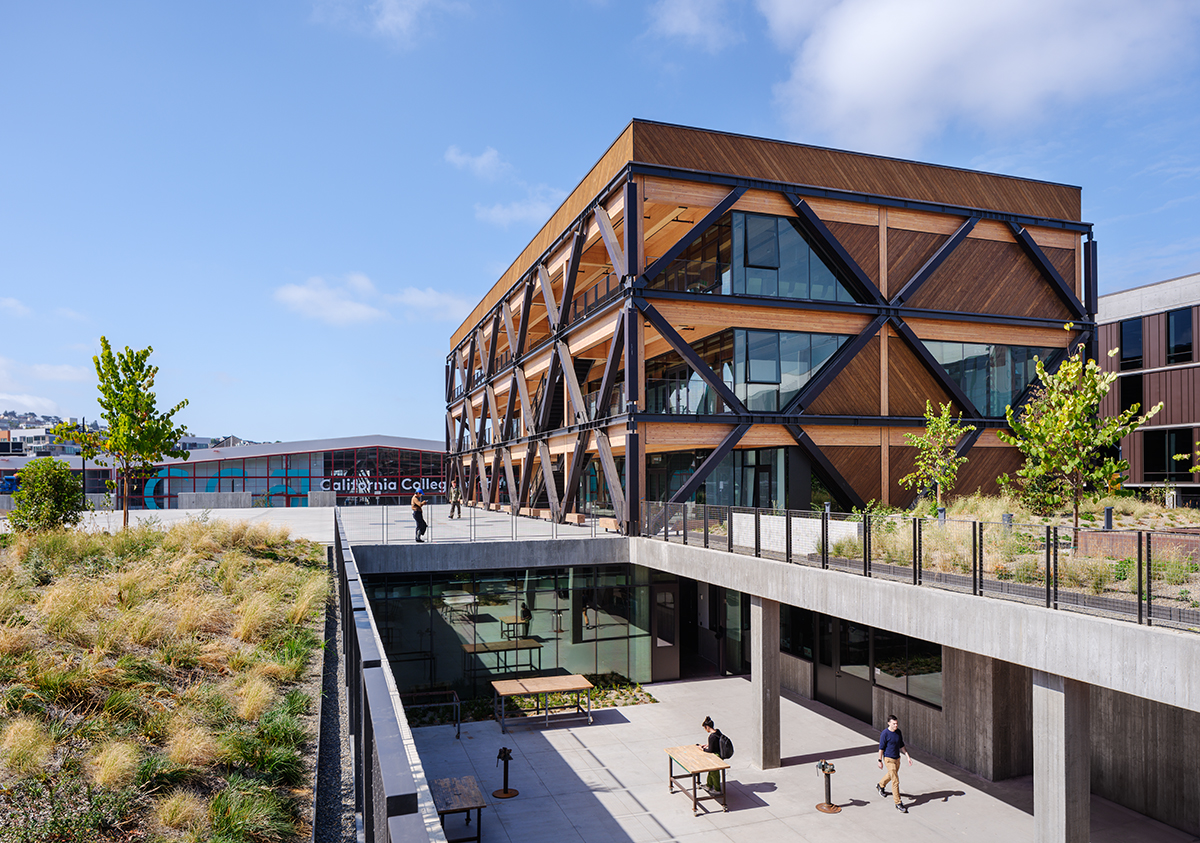
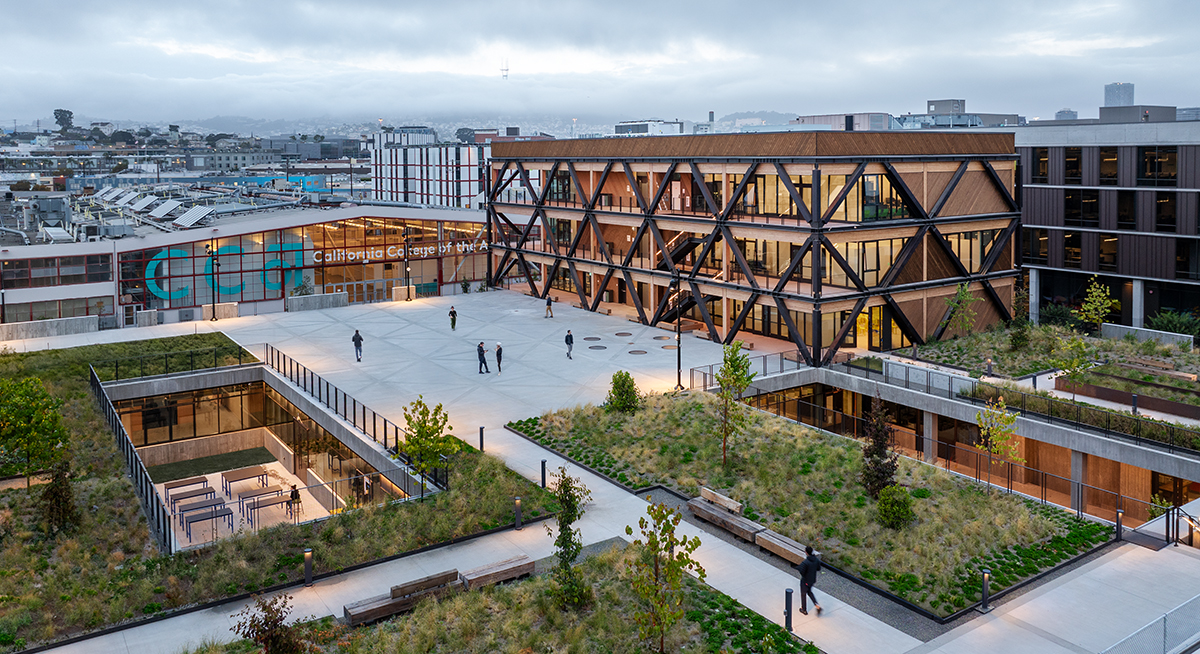
The new addition at the California College of the Arts (CCA) expands on the school’s San Francisco campus, establishing a vibrant indoor-outdoor environment for learning and making that strengthens relationships among varied people, ideas, and creative practices.

Founded during the Arts and Crafts movement at the turn of the 20th century, CCA has grown to encompass 34 art and design disciplines, from jewelry, ceramics, and textiles to metal arts, architecture, and animation. Conceived as a creative ecosystem where different disciplines can productively interact and overlap, the building physically extends from CCA’s existing main academic building, providing new art-making facilities, learning spaces, and green spaces that support its diverse community.

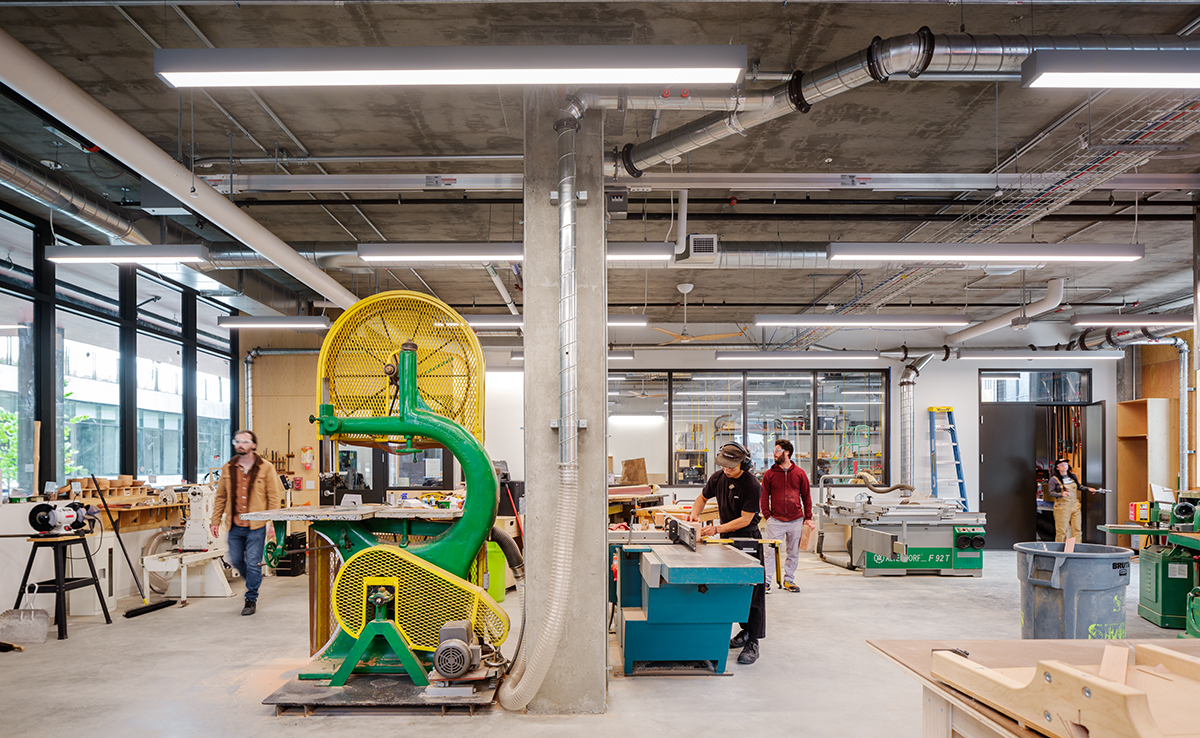
The building’s concrete ground level is a hub of indoor-outdoor workshops for more physically intensive art-making practices and fabrication. Organized around shared materials and equipment, this level’s open, flexible plan makes the different programs easily visible and accessible to one another, promoting interdisciplinary interaction and providing adaptability as new needs, mediums, and technologies develop.

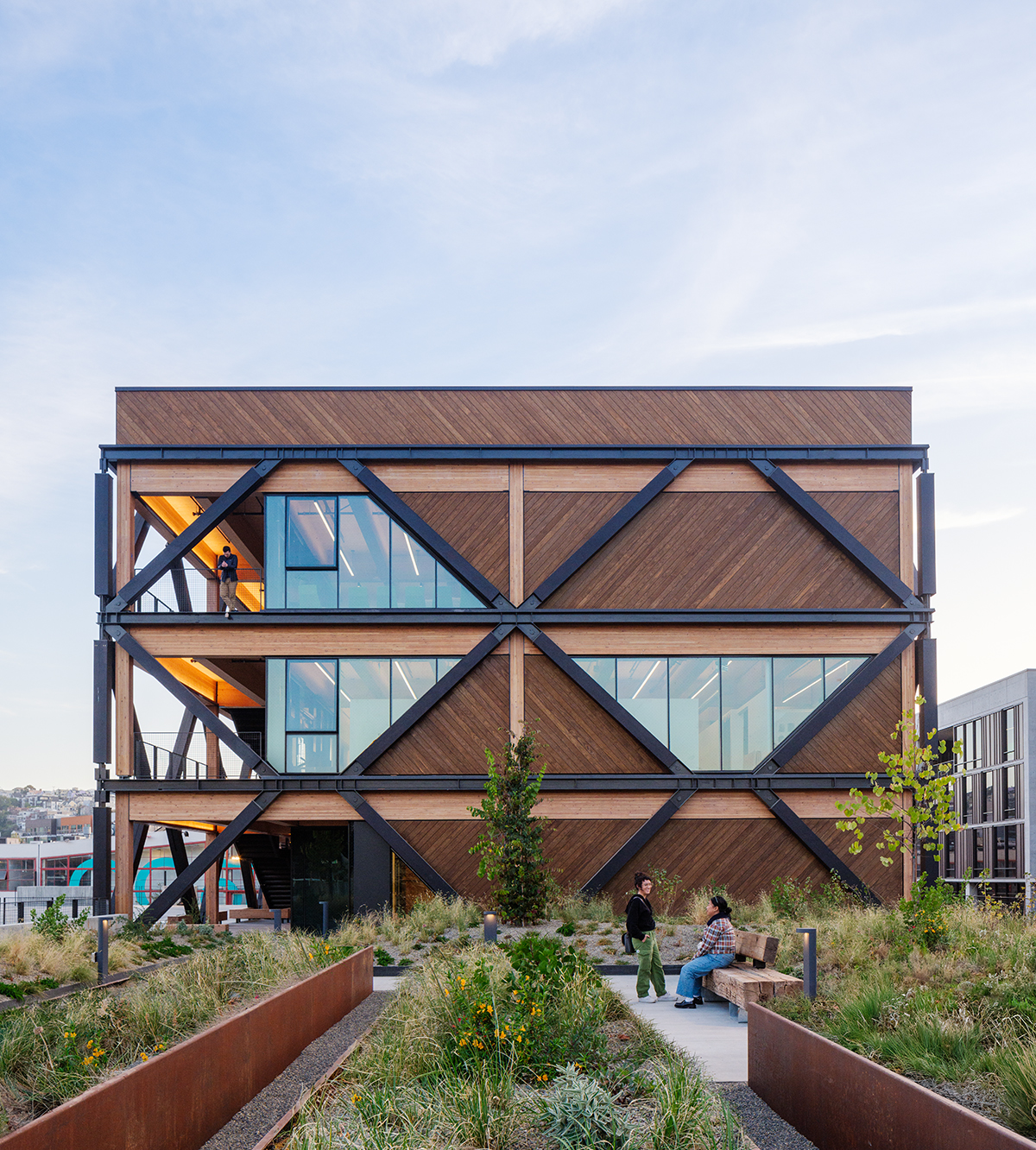
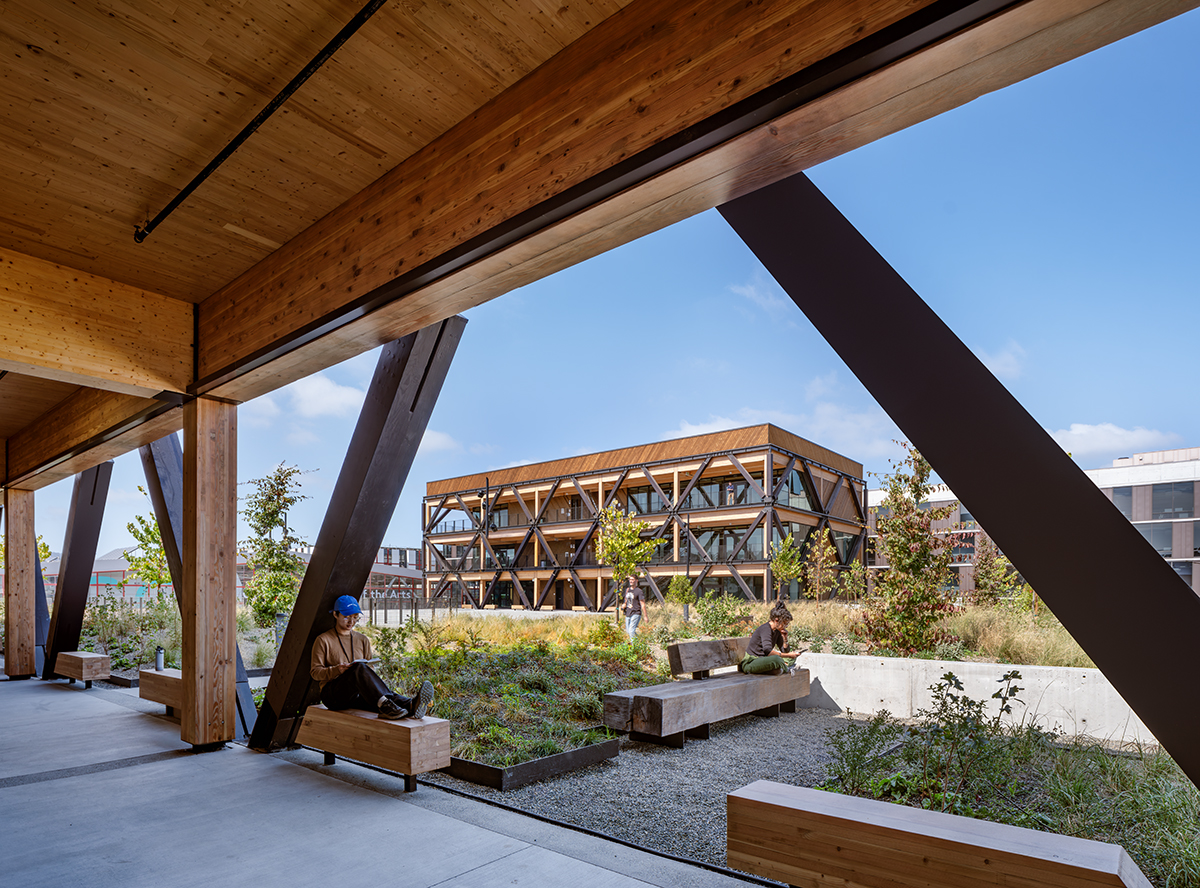
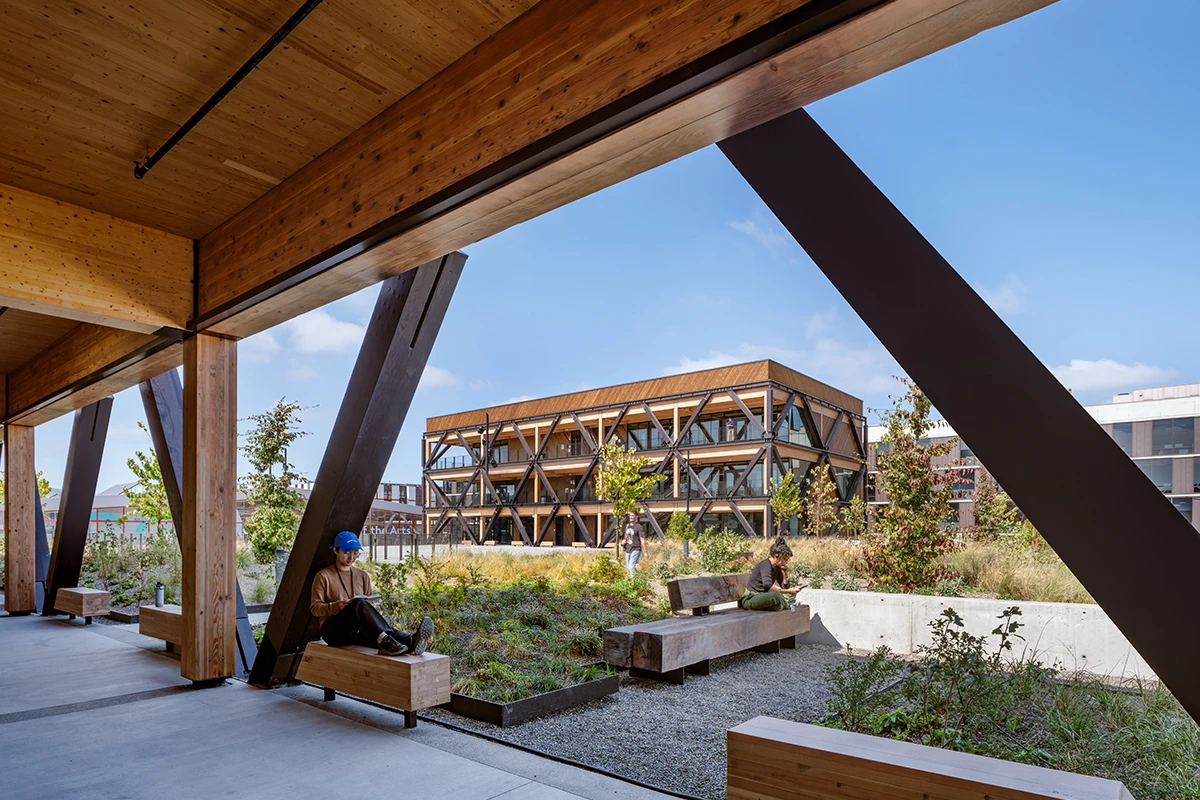
Emerging from the building’s base, two mass timber pavilions house classrooms, art studios, and exhibition galleries. Both pavilions lead onto a green terraced landscape that unites the building’s lower and upper levels. Their deep balconies enable exterior circulation as well as informal learning, working, and social spaces where the CCA community can enjoy San Francisco’s mild climate. Their structures, which are among the first exposed mass timber structures in California and include a one-of-a-kind eccentric braced frame system, allow their natural materiality and lateral and gravity loads to be visible.

Through a welcoming new streetscape and programs that seek to increase the impact of art in the wider community, the new building enhances CCA’s connection to San Francisco’s design and innovation district as well as the wider Bay Area and its environmental, entrepreneurial, and creative cultures.

//jury comments

This is an exemplary project across all criteria. Clear program and concept, beautiful and innovative tectonics, rich materials, wonderful spatial variety, and clearly organized plan. This project sets a very high bar for excellence in academic architecture and sets the stage for future growth and upgrades for this institution’s next 100 years. Innovative mass timber structure and passive systems continue the trajectory of CCA’s cutting edge sustainability program.
//framework for design excellence measures
Measure 1: Design for Integration
Built to meet carbon neutrality and net-zero energy standards, the project’s design strategies serve both environmental and experiential purposes, lowering the building’s carbon footprint while enhancing student comfort and well-being. Taking advantage of San Francisco’s mild climate, the building maximizes natural ventilation, daylighting, and passive cooling, creating a vibrant indoor-outdoor learning environment while reducing reliance on mechanical systems. Going beyond performance metrics, CCA’s design is future-focused and dedicated to supporting healthy, resilient spaces for the entire CCA community. The hybrid mass timber structure and minimal finishes reduce the building’s embodied carbon footprint by almost half that of a typical baseline building. Carved out of the concrete lower level, two large maker yards enable abundant fresh air and natural light to penetrate deep within the interior. Other passive design strategies, such as self-shading façades and night-flush ventilation, naturally cool the building to dramatically reduce the size and energy demand of mechanical systems. The building is equipped with infrastructure in place to enable a closed-loop, net-positive building in the future, which will be powered by a planned solar array on the roof of a separate, existing CCA campus building and the roofs of the timber pavilions.
Measure 2: Design for Equitable Communities
A 6-month planning and programming process integrated trustees, administrative leaders, faculty, staff, and students in town halls, retreats, and feedback sessions to inform possibilities for the newly unified campus. The design team’s broad access to multiple college constituencies led to highly integrated decision making. The resulting Master Program Diagram highlights an organization of disciplines into neighborhoods sharing pedagogical and physical needs, all connected by a fabric of community programming. Feedback prioritized flexible and “creatively hackable” environments that support CCA’s interdisciplinary culture and responds to future needs through public engagement and connection to the surrounding community.
Measure 3: Design for Ecosystems
Transforming a hard-scaped corner of San Franciso, the design at CCA creates a biodiverse garden that supports ecological health and connects users to nature. The landscape design features 85% California native species, including Costal Live Oak and other oak tree species that provide food, shelter, and nesting sites for birds and insects. Circulation routes and outdoor seating areas are carefully positioned alongside planting areas to offer immersive experiences with nature. Following dark-sky standards, CAL Green BUG, light sources with low UGR (glare) and/or fully shielded by architecture in soft indirect details minimize light pollution and protects nocturnal wildlife.
Measure 4: Design for Water
The site’s stormwater management system has been designed to maximize pervious areas which allows natural and passive infiltration of rainwater into the underlying soil. Pervious pavement, at-grade planters and on-structure planters have changed the site’s imperviousness from 100% to 69%, and reduced the peak flow rates and volumes entering the city’s combined sewer system beyond the minimum city stormwater requirements.
Measure 5: Design for Economy
The project’s design approach through passive design principles, multi-use spaces, and long-term adaptability maximize value while minimizing environmental impact. The new building’s passive design features including self-shading facades and night-flush ventilation reduce it’s total energy demand. Mass timber elements were carefully optimized to use the most efficient sections and layouts, reducing material use and waste. The flexible and adaptable design encourages multi-purpose use, with the maker yards functioning as outdoor classrooms, fabrication zones, and gathering spaces. Built with future change in mind, the campus is intentionally adaptable, allowing spaces to evolve over time without the need for costly renovations.
Measure 6: Design for Energy
CCA’s expansion incorporates high-performance energy strategies, achieving a 37% reduction in energy use and 24% cost savings compared to the ASHRAE 90.1-2010 Baseline. The HVAC system features DOAS with enthalpy wheels for energy recovery, which significantly reduces heating demand. High-efficiency lighting, automatic controls, and daylighting strategies cut lighting energy by 49%. Through operable windows, fan energy is decreased by 69%. Enhanced insulation and high-performance glazing further optimize energy efficiency. The design strategies were guided through energy modeling which ensured compliance with LEED BD+C v.4.0 and securing 11 LEED points.
Measure 7: Design for Well-Being
Occupant health and well-being was critical to the design for CCA’s expansion with strategies to enhance access to fresh air, daylight, and thermal comfort. Two large maker yards carved into the lower level bring abundant fresh air and natural light deep within the interior. Operable windows and ceiling fans are provided throughout the project and help cycle natural airflow. The MERV-13 filtration system at all four air handlers ensures clean, healthy air for equipment and occupants. Passive design strategies – including self-shading facades and night-flush ventilation – naturally cool the building, minimize solar heat gains, and improve thermal comfort.
Measure 8: Design for Resources
The design team’s selection of mass timber as the primary structure for the pavilion buildings significantly reduces embodied carbon. Sustainable sourcing was also utilized in concrete and rebar materials, with concrete featuring lower carbon mixes and rebar from manufacturers using the EAF process. An LCA performed for the project, estimates a total reduction of 24.3% in embodied carbon compared to the baseline, with a 49.3% reduction when accounting for sequestration from the mass timber. In addition, the project’s overall wood sourcing is 79% FSC-certified. These material selections reflect the project’s commitment to minimizing environmental impact.
Measure 9: Design for Change
The exterior mass timber framing for the pavilions are a one-of-a-kind timber eccentric braced frame (EBF) system. This carries the highest level of ductility compared to traditional lateral systems for seismic resilience. The EBF system is easily accessible for periodic inspections and repair/replacement if needed after a large seismic event. Passive survivability is supported as a robust PV and battery energy storage system allows for ongoing renewable energy to be available during outages. Additionally, the Plinth Pavilion was designed to support a 100 LB/SF live load, exceeding typical standards and creates a structure that is adaptable to future programmatic changes.
Measure 10: Design for Discovery
The new CCA building was designed to be sustainably agile and “creatively hackable”, ensuring long-term adaptability. The highly collaborative planning process engaged multiple college constituencies, fostering an integrated decision-making. The innovative design also features the first-ever use of an exterior timber-steel hybrid eccentric braced frame (EBF) in a high-seismic zone. Through dozens of post-occupancy tours and site visits, the design team has learned that some operational practices are not fully aligned with the building’s intended use. Working with the faculty and staff, the design team will reinforce the design vision—a fully integrated and collaborative teaching, making, and learning environment.
Skip to content