
FHCSD El Cerrito

eebb f fd dca debc copy feature

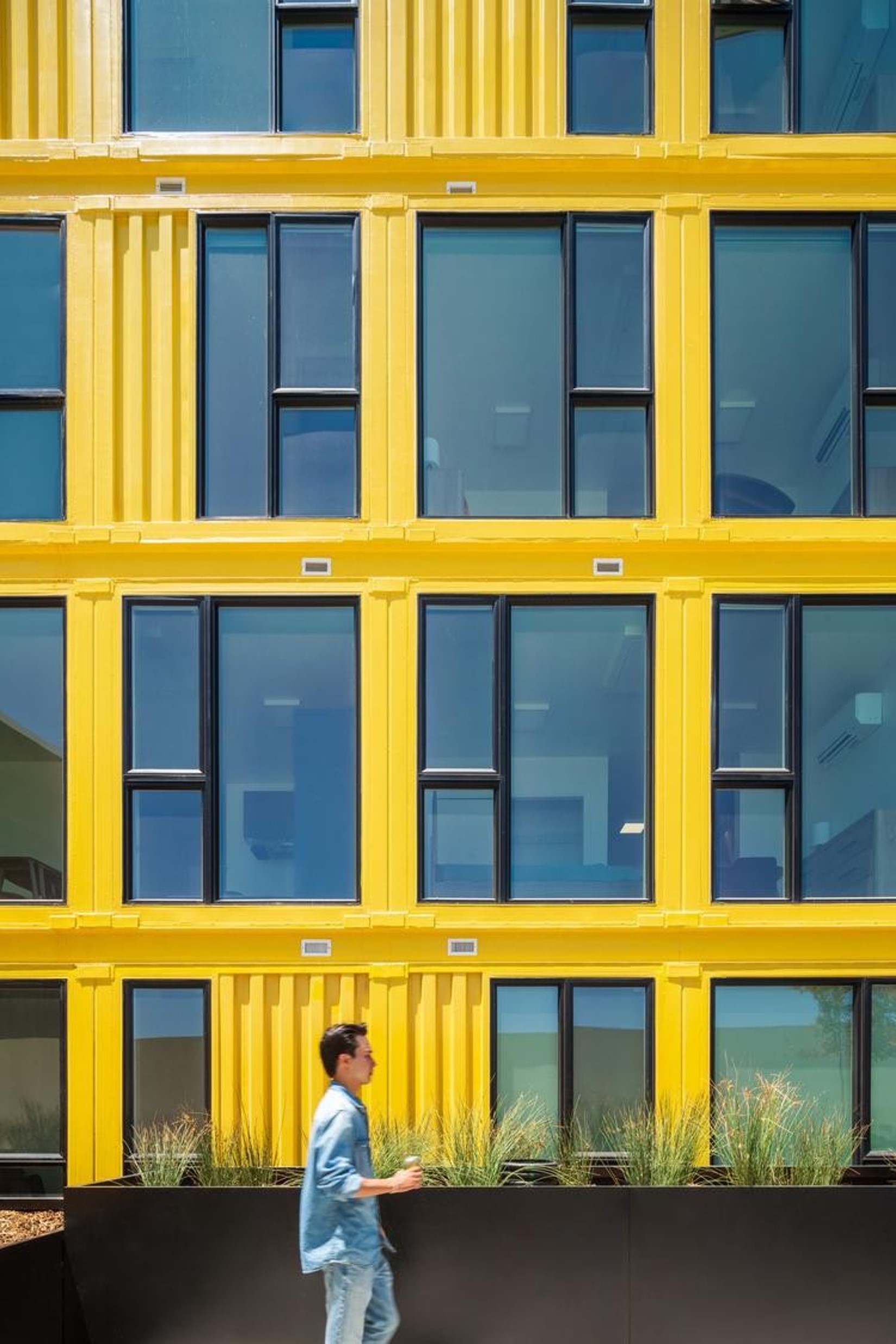
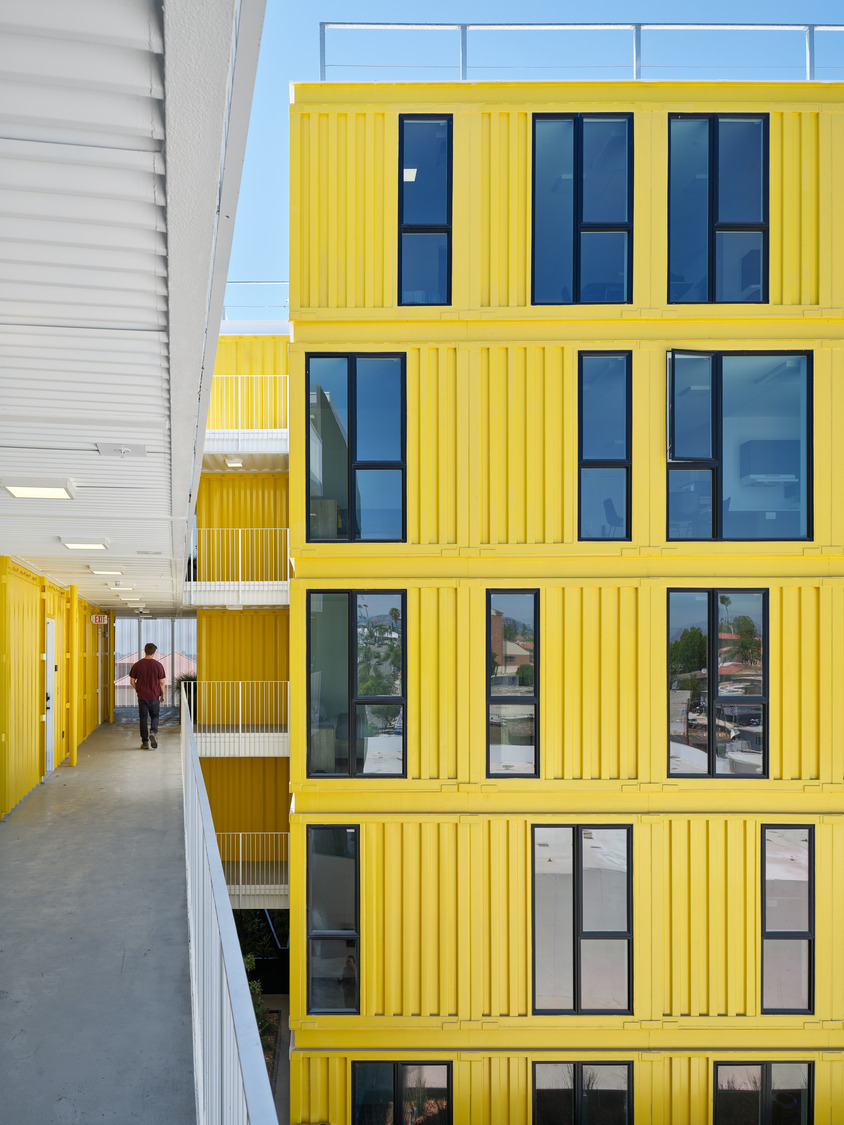
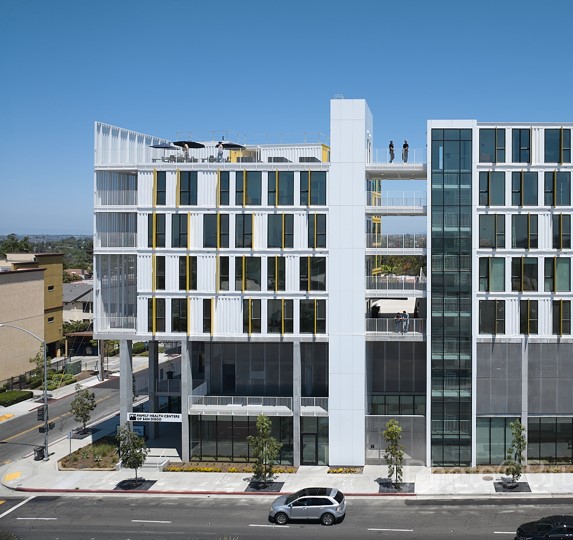
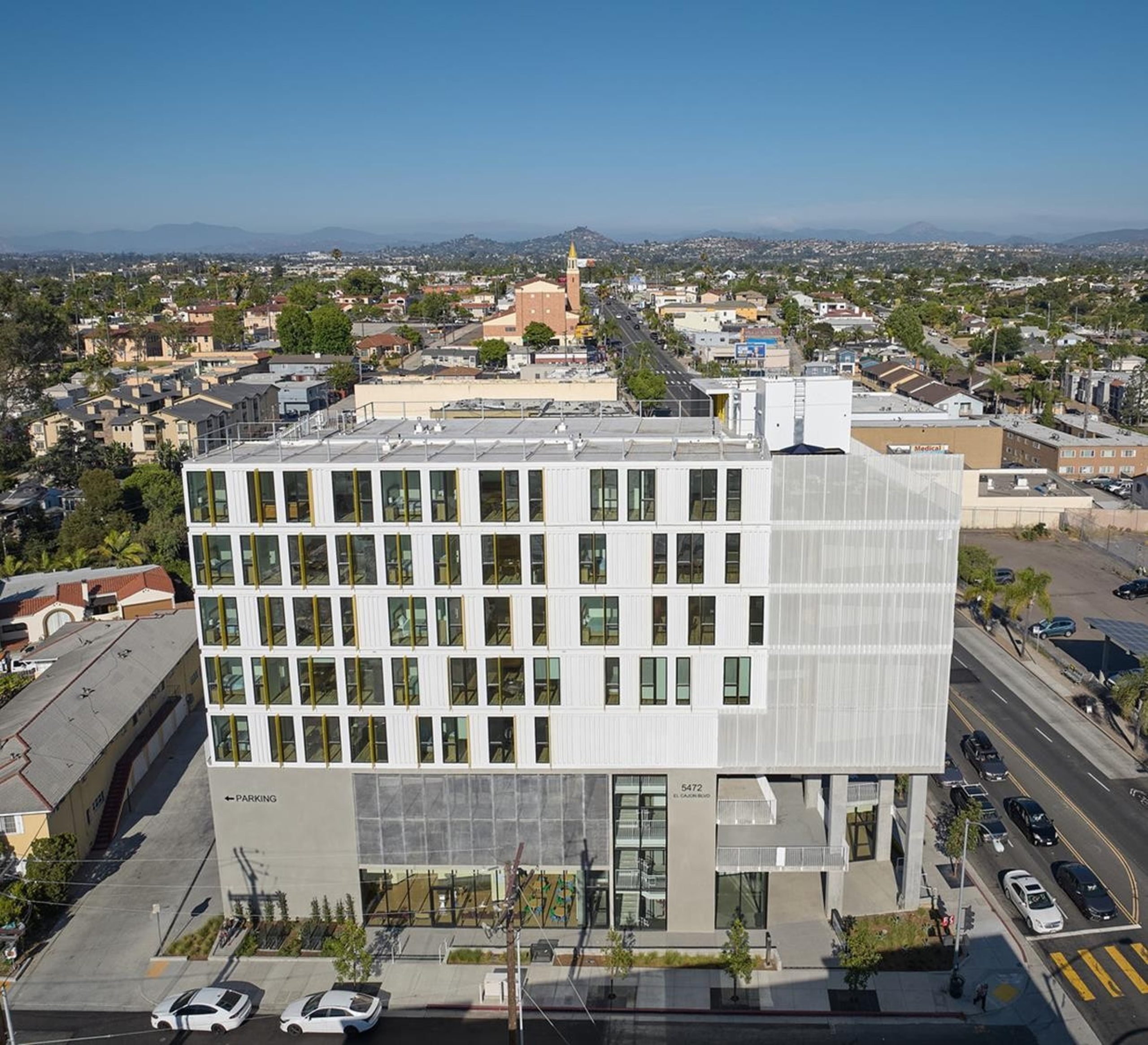
The design for this single-family development which includes 172 residential units over a parking structure which has two levels of below grade parking along with two levels of above grade parking and ground floor behavioral health clinic. The development provides a mix of affordable housing units for medical interns working in the health clinic and permanent supportive housing units with on site services. The design embraces the use of single use recycled shipping containers as a rigorous module in its five levels of housing on the upper floors which will be fully prefabricated modular units constructed off site.

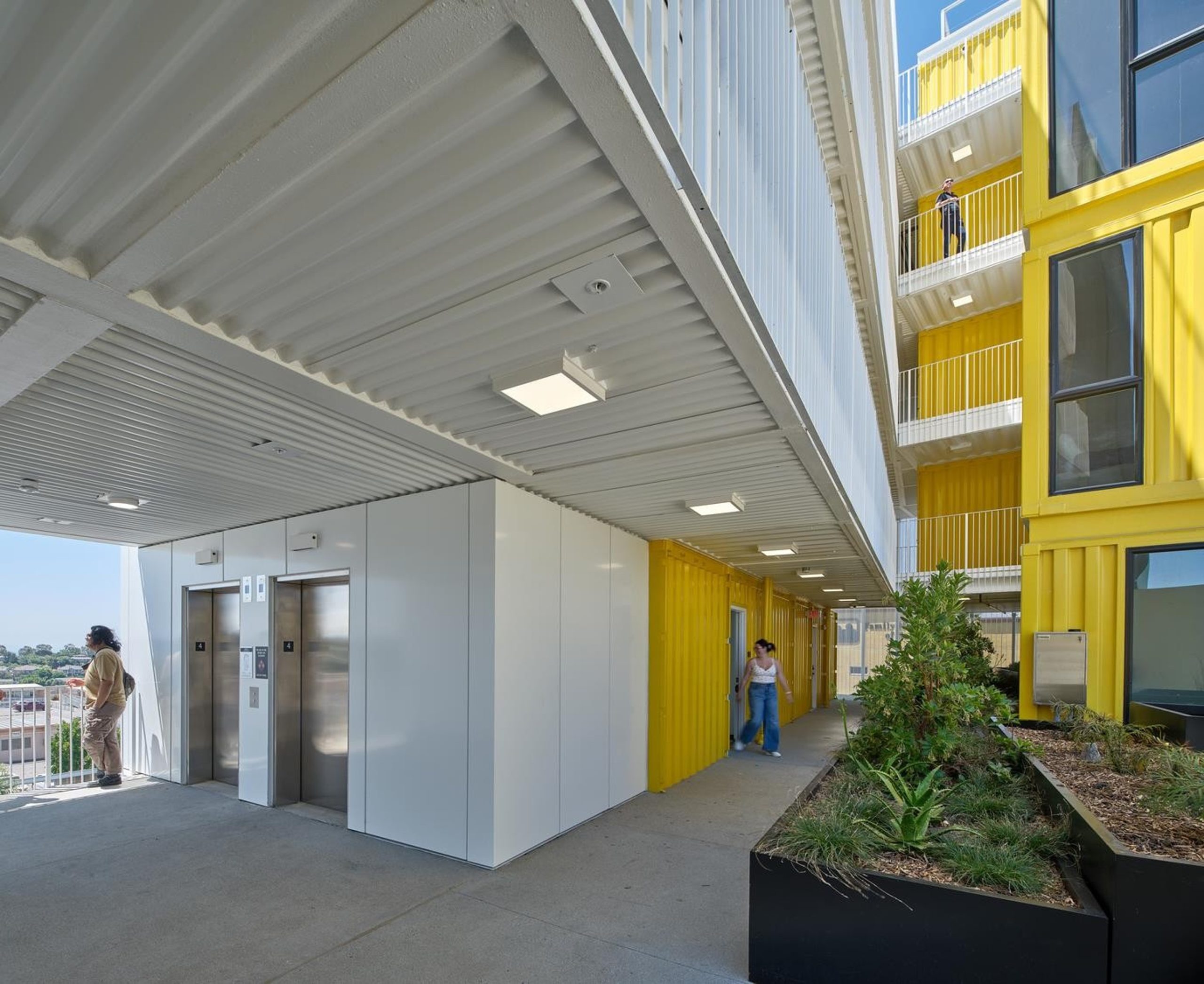
The building massing is organized to efficiently provide parking levels and the ground floor clinic space on the lower levels with the concrete podium while providing an entry courtyard at the southwest corner of the site for the clinic and parking programs along with a midblock entry courtyard for the residential units on the upper levels. These courtyards along the sidewalk breakdown the scale of the building along the street to strengthen the public realm in how it connects to the community. The upper five floors of residential unit are organized along a perimeter spine organized along the south edge of the site with four fingers of residential units running north/south to shape a series on roof courtyards to promote social connections for the residents.

The courtyards open to the north to allow for the prevailing northwest breezes to flow into the site and to scale down the façade along the north into smaller massing blocks to respond to the surrounding residential neighborhood. The integration of landscape with architecture embraces biophilia in connecting people with nature to promote health and wellness. The use of modular construction innovates at every step of the delivery model from design, documentation, permitting to construction in promoting a lean delivery process in reducing the overall schedule. This development is currently under construction with the foundations being poured on site while the modular housing units are being fabricated off site.

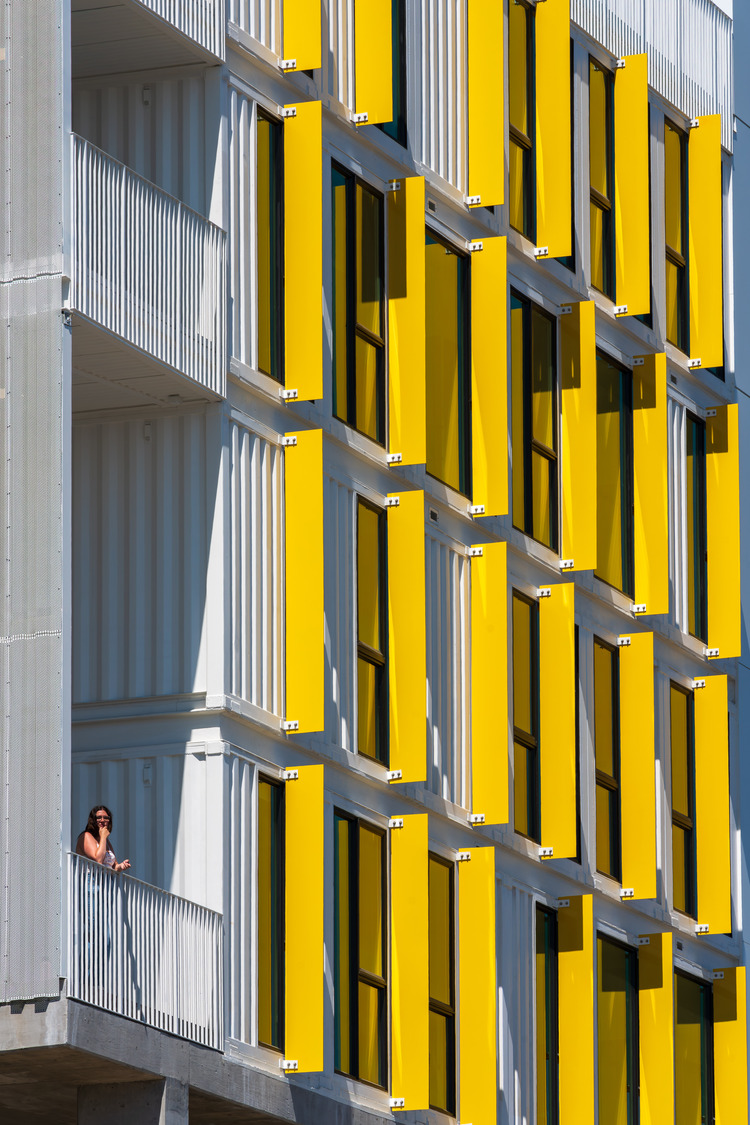
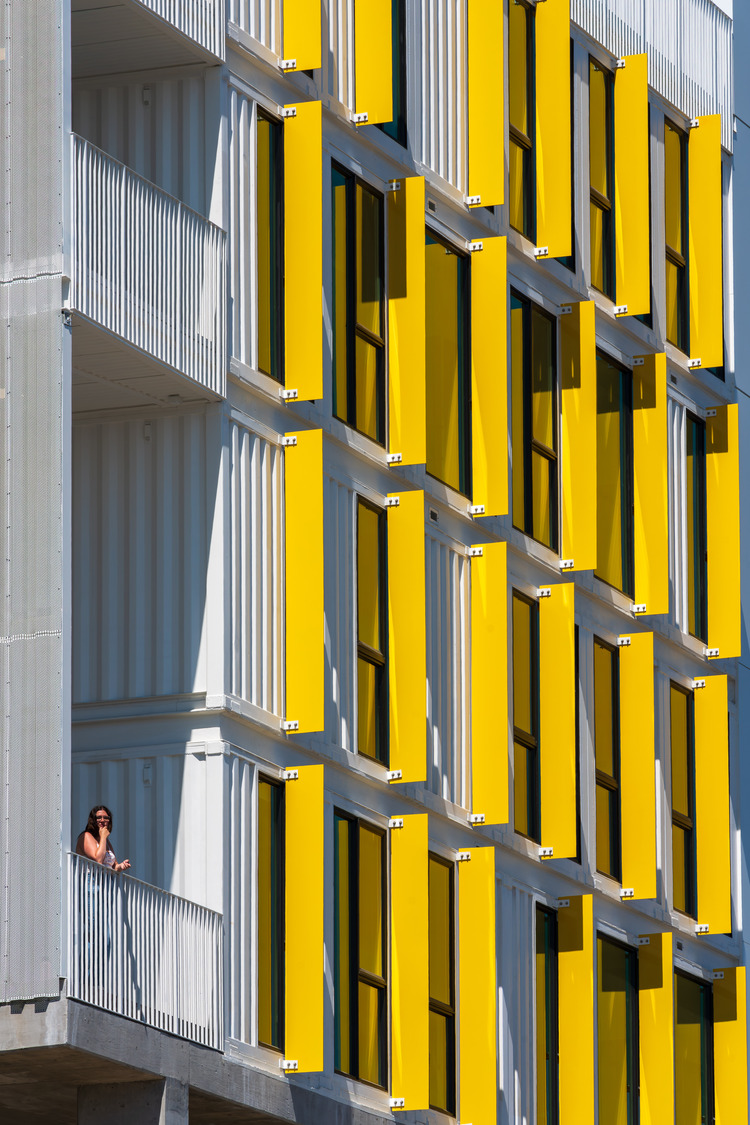
The design embraces its diverse neighborhood context, a mixture of older apartment buildings, retail shops, health clinics and single-family homes. The design massing break apart to scale down along the north towards the apartments and single-family homes while creating a welcoming entrance along El Cajon boulevard with its entry courtyards and upper-level balconies above to connect the users to the community. The facade design is driven from the container module and then scaled down into smaller modules with the window proportions and vertical sunshades to create a multitude of texture and scale.

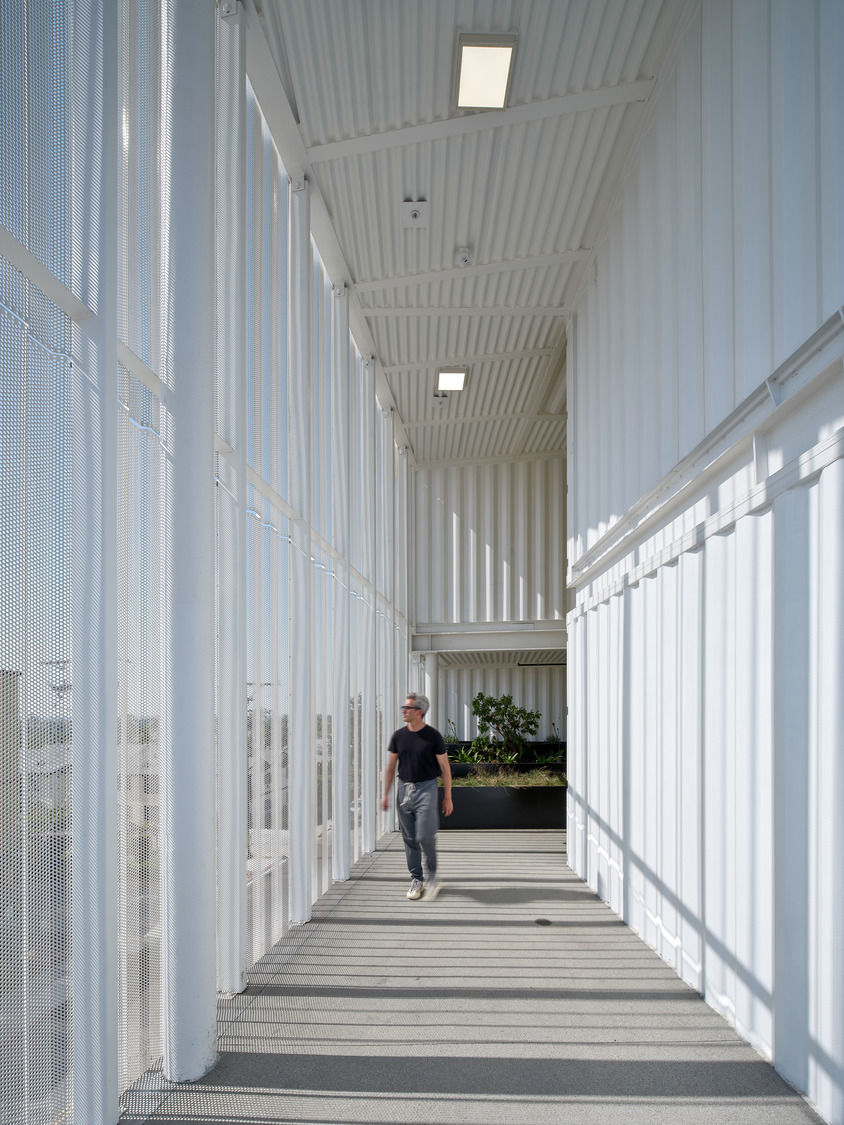
The integrated high performance design builds on the use of recycled single use shipping containers which are highly insulated for thermal and acoustical performance. The passive design features include natural ventilation with operable windows, daylighting and solar heat gain control with exterior vertical sunshades. The MEP system utilizes a high performance centralized VRF system and centralized electric heat pump boiler system for domestic hot water. The roof area is preserved for photovoltaic panels for energy generation and solar thermal panels for hot water generation. The exterior circulation system promotes health and wellness. There are multiple roof vegetated roof decks with a community vegetable garden to reduce heat gain and collect storm water. The site includes a biofiltration system to treat and store water collected on site while promoting biodiversity with its adaptive landscape palette. Overall building performance goals are being achieved to exceed 70% below title 24 and 86.6% below the AIA 2030 challenge benchmark. This project is designed as an all-electric development to promote carbon neutrality in its operations.

//jury comments

This project takes the humble shipping container that we’ve seen ubiquitously, but applies it in a sophisticated way, in a refined organization that feels dignified. Very well done in terms of massing, fenestration, tectonic expression, and material and colors. It delivers 172 affordable, 100% electric units which is an extraordinary achievement.
//framework for design excellence measures
Measure 1: Design for Integration
The integrated high performance design builds on the use of recycled single use shipping containers which are highly insulated for thermal and acoustical performance. The passive design features include natural ventilation with operable windows, daylighting and solar heat gain control with exterior vertical sunshades. The MEP system utilizes a high performance centralized VRF system and centralized electric heat pump boiler system for domestic hot water. The roof area is preserved for photovoltaic panels for energy generation and solar thermal panels for hot water generation. The exterior circulation system promotes health and wellness. There are multiple roof vegetated roof decks with a community vegetable garden to reduce heat gain and collect storm water. The site includes an biofiltration system to treat and store water collected on site while promoting biodiversity with its adaptive landscape palette. Overall building performance goals are being achieved to exceed 70% below title 24 and 86.6% below the AIA 2030 challenge benchmark. This project is designed as an all-electric development to promote carbon neutrality in its operations.
Measure 2: Design for Equitable Communities
This project engageed multiple community groups during the design phases of the project. The team meet with the El Cerrito community group multiple times during the programming and design concept phase to inform the community of the new development and have feedback from the neighborhood. The project team also engaged the college area planning group in the design process. There was also a community listening session which was host by FHCSD with the City of San Diego mayor and county of San Diego council memeber.
Measure 3: Design for Ecosystems
The project design integrates a series of planted roof courtyards on the level 4 deck which connect the residents to nature and the surrounding open space canyons to the north within the neighborhood. A community garden is located on level 8 to teach the residents about nutrition. Drought-tolerant plants provide stormwater retention and habitats for animals. The rooftop planting is important because birds play a key role in the local ecosystem. This region’s large bird biodiversity and the building’s proximity to the mission valley watershed and neighboring canyon open space provides a key link in this ecosystem.
Measure 4: Design for Water
Stromwater is collected from all the building roofs and routed to bioretention basins in each of the level 4 courtyards which then flow through a modular wetlard on grade at the side setbacks and gets stored on site within a basin in the parking structure. This results in a site in which 100% of the surfaces capture and treat stormwater as an visible landscape system. A high-efficiency drip irrigation system is designed for the site.
Measure 5: Design for Economy
This is a permananet supportive housing development which serves previously homeless residents. This development utilized 465 single use recycled shipping containers as the residential buildig module for cost efficency. The prefabrication delivery model will reduce cost overall with reduced construction finacing cost, construction escallation with the overall schedule reduction and start revenue for the development earlier since resident will occupy the apartments earlier than a traditional delivery model. Our design approach with utilizing shipping containers was to embrace the module and celebrate the the scale and texture inherent with the shipping container corrugated metal as our exterior facade material.
Measure 6: Design for Energy
Our passive design approach for the façade design promotes the use of natural ventilation with operable windows in every container module along with exterior vertical sunshades to control solar heat gain throughout the day. The residential units design builds on the use of recycled single use shipping containers which are highly insulated for thermal and acoustical performance. The roof area is preserved for a 81 kw photovoltaic system for energy generation and solar thermal panels for hot water generation. The development is designed as an all-electric development to achieve carbon neutrality in its operations.
Measure 7: Design for Well-Being
The development is designed as a GreenPoint platinum project. The design team has been working directly with the manufacture of the modular housing units in limiting the number of products utilized for the interiors of the units and in assuring they comply with the indoor air quality credits in the GreenPoint rating system. All the interior spaces have operable windows. All of the residential units have views out to nature adjacent to the site and toward the courtyards which embraces biophilia in connecting people with nature to promote health and wellness.
Measure 8: Design for Resources
The design embraces the use of single use recycled shipping containers as a rigorous module in its five levels of housing on the upper floors which will be fully prefabricated modular units constructed off site. By utilizing the shipping container which some additional supplemental streel framing approximately 45% of the entire sf for this development was sourced from recycled content which reduces embodied carbon in constructing this development. The modular fabrication manfacturing process also reduces construction waste, provides building effieceny and reduces on site labor which reduces the construction impact to the surrounding community.
Measure 9: Design for Change
The design incorporates passive survivability. The parking garage decks are designed with flat floors for future adability to other uses with speed ramps connecting each of the levels to minimize the footpront for these components. The roof includes a 81 kw pv system which can be connected to an onsite battery storage system within the parking stsructure in the future. The solar thermal roof system will generate hot water during the day with utility power.
Measure 10: Design for Discovery
Our team in currently planning post occupancy surveys with the resident as we approach the 1 year of occupancy milestone. This will provide critial feedback to implement changes to the current facility and resident sapces while also informing future designs for other projects to complete a feedback loop for informed design. We’ll also be showcasing the high performance design approach as an educational opportunity to promote carbon nuetrality and how to achieve this in a cost effecive manner with centralized systems.
Skip to content