
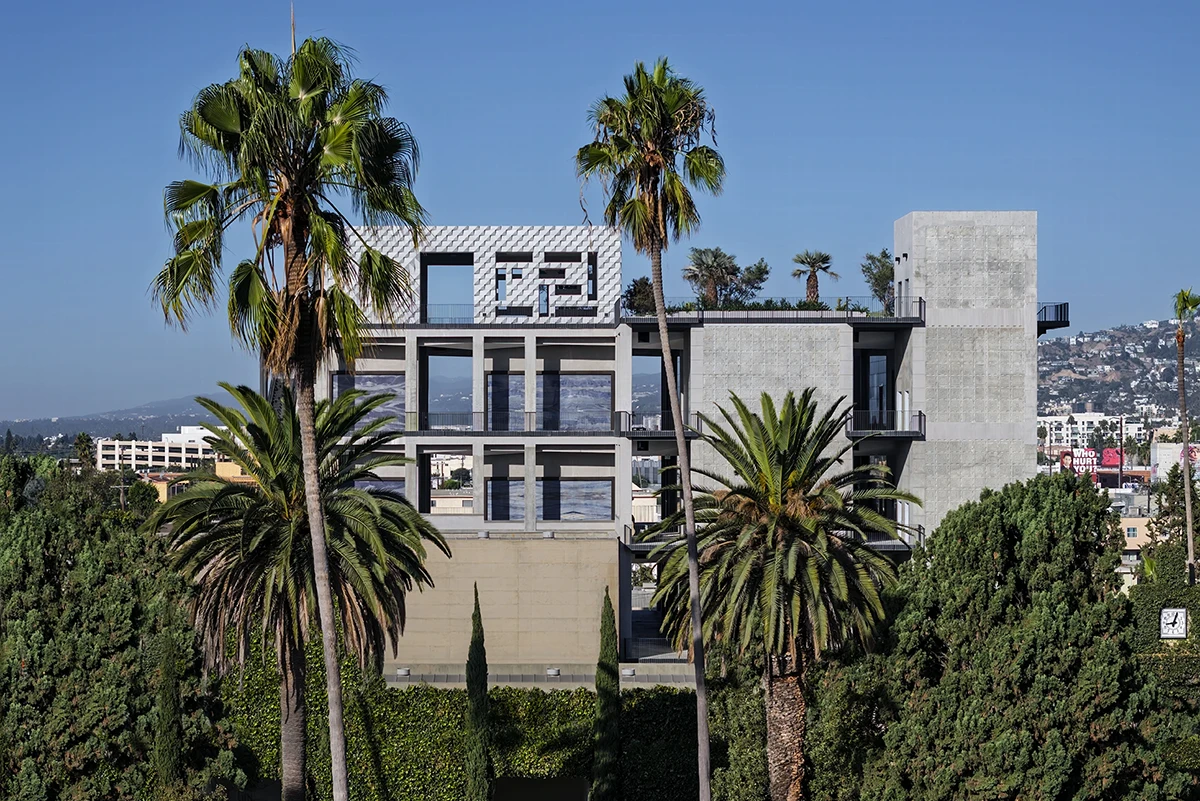
Gower Court Mausoleum

HVR copy feature

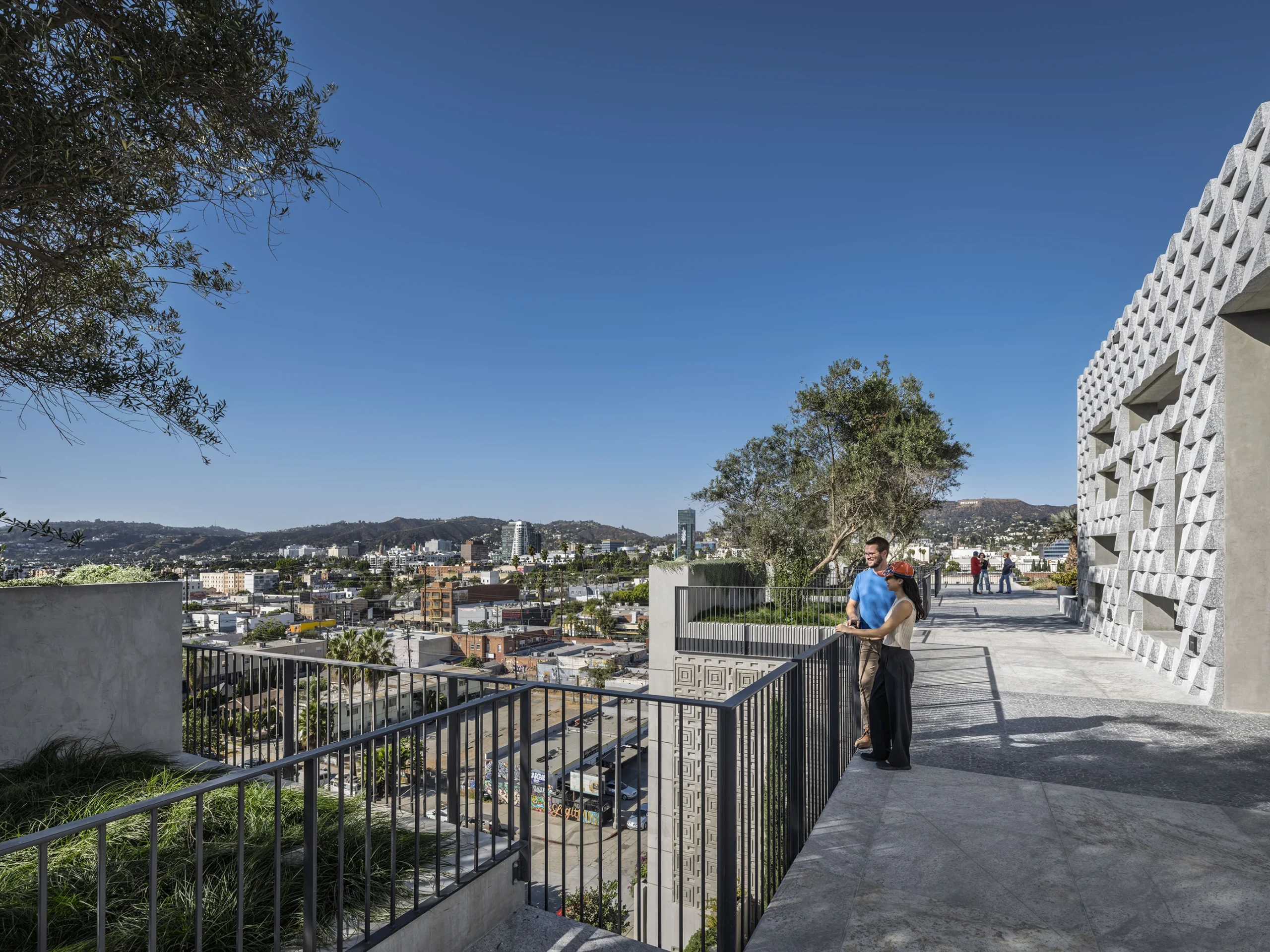
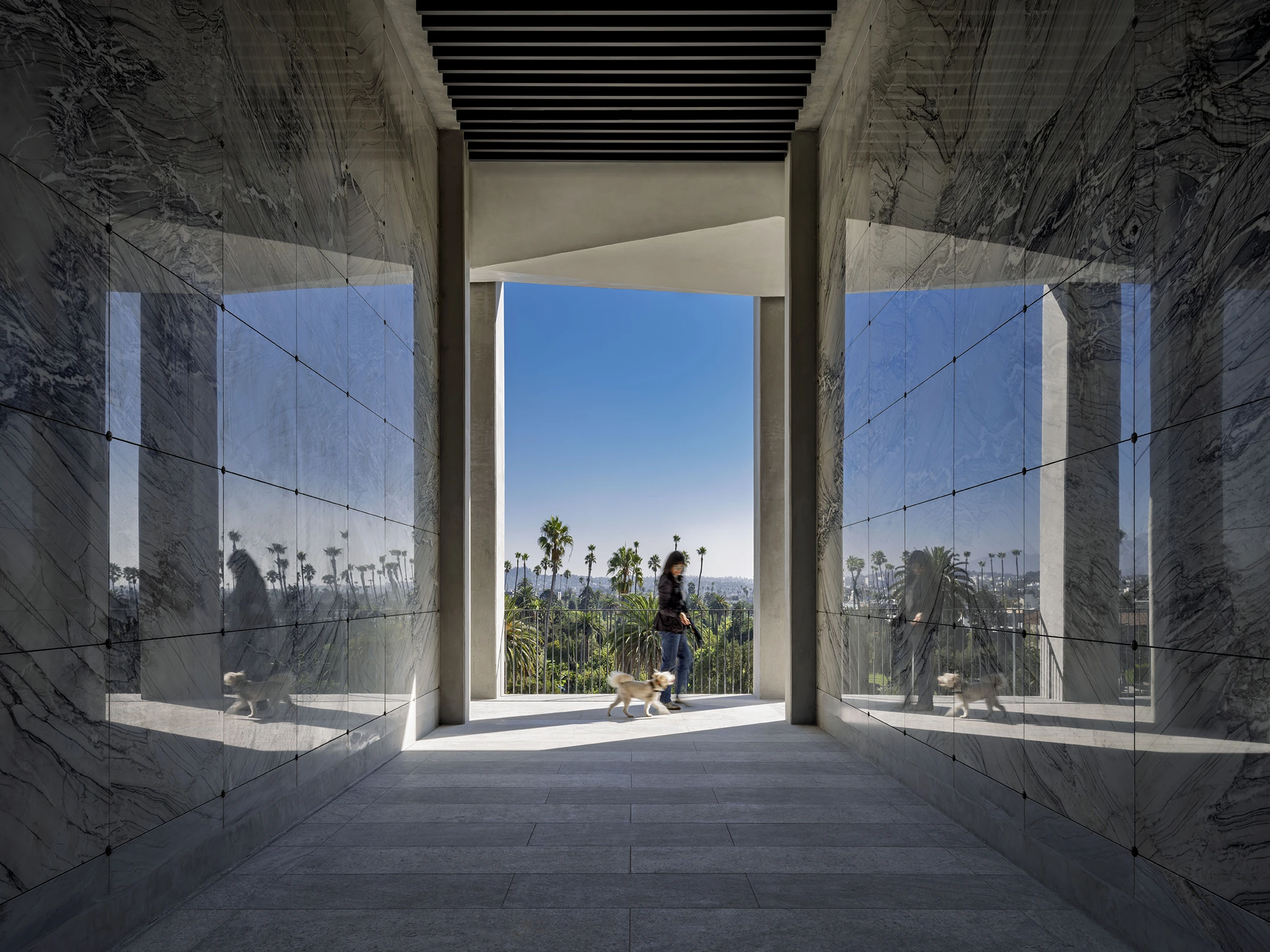
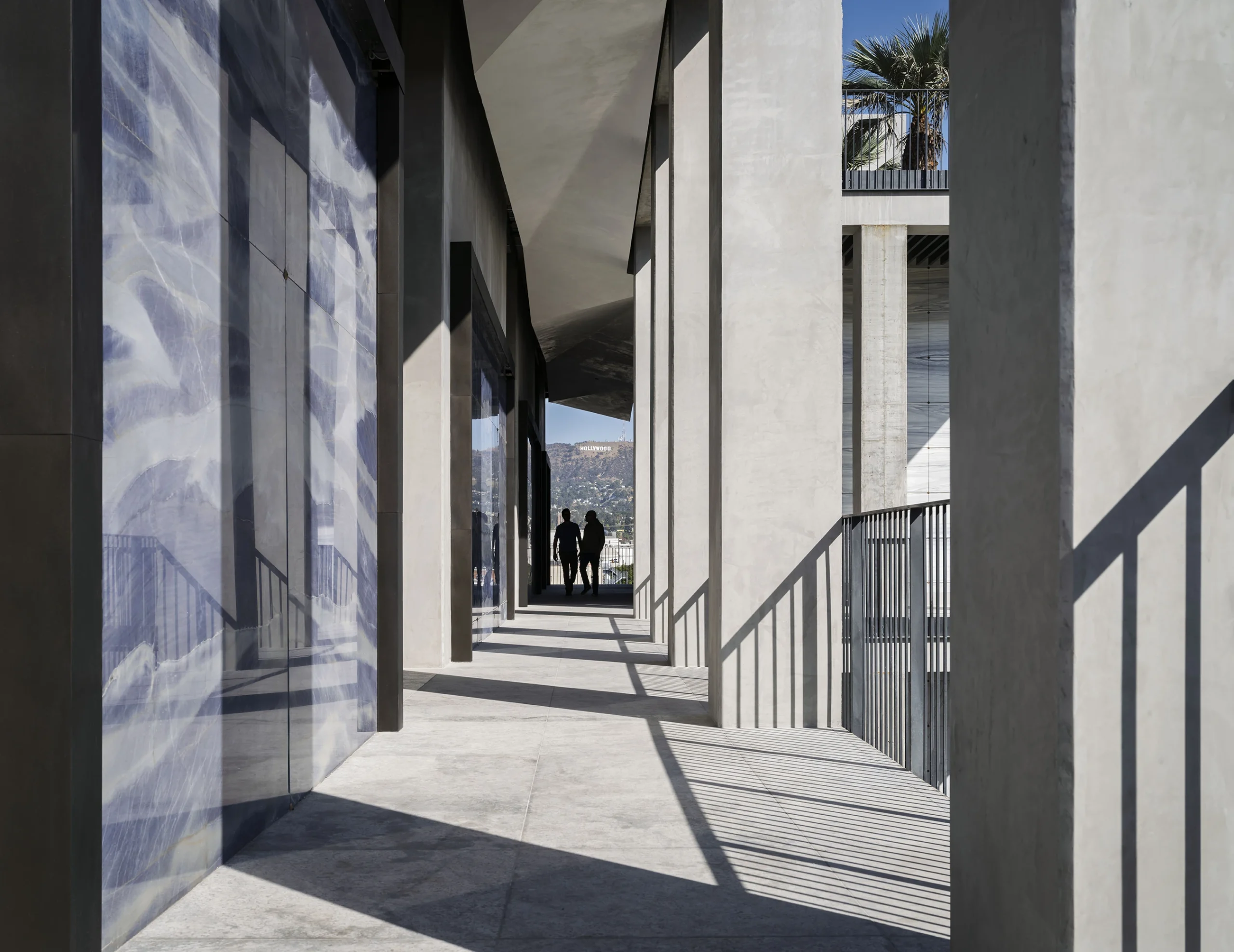
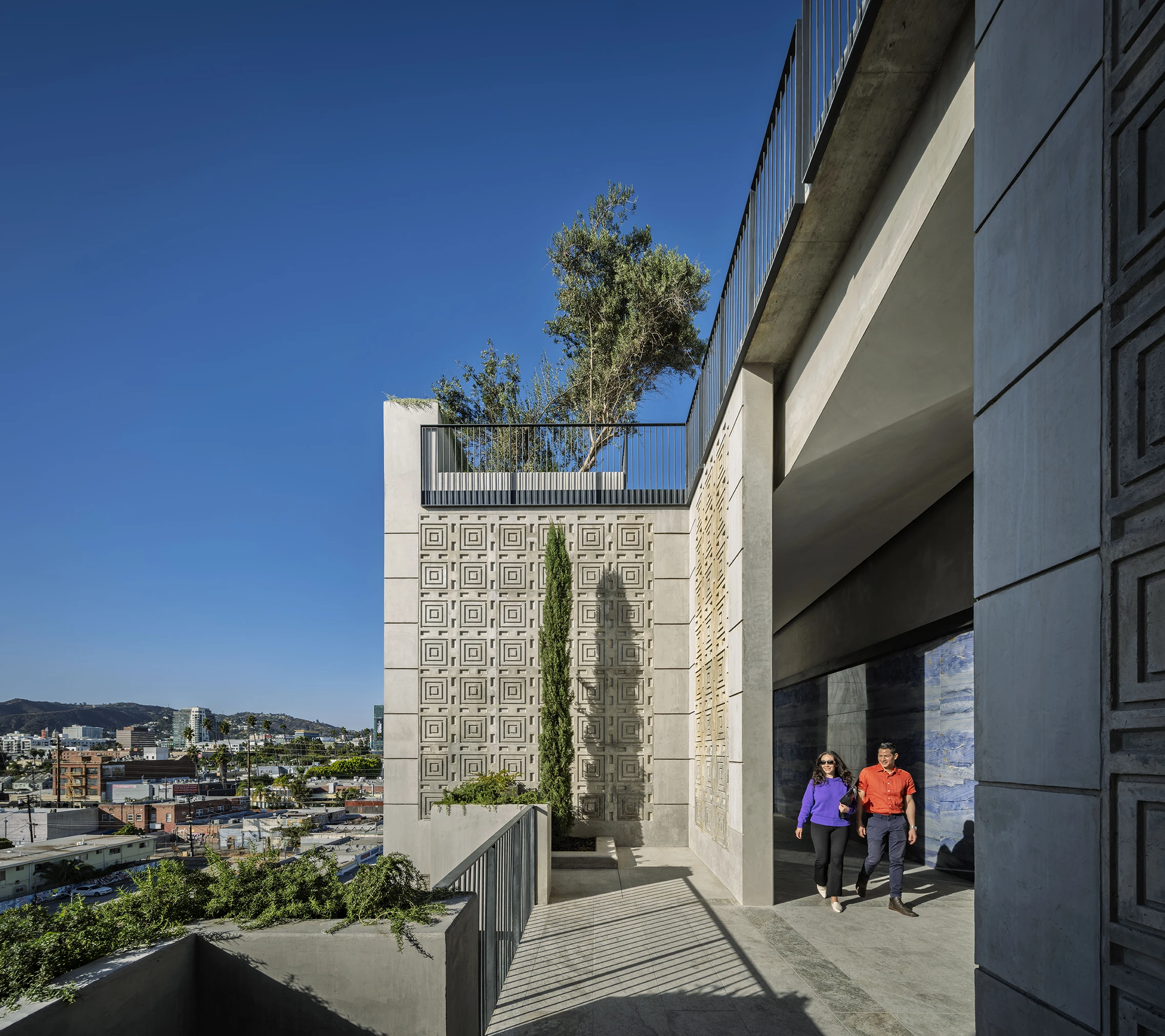
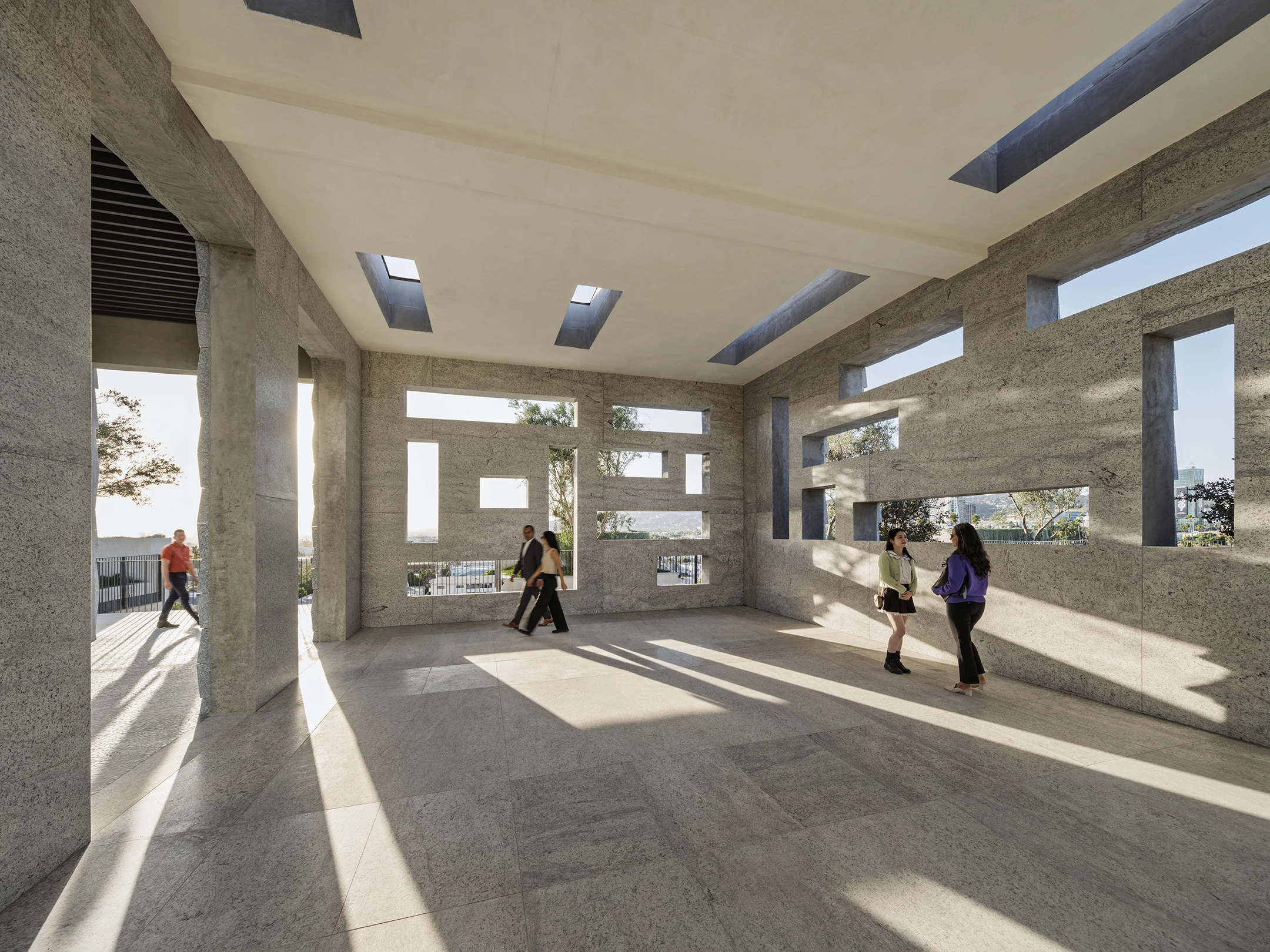
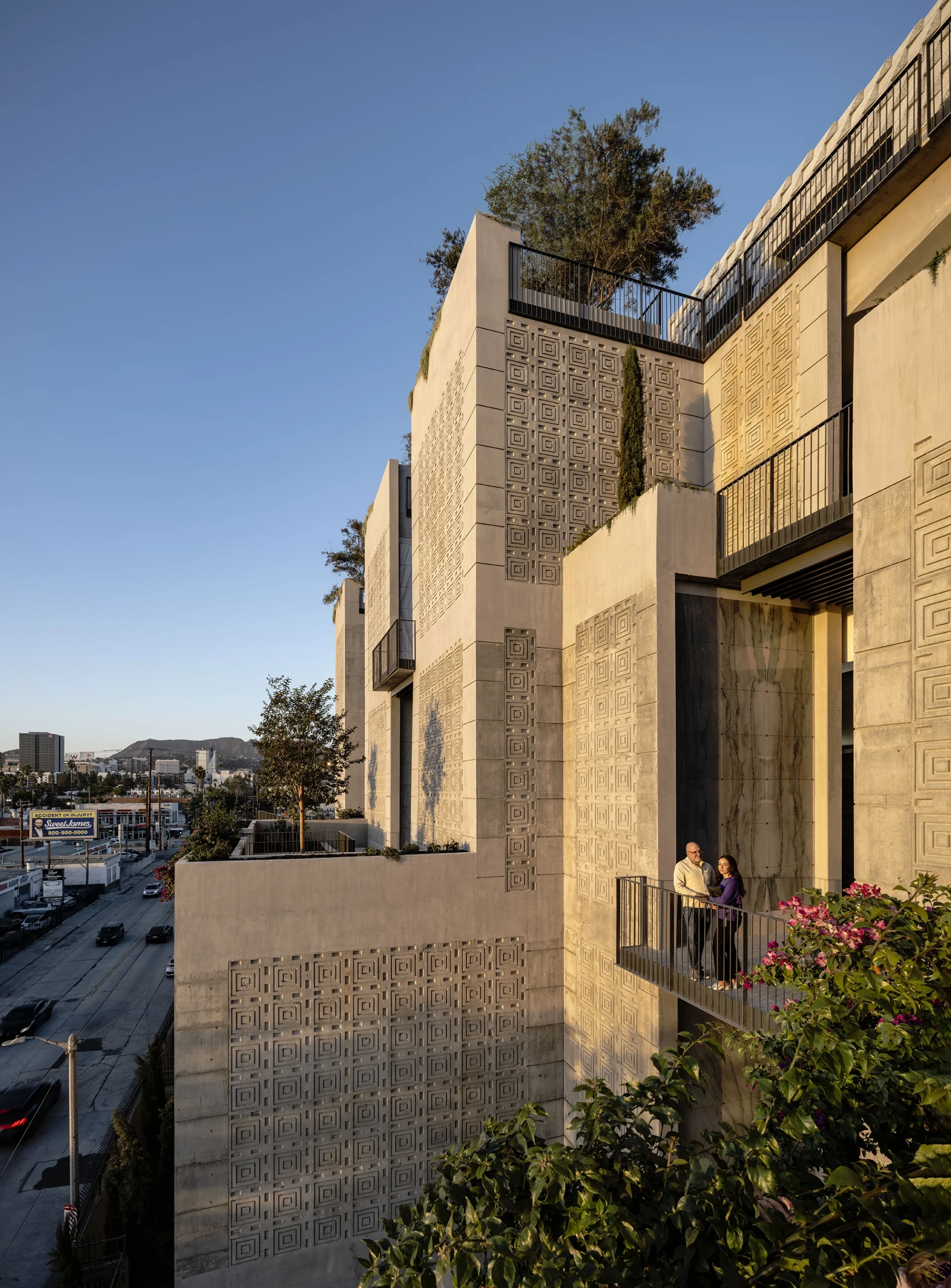
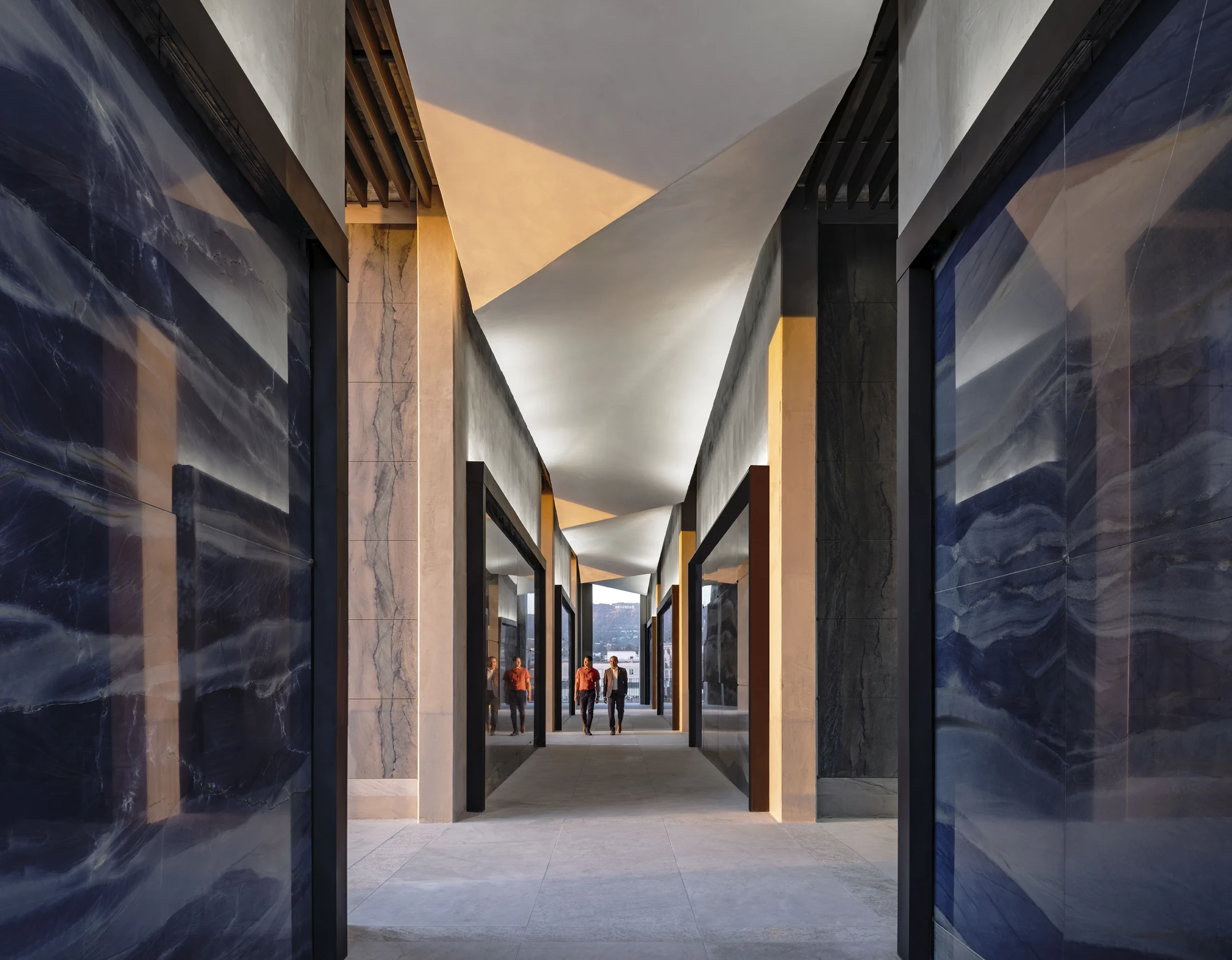
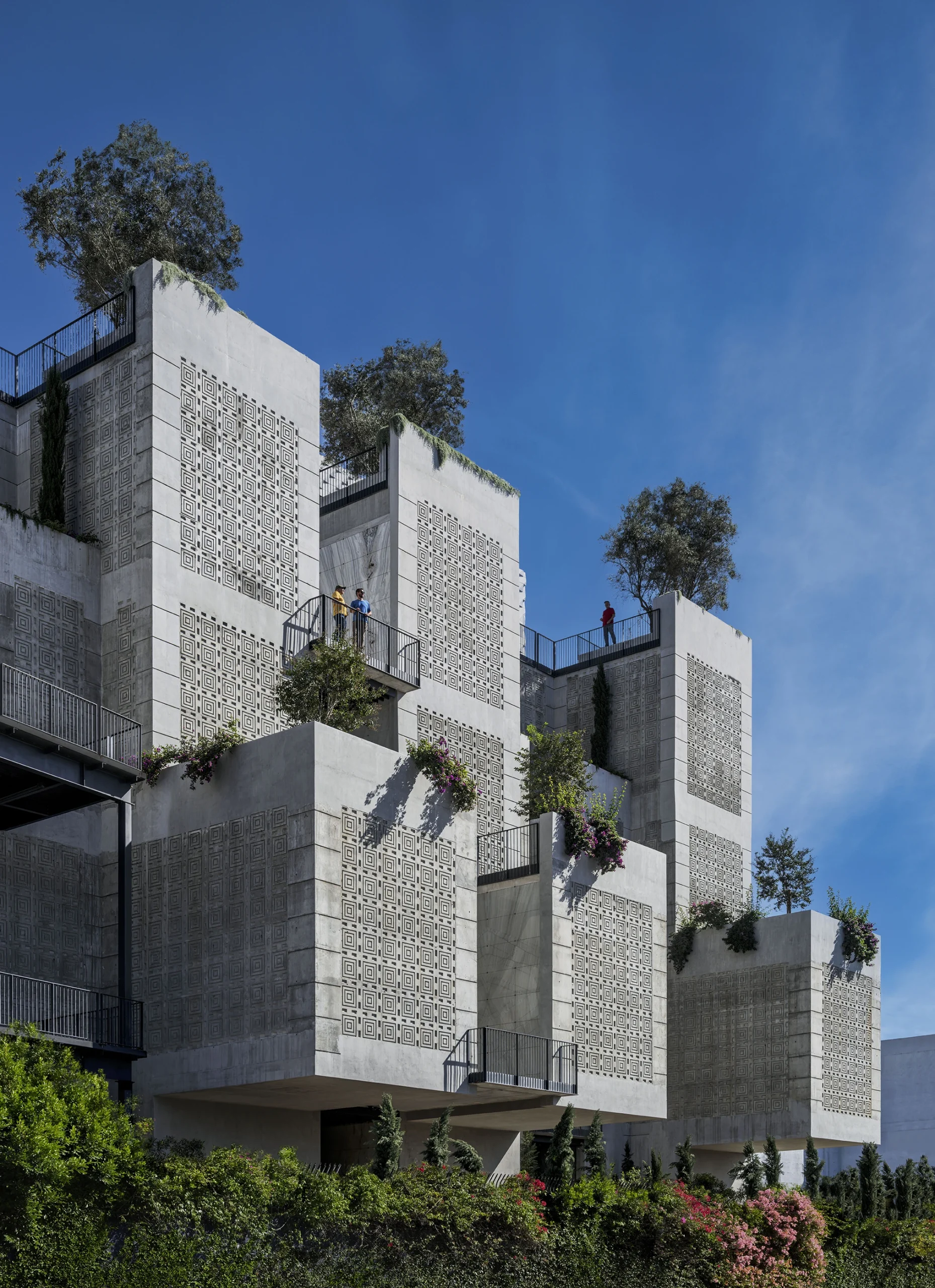
The landmark Gower Court Mausoleum, rising 100 feet above Hollywood Forever Cemetery, serves as a distinctive final resting place for 13,000 individuals. Built from poured-in-place concrete to support the weight of coffins, its large, cantilevered volumes extend over Gower Street, on axis with the Hollywood Sign, offering sweeping views of Los Angeles. The structure supports a mix of crypts and nooks for urns situated on five levels, each soaring 20 feet high. Open passageways invite light and air and create a serene, breezy atmosphere. Lushly planted balconies, courtyards, and terraced gardens extend 20 feet from the building, providing overlooks, generous seating, and a welcoming space for reflection and joy. Gower Court balances monumentality with openness, setting a new standard for vertical cemeteries.

//jury comments

A beautiful, sculptural work of architecture that provides a real, significant, new use to the idea of a mausoleum in an urban environment. It is a welcome addition to this neighborhood in the city.

//framework for design excellence measures
Measure 1: Design for Integration
“While embodying the spirit of designers like Donald Judd and Eduardo Chillida’s simple modernism, the Mausoleum also recalls ancient sites of spirituality like the ziggurats of the Ancient Near East and mastabas from Mexico and Central America. In ultimately aligns with a growing architectural movement often called “eco-brutalism,” which combines the concrete volumes of 20th-century Brutalism with lush vegetation and landscape-focused design. The project’s design excellence addresses rigid regulatory requirements in a building with little to no active building systems. As an entirely open-air experience, the mausoleum has no HVAC system, and its time-clock and occupancy sensor-controlled LED lighting is pared back to minimize energy consumption. The flow-through planters and carefully selected native, drought-tolerant plantings filter the on-site well water used for irrigation, drawing water from the aquifer only to return it. In tandem with the on-site BMP’s, the goal of the project is to detain and reuse water to the greatest degree possible. Design excellence that combines rigid/difficult regulatory requirements in a building with no to little active building systems (HVAC, enclosure, equipment, etc. that use a minimum of power, Plants/water as filtration – from the (well) aquifer to the aquifer. ”
Measure 2: Design for Equitable Communities
The Mausoleum is designed to pay tribute to the site’s deeply rooted history while promoting community. Through collaborative design processes and community outreach initiatives the team engaged local residents, historians, officials and stakeholders in shaping a space that resonates with collective memories and aspirations. Conceived as a topographical landscape — fragmented, stepped and “see-through” — it responds to the community by connecting the neighborhood to the park-like cemetery. Integrating sustainable and inclusive design practices, it provides a tranquil environment where visitors can connect with the past, celebrate life, and community events, fostering a sense of belonging and shared heritage.
Measure 3: Design for Ecosystems
Hollywood Forever Cemetery focuses on blending natural ecosystems within an urban setting. The goal is to achieve a seamless relationship between constructed spaces and natural environments, promoting biodiversity and ecological strength. By utilizing native plants, implementing sustainable water management and rainwater capture, and encouraging habitats for wildlife, the design enhances both the visual appeal and ecological significance of the cemetery and encourages active community engagement. The project aims to highlight the importance of protecting and supporting urban ecosystems, establishing a legacy of environmental care for generations to come.
Measure 4: Design for Water
Hollywood Forever emphasizes the sustainable management and integration of water resources within the urban landscape. This project aims to create a harmonious balance between built environments and natural water systems, enhancing both ecological and aesthetic value. Water for the building is provided from an on-site well that serves the Cemetery grounds without burdening the public water infrastructure. Stormwater management strategies include flow-through planters and an extensive system of detention storage chambers filtering the water to replenish the aquifer. The planting strategies throughout the building include highly efficient irrigation methods carefully designed for the different types of planting, planters and locations.
Measure 5: Design for Economy
Inherent in the conception of the project the design team considered resources, vendors, material sources, artisans and technologies already in place at the Cemetery, leveraging them for efficiencies and cost savings – such as utilizing the expert stone mason on staff that crafts tombstones and other elements to install the custom granite block façade of the rooftop columbarium. In addition, a uniquely qualified in-house construction crew was established. The crew – as well as the reusable crypt formwork and other equipment – will continue work on subsequent phases of the Mausoleum further amortizing the initial cost.
Measure 6: Design for Energy
Hollywood Forever emphasizes integration of sustainable energy solutions, creating a building with virtually no enclosed spaces, the open-air structure is drenched with fresh sea breezes and natural light and does not require significant systems or energy consumption to operate. Fully naturally ventilated, there are no active Mechanical systems. The spaces’ openness allows for an approach that relies on daylight that bounces and reflects deep into the building by polished stone crypt fronts and the folded planes of the circulation hallways ceiling. Hot water is provided locally with small tankless heaters at the restrooms; no other hot water system is required.
Measure 7: Design for Well-Being
The naturally ventilated and daylit project nurtures the well-being of all visitors, whether family of the deceased or tourists to Hollywood and Los Angeles. As an increasingly lush topographical landscape rising on axis with the Hollywood Sign, it is designed for the well-being of Hollywood and Los Angeles as nurturing communities that honor, celebrate, and ultimately monumentalize the full cycle of life, while contributing to cleaner air and a greener city.
Measure 8: Design for Resources
Phase 1 construction of 4.5 years defines an approach to constructing the following phases. The building is mainly a significant cast-in-place concrete structure, by regulations. With cast texture finishes it does not require additional finishes or processes. The remainder of the materials for crypt fronts, paving, benches and cladding are a selection of natural stones – granites and quartzites as they are to last “forever” with minimal maintenance, replacement or refinishing. Alternative options were considered, but given regulatory requirements and the duration of 3-phase construction and the buildings’ life expectancy benefits of Concrete and Natural Stones outweighed other considerations.
Measure 9: Design for Change
The client base for the Cemetery has seen significant shifts of cultures, population, needs. Though inherently a typology that embodies permanence, remembrance and a deep sense of place, the Mausoleum provides varying cultural and financial options for internments and memorials. Design and planning strategies incorporated allow for future adaptability, growth and change. With a shift away from Crypt spaces to more Niches, there is a planned ability to add a great number of them as-needed. The deep planter areas throughout the building terraces and roof garden have been conceived to allow for Urn in-ground “garden” internment as future options.
Measure 10: Design for Discovery
By expanding vertically, the completed 3-phases of the mausoleum will avoid disturbing 25 acres of ground space establishing a new typology that promotes change within the industry. The open space throughout the Mausoleum not only provides a highly efficient and cost-effective alternative to Mechanical systems, but coupled with the abundant terraces, gardens and estates, creates an experience of discovery, of unique spaces bathed in sunlight and ocean breezes in the center of Hollywood with vistas of the iconic Hollywood sign and other L.A. landmarks and landscapes.
Skip to content