
Mar Vista House No. 1

HRD MVH img dpi copy featured

On a small secluded West Los Angeles lot surrounded by dense vines and trees, a small post-war bungalow is wholly transformed into an indoor-outdoor entertaining space for a creative couple, their twin children and dog.

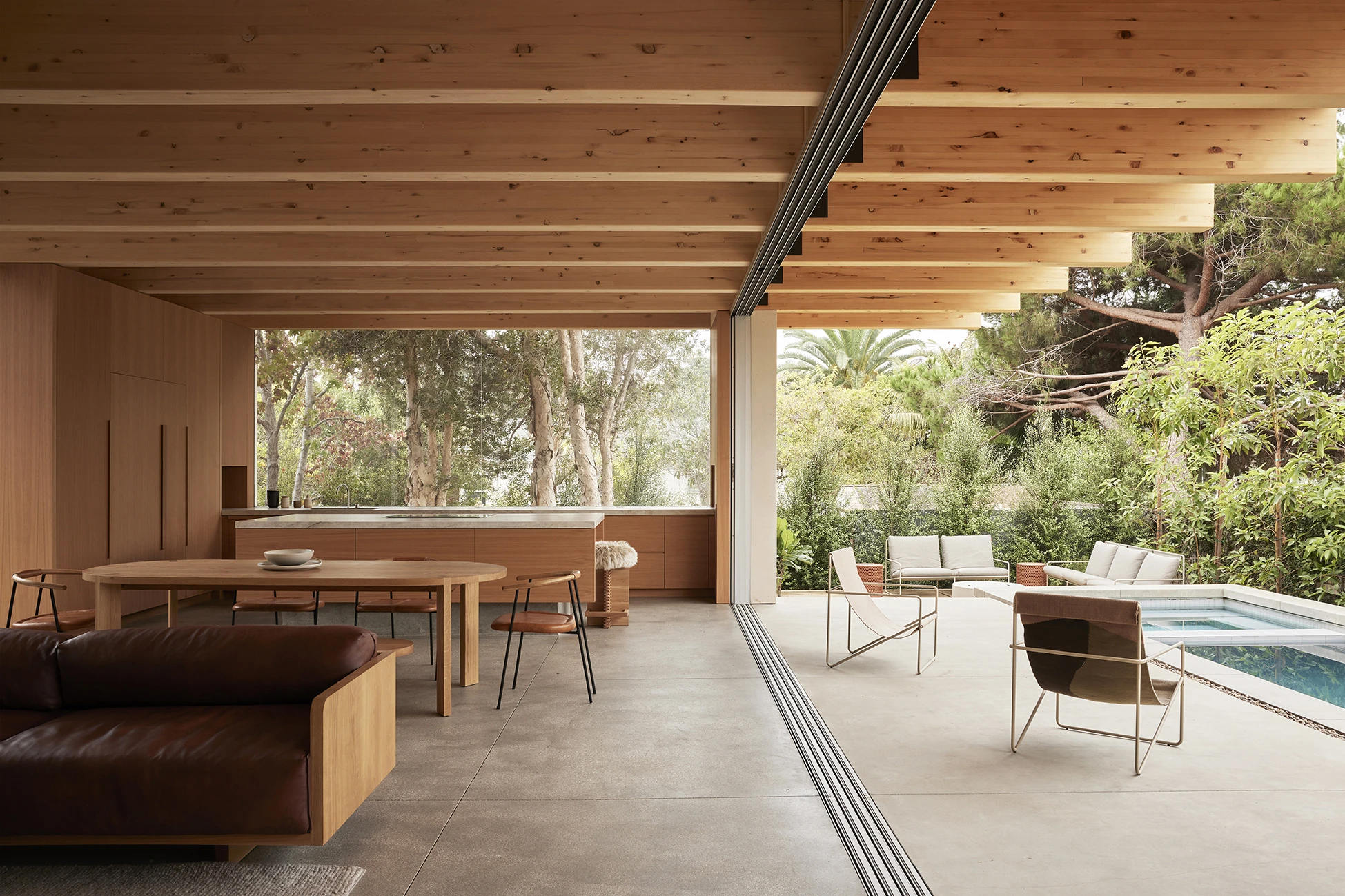
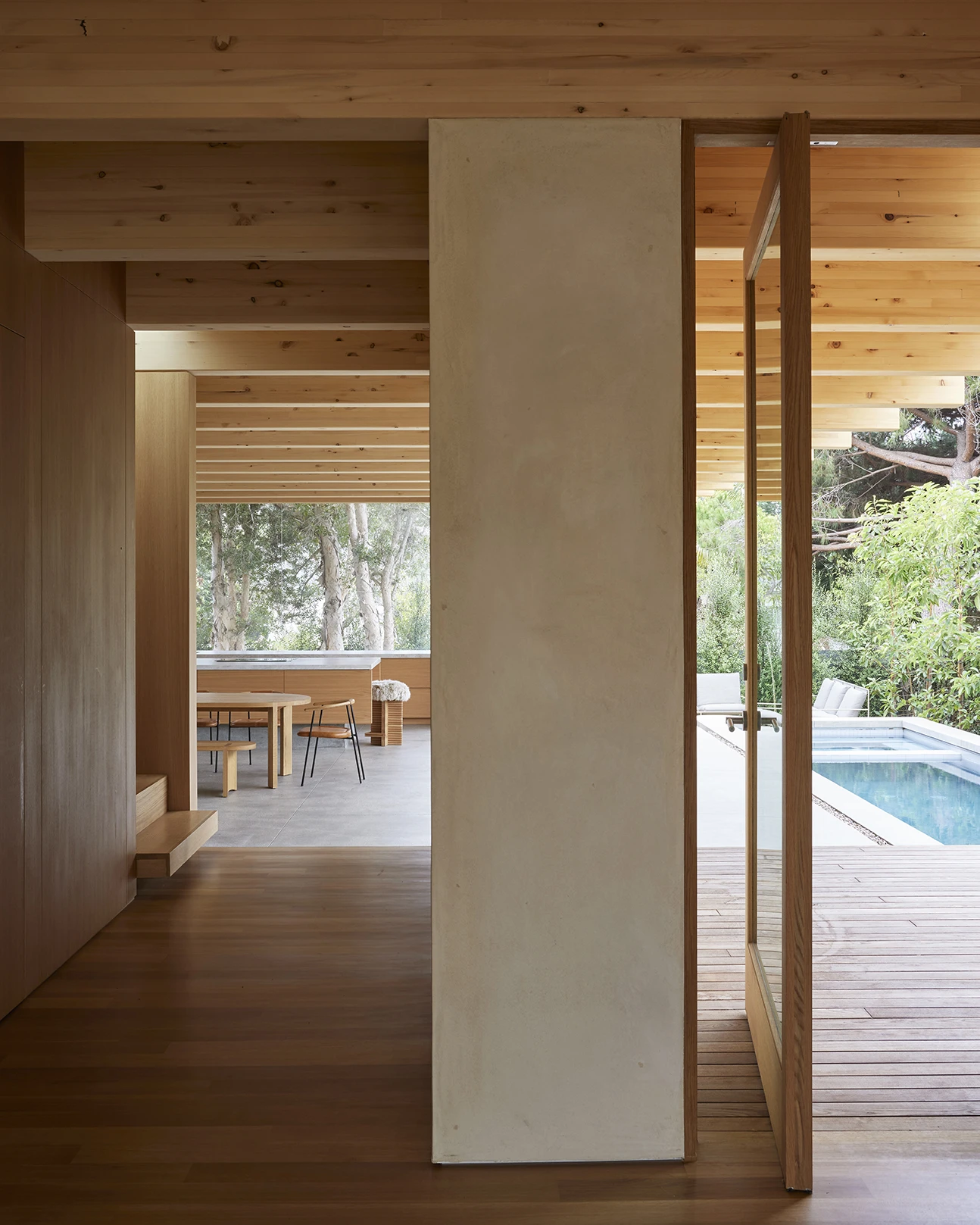
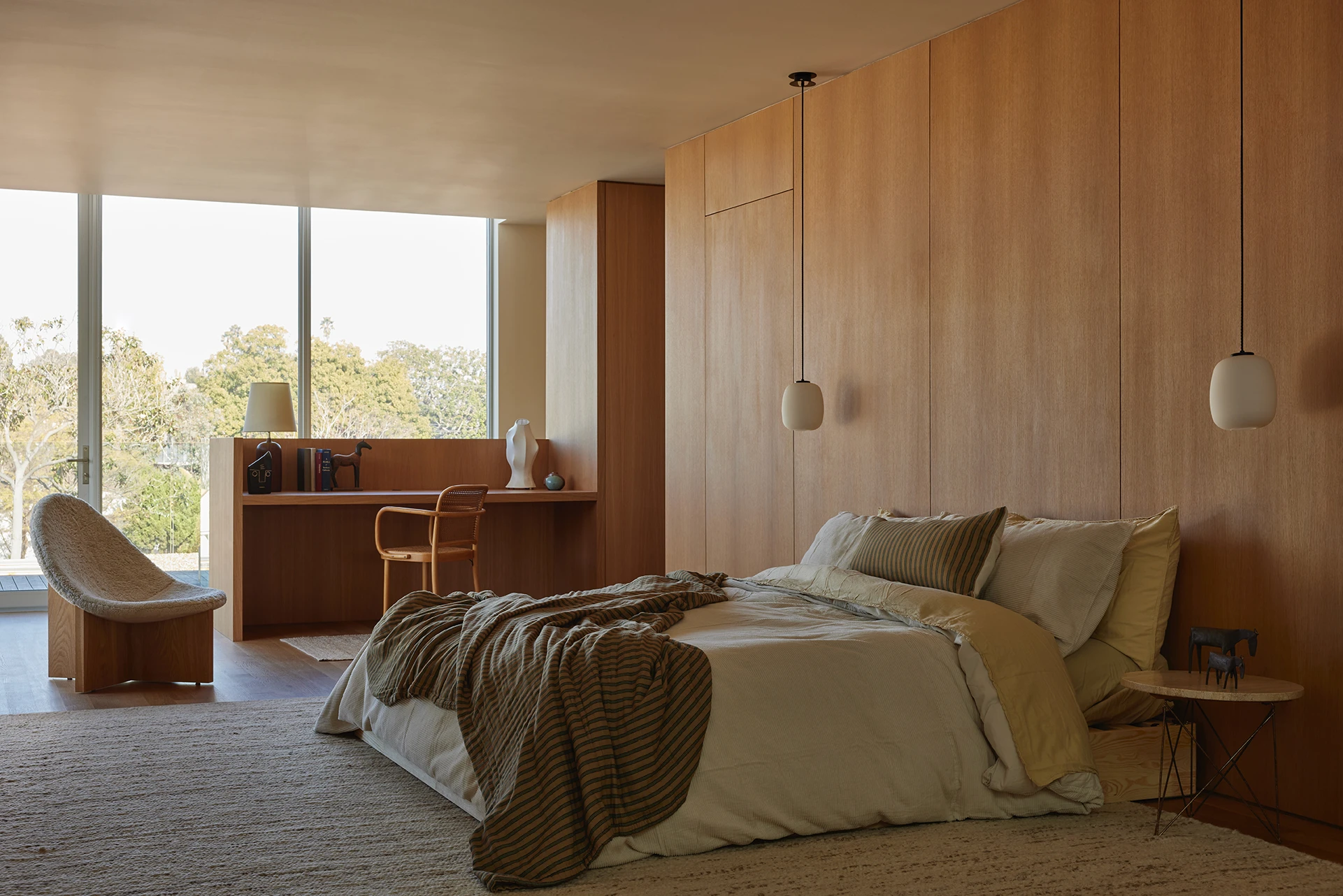
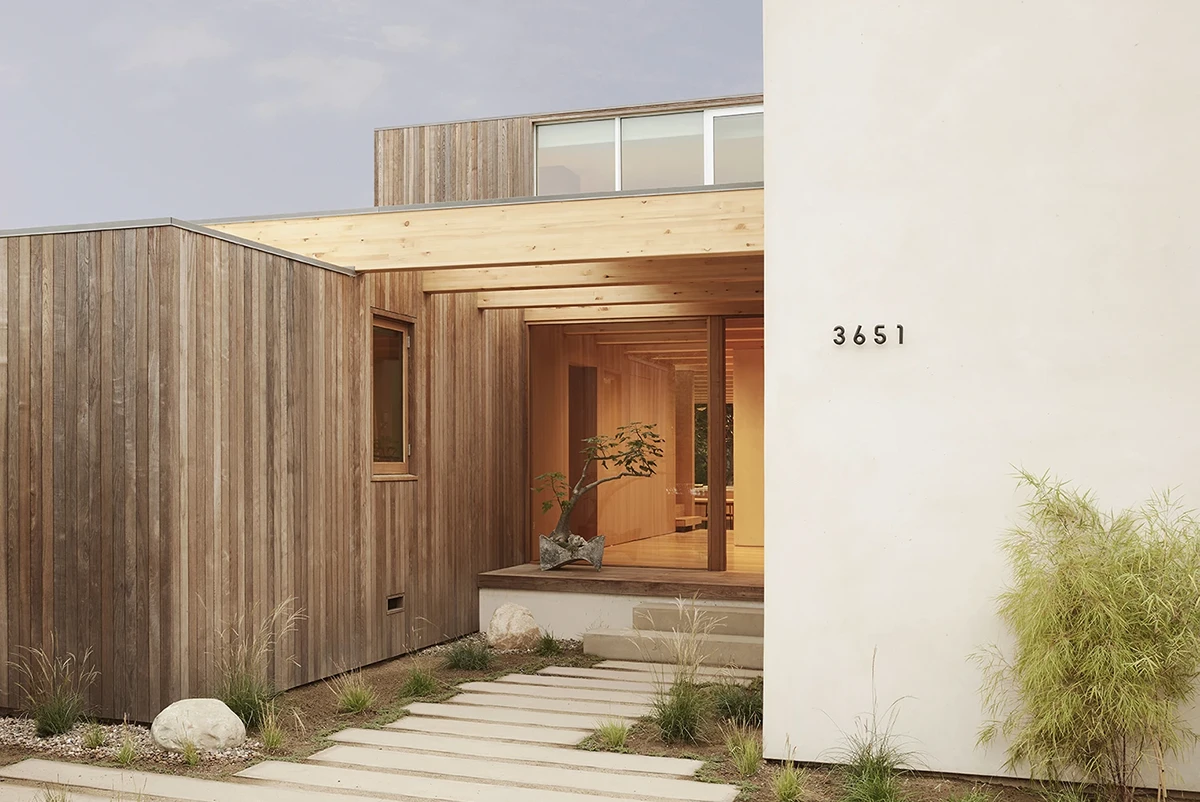
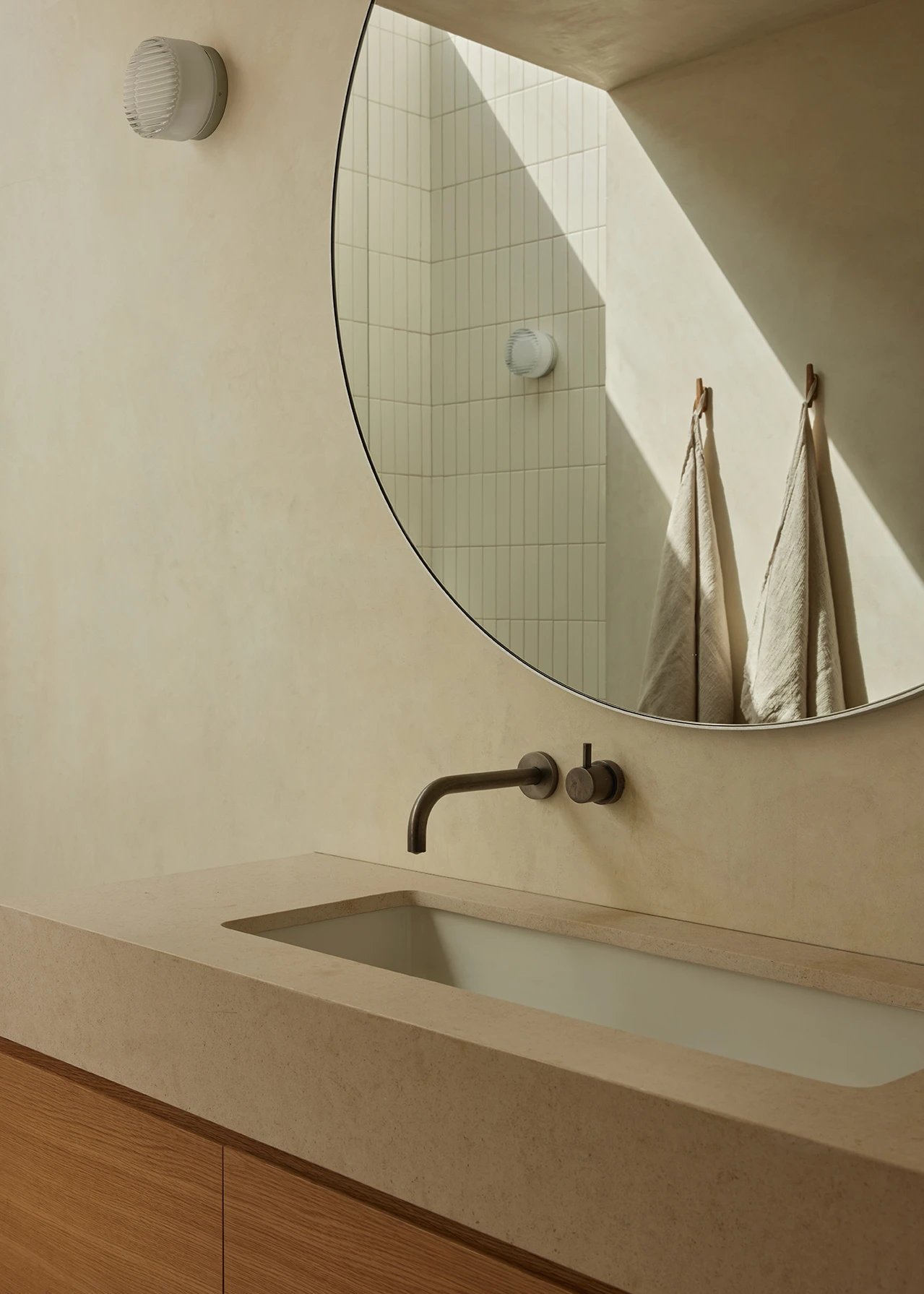
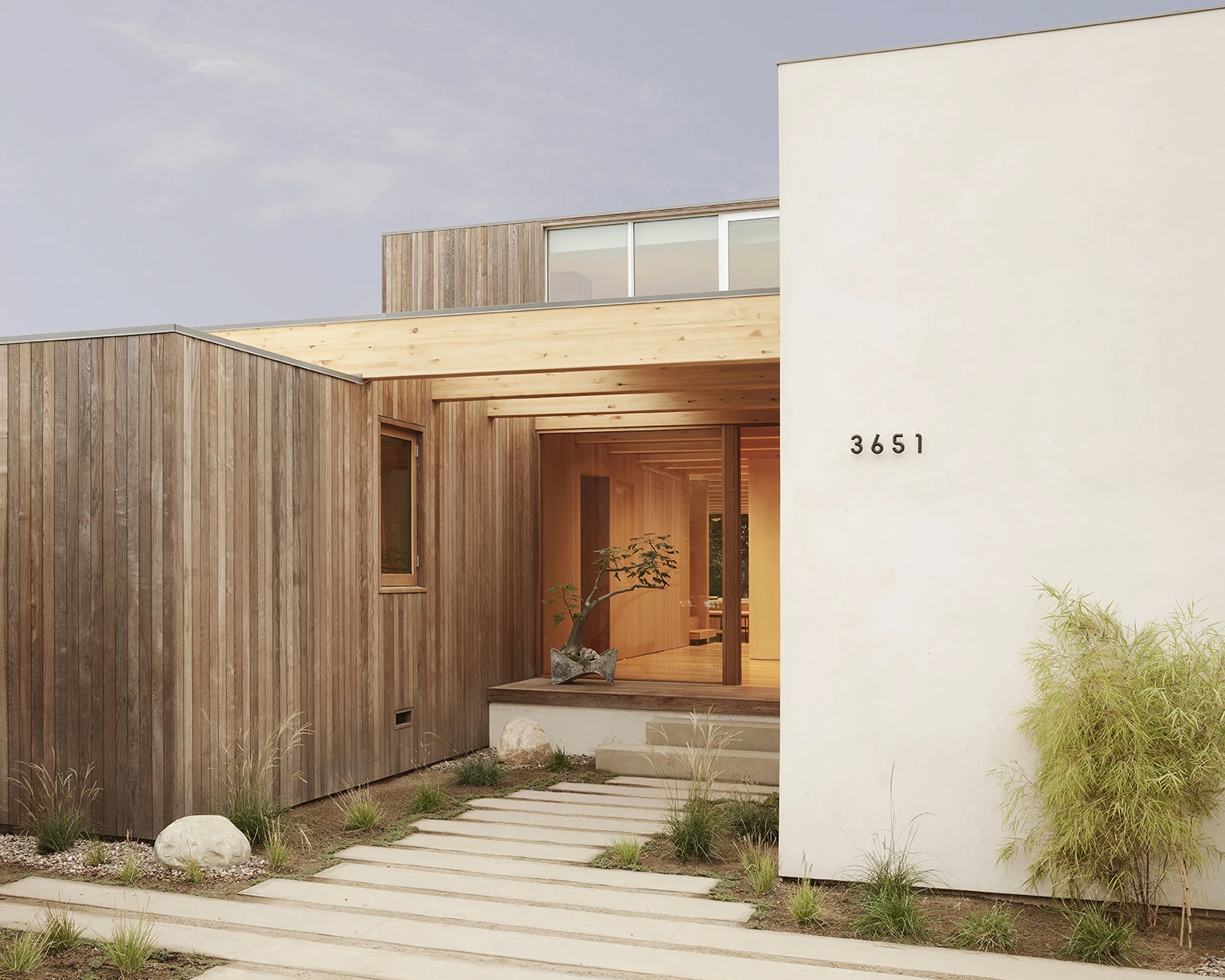
A mandate to avoid drywall is met through the use of wood and concrete finishes and large expanses of sliding glass. The project is organized around a rhythmic layer of heavy beams running from front to back and blurring the line between inside and out. Surrounding the beams are essentially three private volumes; the children’s bedrooms on one side, an ADU on the other, and a primary suite above. Common living space is consolidated and situated at the rear of the property, below the beamed canopy and amongst the landscape. The beams lead one through a small entry court and into a central mixing chamber, where all spaces can be accessed, but where the outdoor patio and pool almost beckon the visitor to proceed to immediately. The compression that occurs at the entry and corridor are rewarded with a sense of openness and lightness upon arriving at the indoor-outdoor living space. Despite their size and heft, the beams never feel oppressive. Because they are hung from above, the removeable barrier between inside and out is reduced to a thin slider track and the beams almost hover above the space like an umbrella. The stair slips between two beams, enabling access to the primary suite above and a chance to feel the beams as one passes through to above.

Despite it’s small size, the house feels open, airy and connected to the outdoors, while still providing cozy, intimate private spaces tucked away yet still easily accessible.

//jury comments

The design stands out for its simplicity and elegance. A simple but beautiful tectonic concept using the grain of the glulam beams to organize the plan as well as the expression of interior spaces, and the continuity of indoors to outdoors.
//framework for design excellence measures
Measure 1: Design for Integration
The project leans on two main sustainable components; the use of wood as a structural and finish material throughout, and the use of natural daylighting and ventilation to regulate and reduce energy consumption and maintain a healthy relationship with natural cycles and rhythms. Glulam beams, T&G structural decking and siding, wood panel cabinetry and wall finishes, and wood flooring are all used for their low-carbon footprint and for the warmth, naturalness, and a softness they emit. Large operable doors and windows and deep covered overhangs allow the users to take advantage of the Southern California climate and live much of the year without the use of heating or cooling. Solar photovoltaics and all-electric appliances eliminate the use of fossil-fuels and reduce the project’s carbon footprint further. Stormwater capture and reuse for the low-water planting palette reduces the water-use as well.
Measure 2: Design for Equitable Communities
As this is a single-family residential project, community input was not saught in the design process. The architect and client relied on zoning code requirements to dictate project relationship with regards to massing, height, etc.
Measure 3: Design for Ecosystems
The project uses low-water vegetation and porous ground surface materials. There was a specific effort made to protect and maintain the existing vegetation around the site, including vines growing on site walls, and existing trees in the rear yard and parkway.
Measure 4: Design for Water
The project does not go beyond code requirements for water conservation.
Measure 5: Design for Economy
The architect and the client chose to build the project below the maximum floor area allowed specifically to maximize outdoor space; opting for a smaller house with higher quality finishes and space, better outdoor space and a stronger connection between indoor and out.
Measure 6: Design for Energy
Large overhangs were utlized at the large glazed openings to reduce direct sunlight. All spaces were designed to have operable openings at two ends of each room for natural ventilation and tempurature regulation. Inaccesible roof areas were all utilized for the solar PV system.
Measure 7: Design for Well-Being
Large overhangs were utlized at the large glazed openings to reduce direct sunlight. All spaces were designed to have operable openings at two ends of each room for natural ventilation and tempurature regulation.
Measure 8: Design for Resources
The project utilized glulam beams as a major structural and design feature – taking advantage of the large spans to reduce the use of steel significantly. T&G decking was utilized in the other direction, enabling longer spans than typical plywood sheathing and allowing for larger spacing between beams, further reducing material use. Beams were prefabricated to fit, reducing construction waste. Beams and wood were sourced from western sawmills, ensuring relatively low transportation and shipping requirements.
Measure 9: Design for Change
The JADU was designed for maximum flexibility to be used as a separate unit, or to be used by the family as an easily adaptable flex space. A large barn door allows the space to be made open to the main house, or easily separated.
Measure 10: Design for Discovery
The use of wood was specifically chosen for the warmth it provides, and low embedded carbon, but also because the natural aging process of wood enables the building to constantly change over time from the impact of the sun and rain. This sense of age and change was chosen for the specific beauty, delight and sense of discovery it provides.
Skip to content