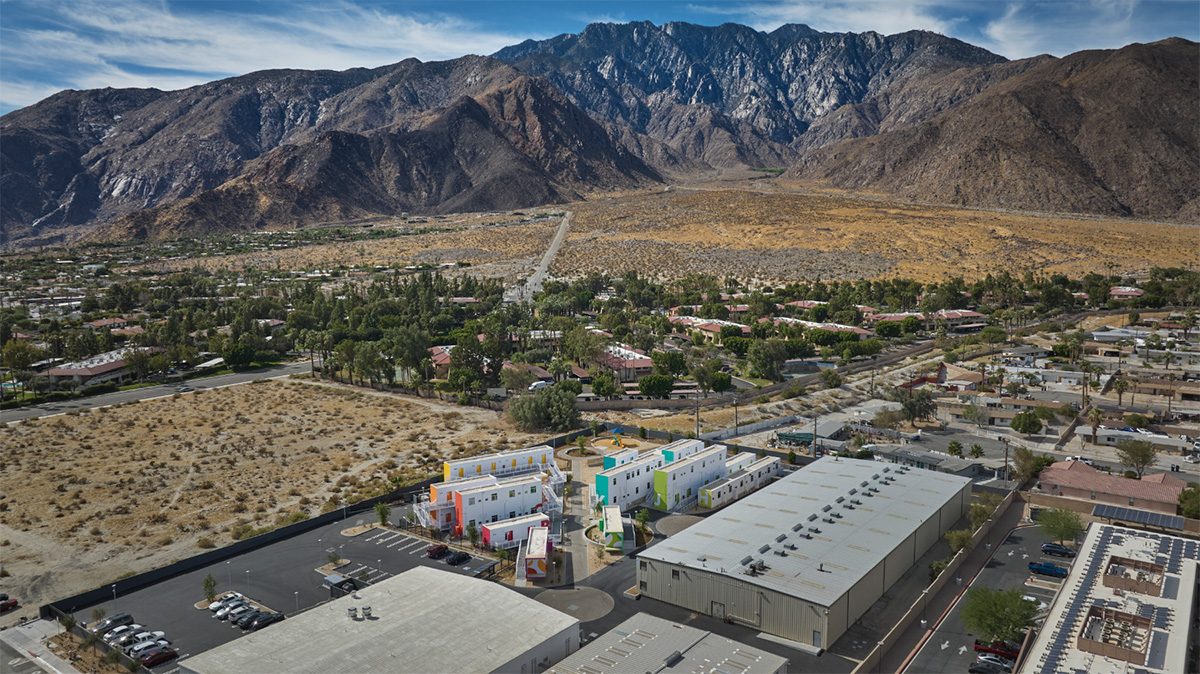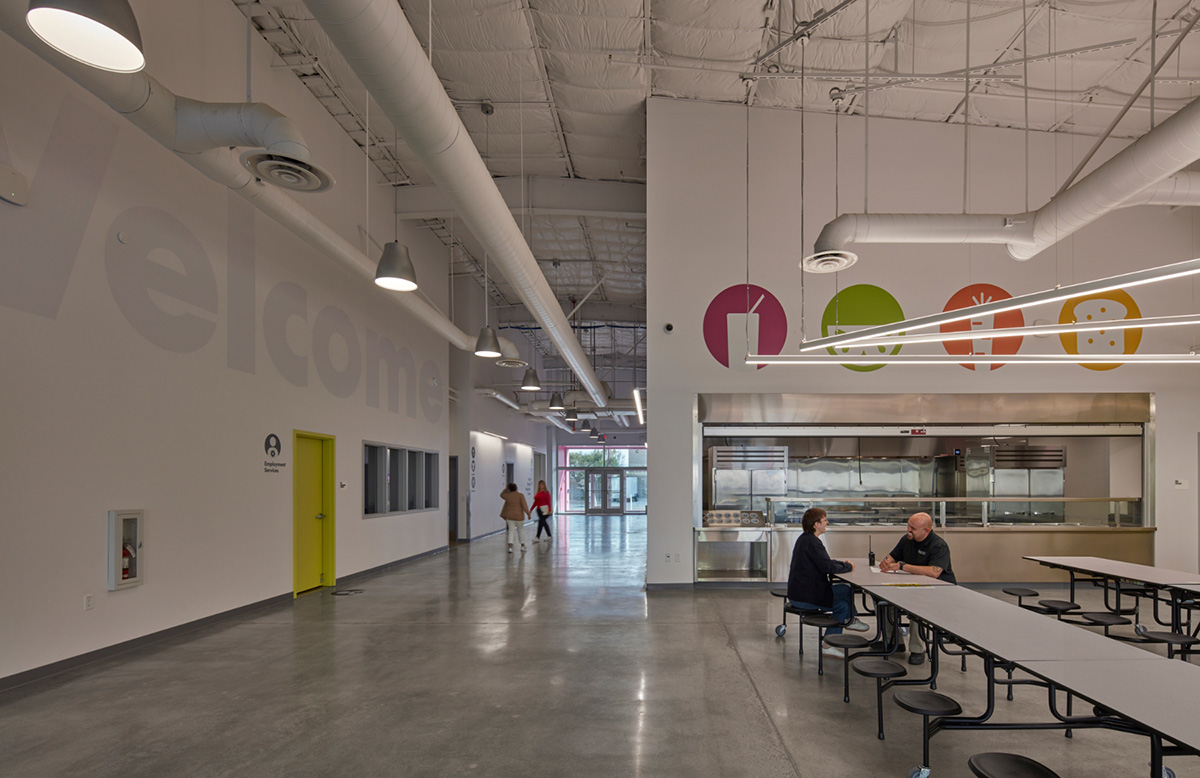

An underutilized site was transformed into the vibrant new Palm Springs Homeless Navigation Center. 80 transitional residences to served unhoused individuals and families are contained in modular pre-fabricated buildings. A 50-bed overnight shelter along with case management, job training, dining, laundry, and other services are housed in two renovated warehouses. Outdoor public spaces unify all elements, fostering community and a sense of belonging. The City of Palm Springs, facility operator Martha’s Kitchen and Village, and local residents provided programming and community input. Funding is by California’s HomeKey Program, City of Palm Springs, and Riverside County.
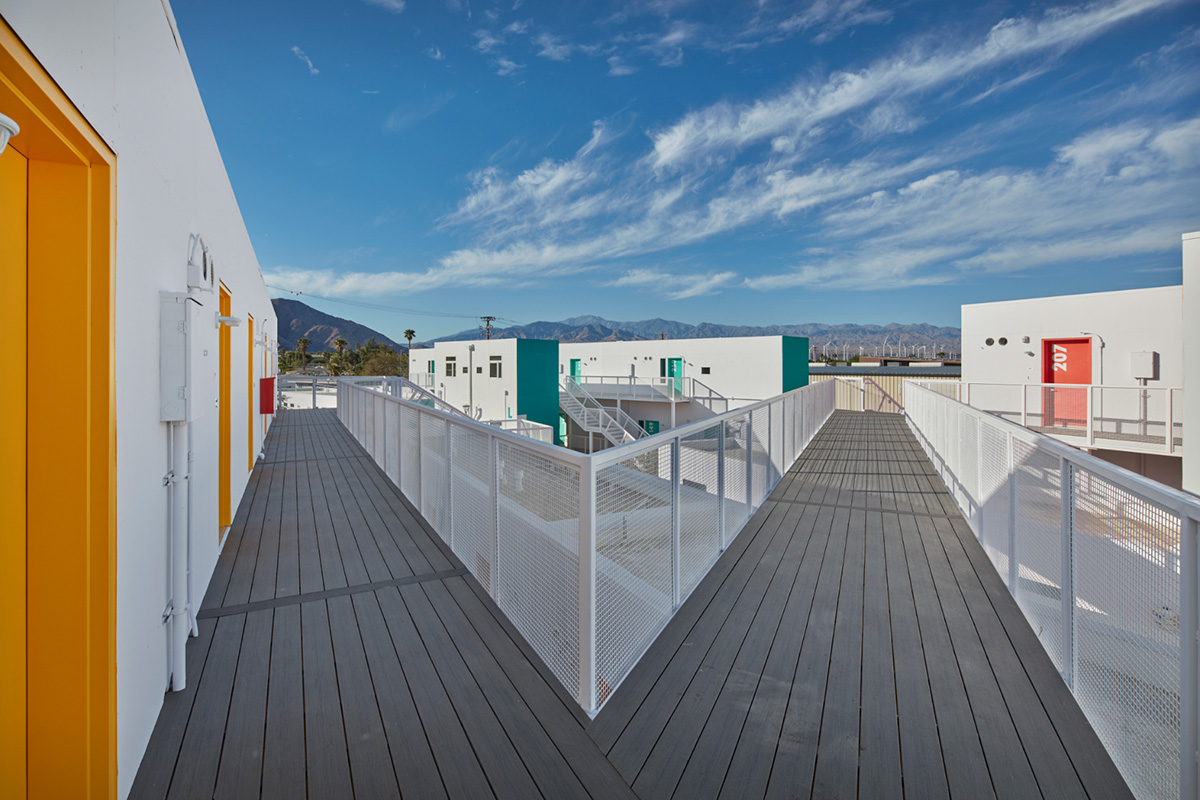
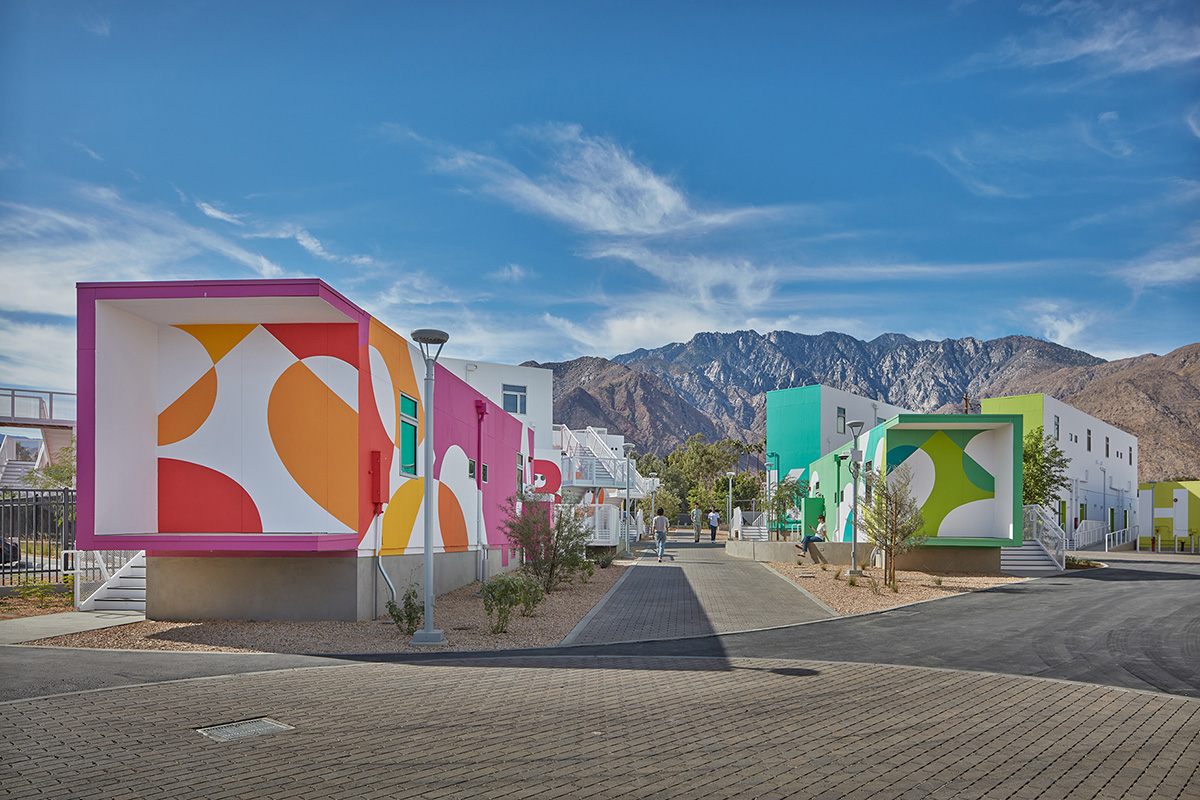
Situated on a sloping desert site with stunning mountain views, the Center eschews traditional notions of how facilities serving our unhoused should appear. It embraces an extroverted design that is inclusive and welcoming. The resultant campus-like setting provides generous exterior and interior public spaces in addition to the privacy and dignity of the residential sanctuaries.
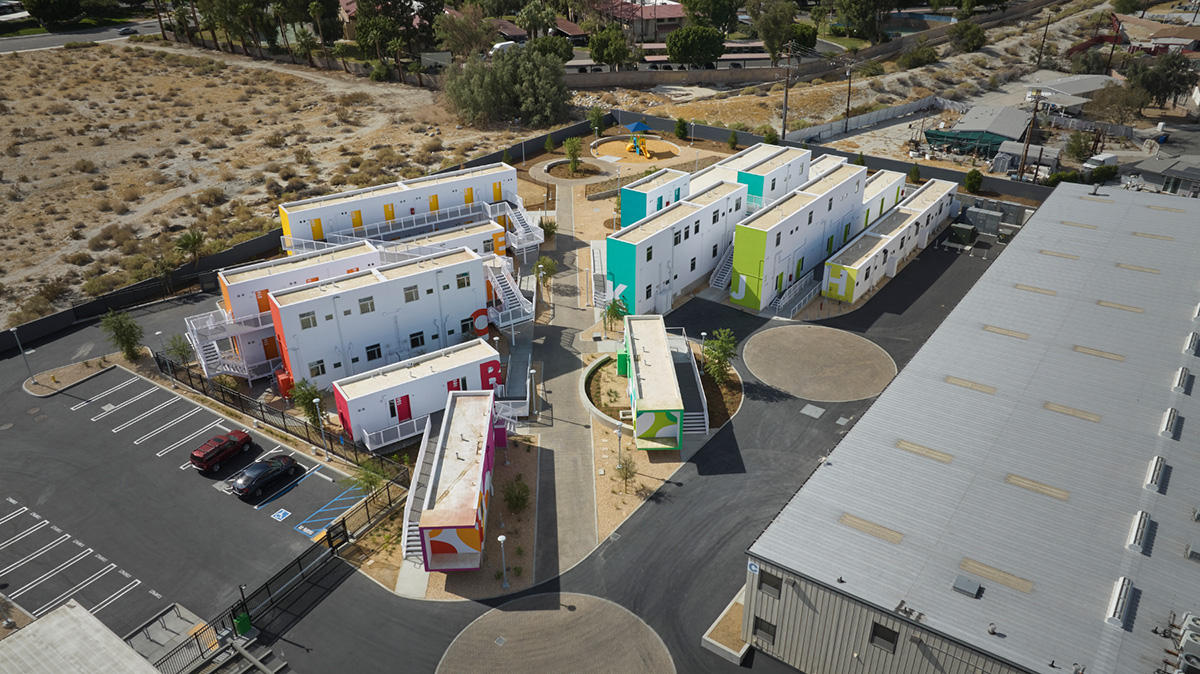
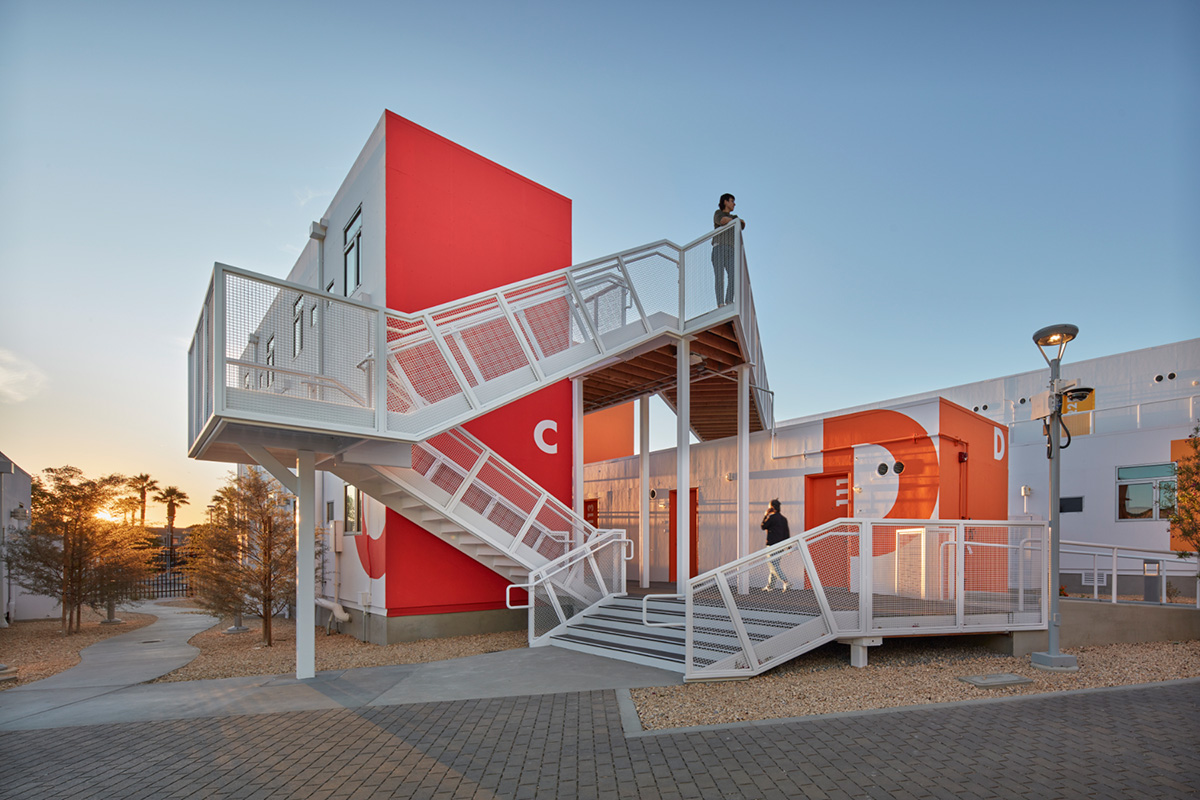
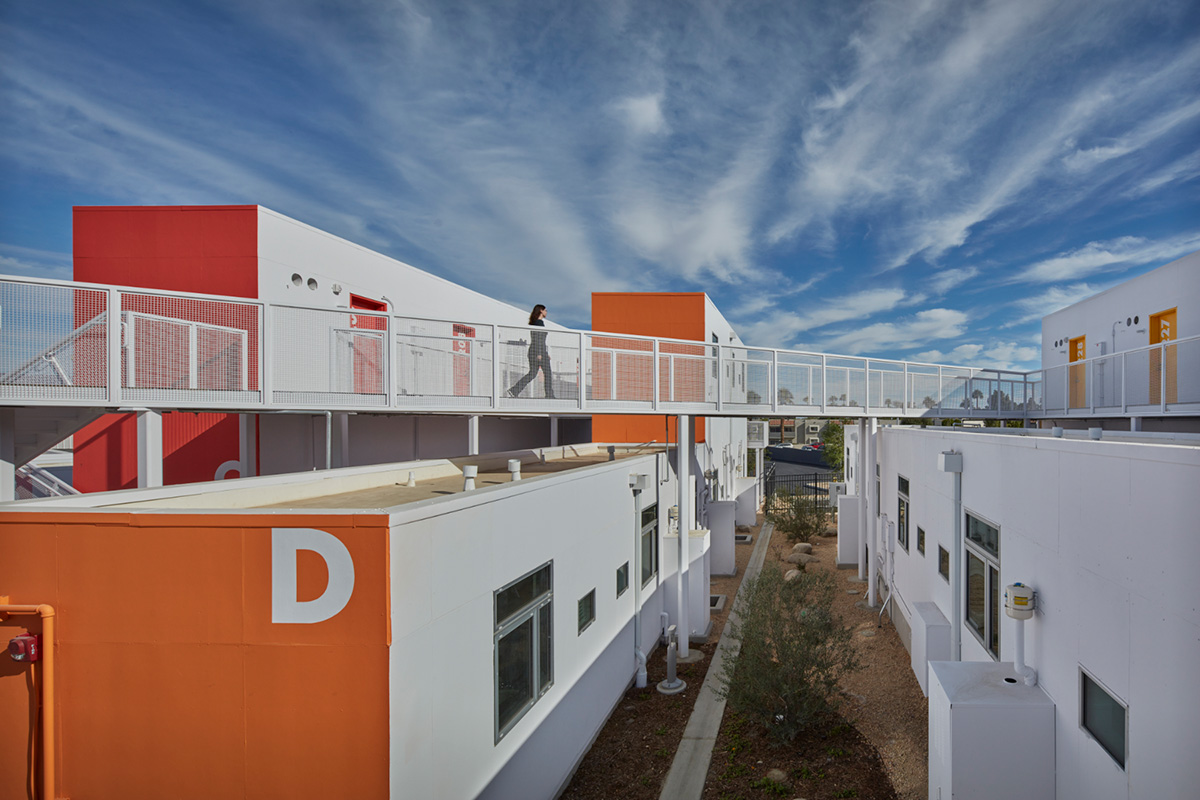
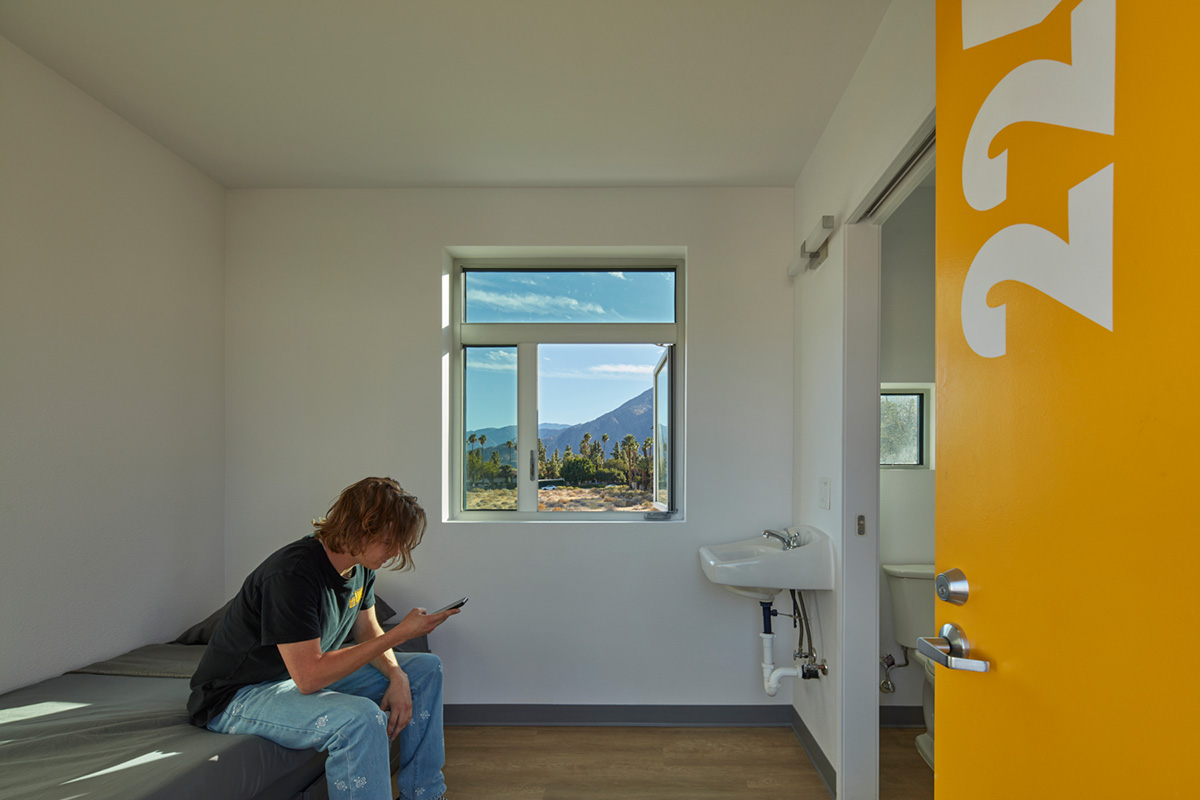
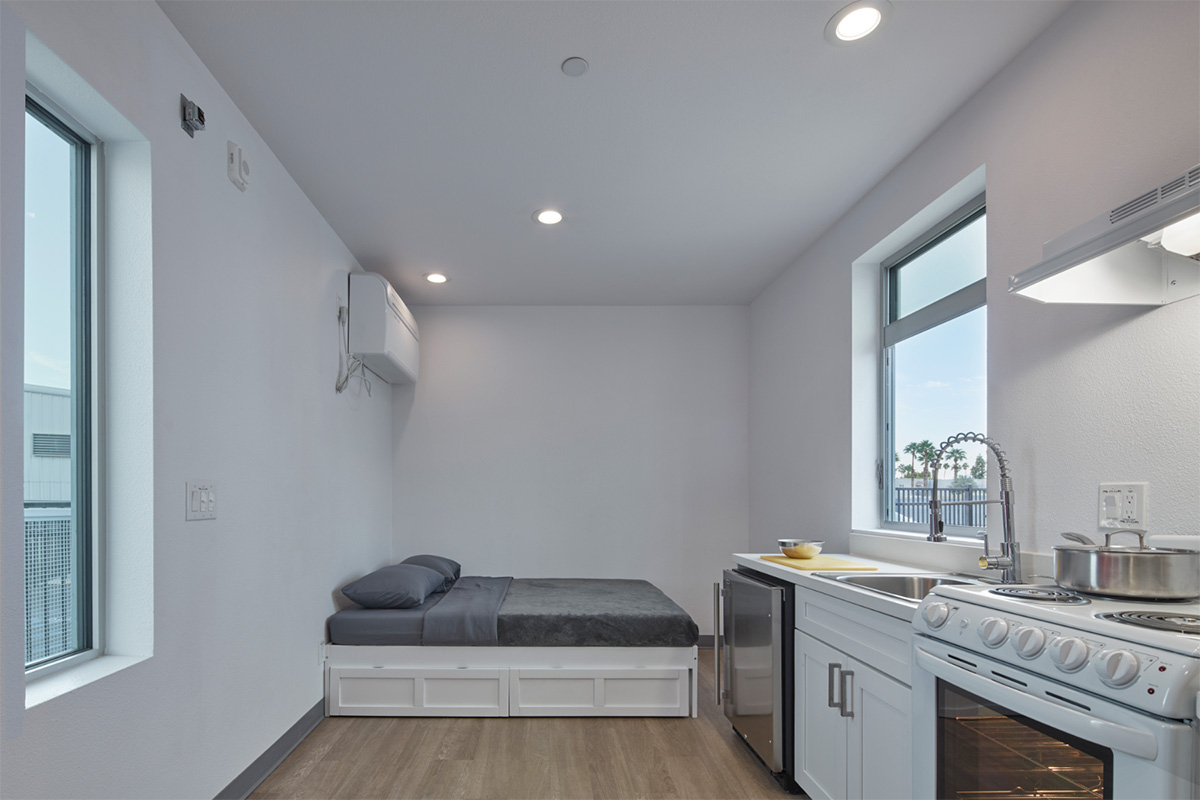
The architects holistically organized the modular housing along a central promenade to create a strong sense of place, organization, and flow, and to promote visibility and security. The 80 new housing units include 51 efficiency studios, 24 dwellings with kitchenettes, and 5 2-BR family residences. Elevated walkways emphasize connectivity and provide shade to below. Each unit has a view of the mountains juxtaposed behind immediate shared outdoor spaces.
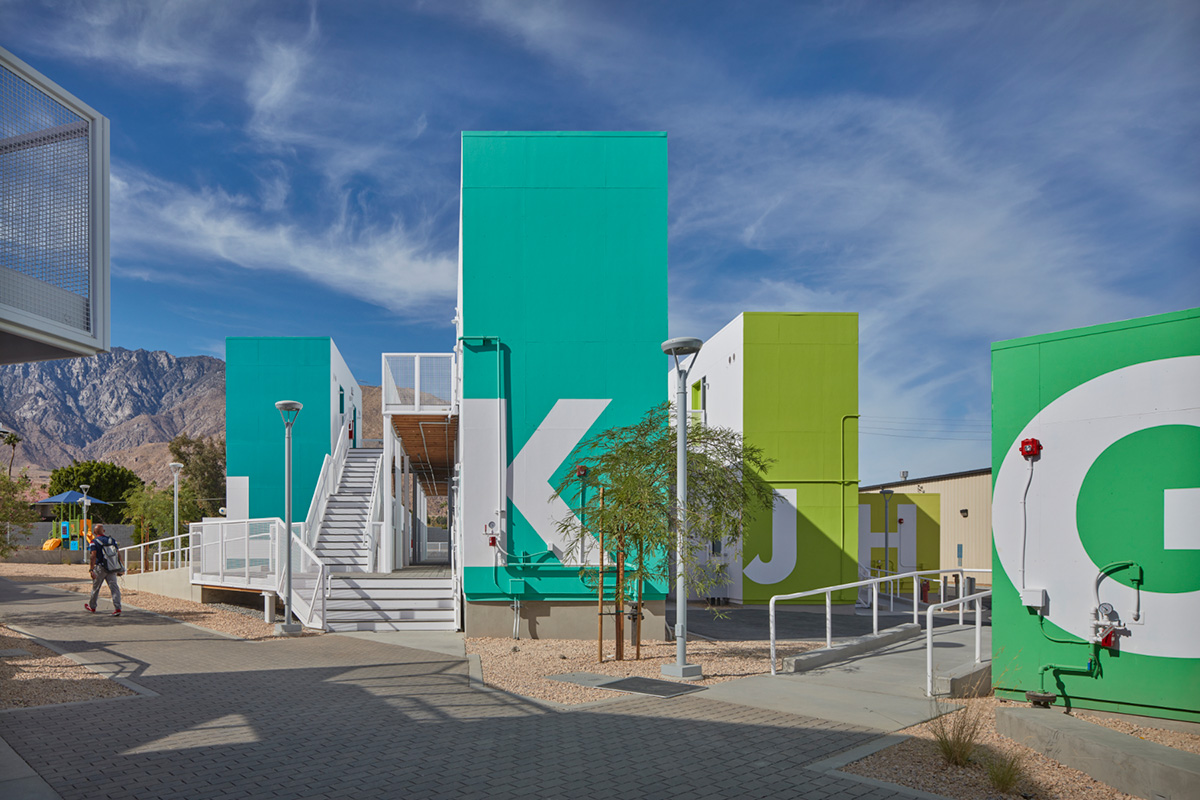
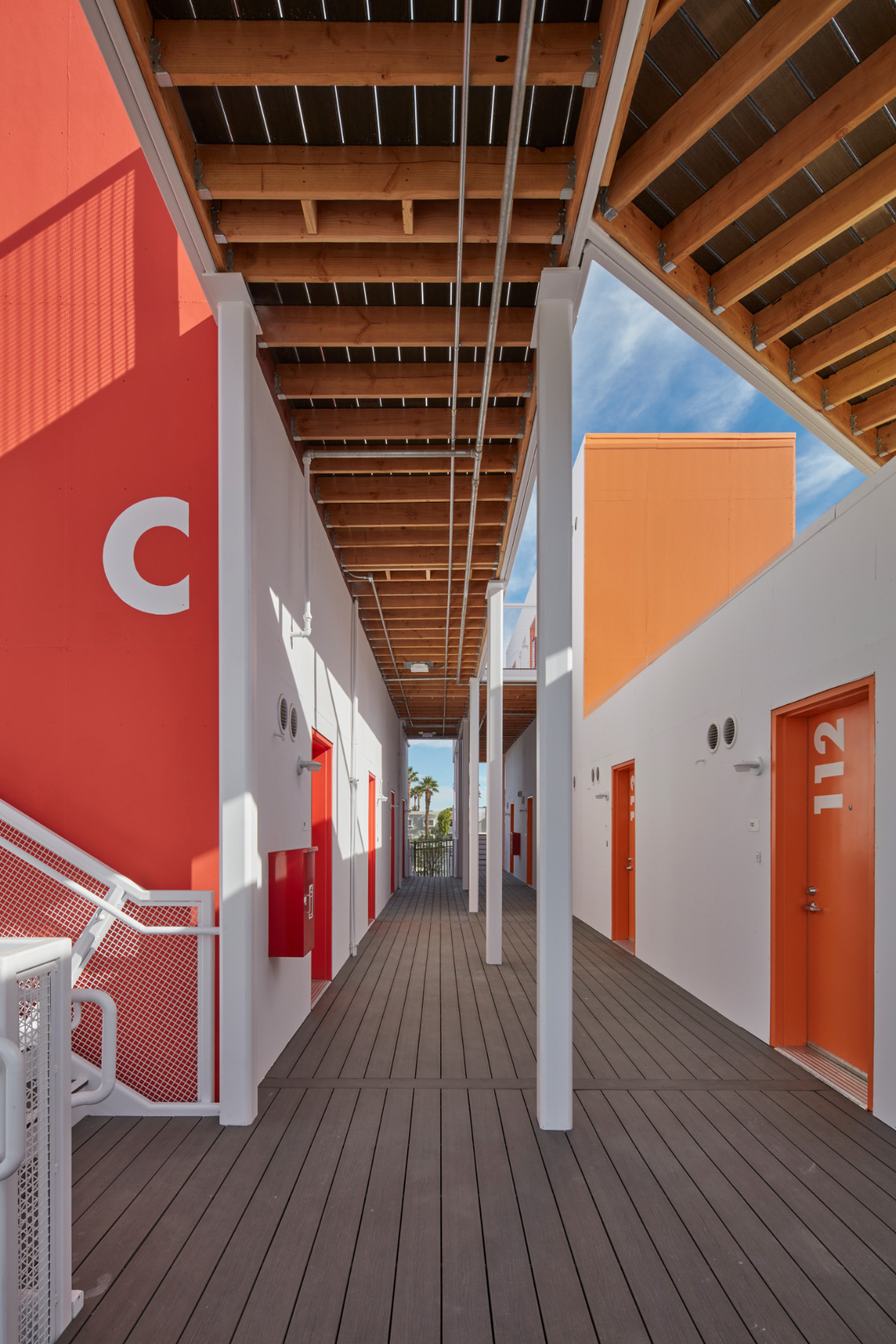
Environmental graphics enliven public spaces and enhance wayfinding. Swaths of vibrant color demonstrate the powerful impact of a coat of paint. East-facing facades project warm colors of sunrise; western ones cool, sunset colors. Large graphic letters and door numbers foster pride of ownership and easy navigation. Additional amenities (playground, landscaping, walking paths, dog run) contribute a neighborhood-like feel.
The Center’s design advances equity, dignity, and community and reflects the architects’ foundational belief that architecture is a social service with the power to change lives.
This is a container building, used in a rather innovative and fun fashion. As a center for people in crisis, it feels welcoming and accessible–a place of shelter. The space allows people access to privacy, but also to communal spaces, which are really lovely. It works with the site so well to mediate between the adaptive reuse of those industrial buildings and yet also opens and weaves perfectly into the mountains beyond.