
Sunnyvale City Hall

Anthony Lindsey SG SunnyvaleCH v copy feature

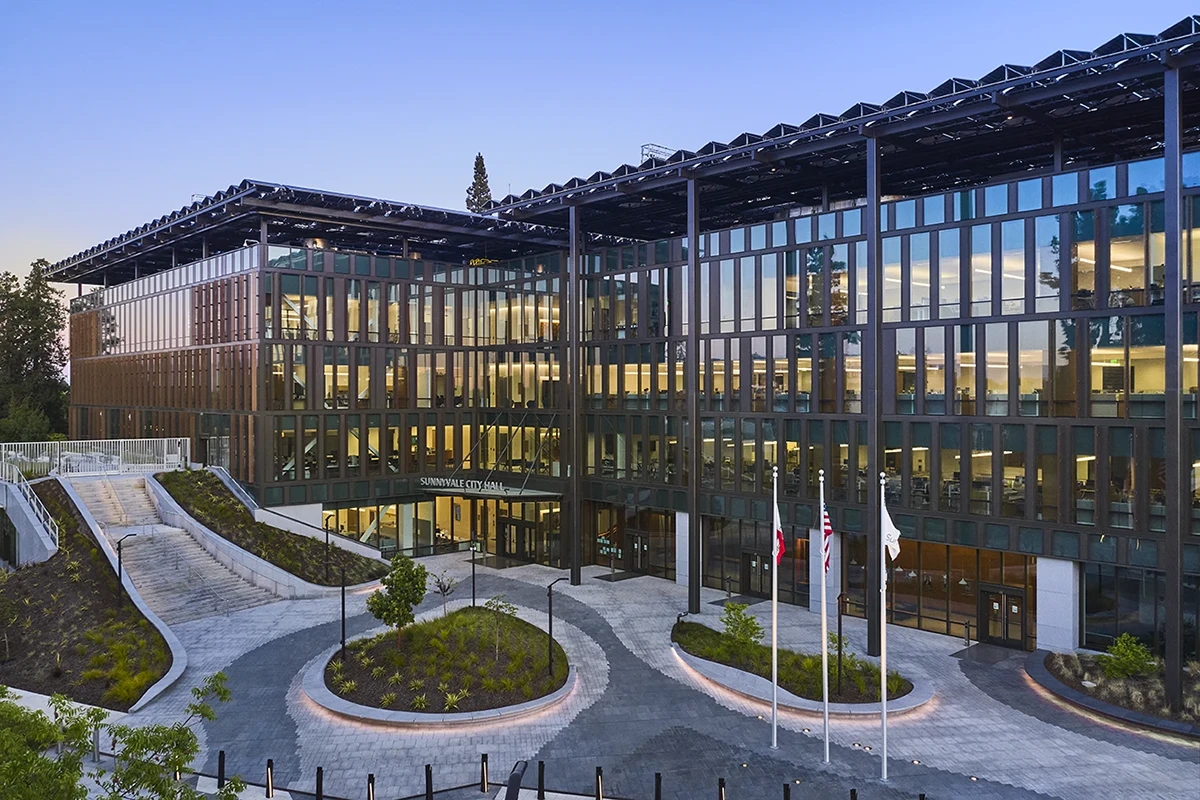
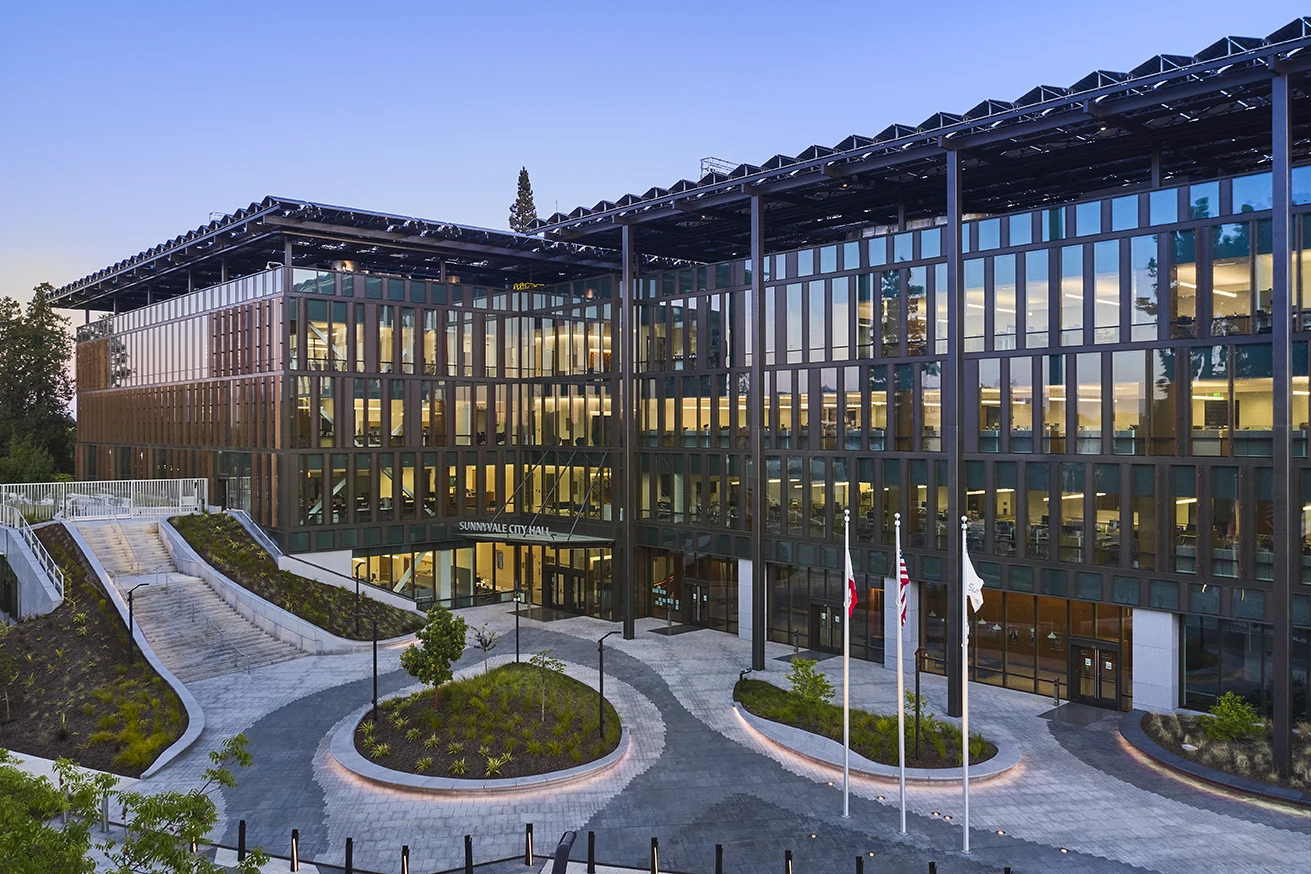
The Sunnyvale City Hall is rooted in the community, formed as fusion of sustainability and human-centric design, with every decision supported by performance outcomes. The building’s most obvious expression of a commitment to sustainable principles is the overarching solar canopy, reflecting its Net Zero Energy performance and acting as a visible model for the community it serves.

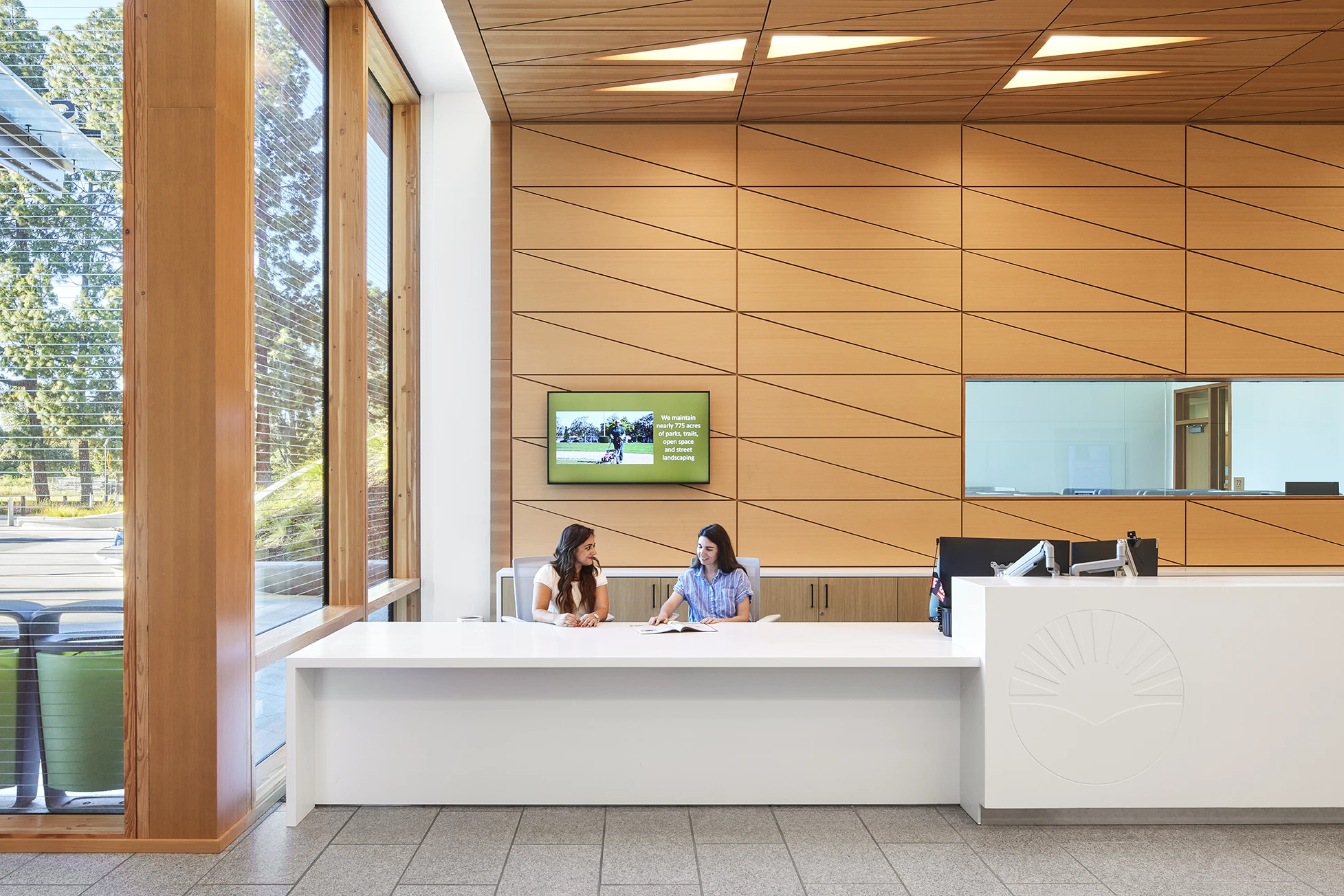
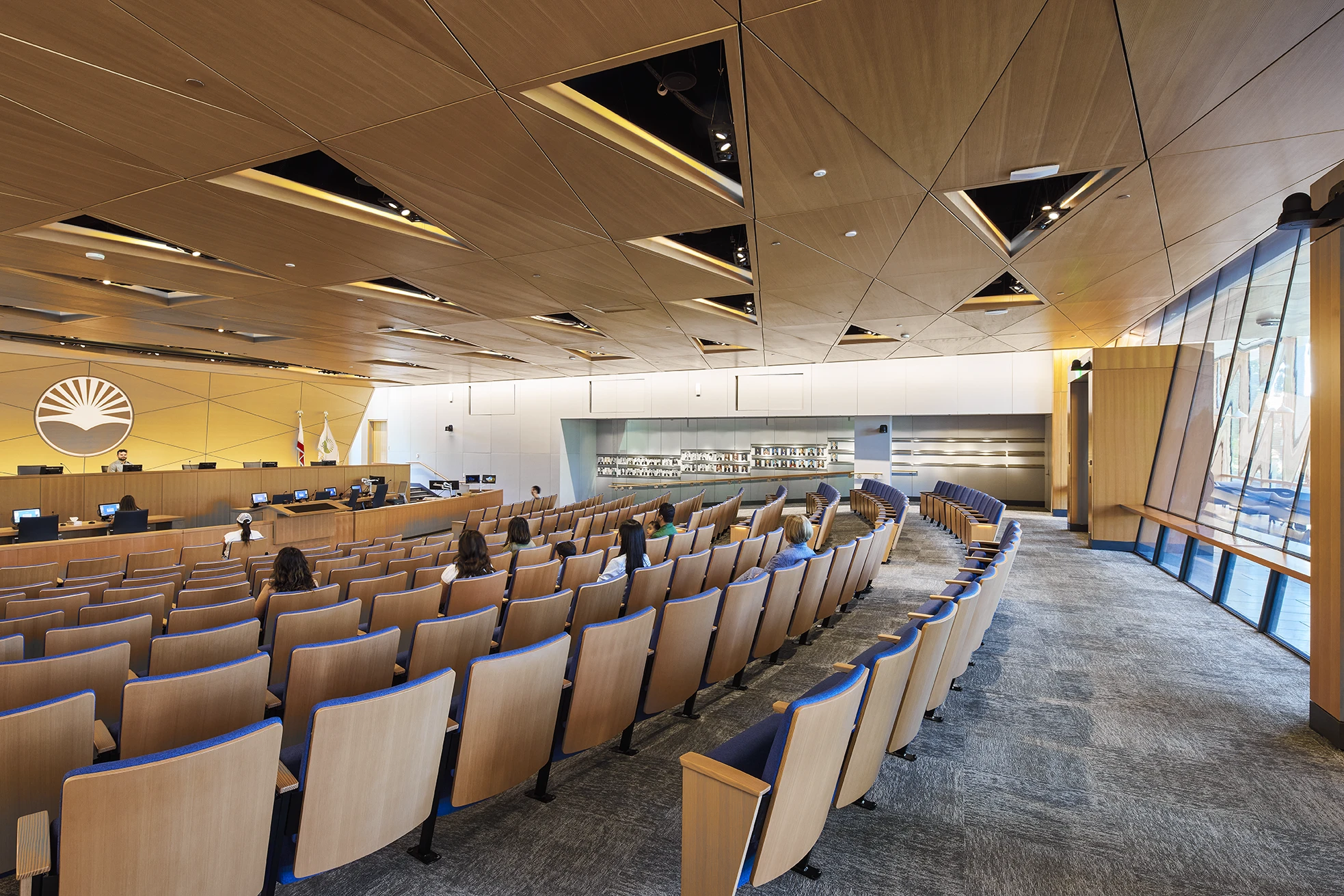
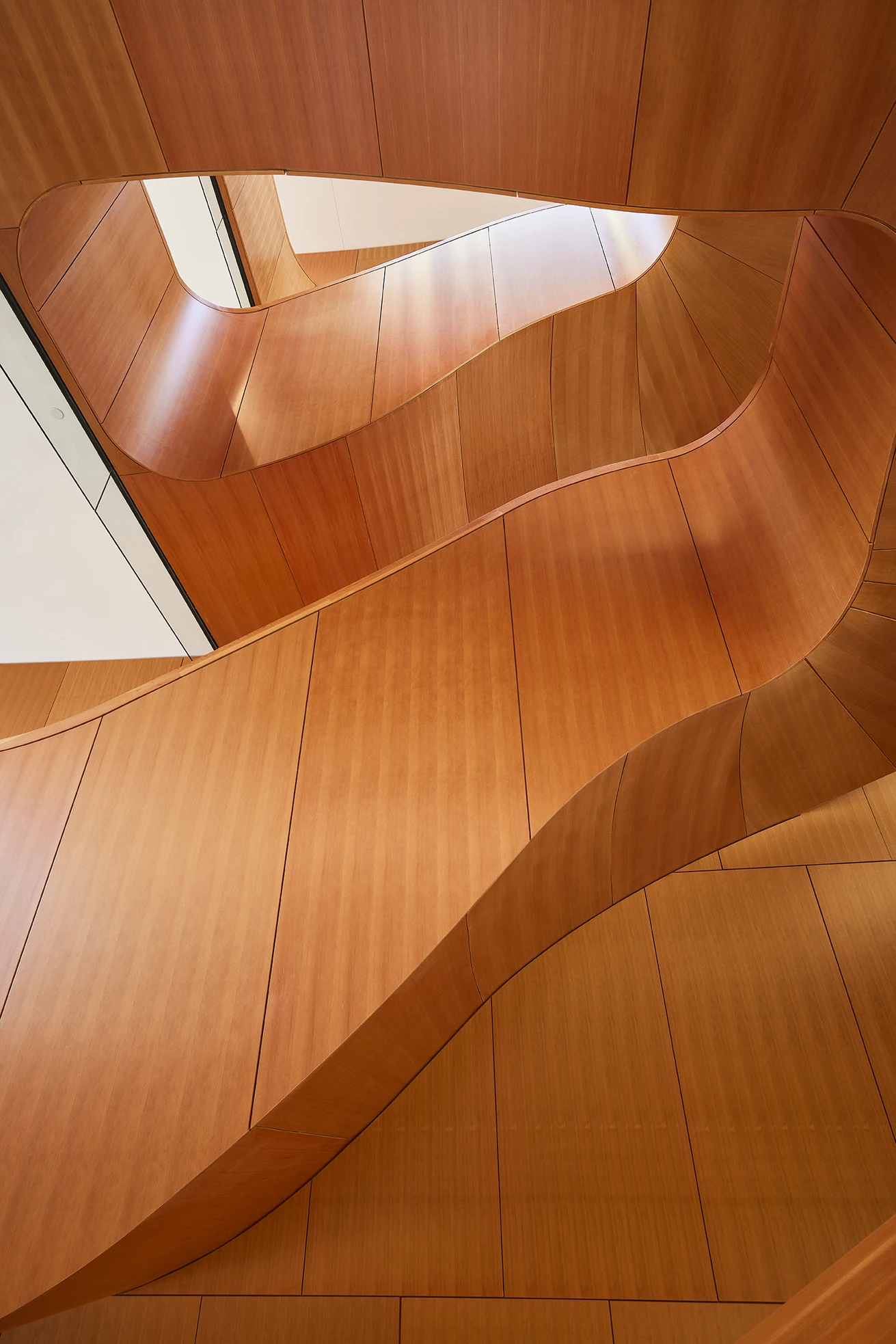
Quietly biophilic, the site and building design honor the heritage trees in the urban forest. Accessible multi-modal pathways resemble tree roots drawing the community into the building. Upon entry, the central stair evokes the spirit of climbing into a tree house, encouraging visitors and staff to move upward through its curves, from earth to sky, encountering the changing views. The heavy timber curtainwall fades into the forested background, and wood ceiling pattern with triangular voids emulates light filtering through interlayered tree branches. At a tactile level, the custom-fabricated conference tables and benches crafted from reclaimed redwood create a touchpoint to the living history of the site.

The interior is peaceful and functional, supporting the City’s mission to serve the community responsibly in an accessible and transparent manner. The grade level contains public functions, including the Council Chamber and large flexible meeting rooms available to building occupants and the community at large. The Council Chamber illuminates its purpose during evening Council meetings and welcomes the community into the active and accessible environment from the adjoining exterior Olive Avenue plaza.

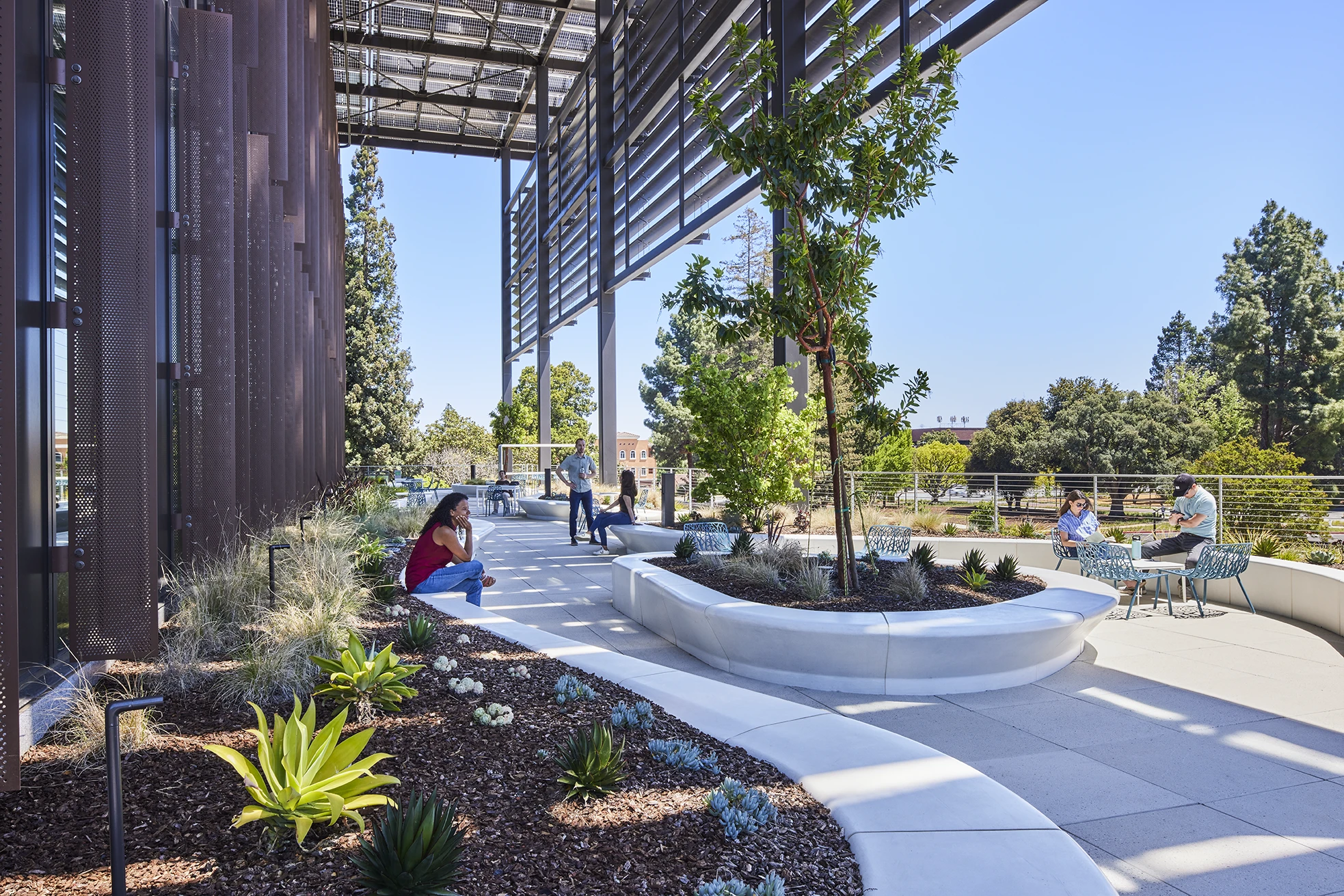
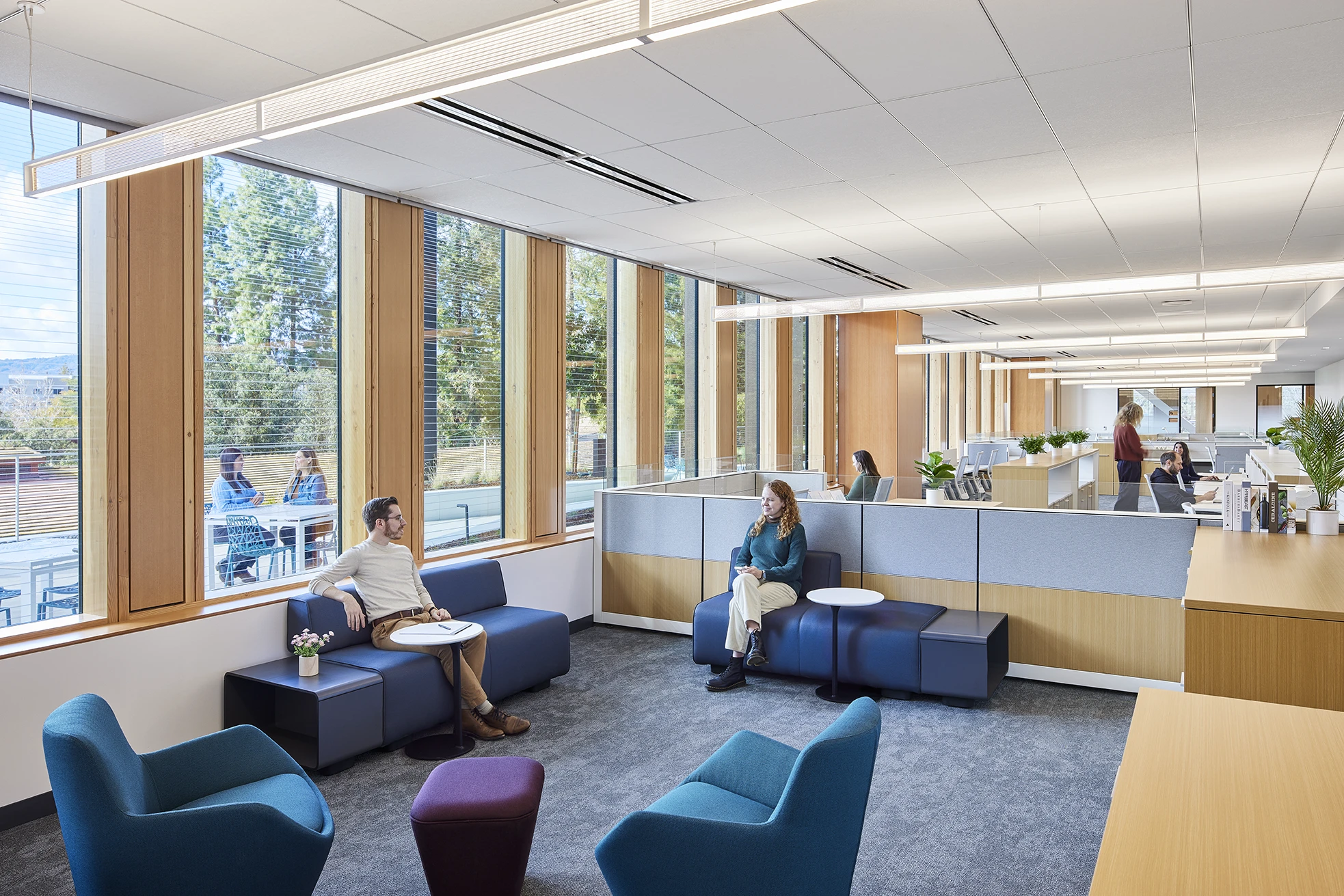
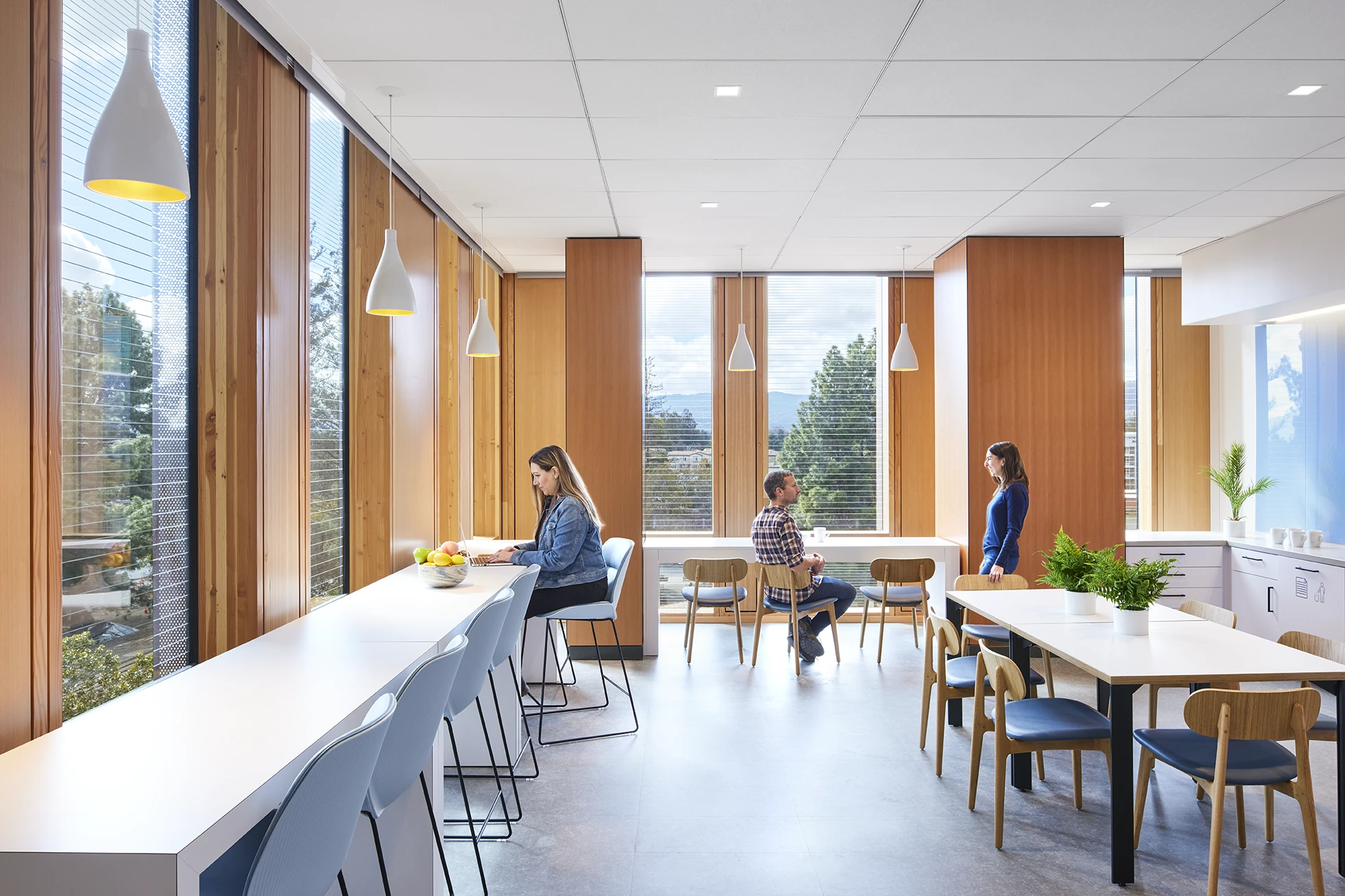
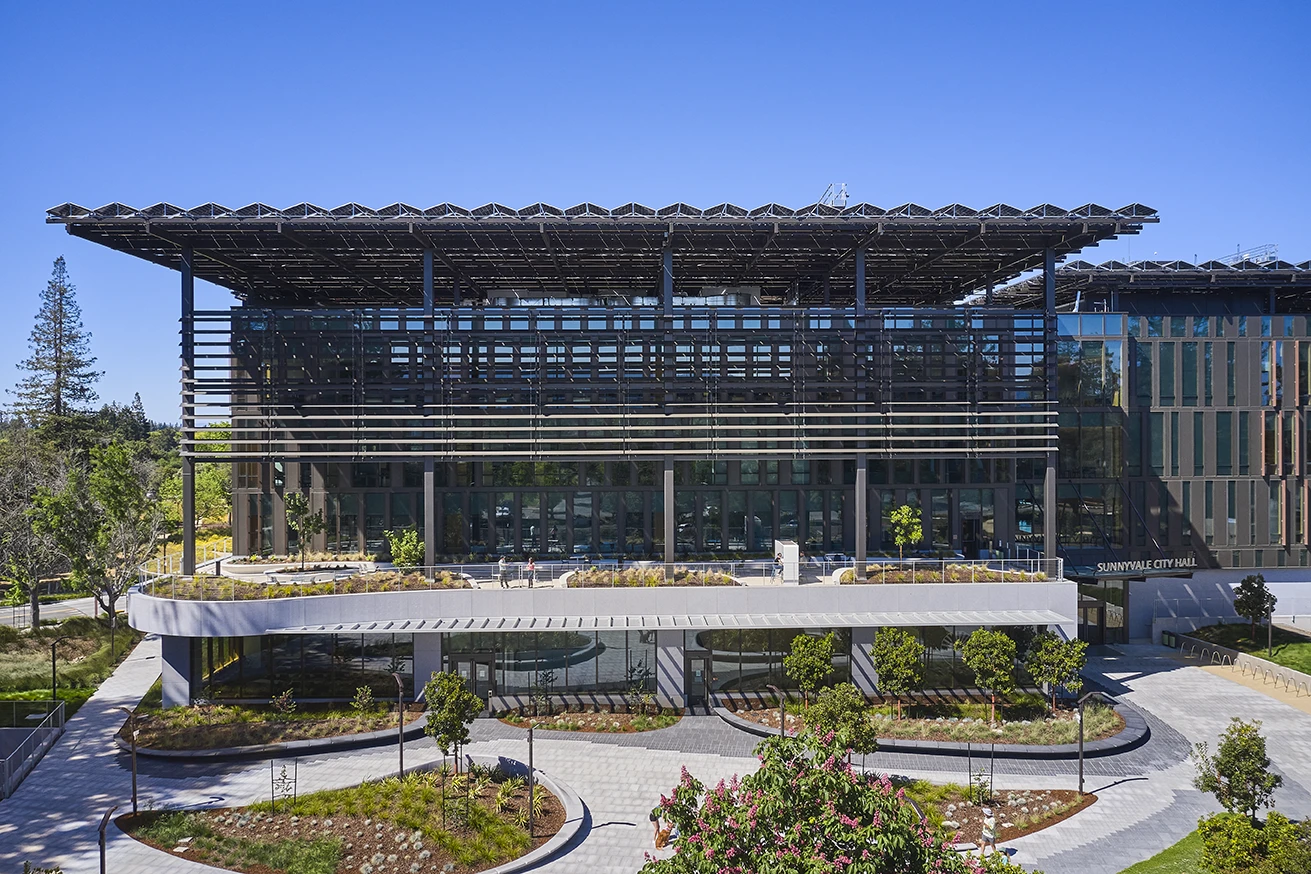
Moving up through the building, the City’s departments each exhibit their own character, but all are designed to maximize daylight and views. The narrow floorplates and full-height vertical glazing allow daylight penetration into the open office spaces providing useful natural light for performing work tasks, saving energy during daytime hours. Along the south façade of the building, the canopy supporting the photovoltaic panels extends to shade the building. In combination with a vertical scrim, the two-part strategy provides effective solar control, reducing direct solar exposure and heat gain, and reducing cooling energy. The canopy and scrim shelter an elevated outdoor work environment for City staff.

//jury comments

Sunnyvale City Hall is the gold standard for civic buildings. It goes beyond human-centered design to life-centered design. It embodies design excellence for its ambitious public-facing program, remarkable achievements in sustainability (Certified net-zero energy use and LEED Platinum), and its beautiful aesthetic qualities.
//framework for design excellence measures
Measure 1: Design for Integration
The design elements of this project are rooted in performance and sustainability. The 30,000 square foot photovoltaic array on the rooftop not only enables the net zero energy goal, but also acts to shade the south-facing window wall. The exterior enclosure was designed to balance both daylight autonomy and the reduction of cumulative solar heat gain. This is acheived through the distribution of transparent and opaque glazing panels in response to climate data. In an effort to reduce embodied carbon, the window wall itself is constructed using heavy timber mullions.
Measure 2: Design for Equitable Communities
This project prioritizes equitable access and reduces car dependence through improved walkability, bike infrastructure, and access to public transit connections. The masterplan increased open space from 6.7 to 17.5 acres. This provides accessible outdoor areas for all ages and abilities, promoting community health and well-being. By reducing building footprints and surface parking, the plan reclaims land for community functions and reconnects the campus to the natural environment. Our community outreach ensured diverse voices shaped the design, addressing specific social equity issues by prioritizing access to green space, fostering community gathering, and creating a welcoming environment for all.
Measure 3: Design for Ecosystems
This project prioritizes ecological health through 82% reduced water use and the exclusive use of native and adapted plants. A diverse planting palette, including pollinator meadows, understory plantings for the redwoods, which help preserve the existing redwood habitat, and the oak woodland planting that supports local fauna and existing oak tree growth. Other plants and trees throughout the site provide abundant nectar and pollen, a variety of flower shapes and colors, and bloom throughout the growing season. These plants not only support pollinators but also contribute to habitat restoration efforts, fostering a deeper connection between users and the surrounding ecosystem.
Measure 4: Design for Water
To reduce indoor water use, the building uses low-flow water fixtures throughout. The HVAC system uses zero water, and the landscape selection includes low water use and drought tolerant plants that fit with the local climate and native landscape. To retain the 90th percentile storm on-site, a combination of bioretention basins and an infiltration chamber system are used in series.
Measure 5: Design for Economy
The building maintains flexibility across many of the interior and exterior spaces, including the council chambers which are suitable for many presentation types. Conference and training rooms also provide flexibility for the community, and the outdoor workplace provides a healthy garden setting to meet and work without the cost of additional floor area.
Measure 6: Design for Energy
This project is designed to be all-electric, incorporating advanced heat recovery air handling units (AHUs) to maximize energy efficiency. A photovoltaic (PV) array with a capacity of 697 kW is installed, generating an impressive 1.099 GWh of energy annually. This setup ensures a 100% annual energy reduction, achieving net-zero energy consumption. Additionally, the PV system reduces peak electrical demand by 73%. To further enhance energy management, a Battery Energy Storage System (BESS) is integrated, supported by a microgrid system that provides usage flexibility. This combination of technologies not only promotes sustainability but also ensures reliable and efficient energy use.
Measure 7: Design for Well-Being
Strategies for improved indoor air quality include walk-off mats at all entrances to the building, dedicated exhaust at janitor closets and storage rooms with cleaning products, air handling units selected with 1) MERV 13 filtration, 2) Photo Catalytic Oxidation filtration, and 3) increased ventilation rates 30% above code. Daylight analysis studies were conducted for the new Sunnyvale City Hall to evaluate visual comfort and useful daylight levels across all floor plates. A primary goal was to maximize floor area receiving useful daylight levels high enough to avoid electric lighting, yet low enough to avoid glare.
Measure 8: Design for Resources
The City Hall was designed using a steel moment frame system for resilience, which supports building functionality during and after a seismic event. Admixtures and recycled content were integral to the concrete. The entire window wall system substantially reduced the use of aluminum throughout the building. This was achieved by utilizing a heavy timber mullion with a small aluminum cap to fasten the glass to the heavy timber. The wood selected for the mullions was a regional, second-growth and highly sustainable Douglas Fir.
Measure 9: Design for Change
Dedicated to a future flexibility, the Sunnyvale City Hall provides integral interior flex zones for growth, shared conference rooms, and a council chamber which accomodates different types of events. Anchoring the City Hall is the outdoor plaza which is available for farmers markets, community educational events, and seasonal gatherings. All events maintain the ability to close the public road at the plaza, allow the adjacent podium stairs to serve as an outdoor auditorium, and engage an enormous wildflower meadow. The nearby ampitheater also provides a wonderful community presentation space, while still allowing for flexible usage.
Measure 10: Design for Discovery
The conceptual exploration of the City Hall design elevated the collective community experience. These studies led to the creation of physical moments which focused on spatial and tactile variation. Outdoors, one will enjoy a wonderful wildflower meadow, a public amphitheater, and a series of organic stone benches, each which seem to move as a ferrofluid. The main entry and lobby guides one to a giant wooden central stair, which provides an embracing and fun passage to the upper levels.
Skip to content