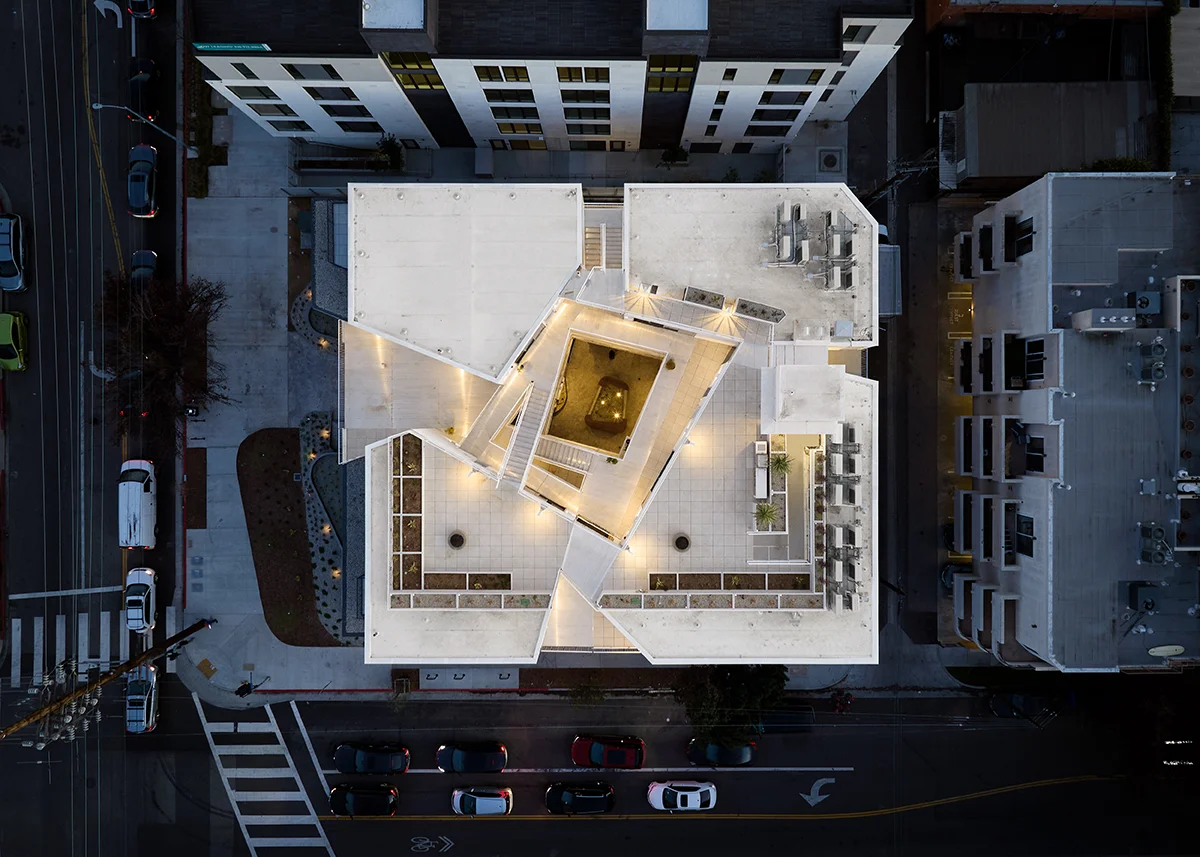

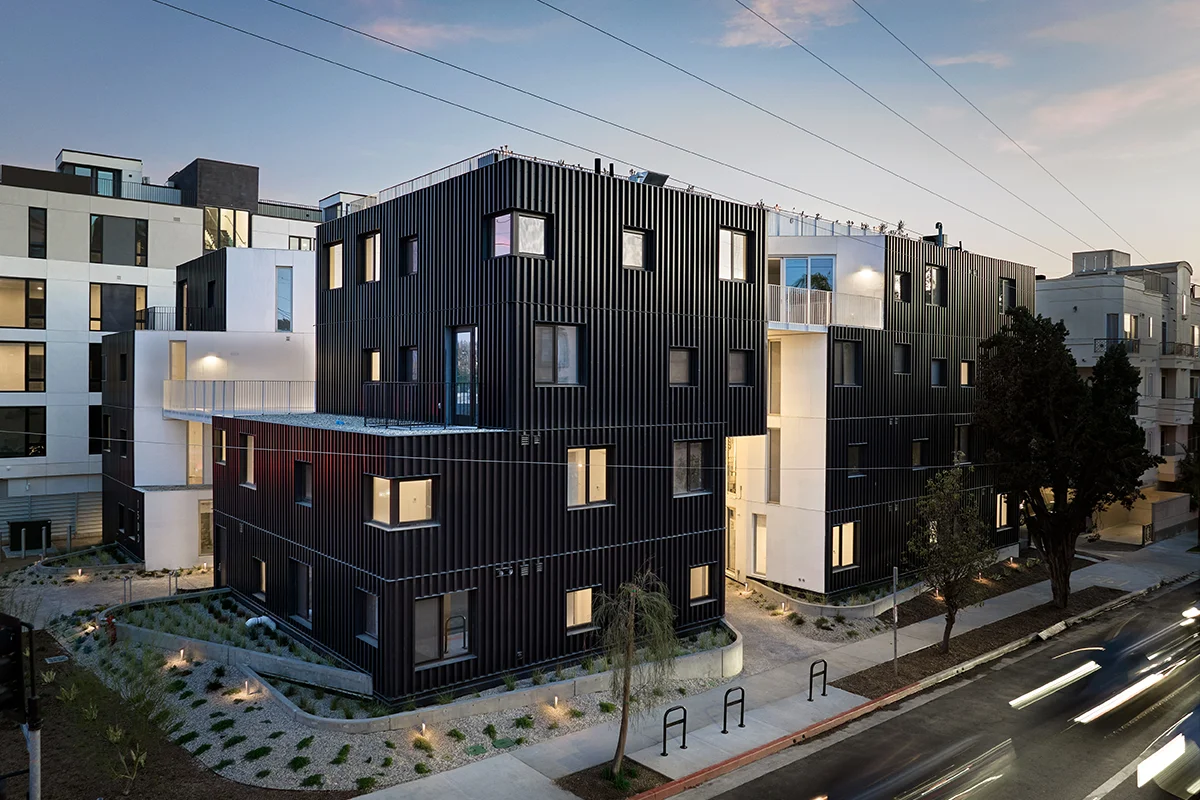
The newly completed Barrington1503 coliving project reimagines how thoughtful design can enhance community living. In a city where rising costs and an abundance of single-residence homes limit access to housing, Barrington1503 introduces much-needed density with 18 units and 79 bedrooms. By redefining traditional housing models, the project fosters community, supports healthy living, and contributes to a more livable Los Angeles.
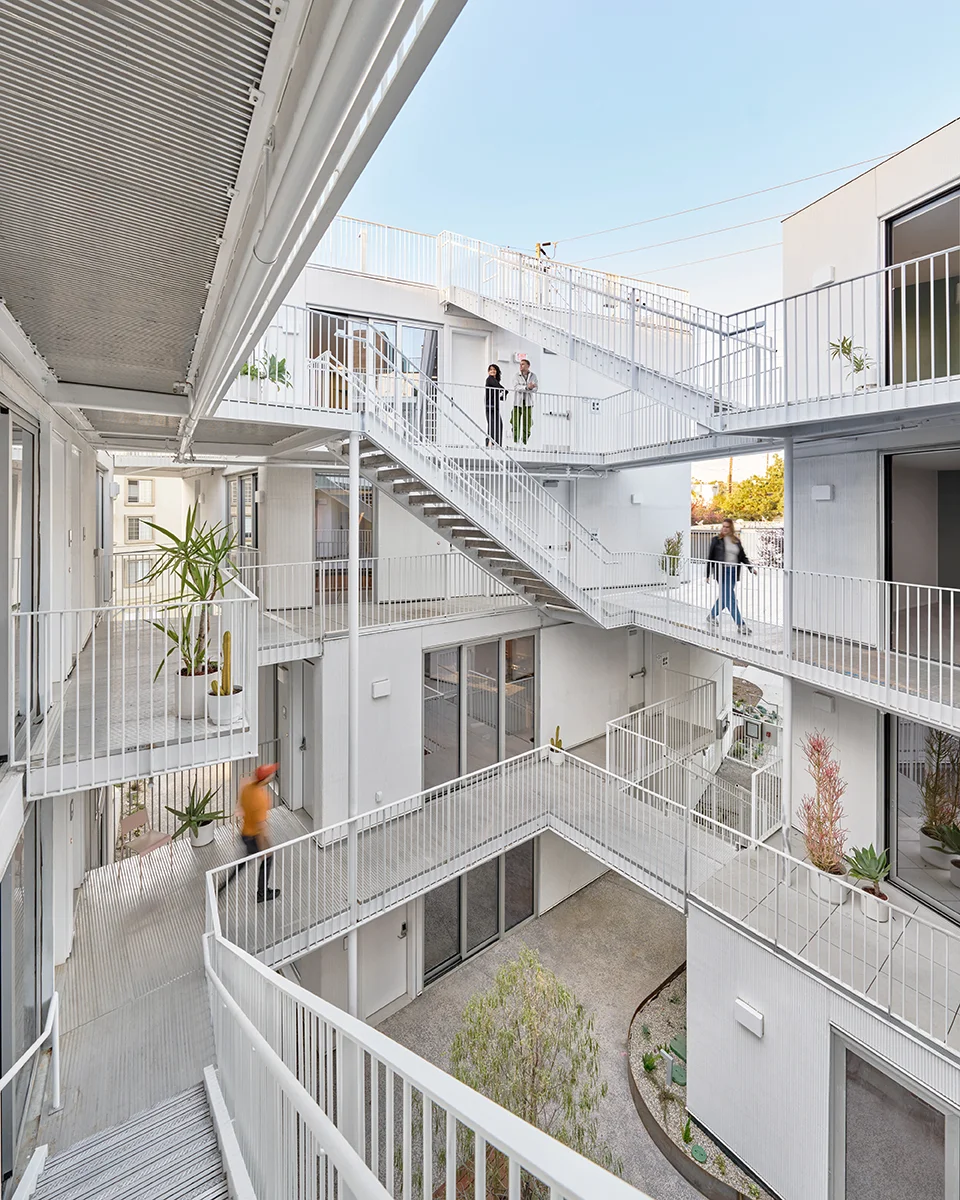
Coliving is growing rapidly, driven by demand for affordability and connection. In West Los Angeles—home to many students and new arrivals—coliving offers a vital alternative. But as the Covid-19 pandemic highlighted, its success relies on balancing communal and private spaces. Central to Barrington1503’s design is a spatial social gradient. Residents enter through a mural-framed passage into a shared courtyard, then ascend through open circulation pathways designed for chance encounters and community interaction.
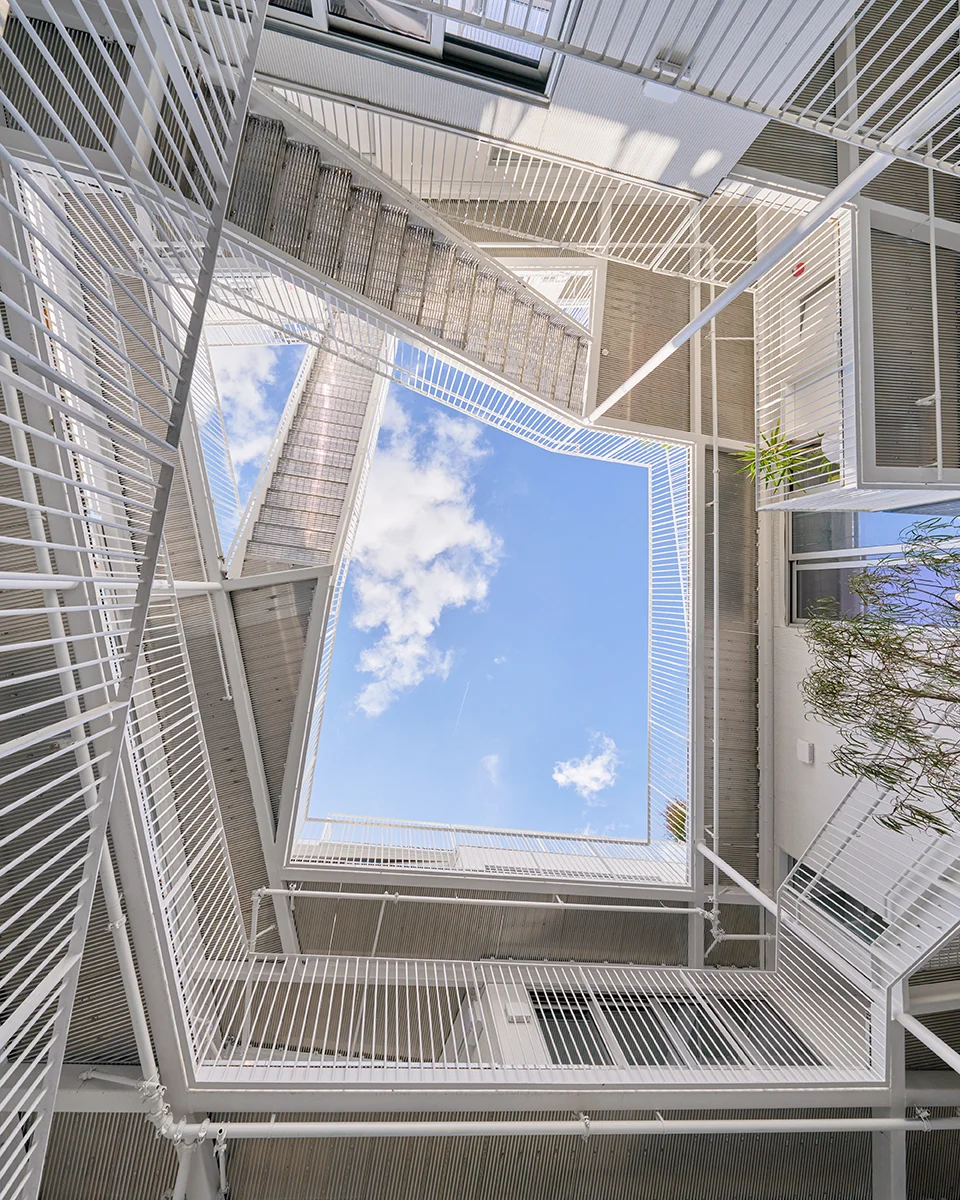
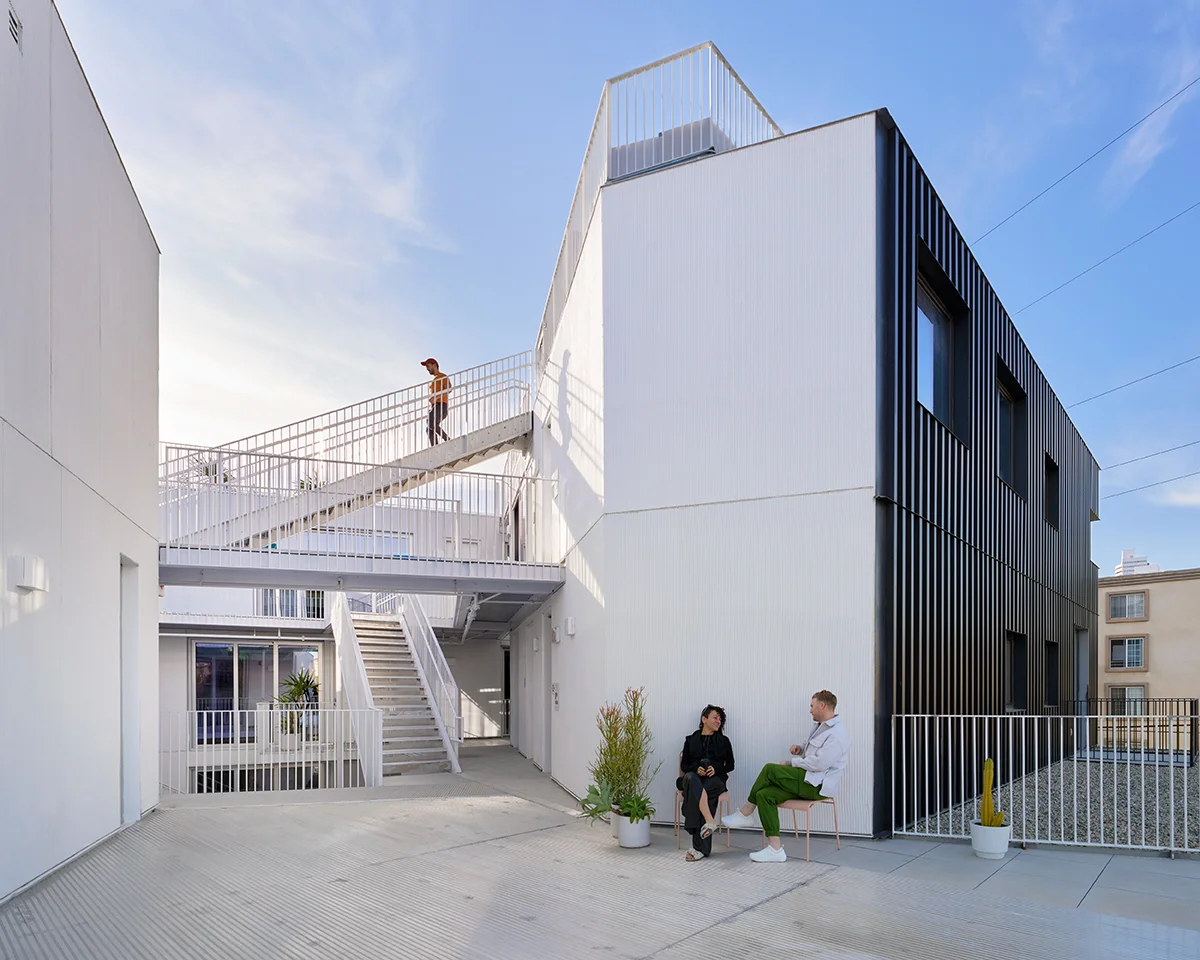
From the courtyard, residents enjoy sky views and natural light filtered through walkways above. Spacious landings on each level provide outdoor moments that blend built and natural environments. Each of the four building volumes features communal dining and living areas, transitioning into private bedrooms. Shared spaces open inward to the courtyard, while bedrooms face outward, offering city views—enhancing both privacy and connection.
This intentional gradient of social engagement ensures personal spaces are protected while fostering shared experiences. Even the interiors support this flow: sage green kitchens and living rooms evoke calm and openness, while darker hallway tones signal the shift to private zones.
Barrington1503 demonstrates that coliving, when executed with care and architectural precision, can be a successful, inspiring model for 21st-century urban housing—combining functionality, community, and access to nature.
Maximizing community engagement through thoughtful and inventive massing this project is a new expression of the growing co-living typology. Its four volumes are an intelligent way to break down and separate the apartment living experience, and to draw natural light and ventilation in the core of the building.