
Pine Flat

feat FaulknerArchitects PineFlatSpring DSF JOE FLETCHER DPI copy

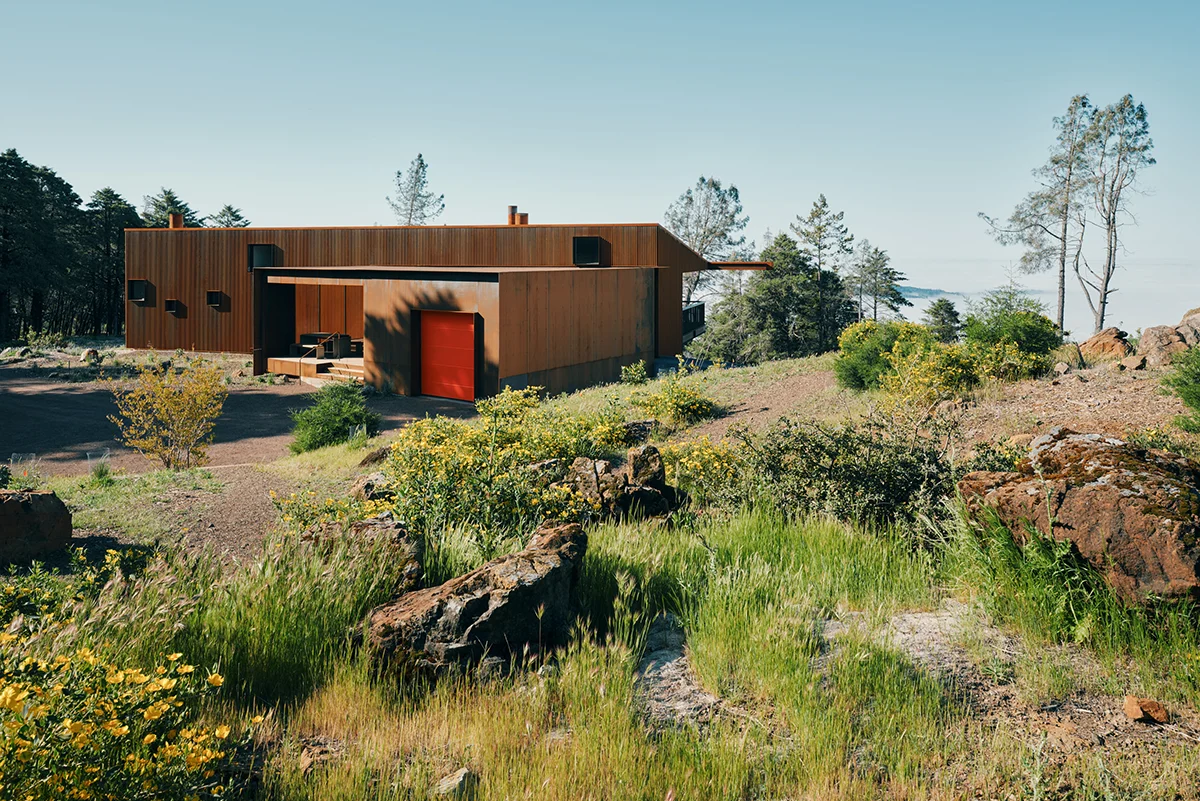
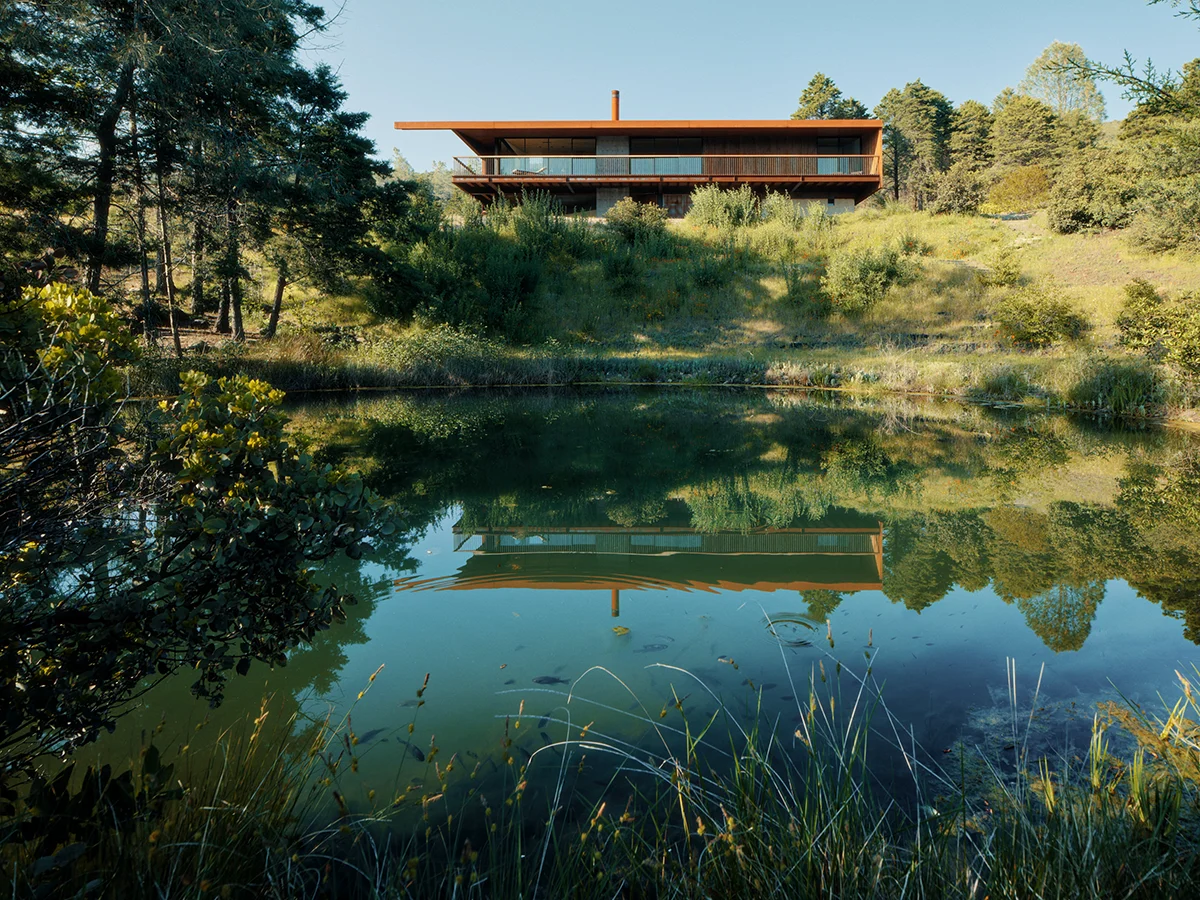
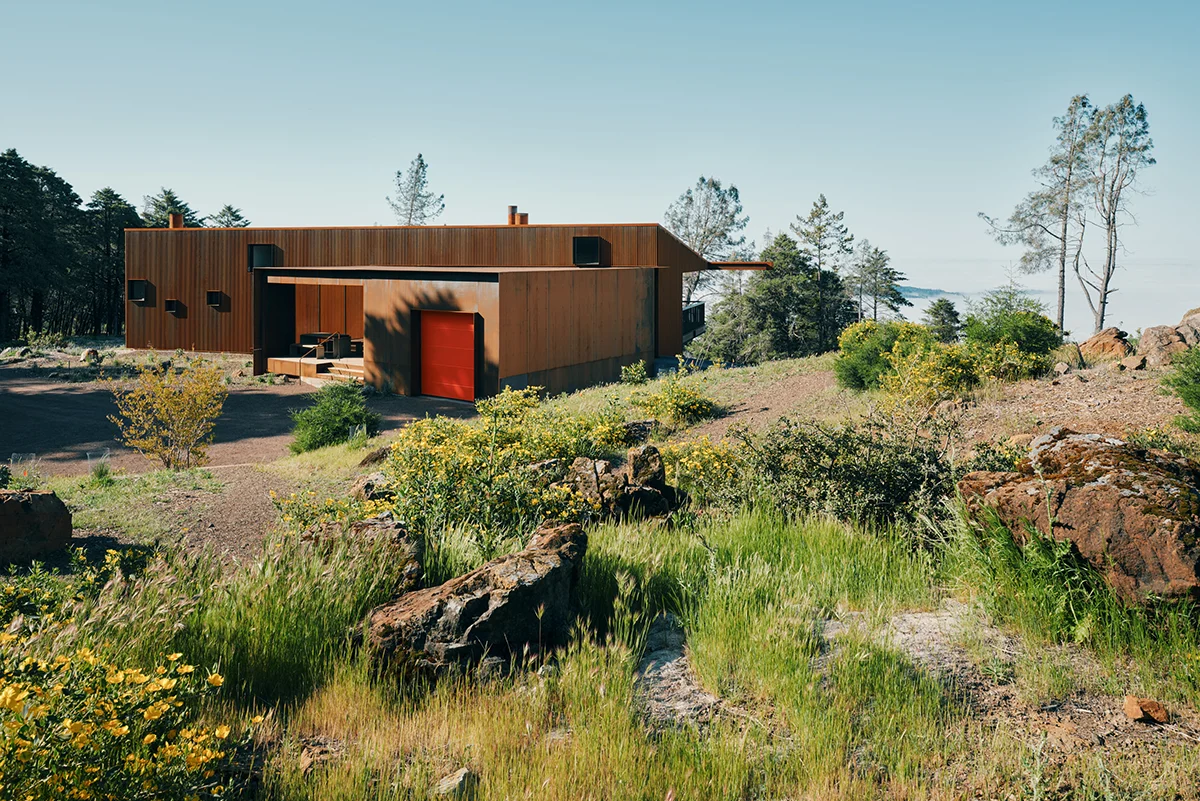
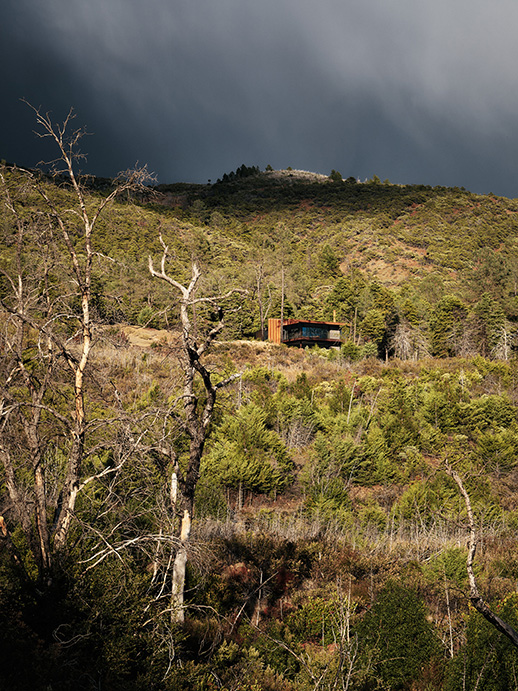
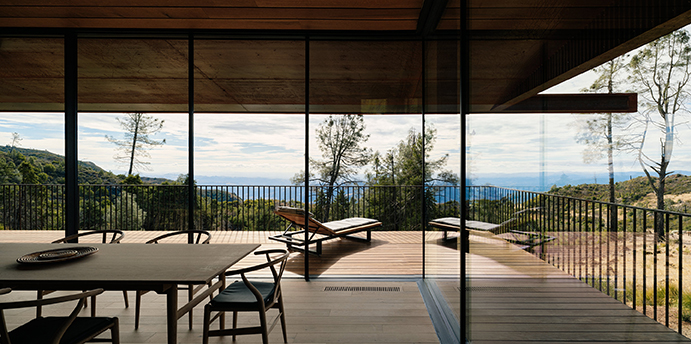
Remotely accessed via a winding former stagecoach road from the quicksilver rush, the area affected by the 2019 Kincade Fire saw the destruction of the original off-grid house. Surviving concrete foundations and walls have been reinhabited. Enhanced construction assemblies, the concrete ground form, non-combustible materials, and sliding ember screens respond to the risk of repeat wildfire events. Largely closed on the exposed north side and open to the south and west Mayacamas Mountains views, the protective form respects the ridgeline, existing as a quiet presence in the wildland landscape. Portions of the angular footprint of the preexisting foundation project from the new rectangular form and build the sculptural light well, entry steps, porch, and garage. A new concrete chimney mass anchors the main floor, creating a focal point for the living spaces. Driven by the clients’ preference for future wheelchair accessibility, the entry ramp extends outward as an expressive form toward the west hillside. The concrete basin fosters a visual and poetic dialogue that briefly captures artesian well waterflow. The off-grid site utilities support a home that embraces passive survivability. An abundant connection to nature promotes healthy well-being, while the restorative landscape approach enhances biodiversity through a wildfire protective strategy.

//comments

An off the grid house with high sustainability goals and a simplicity and roughness that’s appropriate for the context. It’s a good example of a strong fire-rebuild. The retention and reuse of the original foundation creates interesting spaces, while its sloping roof and materials palette integrates nicely into the site.
//framework for design excellence measures
Measure 1: Design for Integration
This project exemplifies how residential architecture can transcend aesthetic considerations. The home is a tool shaped by the needs of the site, including fire resistance, the landscape, foundation reuse, energy efficiency, off-grid utilities, and remoteness. Climate change is increasing the incidence and magnitude of wildfire events. As we continue to expand into wild landscapes through development, we must enhance construction systems and materials to withstand disasters. Early consideration of these factors should be integrated with all other contextual attributes. The design can adopt a protective posture. Additionally, there should be increased awareness of the importance of moving towards a strategy of self-sufficient off-grid building, even when on-grid infrastructure is available. The 18 kW solar photovoltaic panels, 77 kWh battery storage, and three 15 kW inverters provides the primary source of off-grid power. This home exceeds code required energy efficiency and production. It is intended to become the client’s full-time residence and family legacy property.
Measure 2: Design for Equitable Communities
This project is located in a sparsely populated area. Following the Kincade Fire, several neighbors chose to sell their properties. The client was determined to remain a part of the wildland community. The wildfire ignition-resistant exterior shell, complemented by sliding ember screens, offers resilience during fire emergencies. The clients are given hope that the home can withstand future disasters. Additionally, this design allows more time for emergency services to reach the property, and the local fire department can have confidence that this home is worth protecting. The protective strategies developed can be referenced by vulnerable communities for appropriate fire-sustainable rebuilding.
Measure 3: Design for Ecosystems
Deep overhangs reduce the reflection of the sky and the associated risk to birds. Sliding screens at windows and doors further protect birds. The light fixtures are zoned and kept to a minimal number and size to reduce light spill; this shielded lighting strategy protects the night sky. Landscaping supports the principles of fire ecological succession in the absence of cyclical, low-heat burns. This approach maintains a low fuel load while enhancing biodiversity. Slopes disturbed by previous development were gently graded back to their natural condition. Seeding and the reintroduction of native, drought-tolerant pollinator plants will enhance the ecosystem.
Measure 4: Design for Water
Rainwater is celebrated, with 100% of stormwater captured and retained on site. Channeled into an expressive cantilevered gutter with open flow into the round steel basin below, runoff is diverted to a vegetated bioretention area before flowing down the existing swale into the retention pond. Spring-fed wells provide a reliable flow for all water usage. The concrete basin captures water after it is harnessed by a Pelton wheel for supplementary hydroelectric power, offering a continually refreshed basin for cooling dips. Flowing water can be heard from the deck, promoting calmness and well-being. Wastewater is treated in the repaired septic field.
Measure 5: Design for Economy
Reusing the existing concrete basement foundation walls and footprint served as a cost-saving and time-efficient strategy. The home has less square footage and is one story lower than the original house, utilizing the previous unfinished basement area. Materials were selected for long-term robustness and low maintenance. Self-sufficiency and energy savings are achieved through off-grid utilities. High-performance windows, construction assemblies, lighting, and mechanical systems work together to reduce energy consumption. Wheelchair-accessible spaces and potential to add an elevator provide future flexibility. The openness of the common areas offers adaptivity for changes in use and terraces extend the spaces, encouraging outdoor living.
Measure 6: Design for Energy
This home is off-grid. The existing solar photovoltaic array and battery system was repaired and upgraded as the primary power source, supplemented by power from a hydro Pelton wheel. The main floor is oriented to maximize winter solar gain and daylighting, with deep overhangs on the south and west to provide summer shading. The roof angles in alignment with the predominant wind flow to facilitate passive ventilation through carefully positioned openings. Energy performance will be monitored by the client over time. The solar PV and battery system is flexible and can be expanded as the client’s needs develop and change.
Measure 7: Design for Well-Being
The journey through nature to the home encourages an outdoor lifestyle. Open spaces flooded with natural light connect the client to the immediate and distant landscapes. The continuous aperture of the main floor features specified glazing to reduce glare and heat gain, alongside high-performance wall, floor, and roof assemblies. The reuse of existing foundation and basement walls retains the spirit of the original home. The sound of the waterflow fosters a sense of calm. Wheelchair accessibility provides future reassurance. The HVAC system enhances air quality during wildfire seasons. An EPA certified wood stove within the concrete chimney utilizes thermal mass.
Measure 8: Design for Resources
The site’s remoteness led to materials taking on a precious quality to limit waste. Reuse of existing foundation and walls for 90% of the project’s concrete retained existing embodied energy and limited additional excavation. Existing concrete was cleaned and exposed to reduce material use. 20% fly ash was added to the new concrete mix. Engineered lumber utilized for 100% of wood frame. Embodied recycled content of steel structure and 70.2% recycled content for corten steel siding. Use of low carbon mineral wool and cellulose insulation. Materials were sourced locally where possible and chosen for fire resilience, durability and low maintenance.
Measure 9: Design for Change
This durable, low-maintenance, long-lifecycle, wildfire-resilient design is in response to the ever-increasing wildfire risk. Robust materials, a fire-resistive shell and sliding ember screens address this concern. The home provides or can be adapted for accessibility as the clients age due to the integration of the entry ramp, wheelchair maneuvering clearances, grab bars, and pre-planned elevator framing. Passive survivability is achieved through off-grid utilities, ventilation strategies, protective overhangs and sheltered outdoor spaces. The house is seismically engineered against earthquakes and insulated/thermally broken to withstand extreme temperature. Steel rainscreen wall cladding and the corrugated steel roof offers protection against extreme hail.
Measure 10: Design for Discovery
The comfortable project team relationship fostered confidence in a successful collaboration with shared goals. We learned how rewarding it is to reuse existing home elements rather than following the common industry approach of demolition and rebuilding. The remote site with challenging access impacted structural steel sizes, and limited labor availability, resulting in increased construction costs. The surviving concrete walls tell the history of the place and the original house. The triangular skylight and the sculptural concrete front step trace the outline of the existing foundation walls. The steel siding will weather into an earth-like hue, coexisting harmoniously with site conditions.
Skip to content