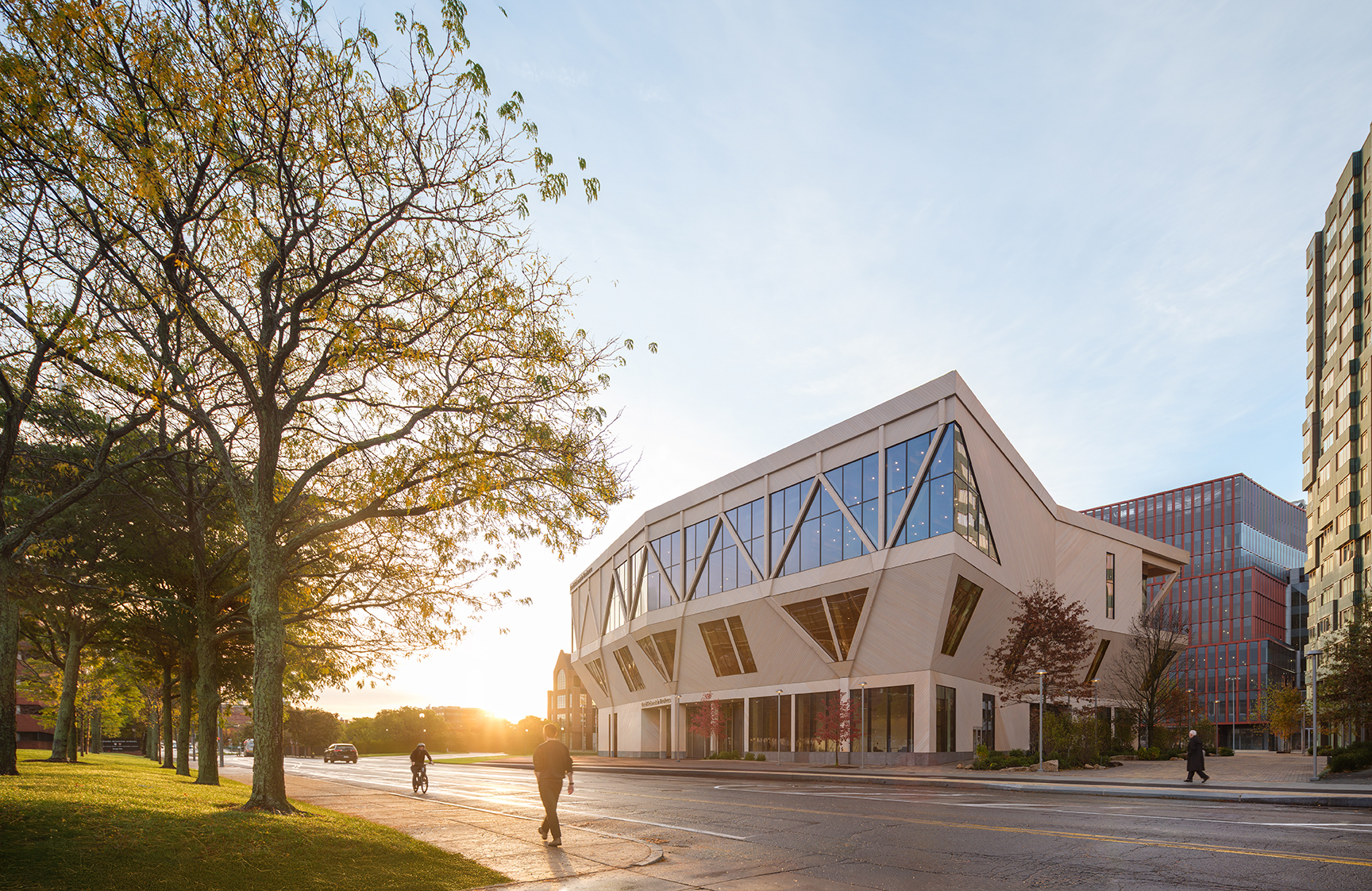
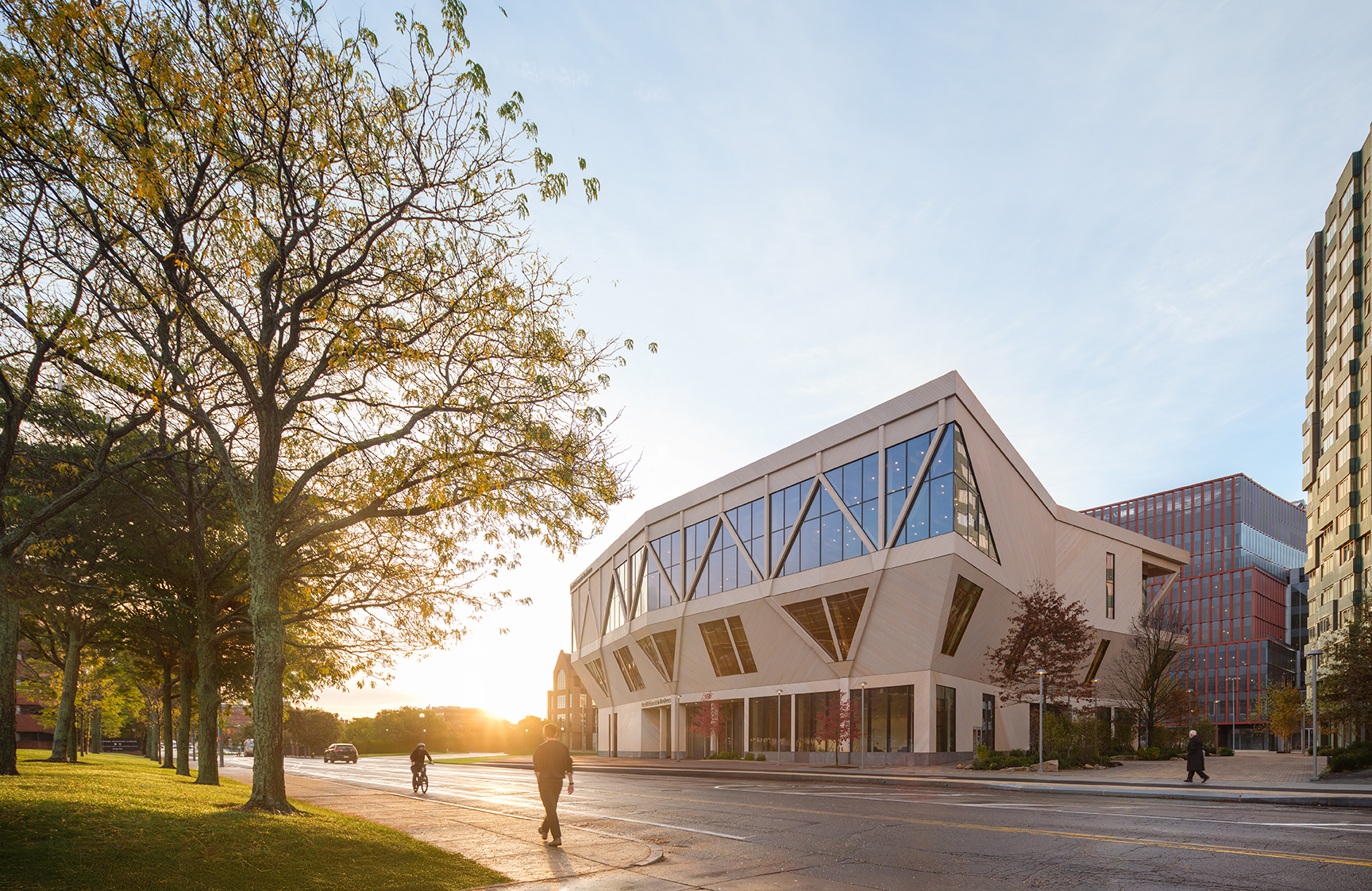
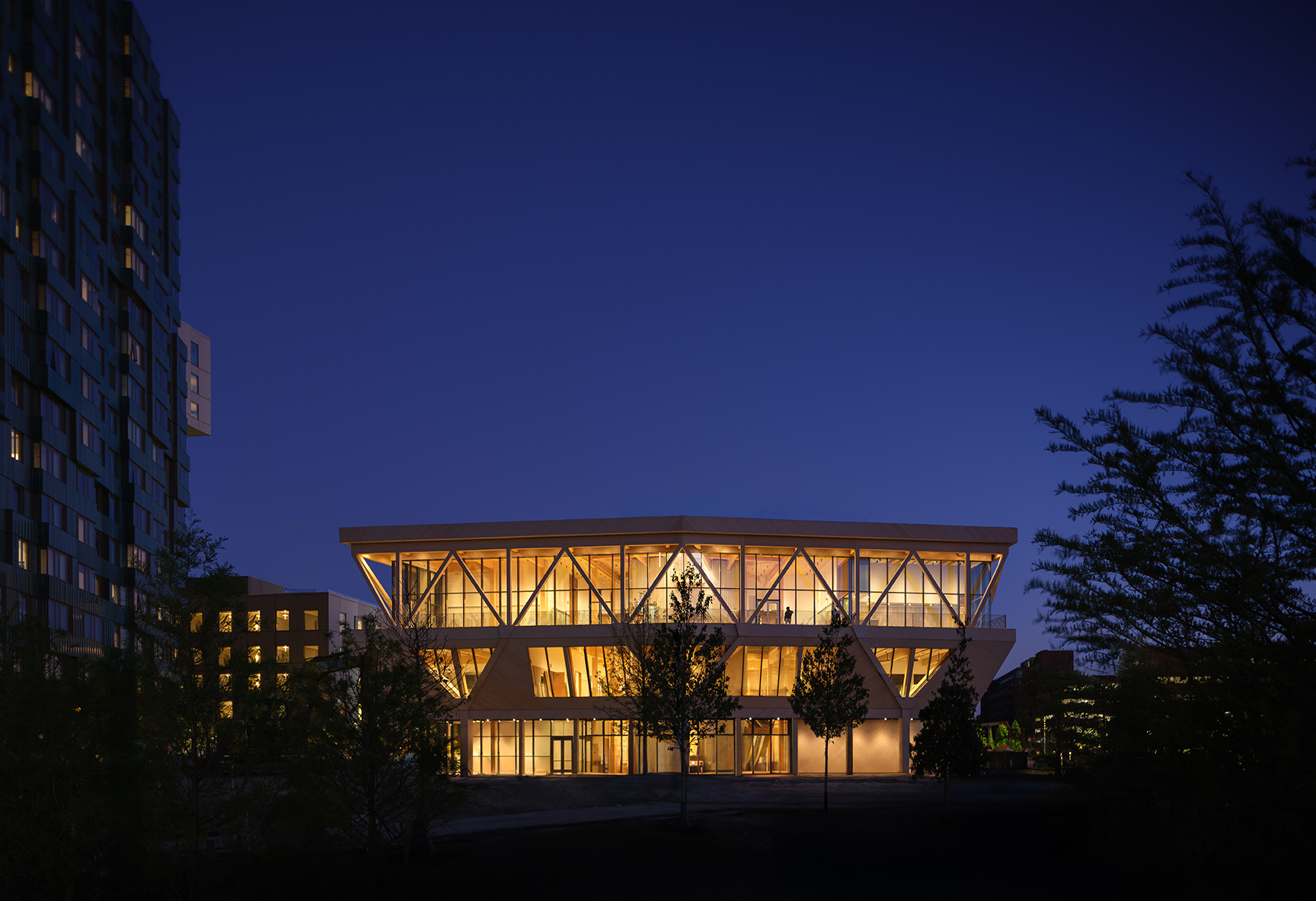
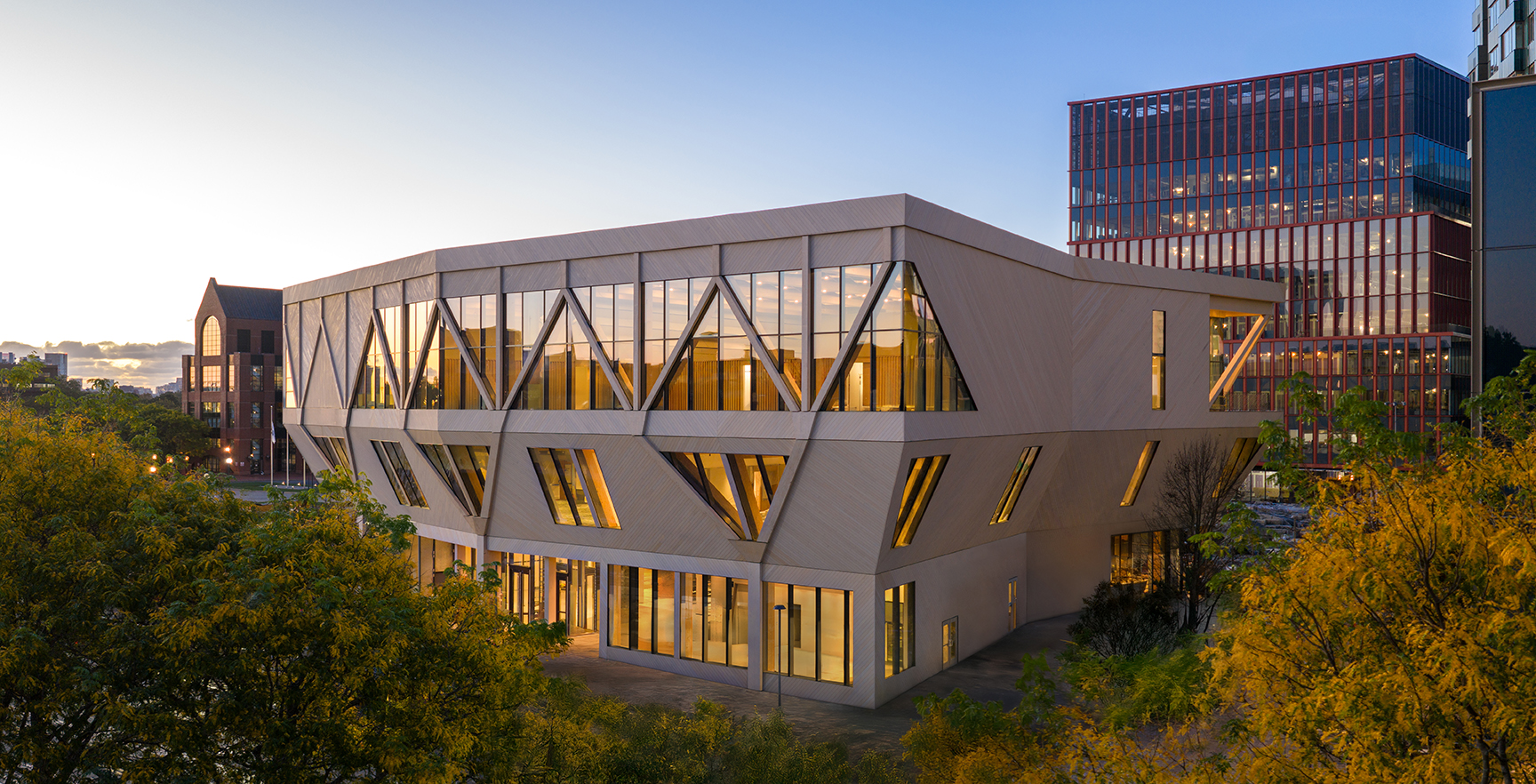
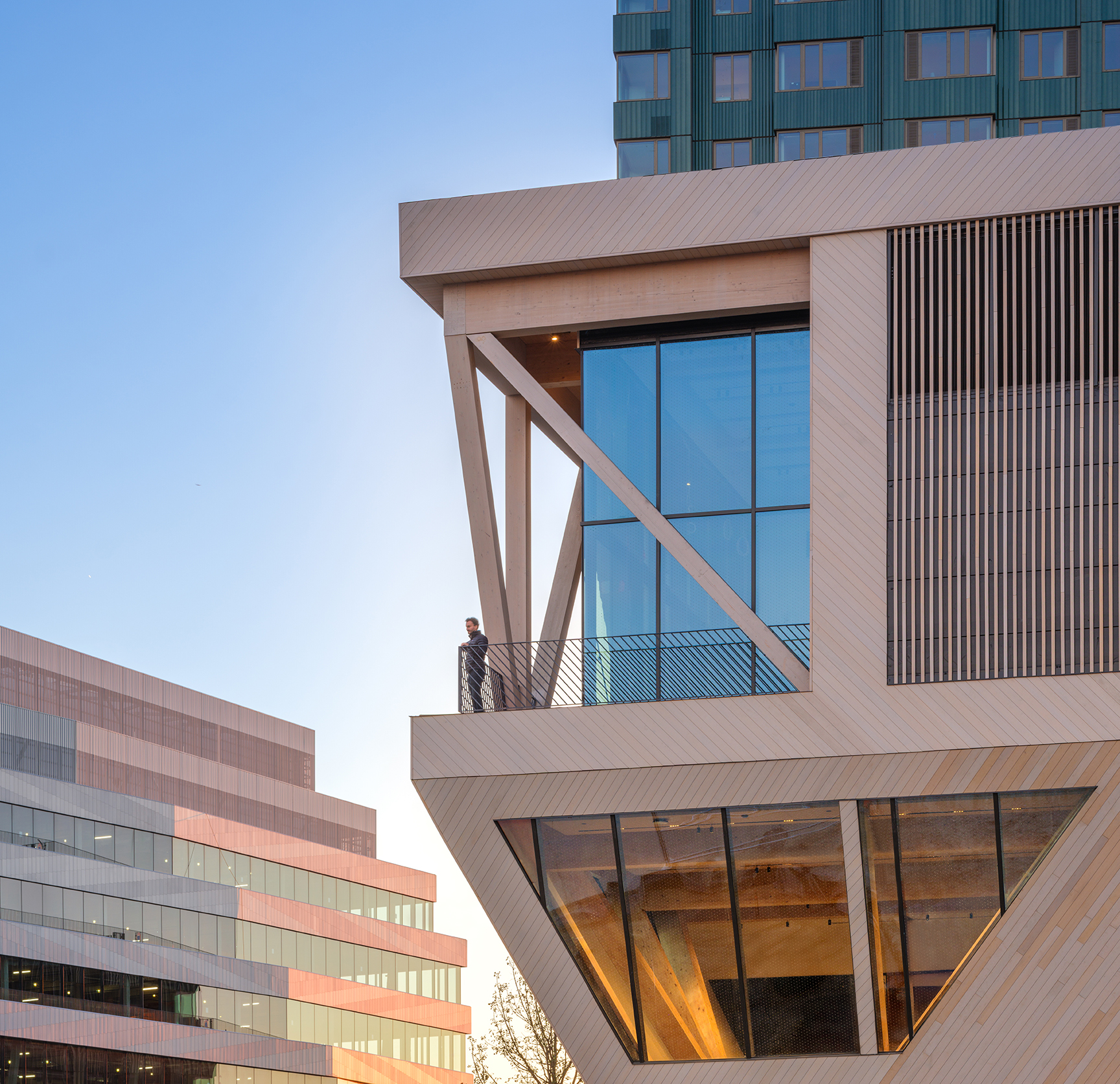
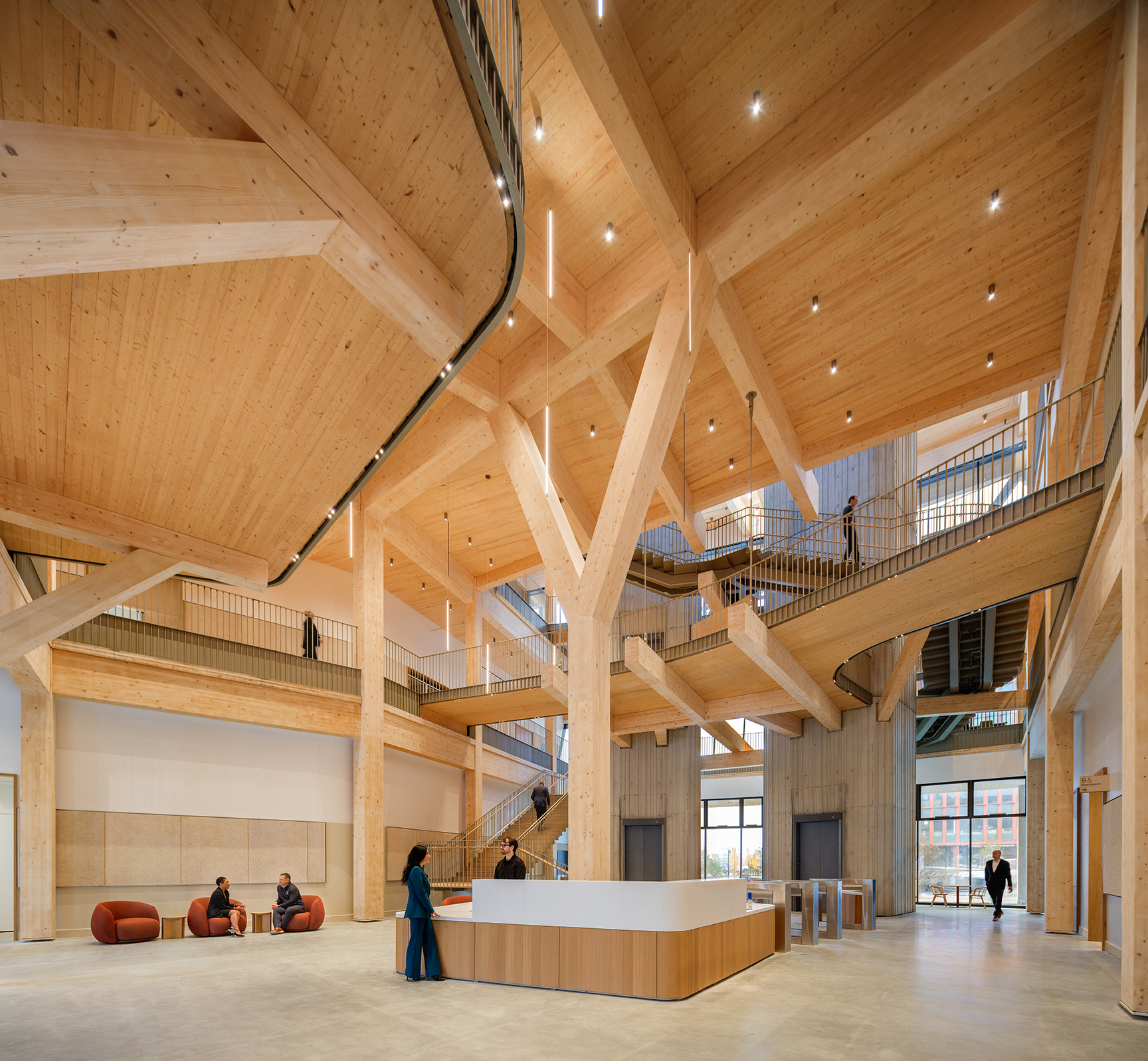
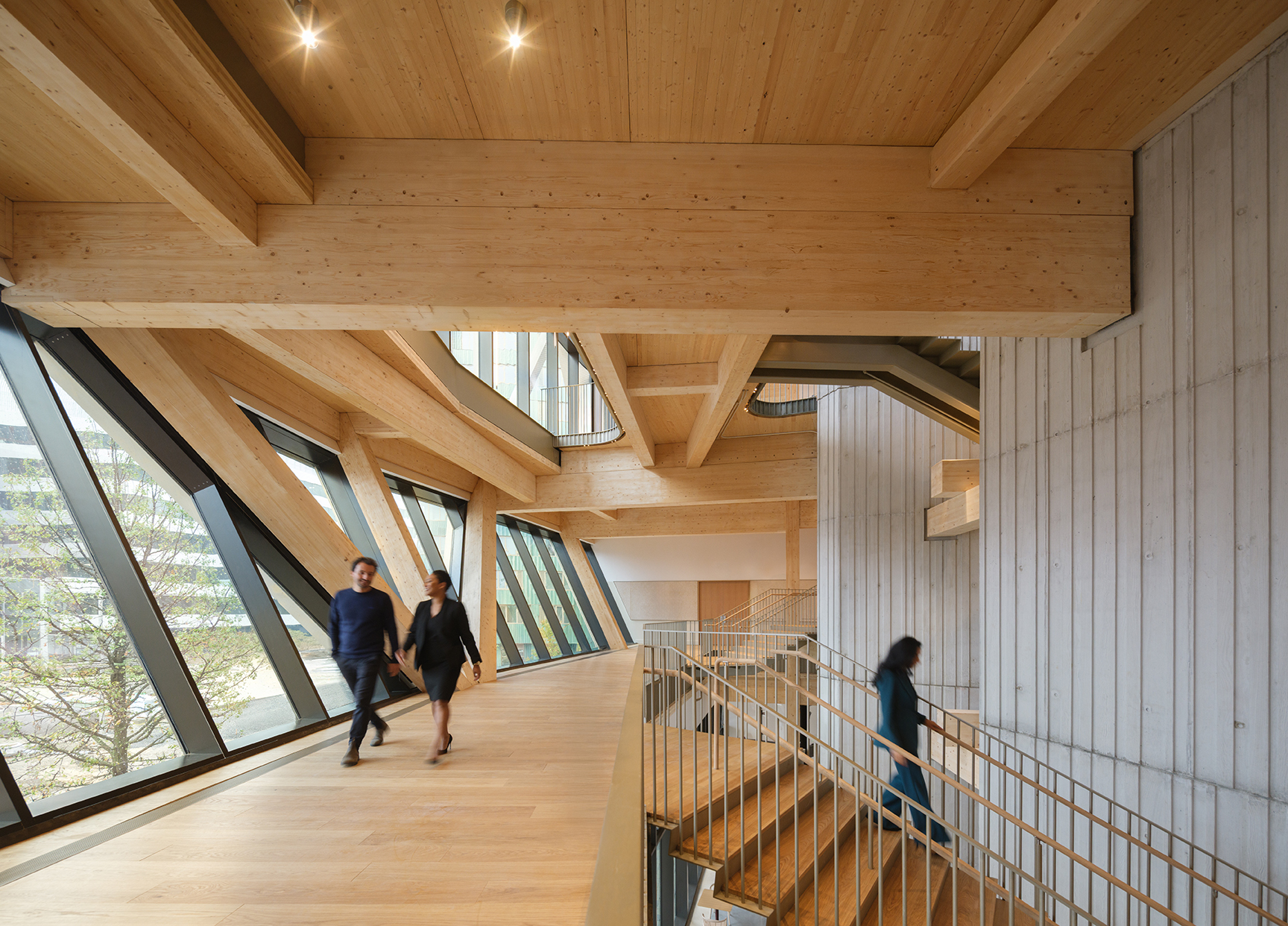
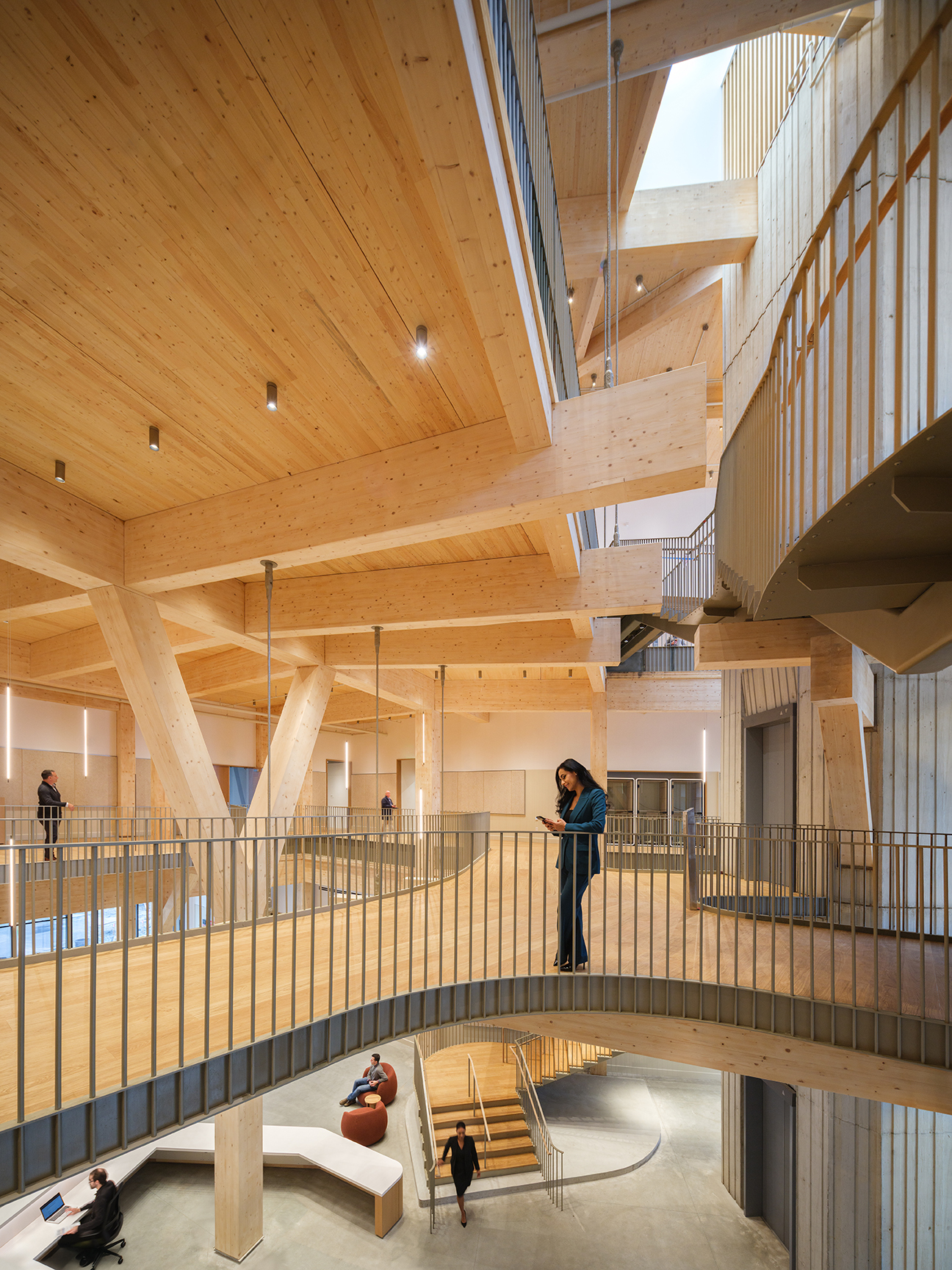
Sustainability strategies are deeply integrated into the design. As a beacon of collaboration and innovation, the project features material innovation with mass timber and low-carbon concrete, with anticipated LBC certifications to be granted after one year of occupancy. Through the use of healthier, low carbon materials—including responsibly sourced wood and concrete made with ground glass pozzolan derived from post-consumer glass containers, the building’s structure reduces embodied carbon by 55% as compared to a similar building using concrete and steel construction. Additional strategies—including a high performance façade, zero fossil fuel combustion on-site, daylighting and self-shading, rooftop solar panels, raised floor system, and connection to Harvard’s District Energy Facility—further reduce environmental impact. Healthier interior materials without harmful chemical classes like PFAS improve indoor air quality and occupant health, while a biodiverse landscape with bioswales and rainwater-reuse supports a vibrant year-round environment for wildlife. Targeting Living Building Challenge (LBC) Core and Materials Petal Certification, the Rubenstein Treehouse exemplifies how materials can advance climate, health, and social goals simultaneously.