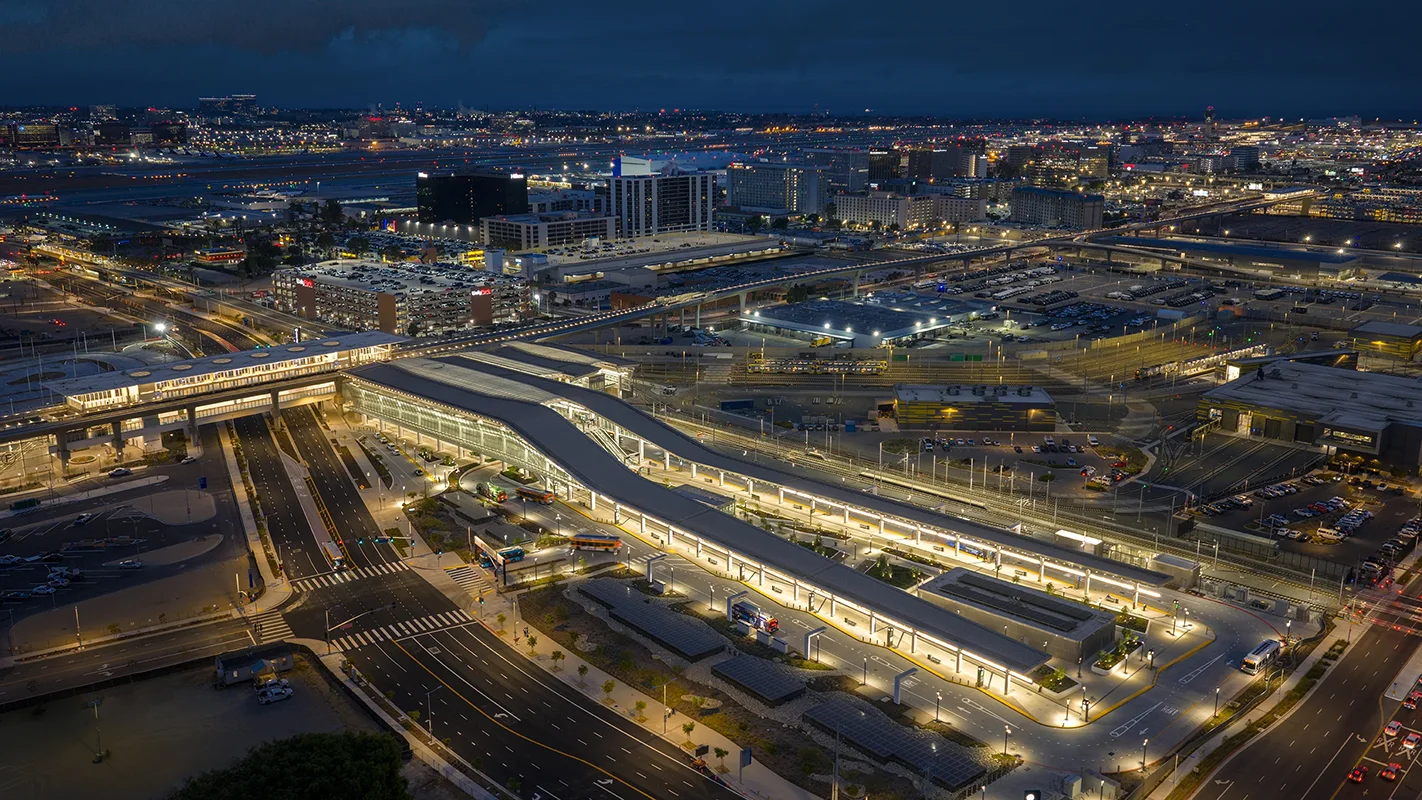
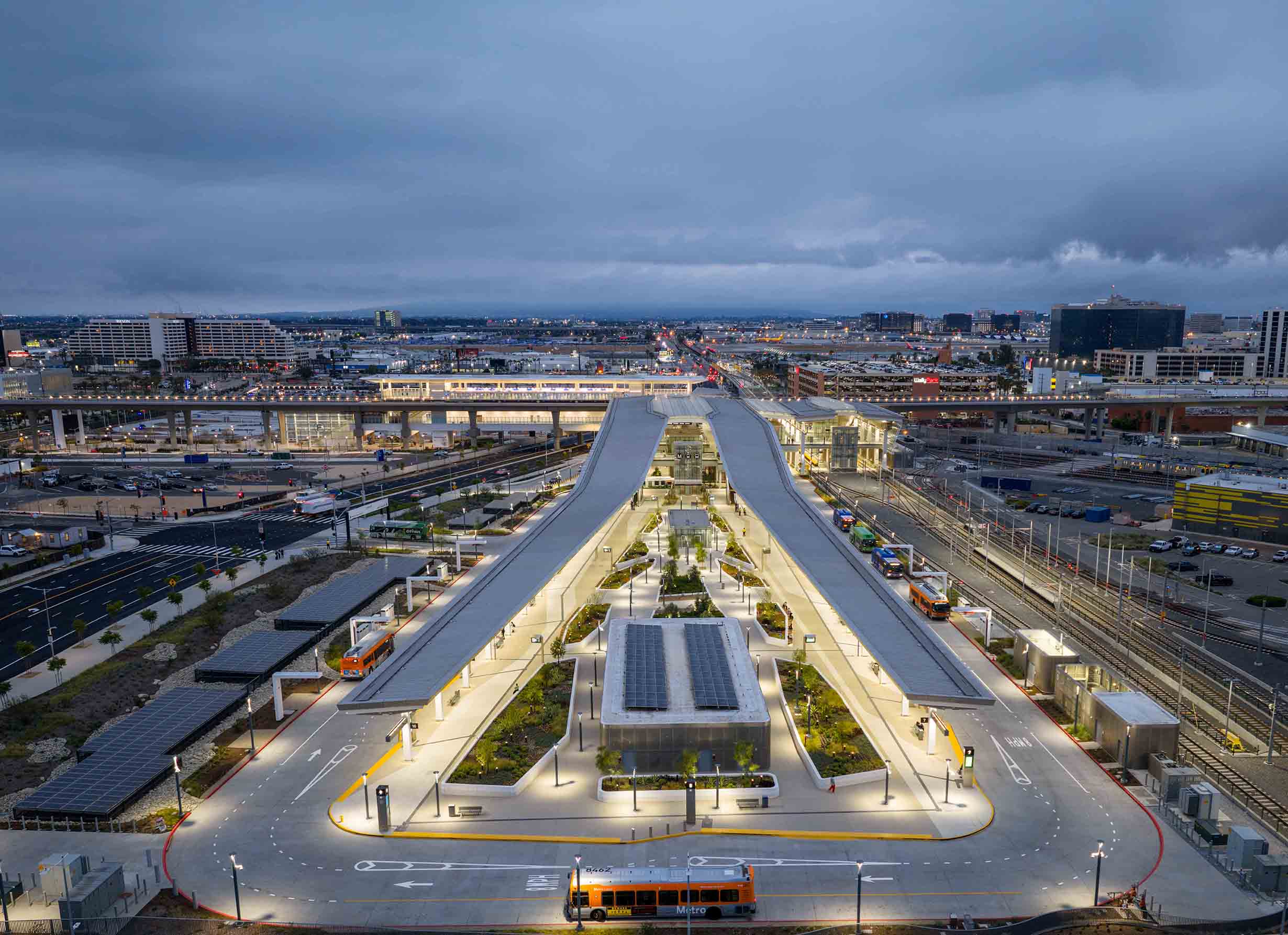
Los Angeles, long derided for its autopian urban landscape, is currently undergoing significant transformation through public transit initiatives. This project, the LAX/Metro Transit Center—one of the most ambitious transit-related efforts in the city’s recent history—expands the urbanism discourse in Los Angeles in numerous ways. Transforms what could otherwise be large-scale utilitarian transit infrastructure into an iconic regional center; Marks the culmination of a complex coordination process between two influential planning entities—LA Metro & Los Angeles World Airports; Coordinates the disparate needs of trains, buses, bicycles and pedestrians within a single place as a regional multi-modal hub; Gathers thousands of commuters from across the region, making it one of Los Angeles’ most inclusive places; Enhances an Equity Focus Community (EFC), where at least 40% of households are low-income and over 10% have no vehicle and helps make public transit more accessible to all with a $2 cross-county fare to LAX; Improves air quality and reduces heat exposure within the region over the long term; Converts a residual triangular-shaped land parcel from a parking lot to an identifiable destination; Provides a landscaped “oasis” amidst the vast “placeless” concrete expanse of parking lots and asphalted thoroughfares surrounding LAX; and Exemplifies how environmental sustainability practices can be incorporated into a mega-project.
//comments
Quite an admirable accomplishment for Los Angeles, which has been a long time in the coming, the fact that it’s not only designed in a pedestrian-oriented way, but it’s actually built. This project successfully transforms what is typically a hostile infrastructure condition into a civic space that is immediately legible. Getting mobility to LAX will have a drastic positive impact on the entire city.