
Lehi Park Bathrooms

IMG () copy featured

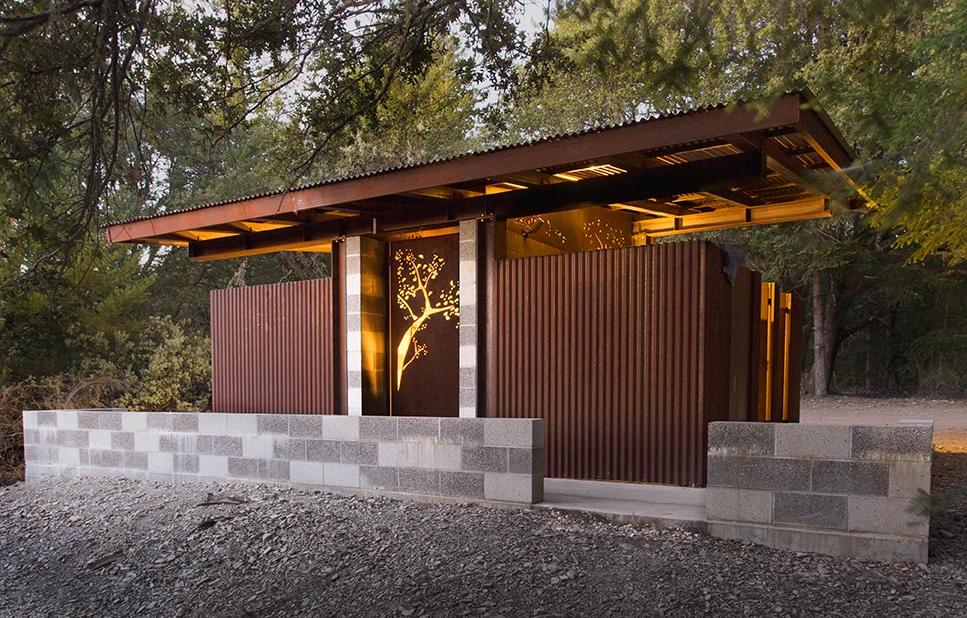
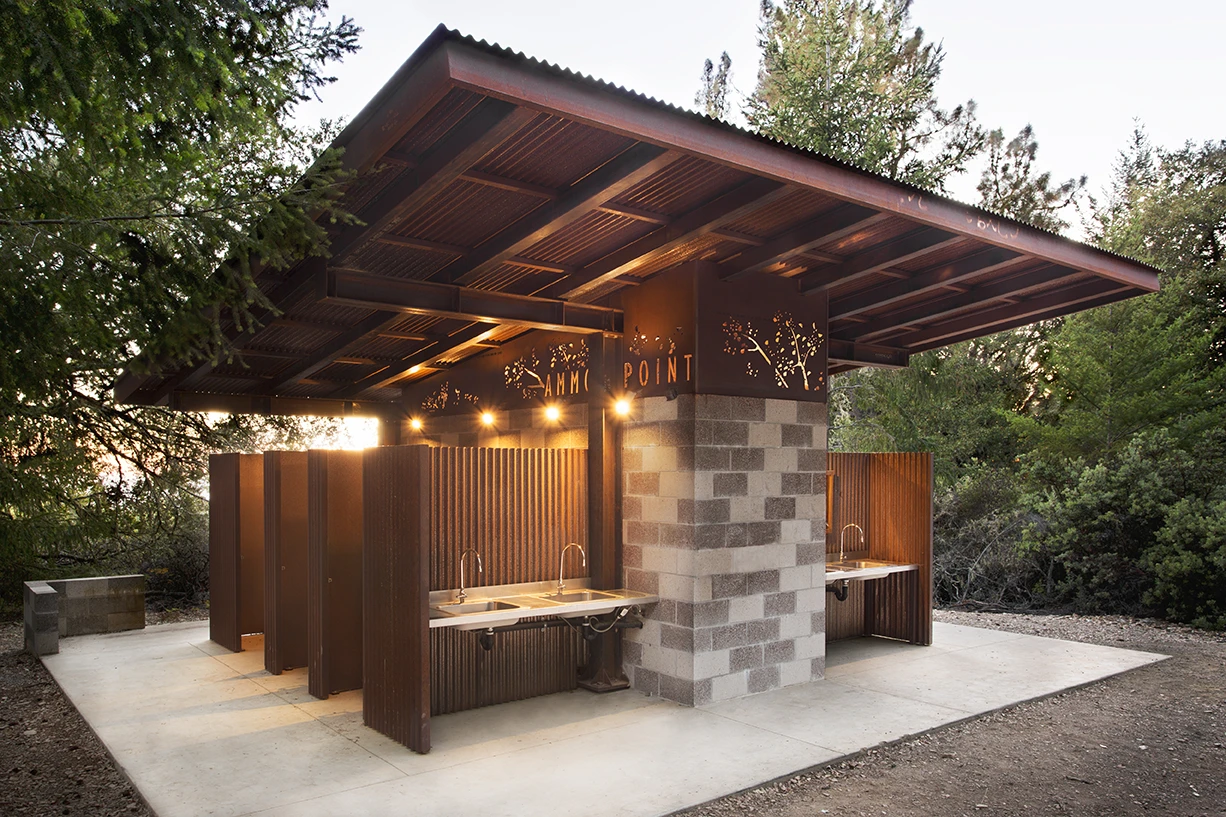
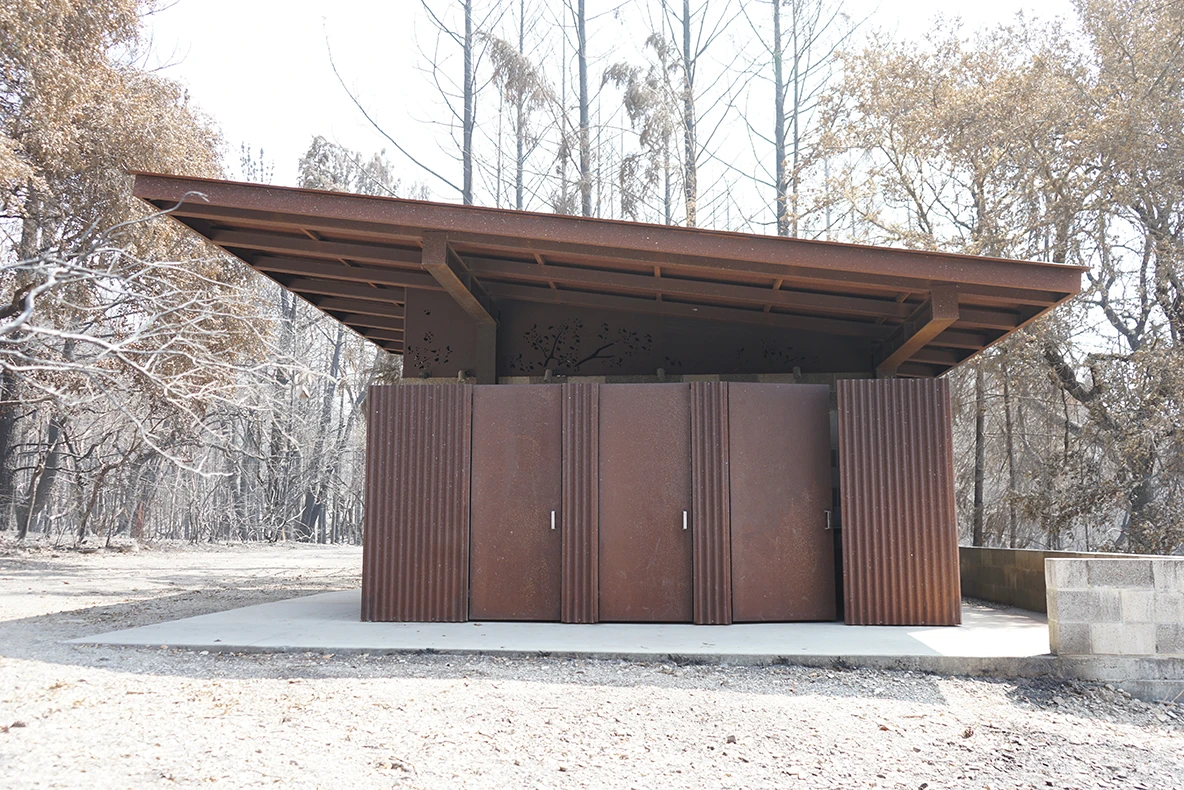
At a summer camp nestled high in the Santa Cruz Mountains, these bathrooms were designed to meet the unique challenges of the rugged, remote environment. The project had three main requirements: the buildings needed to be no-maintenance, cost no more than a standard public restroom, and function entirely off-grid. Despite these constraints, the resulting design exceeded expectations, offering both functionality and beauty.

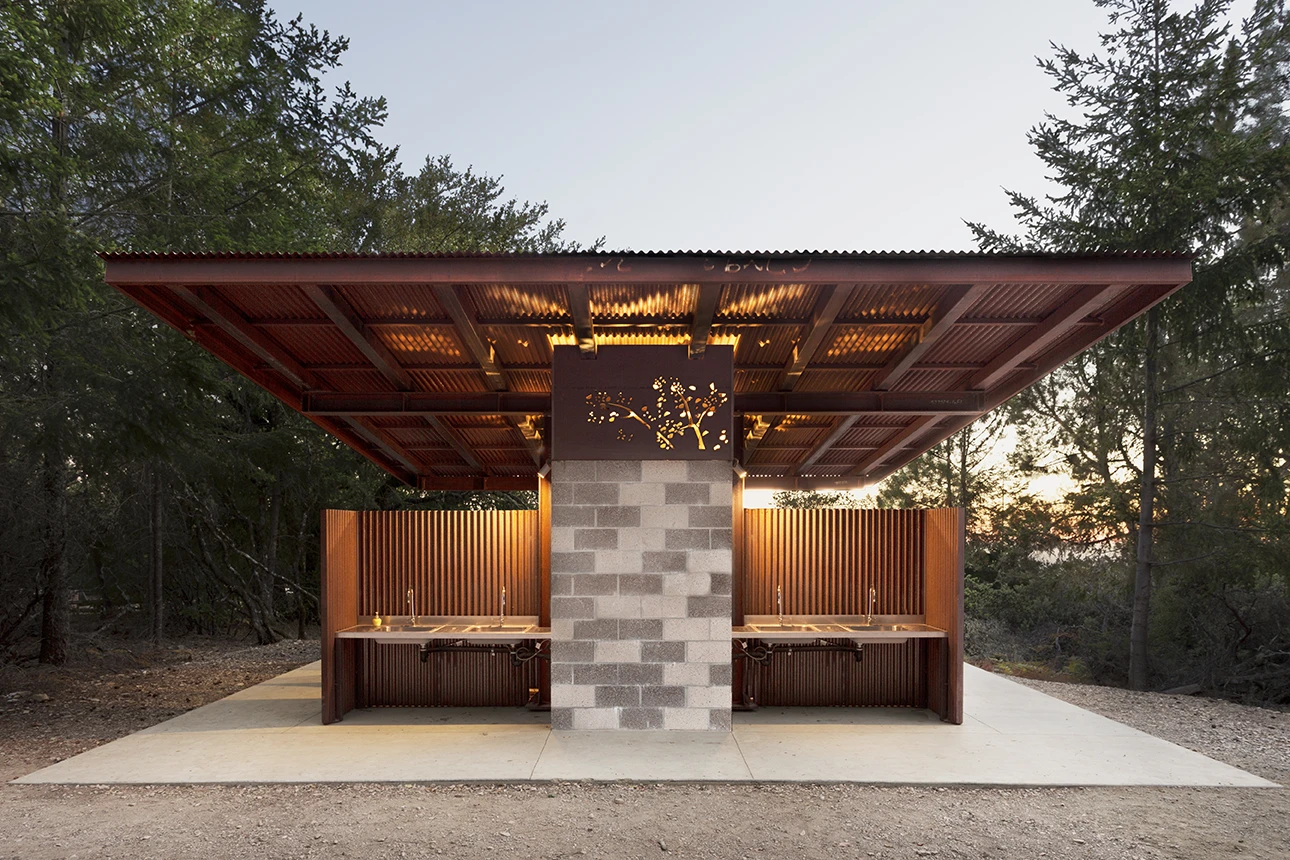
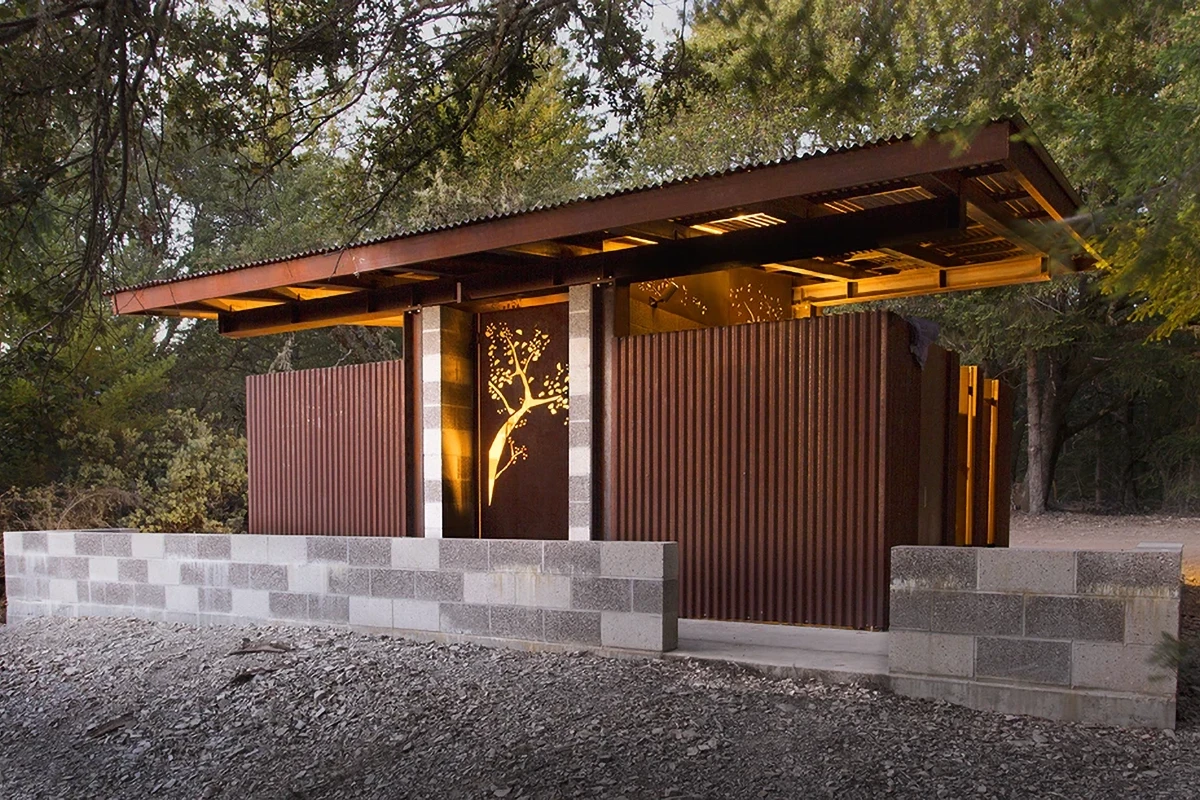
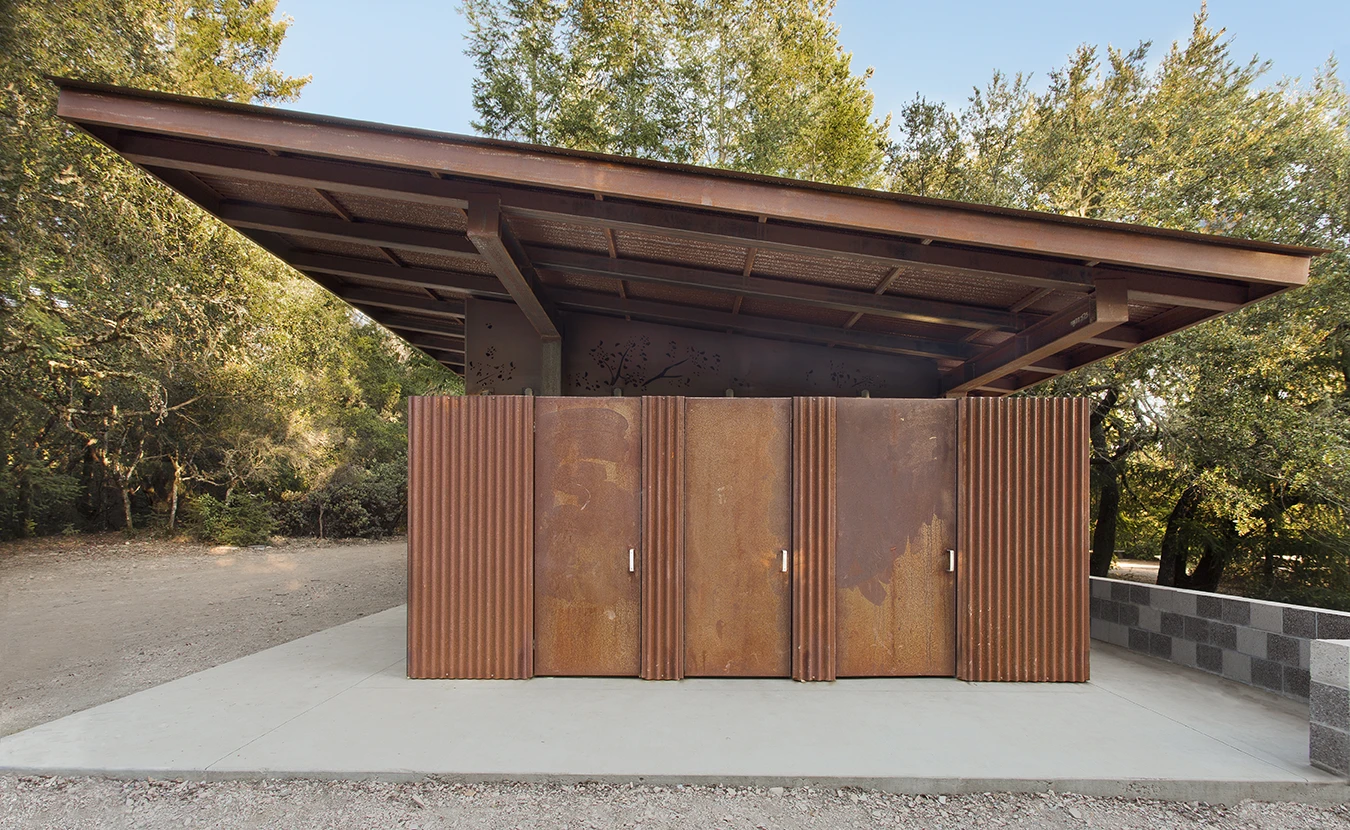
The bathrooms were built with durability and sustainability in mind. Mechanical and plumbing equipment are housed in a central core made of ground-faced CMU block for maximum resilience. Water jet-cut Corten steel panels were used above the core, serving as signage and a subtle homage to the wooded surroundings. Around this core, stalls and sinks made of corrugated Corten steel were arranged with both practicality and aesthetics in mind. A striking Corten roof, angled to optimize performance of a rooftop photovoltaic array, cantilevers outward to shelter the sinks and stalls.

The project was completed under budget, proving that thoughtful design stems from innovative ideas—not extravagant spending.

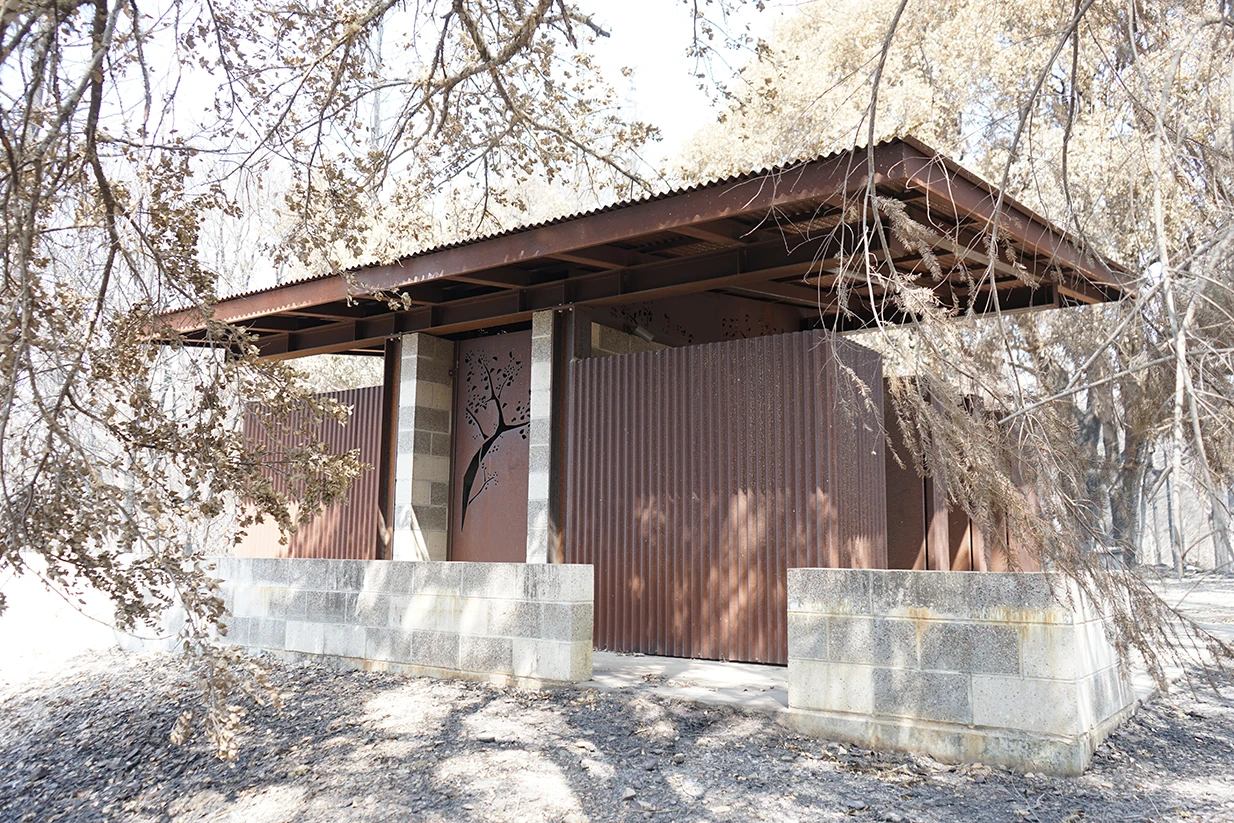
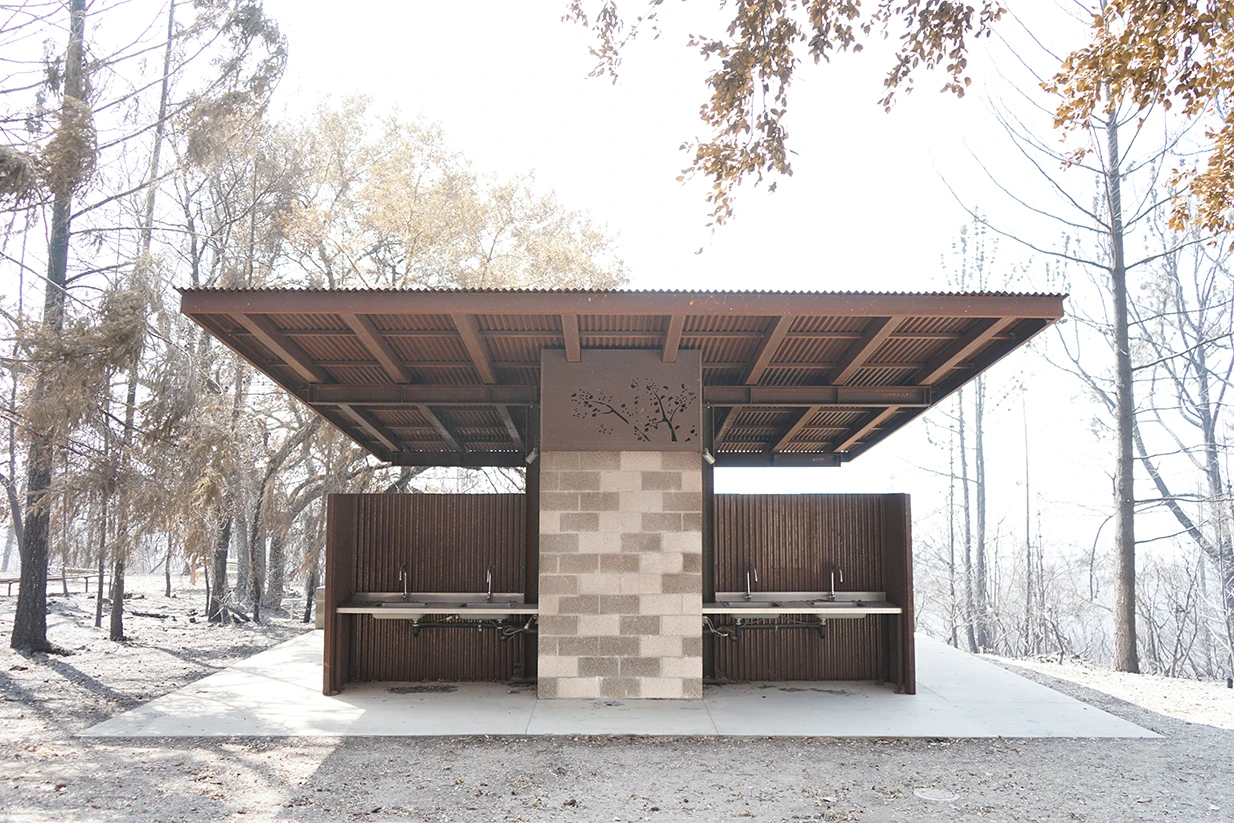
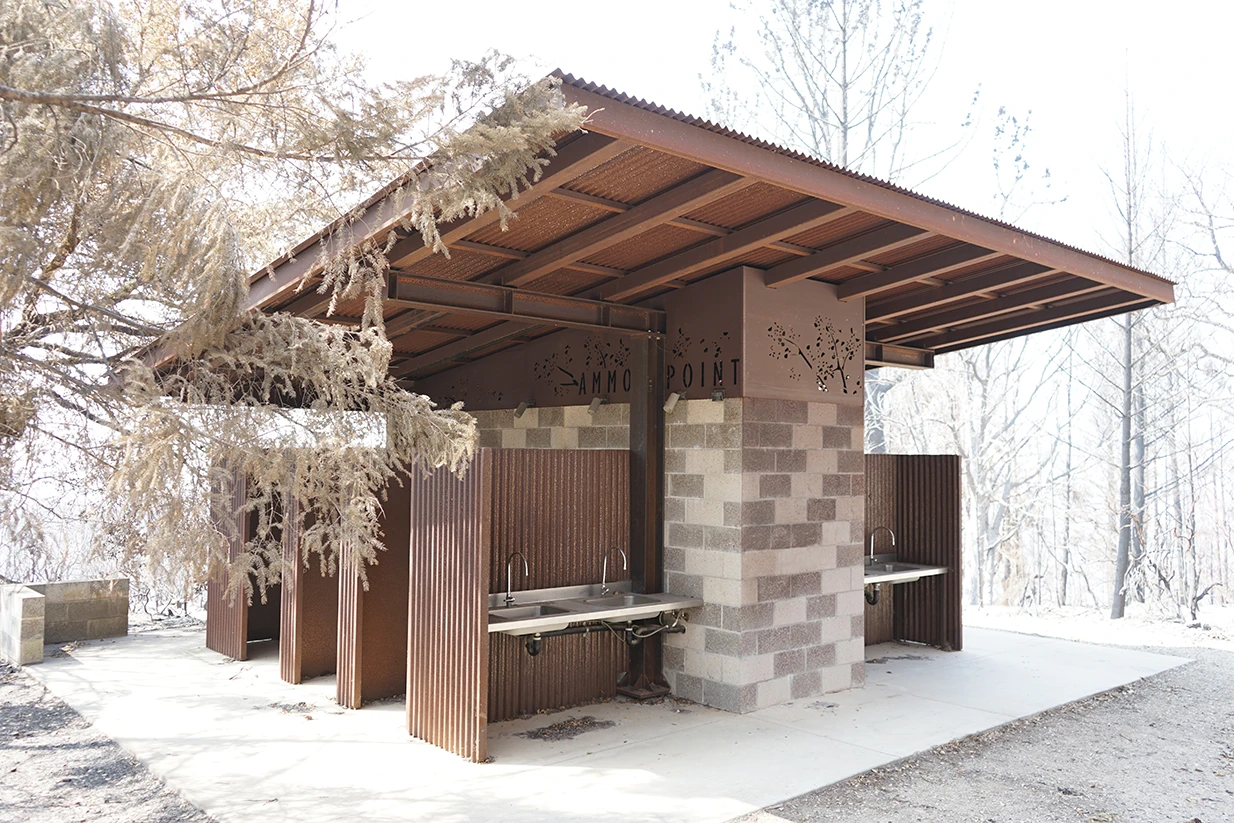
In August 2020, the CZU Lightning Complex fire tore through the Santa Cruz Mountains, burning over 86,000 acres and destroying nearly 1,500 structures. The camp was not spared, with flames consuming every building across its expanse—except these two bathroom and shower facilities. The structures emerged untouched, a testament to the fire-resistant materials and considered design. Even the toilet paper inside remained intact, underscoring their remarkable resilience in the face of disaster.

//jury comments

An oasis in the middle of the woods, and the fact that it survived a wildfire largely unharmed, untouched, is a testament to its fire resistance, setting an important tone given climate change. The formal solution is elegant yet simple, elevating its typology–a fully resolved gem of a small building. It’s so rare that one finds a building that exceeds its function in such a dramatic and handsome way.
//framework for design excellence measures
Measure 1: Design for Integration
This project embraces sustainability through durability, simplicity, and fire-resilient design. Rather than relying on complex systems or high-tech solutions, we focused on fundamental architectural choices: simple forms, passive strategies, and non-combustible materials like corten steel, CMU block, and concrete. These elements were selected to ensure the buildings could withstand wildfires, extreme weather, and decades of use with minimal maintenance.
Our goal was to design structures with a 50+ year lifespan, reducing waste and the environmental cost of frequent repairs or replacement. The roof’s orientation maximizes solar energy collection, supporting off-grid functionality. The open-air layout promotes natural ventilation and minimizes energy needs while maintaining user comfort.
After the 2020 CZU Fire destroyed most of the camp, the bathroom buildings remained unharmed, validating the effectiveness of our design. The owners recognized that resilient, sustainable architecture not only enhances long-term value—it also costs no more than conventional construction when thoughtfully executed.
As a result, we are now rebuilding the camp with this same approach, setting a new standard that benefits not just the occupants and the camp community, but also the environment through long-term resource conservation and fire-adaptive design.
Measure 2: Design for Equitable Communities
During the pre-design phase, Fuse Architects held focused engagement sessions with camp leaders, mothers of campers, and park directors to understand the unique needs of the girls’ camp community. Their input directly shaped the program—ensuring privacy, safety, ease of maintenance, and fire resilience were all prioritized.
This collaborative approach resulted in facilities that are not only highly functional but also resonate with the values and expectations of the camp community. The buildings blend into the natural landscape through a minimal footprint, earthy materials, and passive design strategies, preserving the beauty and quietude of the remote 1,000-acre site.
Measure 3: Design for Ecosystems
Careful siting of the structures were needed due to two protected plant species located near the site. We were able to select a disturbance area that did not affect these protected species. Information signs regarding these two protected species are located throughout the park to inform users. We collected seeds from nearby plants and grew additional plants to use for landscaping. 
Measure 4: Design for Water
Water servicing the toilets and showers is from well water. Each building collects rainwater from the roof for irrigation use and other uses.
Measure 5: Design for Economy
The original restroom and shower buildings were built with wood. They burnt down entirely in the 2020 CZU fire. We convinced the owners to allow us to design in concrete and steel. Our build costs matched wood frame construction costs of the original design that burned. The new designs survived the fire. In fact, all of the wood framed buildings in the park burnt to the ground. These building survived with the toilet paper still on the rolls, lights on and fully functioning as if a fire had never occured.
Measure 6: Design for Energy
The roof slope is designed to face south for optimal sun exposure. The lighting systems are on timers to control energy usage. All lights are LED for maximum efficiency.
Measure 7: Design for Well-Being
These building are complety open air with no glazing.
Measure 8: Design for Resources
The primary structural system is steel and concrete. These materials were selected for fire resistance, durability, and to be low maintainance. No lumber was used.
Measure 9: Design for Change
These buildings are on a remote 1000 acre parcel located in the Santa Cruz Mountains forest. They were designed to withstand extreme fire events, extreme weather and wind and utilize materials that would require little to no maintainance.
Measure 10: Design for Discovery
We recieved feedabck from the users; girls and their camp leaders regarding privacy in the showers. We added strips to the steel that would close any small gaps in the shower door assembly.
Skip to content