
Stanford Residence

Stanford Residence copy feature

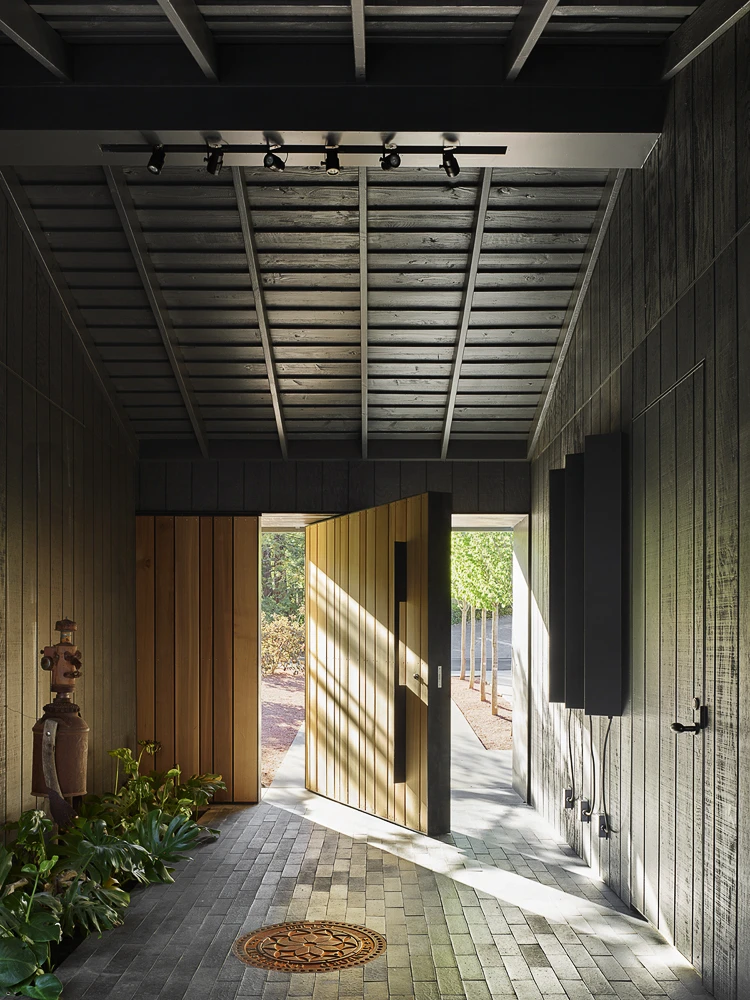
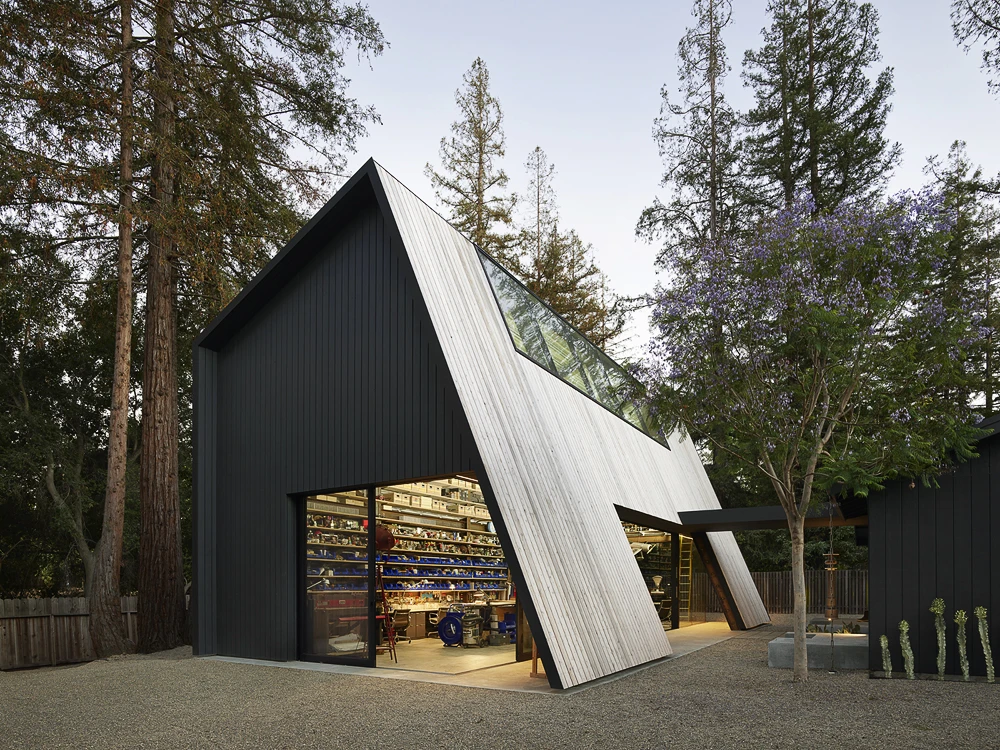
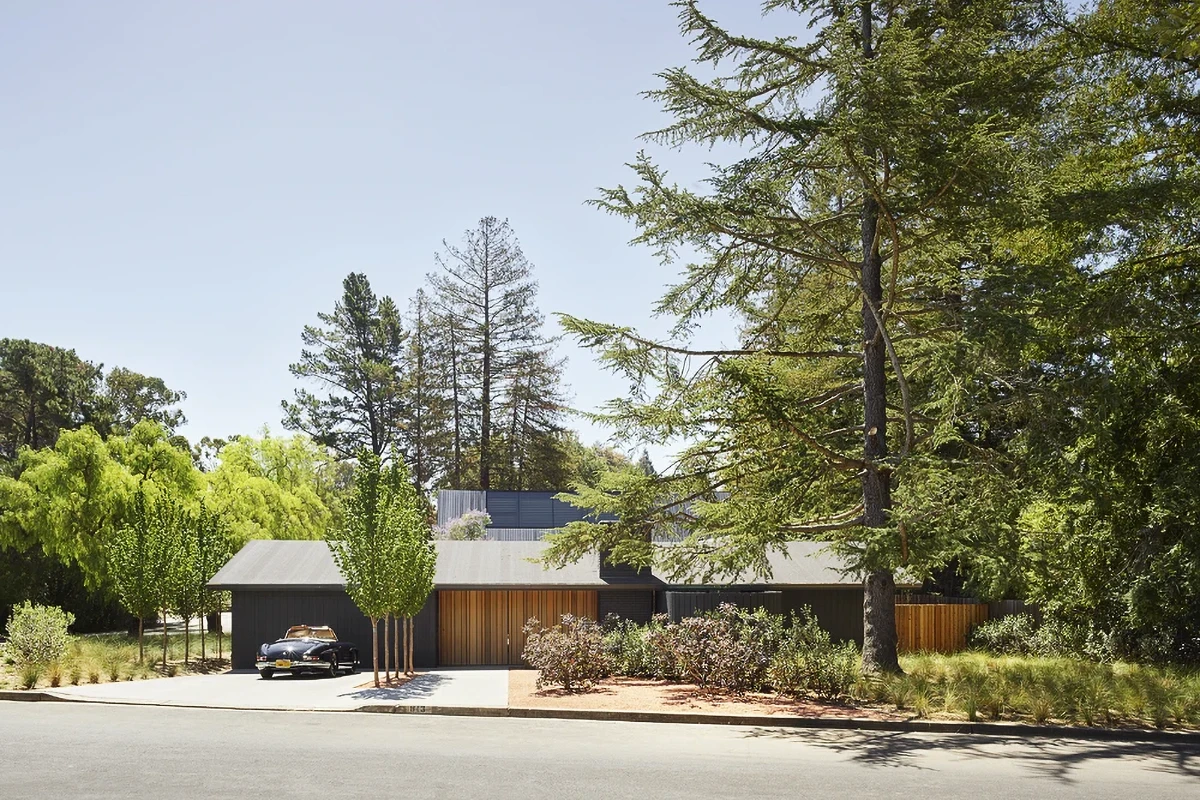
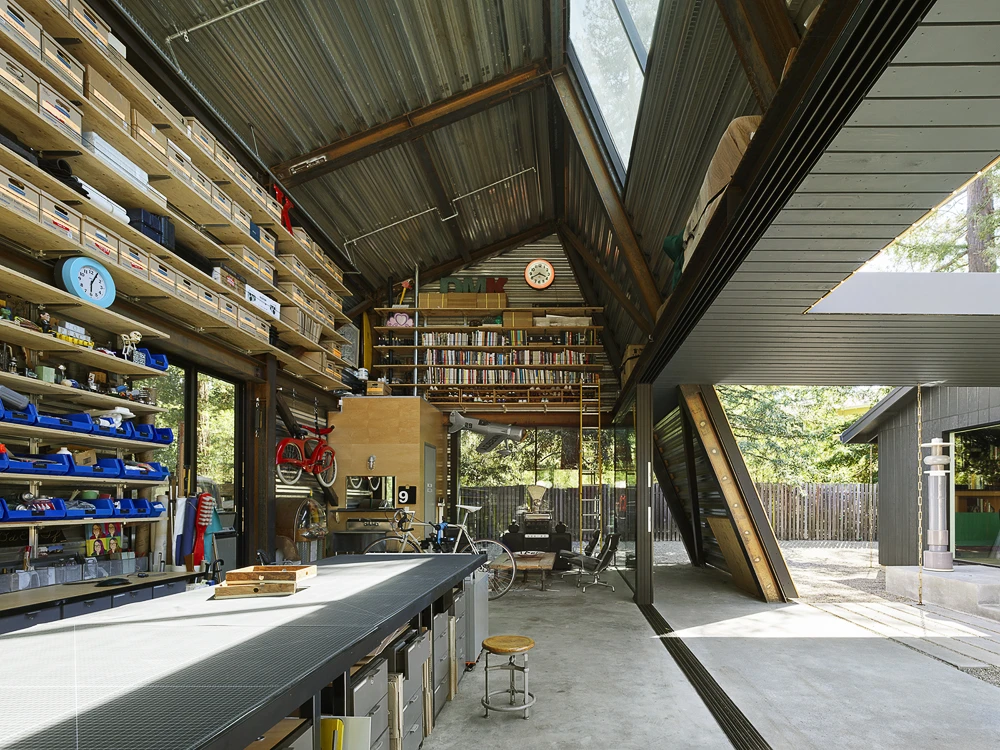
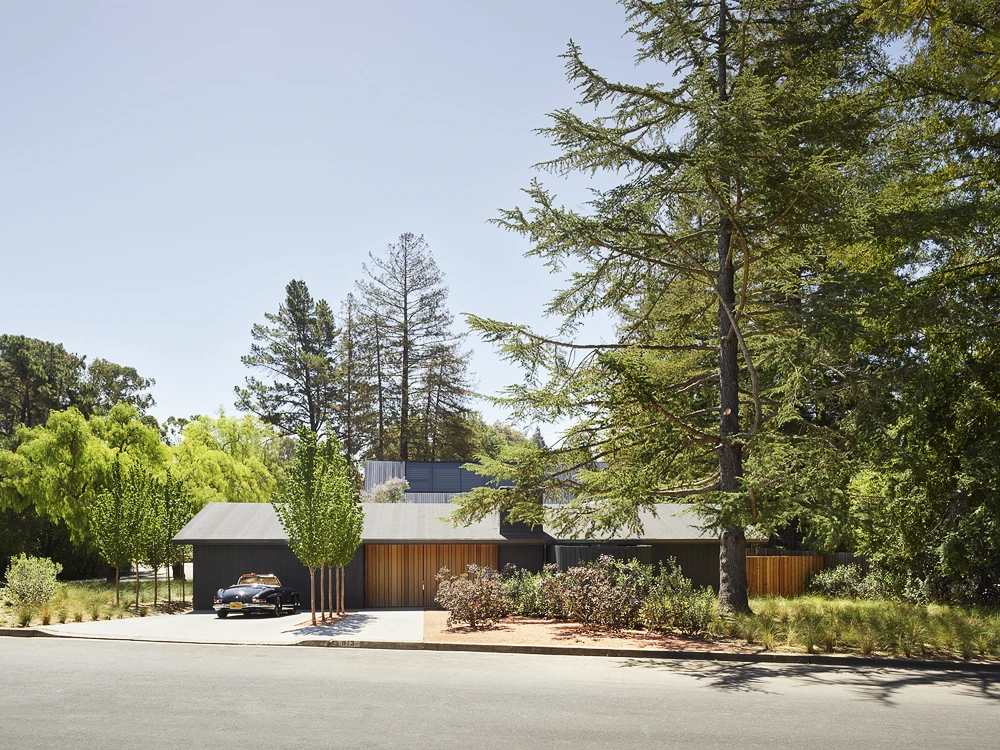
Built for a professor at Stanford University with a lifelong passion for design, this remodel and workshop addition celebrate the utilitarian and the abstract. While the remodeled exterior emphasizes a stealth monochromatic palette, its interior boasts radical openness and modern detailing. The workshop addition formally abstracts the archetype of a barn, storing a curated collection of artifacts and providing an atmosphere for thoughtful introspection and unbounded creativity.

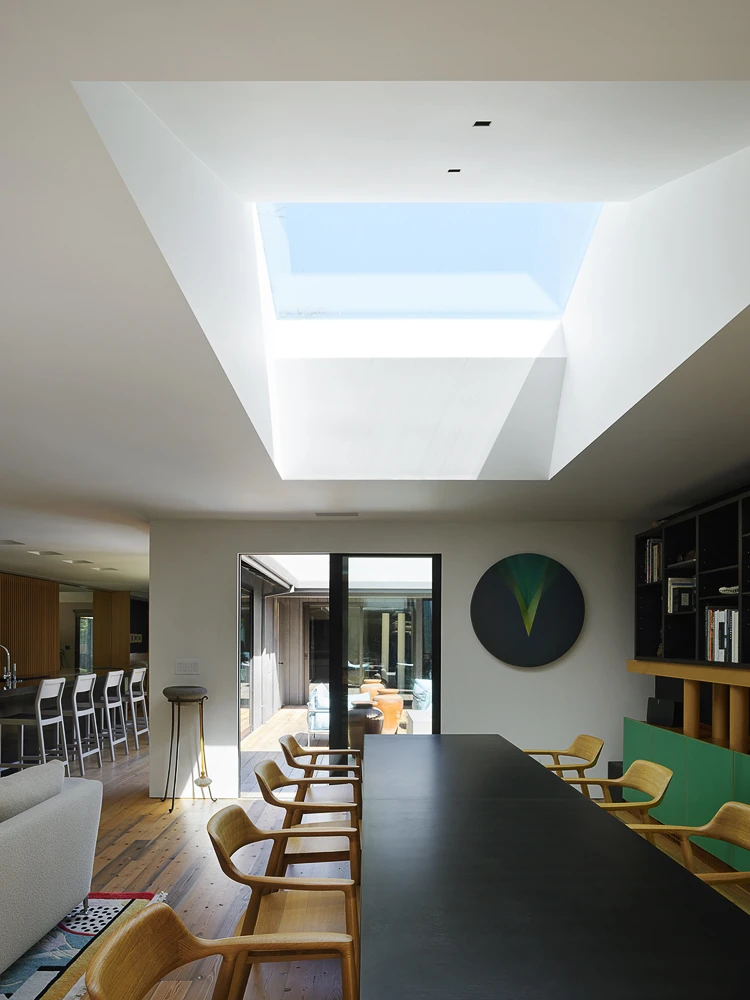
In reworking the compartmentalized floor plan of the original 1970’s home, the team sought to distill the design to experiences central to day-to-day life — workshop, living room, and bedroom. Among the home’s newly connected spaces, the courtyard living room becomes the undisputed heart of the home — the place where the client receives visitors, hosts meetings, or reads in solitude. The home’s open and connected spaces ultimately flow to an art studio, a new separate, modern structure dedicated to unbounded exploration. The studio’s angled, industrial frame, wrapped in wood and glass, offers a clever response to local pitched-roof mandates, while also fulfilling the client’s wishes for a raw and tough space that is ready for anything. Outside, a landscape of drought-tolerant plantings resides in playful dialogue with the home.

//jury comments

The Stanford residence is an exuberant embodiment of its client, and this, the workshop space is delightful, especially given the context of its neighborhood. The renovation of the existing house adjacent to it is also consistently surprising and offers delight in a way that kind of foreshadows that that new workshop space introduced. So the entire experience of the house has a consistent quality of surprise and delight.
//framework for design excellence measures
Measure 1: Design for Integration
Integration: This remodel and addition are served by passive cooling and cross ventilation that interconnect programmatic spaces with their surrounding landscape. A bedroom blends into a kitchen, which blends into living rooms both inside and out. A covered breezeway connects to a new studio addition, and all spaces are served by sliding glass doors and north facing clerestory windows and skylights. During hot summer days, a custom designed UV-rated courtyard canopy provides cooling shade.
Resources: In addition to the project’s climatic response, the team sought opportunities of re-use such as retaining the house’s structure, integrating modern detailing into the original T1-11 plywood siding, and selecting wood flooring made of piers salvaged from San Francisco’s old Transbay Terminal.
Ecology: The landscape rethinks the traditional front yard and presents a playful, imaginary world composed of drought-tolerant plantings and permeable areas of gravel. Cacti, understory grasses, native trees and hedges screen the private and public realms of this prominent corner lot. Celebrating color, seasonality, and the passage of time, muhly grasses cast a field of pink over the landscape in the fall. The landscape design resides in playful dialogue with the home, and is a gift to the neighborhood as well as local fauna.
Measure 2: Design for Equitable Communities
Seeking to maintain the natural quality and character of the residential neighborhoods, Stanford Faculty Housing and adjoining neighbors participated in reviewing and approving the design.
Measure 3: Design for Ecosystems
Ecology: The landscape rethinks the traditional front yard and presents a playful, imaginary world composed of drought-tolerant, pollinator-friendly plantings and permeable gravel. Cacti, understory grasses, native trees and hedges screen the private and public realms of this prominent corner lot. Celebrating color, seasonality, and the passage of time, muhly grasses cast a field of pink over the landscape in the fall. The landscape design resides in playful dialogue with the home, and is a gift to the neighborhood as well as local fauna.
Measure 4: Design for Water
Stormwater is captured and managed through a system of permeable ground cover, french drains, rain chains and gutters. Low flow fixtures and drought tolerant plantings reduce water use.
Measure 5: Design for Economy
As a hybrid home-office-workshop-meeting space, the residence supports many uses. The workshop and courtyard are unconditioned spaces; they expand usable areas without increasing energy consumption.
Measure 6: Design for Energy
In the house, new sculptural voids with skylights enhance daylight and sightlines without introducing excessive heat gain. Living spaces extend to the courtyard-living room, where a custom UV-rated canopy floats over the space to provide cooling shade. At the studio, indirect light from north-facing clerestory windows recreates the classic painters studio and provides an atmosphere for introspection and creativity.
Measure 7: Design for Well-Being
The home’s convenient location enables a life of more bicycling and less driving. Passive design strategies provide for abundant fresh air and natural light. During occasions when the home is closed-up, MERV 13 filters maintain indoor air quality.
Living spaces extend to the courtyard-living room, where a custom UV-rated canopy provides cooling and protective shade. At the workshop, indirect light from north-facing clerestory windows recreates the classic painters studio and provides an atmosphere for introspection and creativity.
Towering redwood and playful landscape of cacti, understory grasses, native trees and hedges provide a connection to nature and moments of delight.
Measure 8: Design for Resources
In addition to the project’s climatic response, the team sought opportunities of re-use such as retaining the house’s structure, integrating modern detailing into the original T1-11 plywood siding, and selecting wood flooring made of piers salvaged from San Francisco’s old Transbay Terminal.
Measure 9: Design for Change
Earthquakes are always a likely threat to building structures in the Bay Area. Close collaboration with the structural engineer produced a robust solution that strengthens and adapts original structural elements to support the architectural design. Additionally, quality materials, products and assemblies, such as the rainscreen wall at the studio, were specified and detailed carefully to ensure resilience over the passage of time.
Measure 10: Design for Discovery
The design of a private residence involves an ongoing dialogue between the design team and client starting with the first consultation and continuing until well after the project is completed and client has moved in. If one is lucky, as in this case, it is a conversion that lasts years and spans projects and project types. This project represents a departure in that it is one of the first recorded as part of the AIA 2030 DDx. Tracking EUI data has provided a helpful framework for cross-referencing energy performance across projects.
Skip to content