
San Francisco State University, George and Judy Marcus Hall for the Creative Arts

SFSU Hero Image&Project Board in dpi ©Henrik Kam copy featured

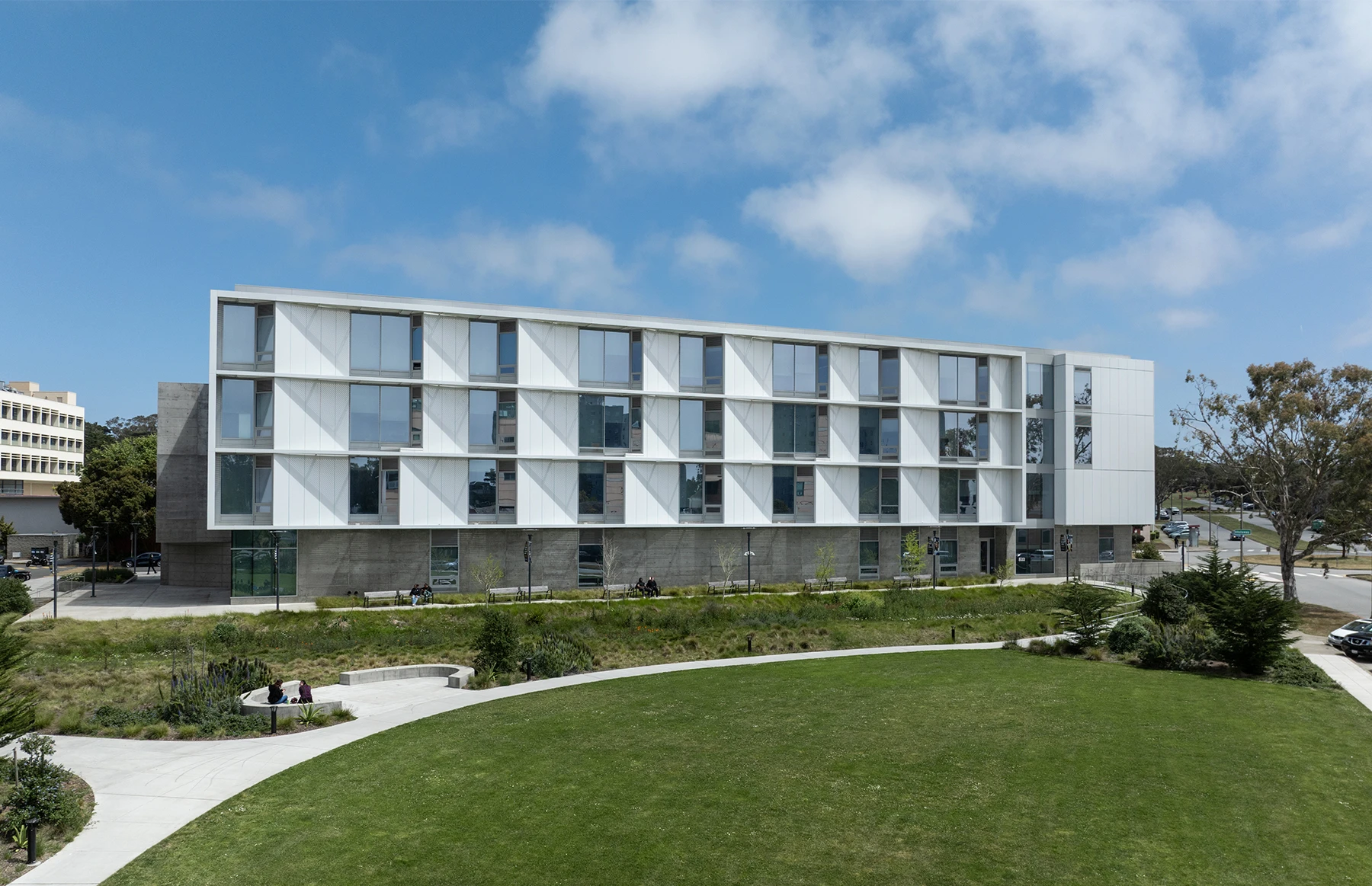
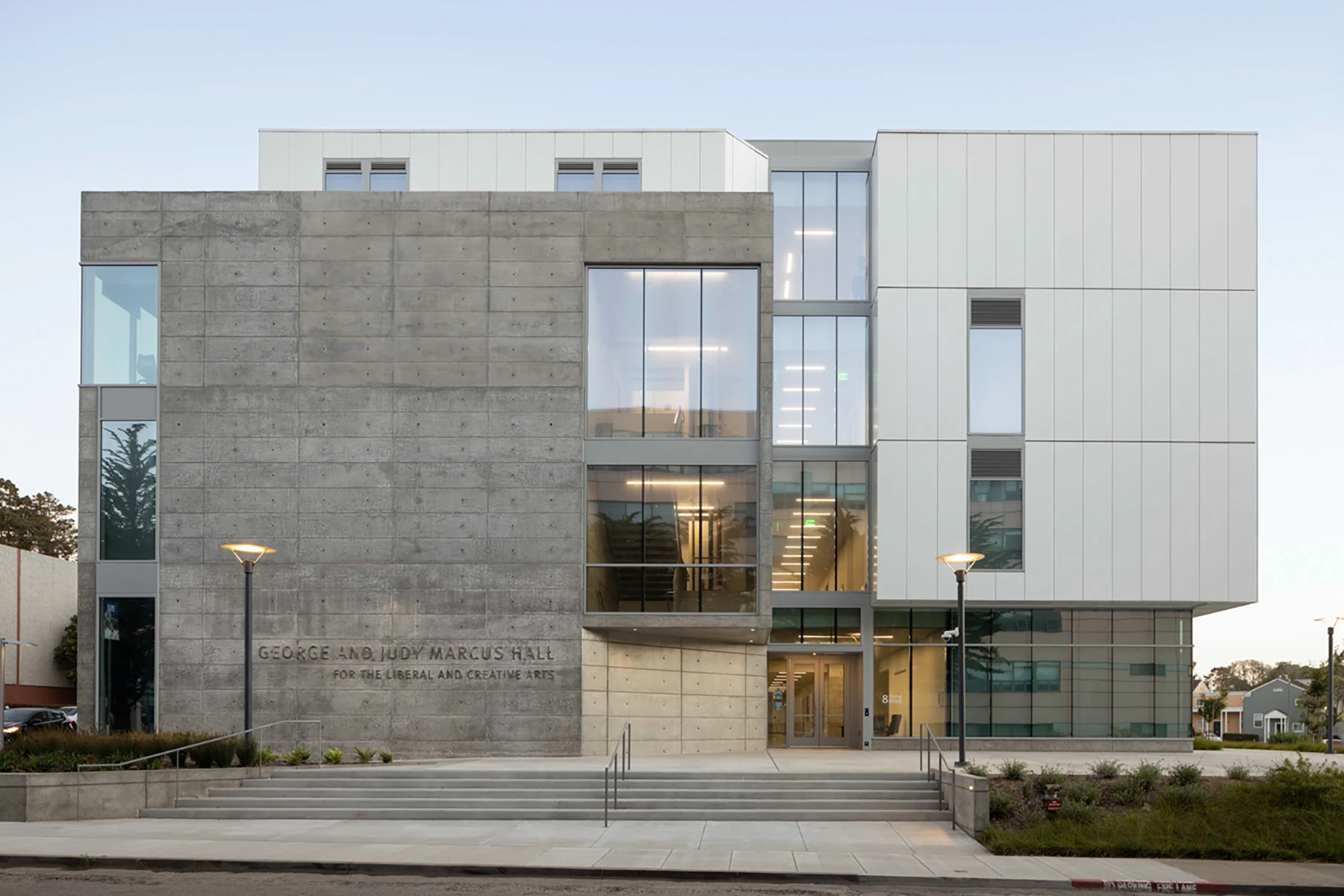
The San Francisco State University (SFSU) Marcus Hall includes all of the Broadcast and Electronic Communication Arts (BECA) program, College of Liberal & Creative Arts (LCA) offices, and interdisciplinary lecture spaces. The project is conceived as a flexible learning and production environment for teaching electronic media capture, editing, and broadcast. The design consists of a four-story bar-oriented north-south. The ground floor houses highly controlled environments and acoustically sensitive spaces dedicated to specialized content creation. The upper three floors are comprised predominantly of classrooms and offices.

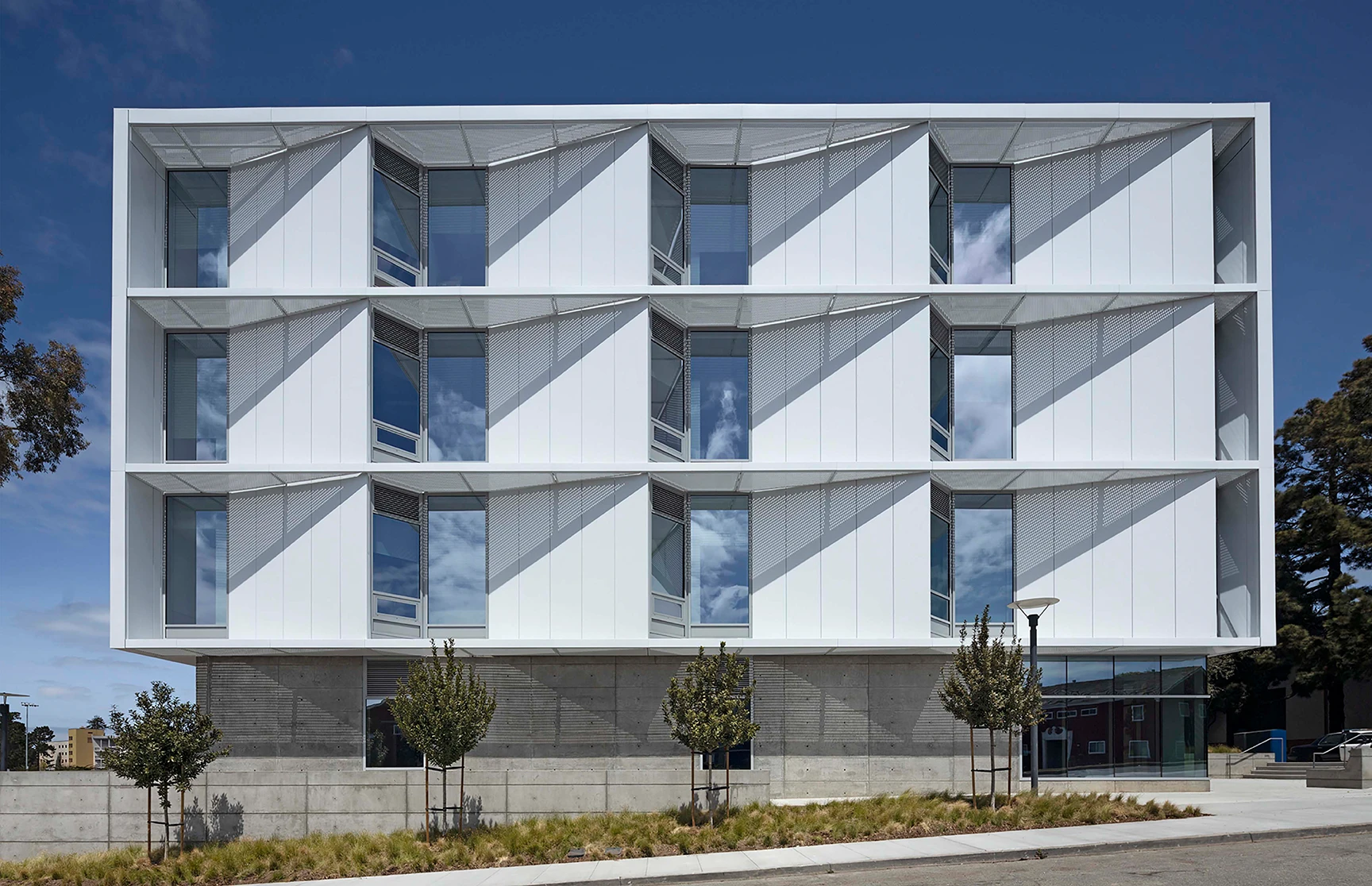
The envelope consists of architectural cast-in-place concrete, insulated metal wall panels, and a low-energy aluminum curtainwall. These systems have been strategically shaped to efficiently mitigate the marine micro-climate specific to the ocean-facing SFSU campus area. The architectural cast-in-place concrete provides mass for the acoustical isolation of studio spaces as well as primary lateral resistance for the structural system. The material durability also aids against wear due to loading and high student traffic at the ground floor level.

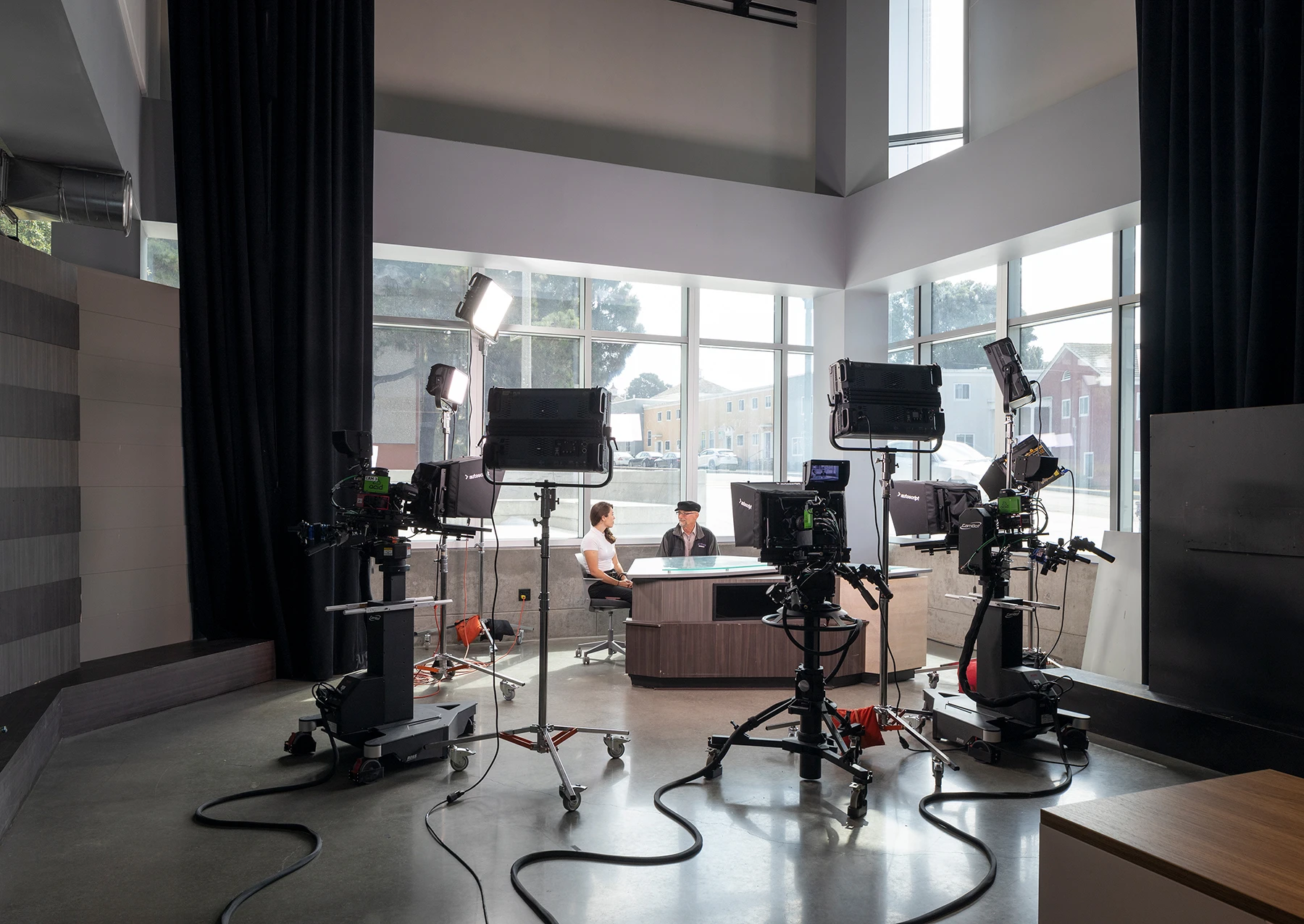
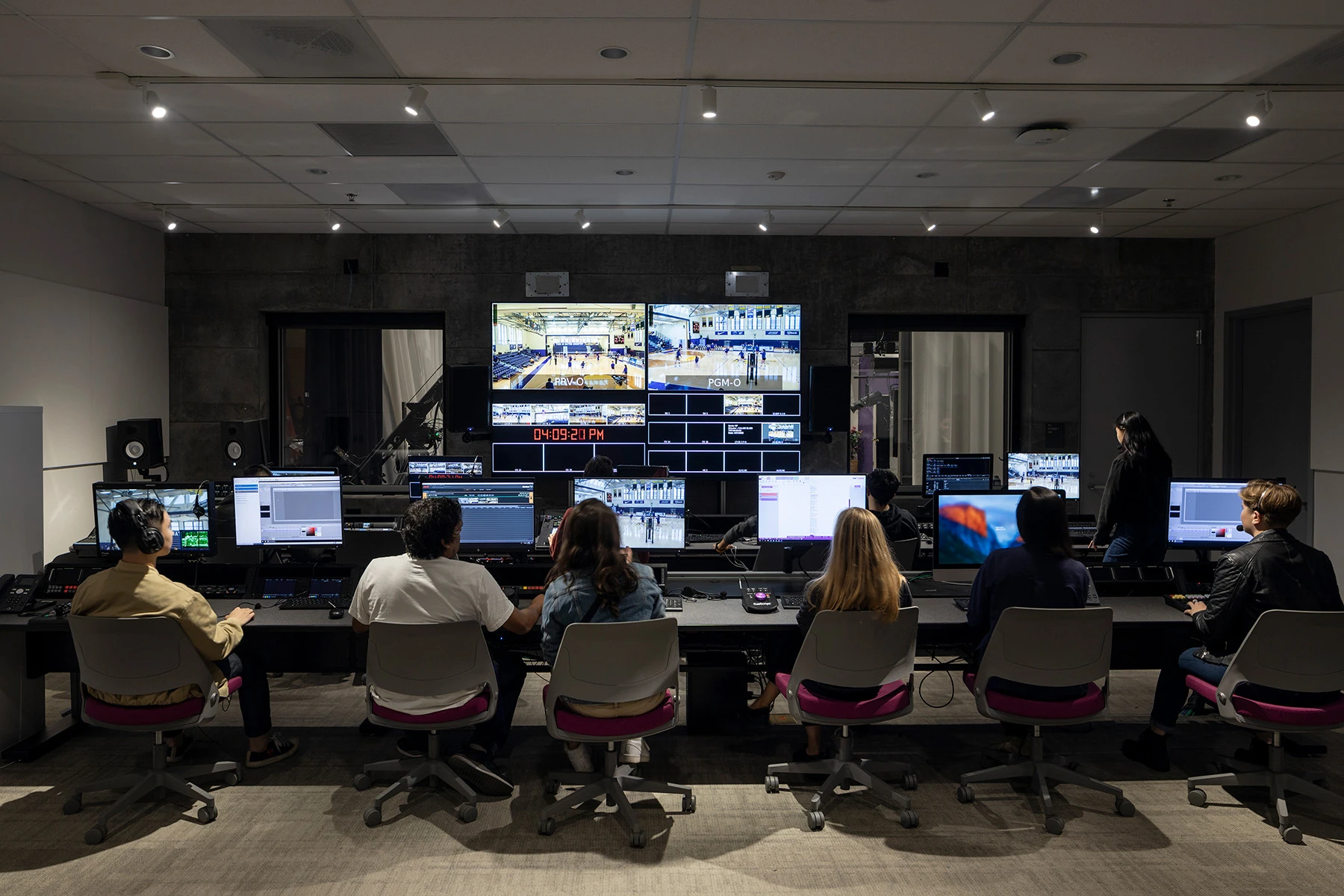
The goal of the project was to offer a flexible, transparent and universally accessible building for students. The building encourages community engagement by “featuring” the BECA program through visual connections to the public exterior. Windows are located along the public circulation spaces within the building that look into the TV Studio and Audio Recording room that showcases the BECA program. As the building also includes multidisciplinary classrooms, this is a great opportunity for the BECA department to engage the larger SFSU community.

//jury comments

This is a building which combines the rigor of a very carefully edited esthetic vocabulary, with issues of sustainability, issues of clarity, of use, and scale within its neighborhood. It is clearly a building that was constructed carefully—probably due to the care that the architect brought to the entire process. A complete statement about what good architecture can and should be: limited, careful, edited, restrained, but an elegant and complete solution to a problem.
//framework for design excellence measures
Measure 1: Design for Integration
In accordance with SFSU’s commitment to resilient and sustainable development:
• Marcus Hall is efficiently planned, conserves resources, and uses recycled, renewable, and durable materials, with a passive energy design to efficiently mitigate the region’s micro-climate.
• Its compact, efficient building footprint minimizes system requirements and enhances energy performance.
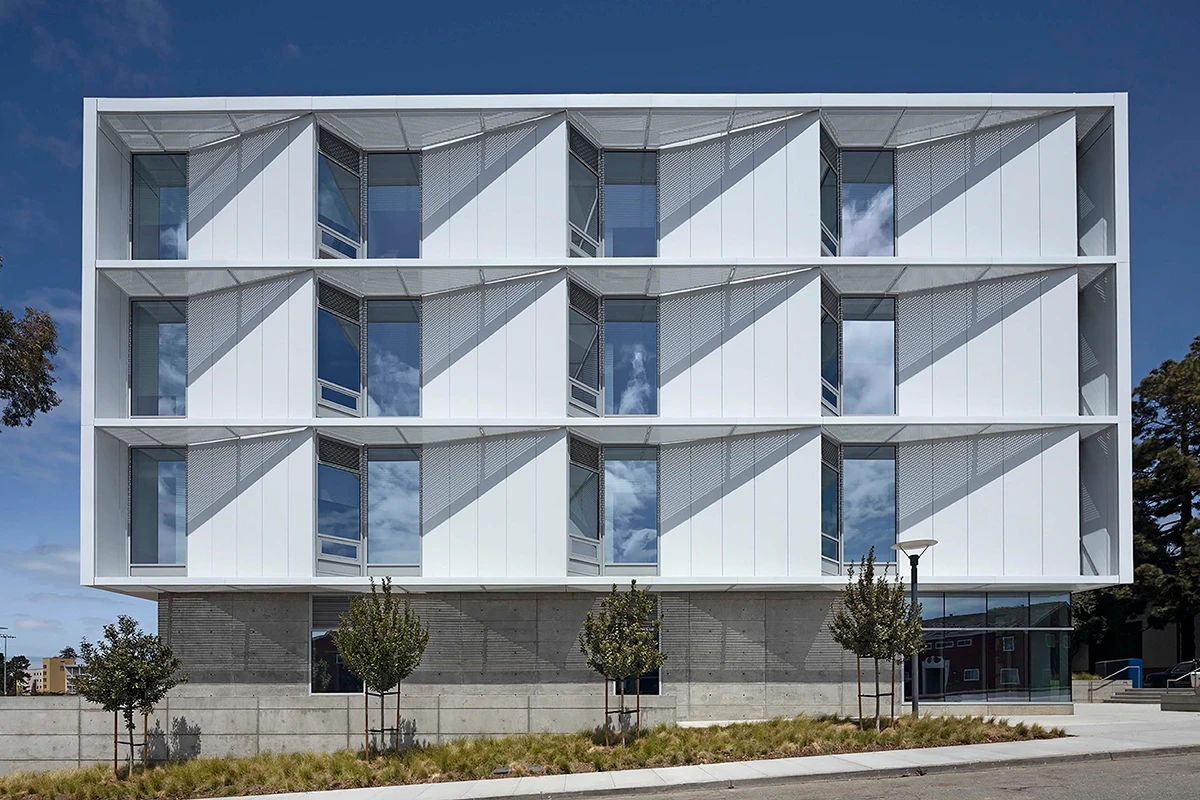
• Its high-performance envelope and exterior cladding maximize daylight for office and instructional spaces while balancing thermal gain and loss, and naturally ventilates spaces wherever possible through operable windows and grilles in the façade system. The folded façade along the south and west sides modulates solar exposure and daylighting.
Measure 2: Design for Equitable Communities
The design process involved regular discussions with a larger campus community stakeholder group that provided the criteria and feedback that informed the siting of the building. The site’s design maximizes open space, accessibility, and transparency and creates a larger campus open spacethat’s shared with the neighboring residential community.
Measure 3: Design for Ecosystems
Site and landscape improvements are confined to a limited area bounded by existing Tapia Drive sidewalks on the north, east, and south, and a 70-foot landscape area on the west side, a portion of which also provides stormwater retention and treatment. Plant materials are long-lived, native, and drought tolerant species that support local native fauna and pollinators.
Measure 4: Design for Water
The project is targeting higher water and energy conservation goals. Strategies include selection of low flow fixtures for and planting design to minimize maintenance including native, drought tolerant and well adapted plant material to minimize water use. The project also implements a storm water management plan and strategies to collect storm water run-off.
Measure 5: Design for Economy
Spaces in Marcus Hall are efficiently organized to accommodate a complex program that includes many technical spaces with specific proximity and technical requirements. The building is efficiently planned around double loaded corridors that also serve as informal social gathering areas with integrated bench seating. A construction cost of $750/SF is considered extremely affordable in the San Francisco Bay Area and offers the university a considerable value for such a diverse and technically advanced program.
Measure 6: Design for Energy
Ample natural lighting is provided not only to classroom and office spaces, but to public spaces as well. Corridors and hallways connect to windows at the building perimeter and borrow natural light from classrooms where possible. Technical spaces that are typically completely lit artificially – studio and production rooms – are also provided with natural lighting. The high-performance building envelope maximizes daylight through orientation and shading while minimizing solar gain in the summer. Facade enhancements include exterior sunshades, operable windows, and ventilation louvers integrated into the facade.
Measure 7: Design for Well-Being
The building design prioritizes the wellbeing of both staff and students that will be using the building. The indoor environmental quality is maximized through careful design of the mechanical air system, limiting of materials emissions, and natural ventilation. Ample natural lighting is provided not to classroom and office spaces, but to public spaces as well. Corridors and hallways connect to windows at the building perimeter and borrow natural light from classrooms where possible. Technical spaces that are typically completely lit artificially – studio and production rooms – are also provided natural lighting.
Measure 8: Design for Resources
In accordance with SFSU’s commitment to resilient and sustainable development, Marcus Hall is efficiently planned, conserves resources, and uses recycled, renewable, and durable materials, with a passive energy design to efficiently mitigate the region’s micro-climate. The architectural cast-in-place concrete is efficiently used to provide mass for the acoustical isolation of studio spaces as well as primary lateral resistance for the structural system. The material durability also aids against wear due to loading and high student traffic at the ground floor level. The exposed concrete finish both at the exterior and interior eliminates the need for additional finishes.
Measure 9: Design for Change
The building design maximizes open and flexible space, accessibility and transparency to allow it to inspire student learning well into the future. All spaces are fully networked and intended to be versatile to allow for collaboration with flexible state of the art AV infrastructure so that students remain at the forefront of technological innovation and leadership. Maximum attention was placed on the placement of the building to shape functional open space to create a living learning environment that anticipates future development on the west end of the site.
Measure 10: Design for Discovery
Key to the success of this highly technical broadcasting program is to anticipate rapid change in the media recording industry. Adequate digital data transfer capacity and pathways planned in an accessible and efficient manner will allow this building to continue to adapt to the changing demands of the media industry. Early involvement by broadcasting experts (many of whom are SFSU BECA alums) and equipment manufacturers helped to futureproof the design of the building. Post occupancy functional testing and commissioning reports have been completed and shared with campus facility staff for ongoing evaluation and improvements to building performance.
Skip to content