
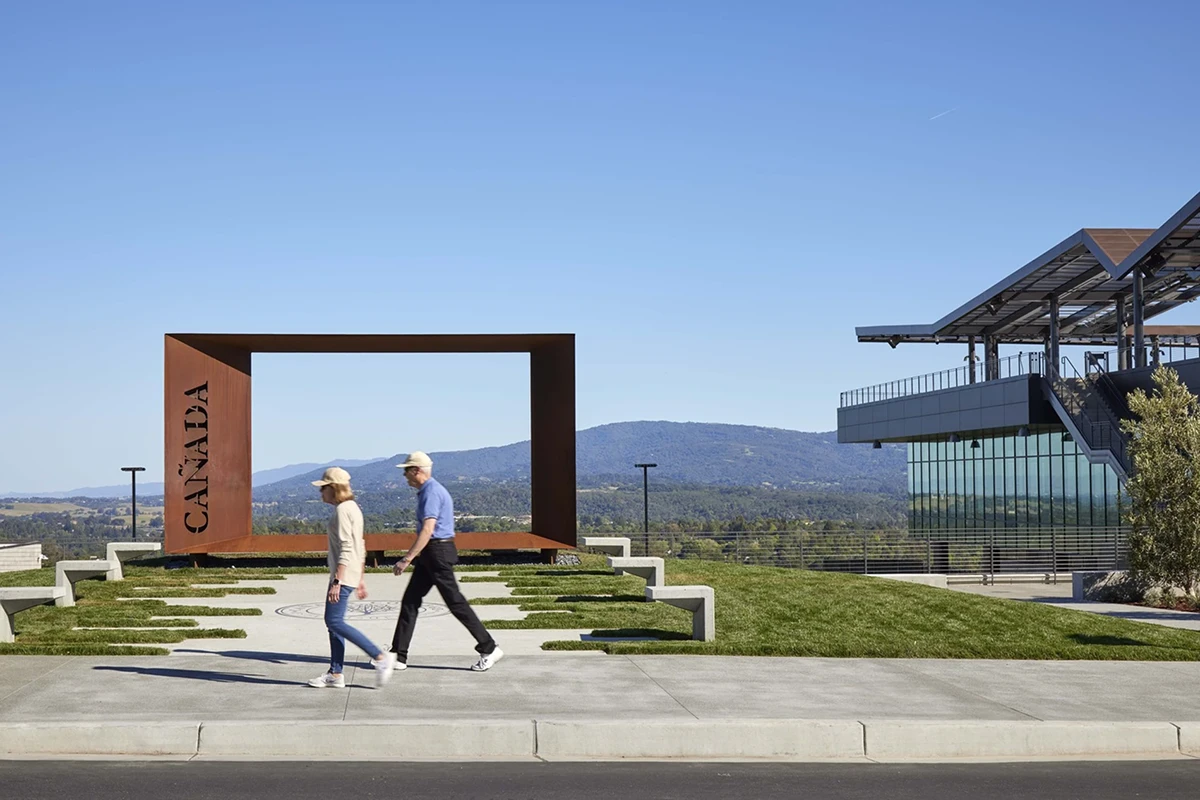
Cañada College Kinesiology and Wellness Center

Cañada College KWC Bruce Damonte copy feature

This new, LEED Gold-certified center unites once-dispersed kinesiology, athletics and dance facilities into a holistic home for wellness. One of the first progressive design-build projects undertaken by a California Community College District, the gateway building supports the college’s renowned athletics training and movement studies, nurturing users’ physical and mental wellbeing, plus a public-membership fitness facility.

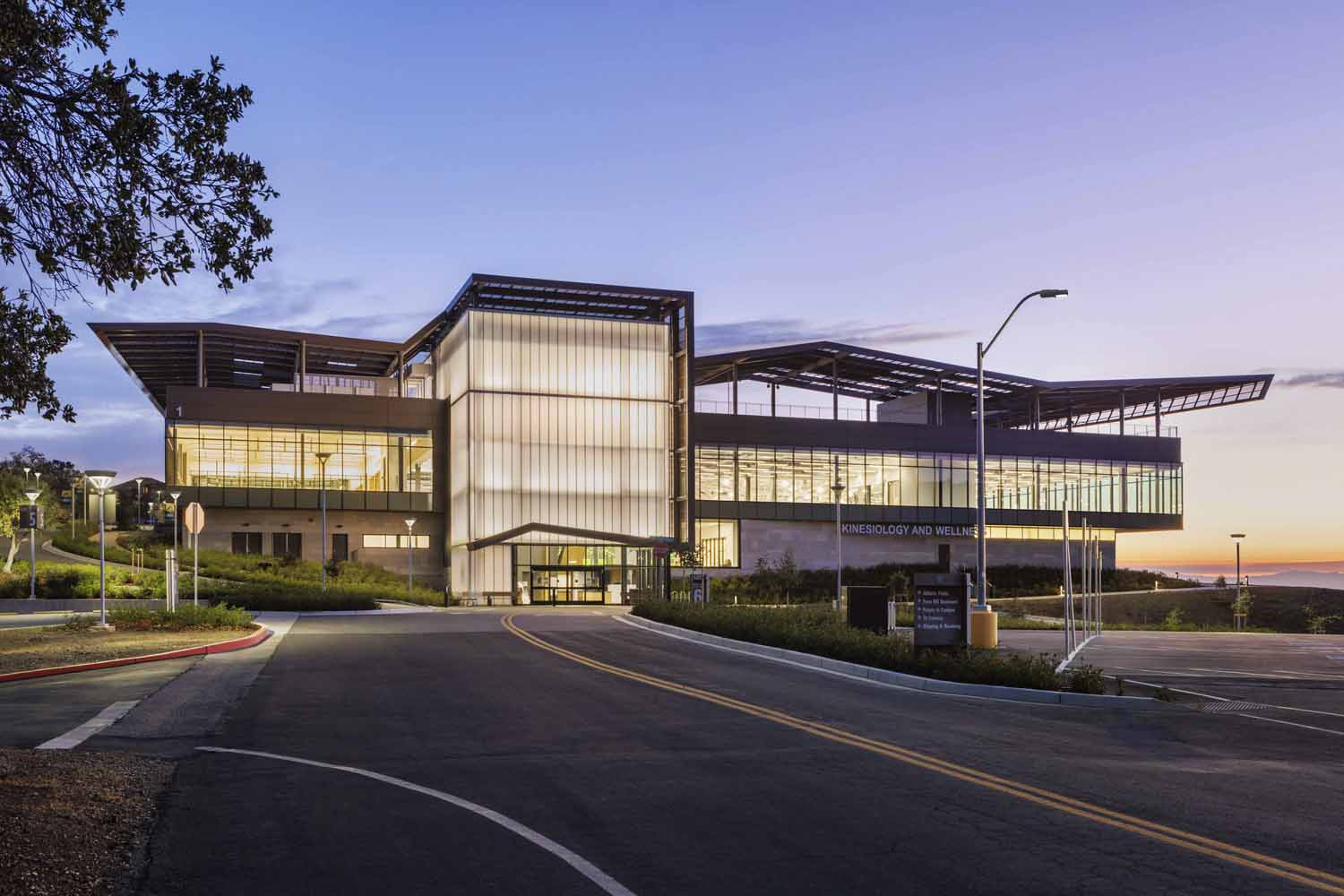
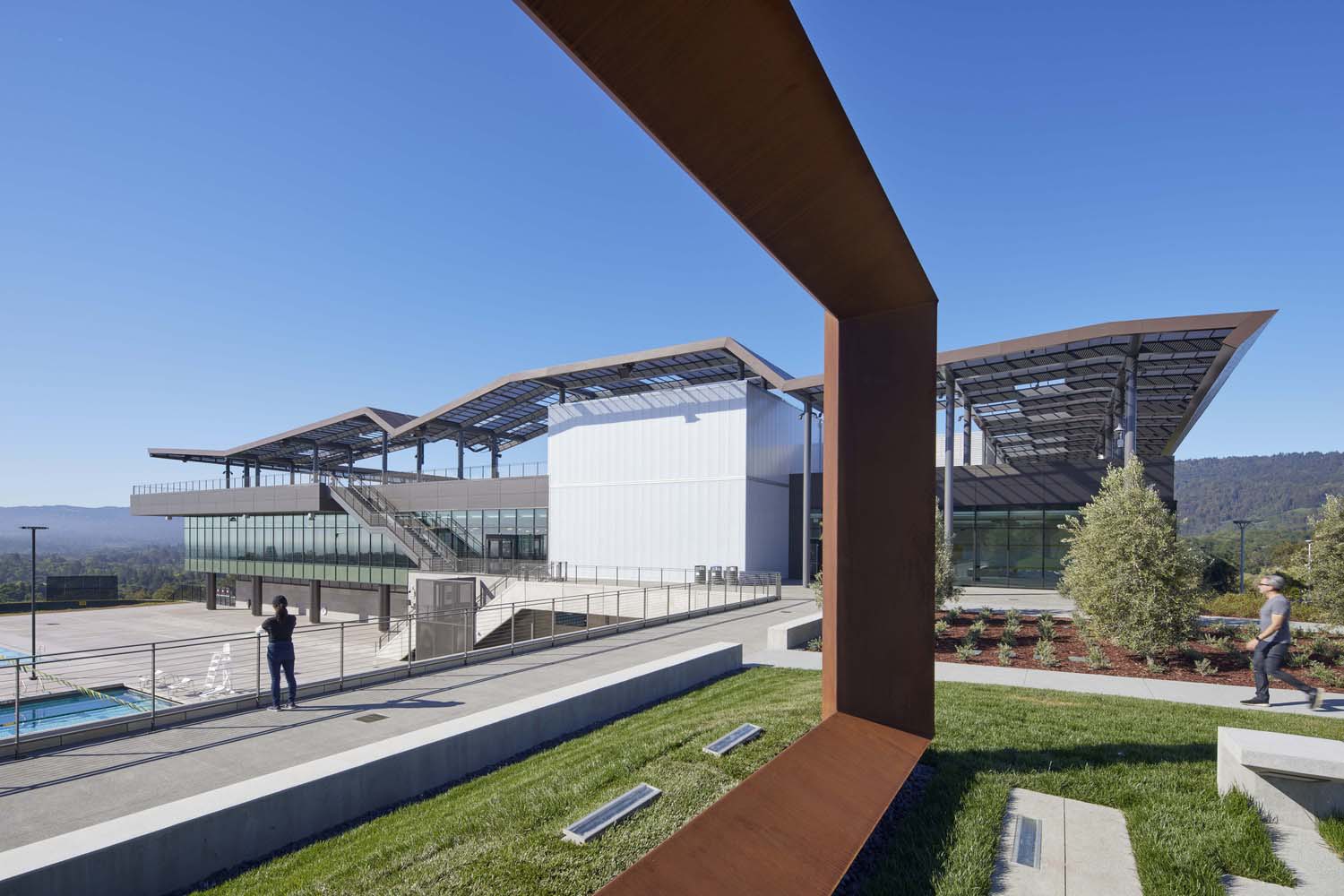
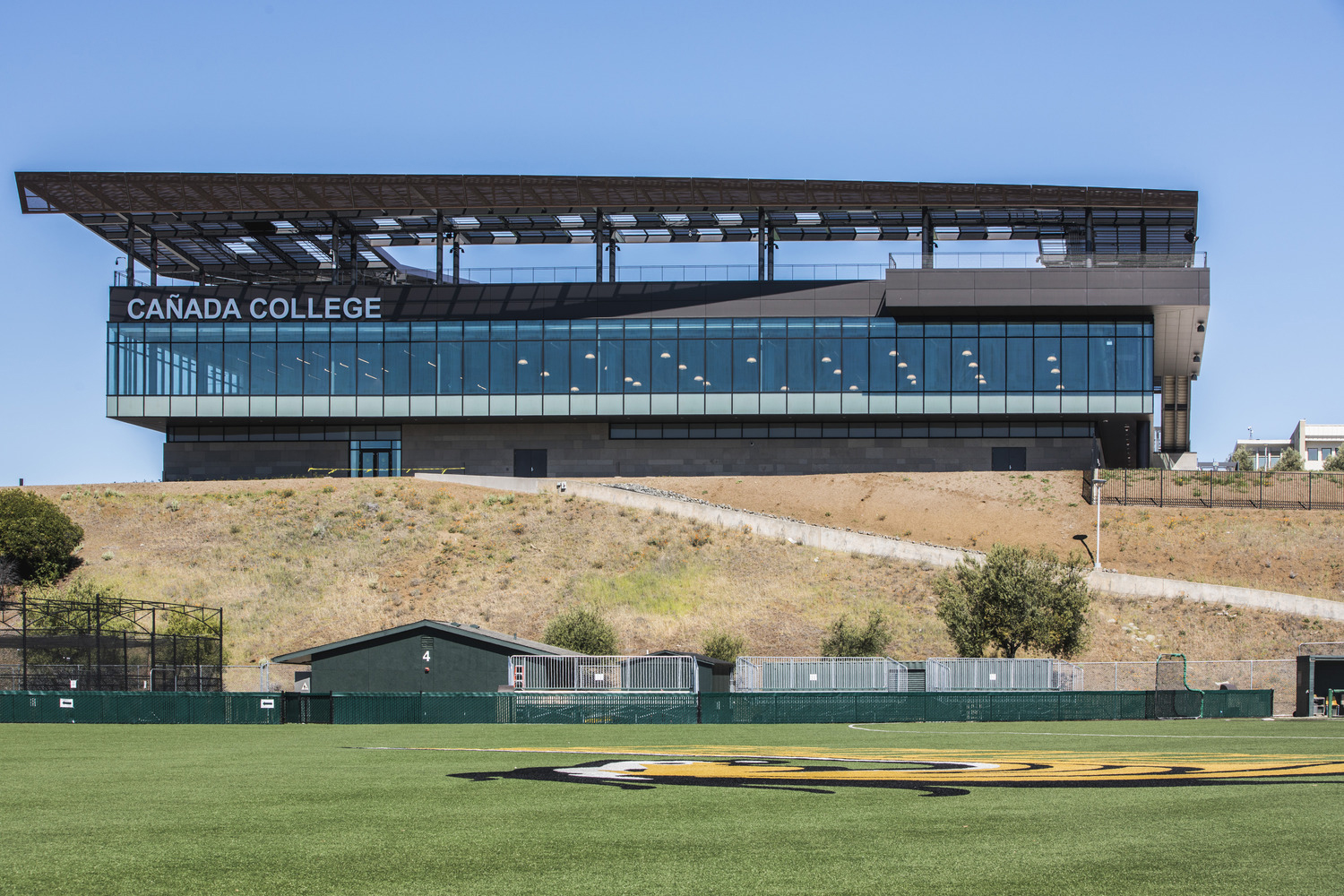
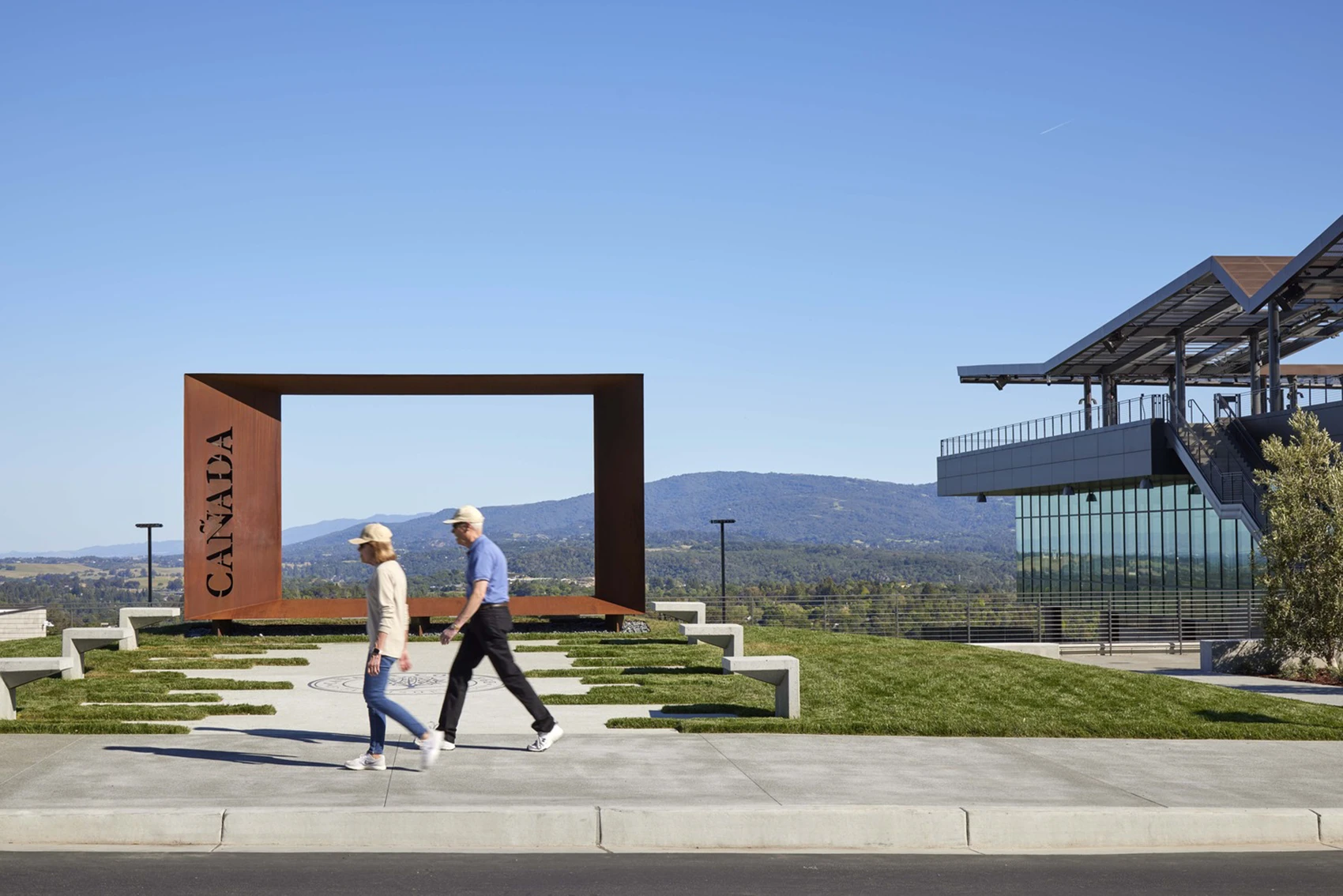
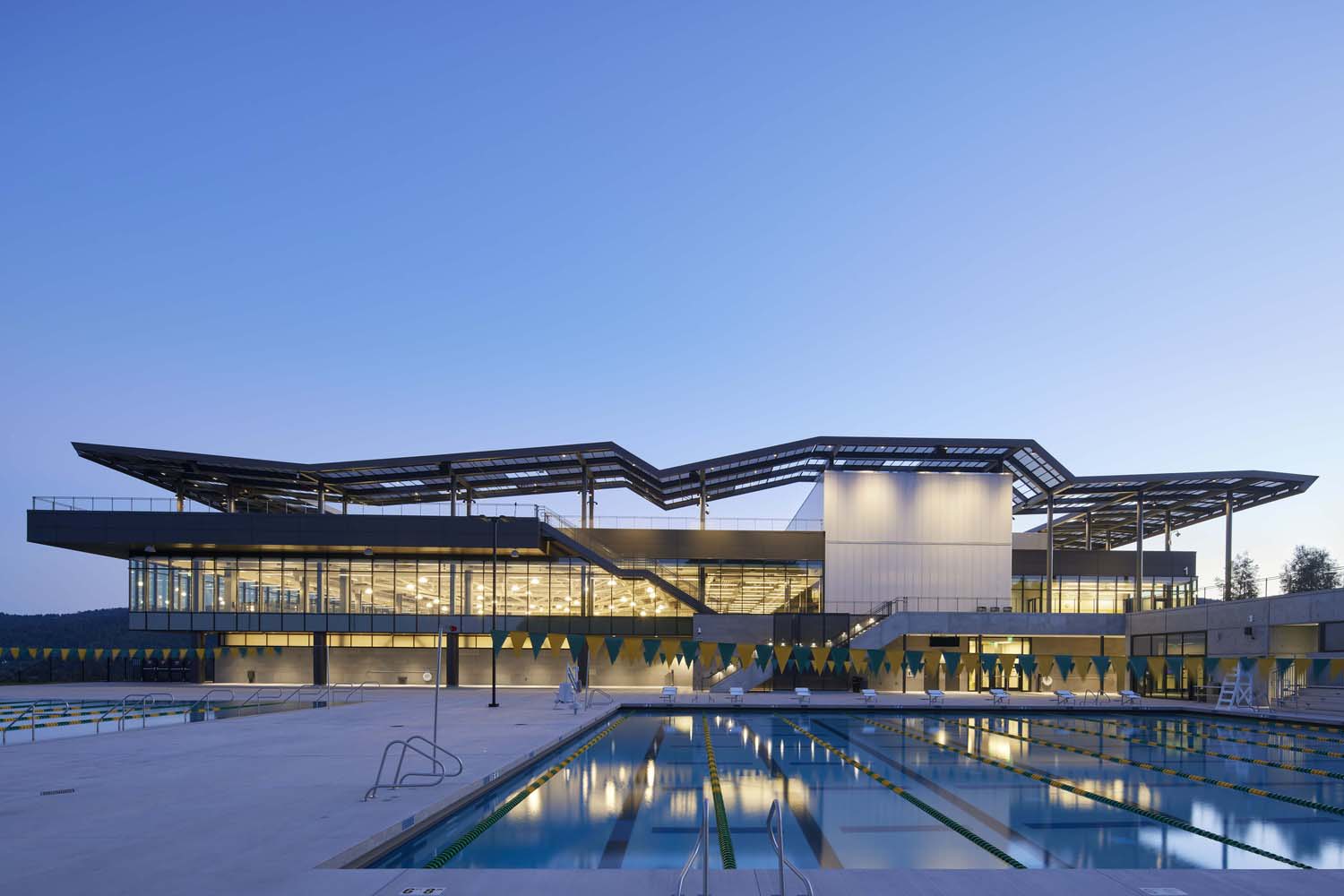
An iconic canopy, inspired by a mountainous ridgeline nearby, tops the building, with an eye-catching design complementing the bucolic landscape. It replaces an outdated 1967 concrete gymnasium that lacked a pool (though initially planned), adequate HVAC, and sufficient windows. The building was dark, uninviting and uncomfortable, even amid its beautiful setting and breathtaking views.

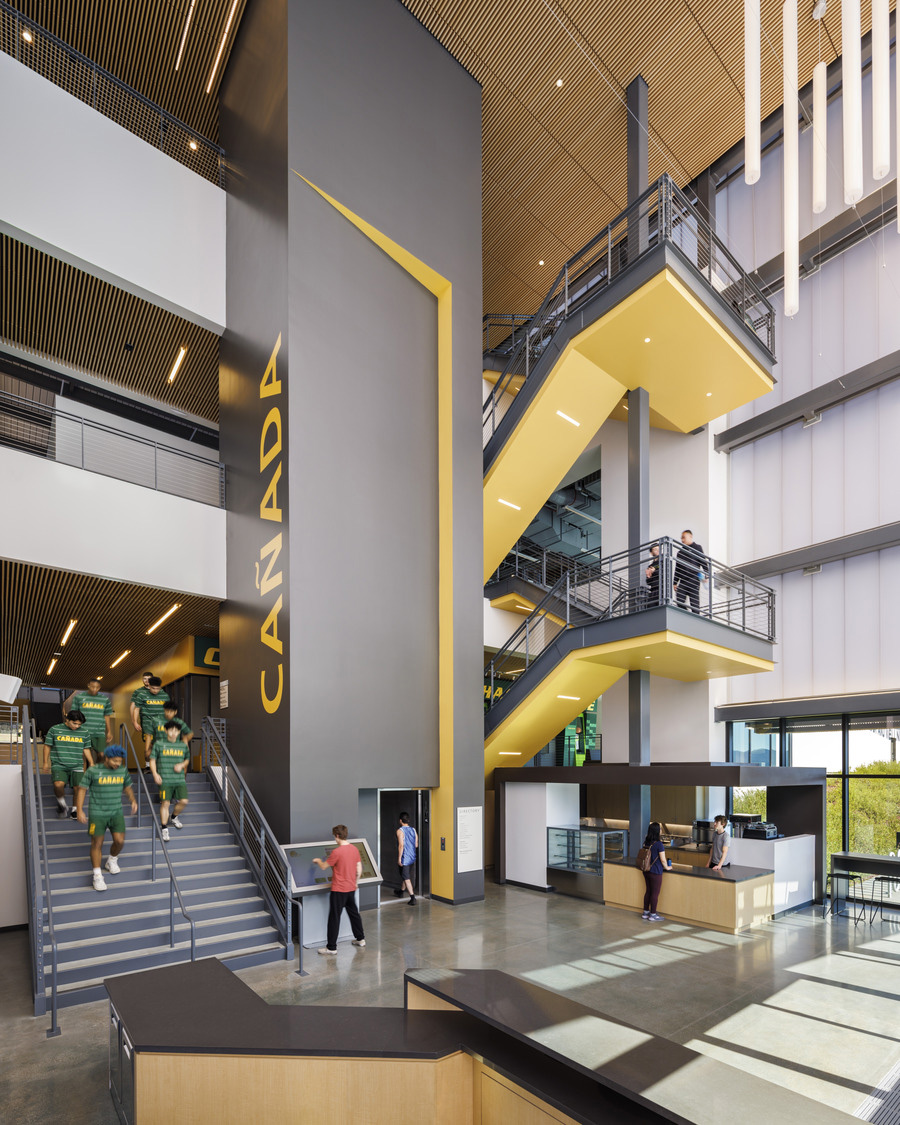
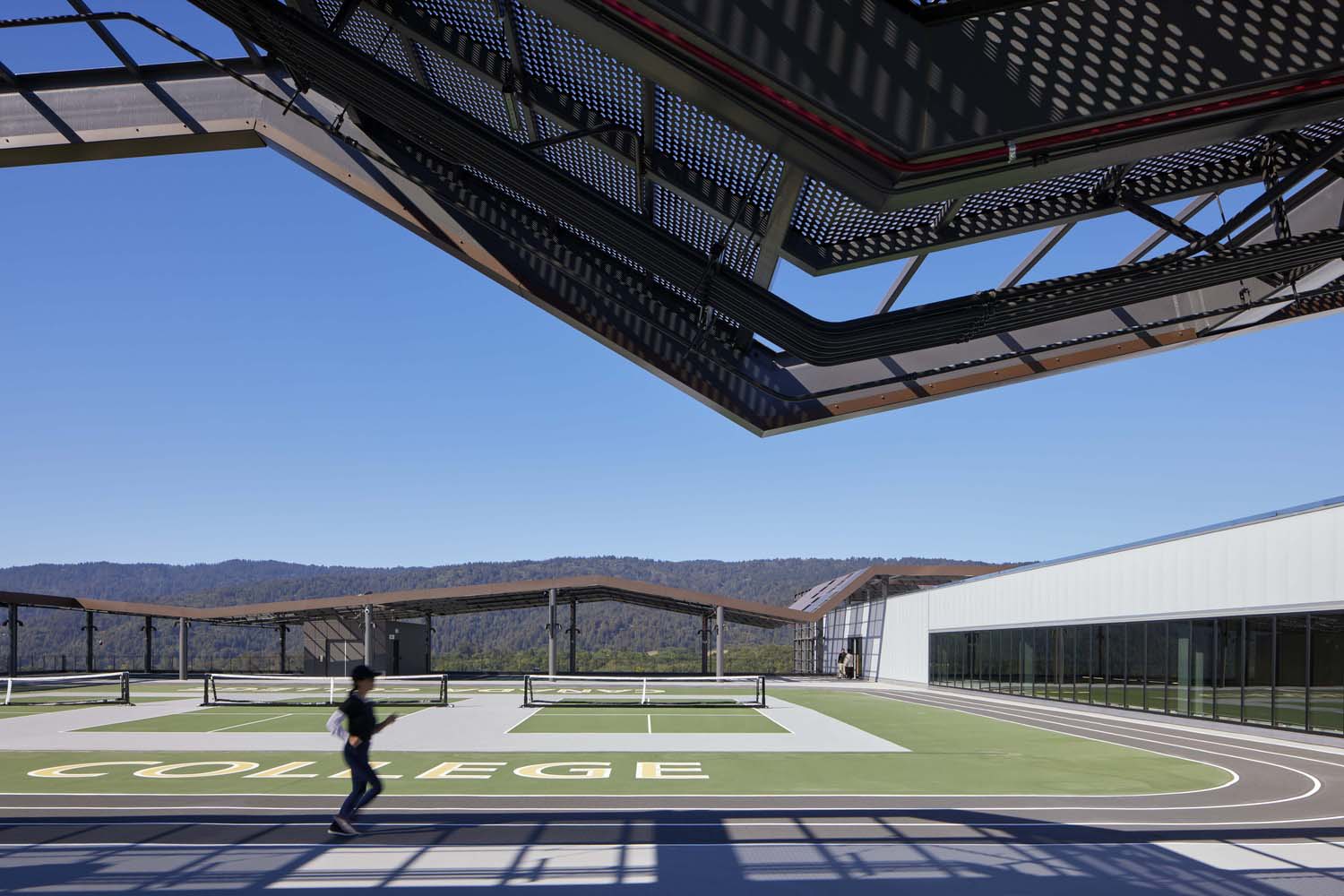
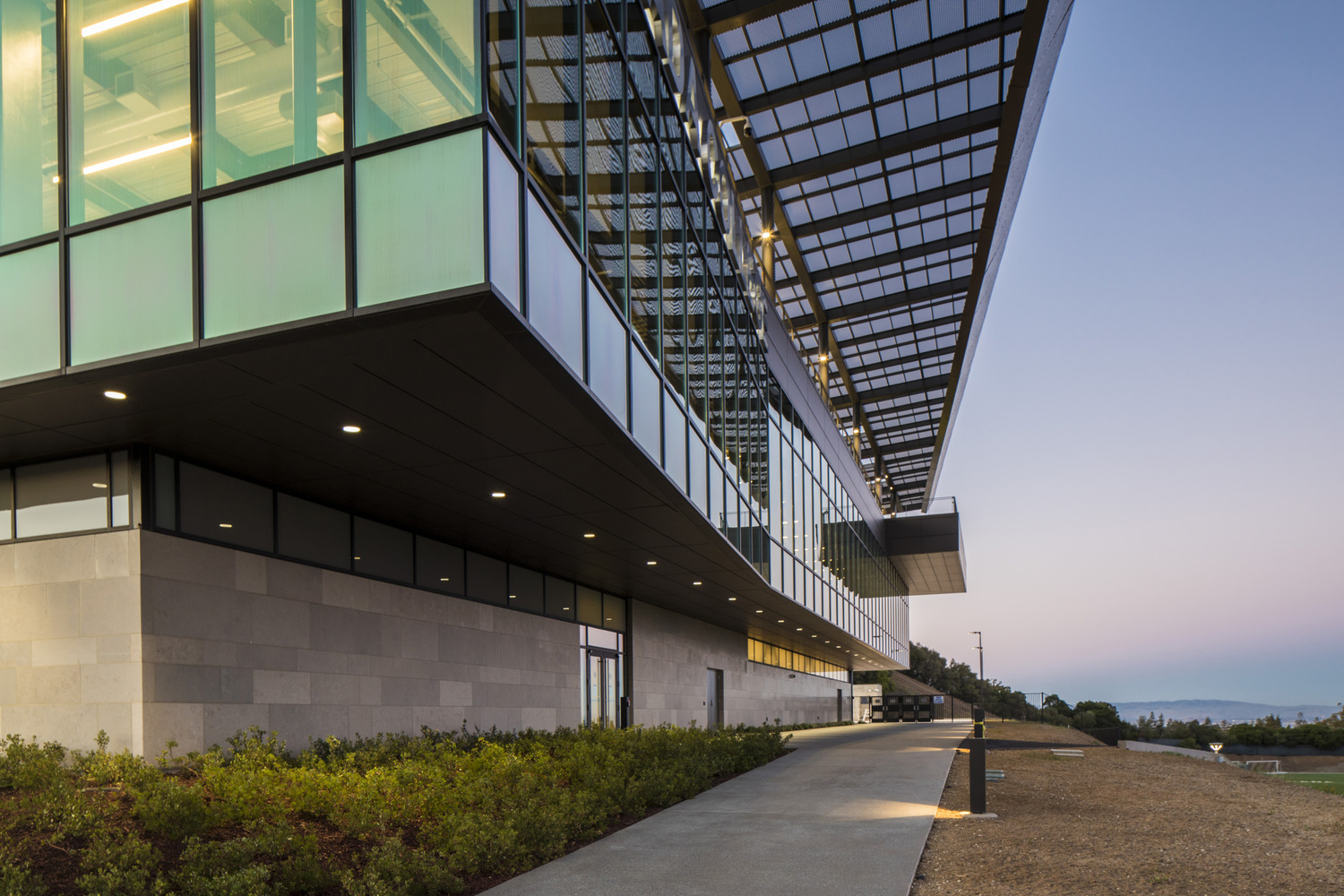
Cantilevered over its hilltop site and visible from the freeway, the new center represents a dynamic shift from its predecessor and serves as the flagship for the campus, and even the district. Its 115,000 sf of programming are spread across two stories and an activated 30,000 sf roof with running track and multi-use areas affording 360-degree views. A three-story lightbox, holding primary circulation, disperses daylight throughout the expansive interior core. Extensive exterior glazing opens the building to long, expansive views of the hills and the town of Woodside. Below the activated roof, an arena-style gymnasium holds retractable bleachers and hosts athletic events, with a long-span structural system that maximizes openness. Because the site occupies a Wildland-Urban Interface, designers employed subtle fire-safety measures.

This community college facility is a prominent resource/ tool for teaching students from underserved areas, helps prepare students for scholarships/ advancement to 4-year programs and NCAA competition, and can improve the health and even the careers of county residents. This project has received awards from AIA San Mateo County, AIA East Bay, Community College Facility Coalition, Design-Build Institute of America Western Pacific Region, ENR National and ENR California.

//jury comments

This building takes advantage of its site on a hilltop, and responds to that through an expressive roof form that both makes it a landmark within the landscape, but also functions well to provide shade for the programs. It elevates the typology of a sports complex within a community college into a really well-resolved and fully thought-out work of architecture.
//framework for design excellence measures
Measure 1: Design for Integration
Located on a beautiful woodland site with breathtaking views, this building enhances its campus and replaces an isolated, outdated, windowless, concrete gymnasium that could no longer meet community needs. This sustainable, flagship building is now a focal point for campus life. It enables a long-awaited expansion of Cañada’s academic offerings, unifying once-dispersed kinesiology, athletics, and dance facilities to support holistic health. An activated roof enables innovative programming area for running and fitness, backdropped by panoramic views. Shading the roof is a large, PV panel-ready canopy whose undulations recall nearby ridges; it reduces solar heat gain on the second-floor curtain wall and minimizes energy consumption. Ultra-efficient glazing opens the interior to expansive views. A three-story lightbox, holding primary circulation, disperses daylight throughout the interior core, supporting sustainability goals. In case of approaching fires, exterior sprinklers protect lightbox, activated by exterior-mounted infrared flame-detectors. Project has been recognized with design awards from organizations including AIA San Mateo County, AIA East Bay, Design-Build Institute of America Western Pacific Region, and Community College Facility Coalition.
Measure 2: Design for Equitable Communities
Planning/programming epitomized “shared governance,” uniting design/build team with athletics and government students, school leadership, businesses, trustees, and public for ~15 work sessions over 5 months, creating an adaptable, consensus-derived program document. Unusually complex stakeholder process reflects college’s goal of improving education by redefining learning environments. District offers on-site sports/rec summer camps to disadvantaged communities. San Mateo County-resident students see enrollment fees waived, with minor exceptions; other fees may be waived depending on need. For underserved students/families, sponsorships enable thousands in tuition savings. Students experiencing homelessness can use facility showers, per district initiative following state legislation.
Measure 3: Design for Ecosystems
In this fire-prone area, a Wildland-Urban Interface (WUI), most materials (concrete, steel, glass, stone) are fire resistant. Should fires approach, the translucent polycarbonate lightbox is mounted with exterior sprinklers, activated by infrared flame-detectors mounted on the building and facing all directions, protecting the structure. Each exterior light points downward. In plan view, all light is kept within the building’s footprint, conforming to Dark Sky Standards. On hot days, bay winds support climate comfort, especially at the roof.
Measure 4: Design for Water
The aquatic center employs the latest energy-efficient technology and equipment, with simple pool covers reducing heat loss and water loss through evaporation. Efficient water fixtures lead to 36% reduction of baseline. A smart “weather-adjusting” irrigation controller achieves a 50% reduction in water use through drip irrigation and drought-tolerant, native planting.
Measure 5: Design for Economy
Programming requirements totaled 115,000 sf, but over two floors that amounted to only 85k sf in total. Search for 30,000 sf more space led to the roof, which became an affordable key programming area and allowed major, right-sizing efficiencies, through the addition of an elevator-stop, exit stair, and long-span steel trusses below the activated roof. Cost of the lightbox was reduced through a polycarbonate panel system, for 60% savings over previous design. The facility’s unusual public-private hybrid revenue model is expected to bring the district significant annual revenue.
Measure 6: Design for Energy
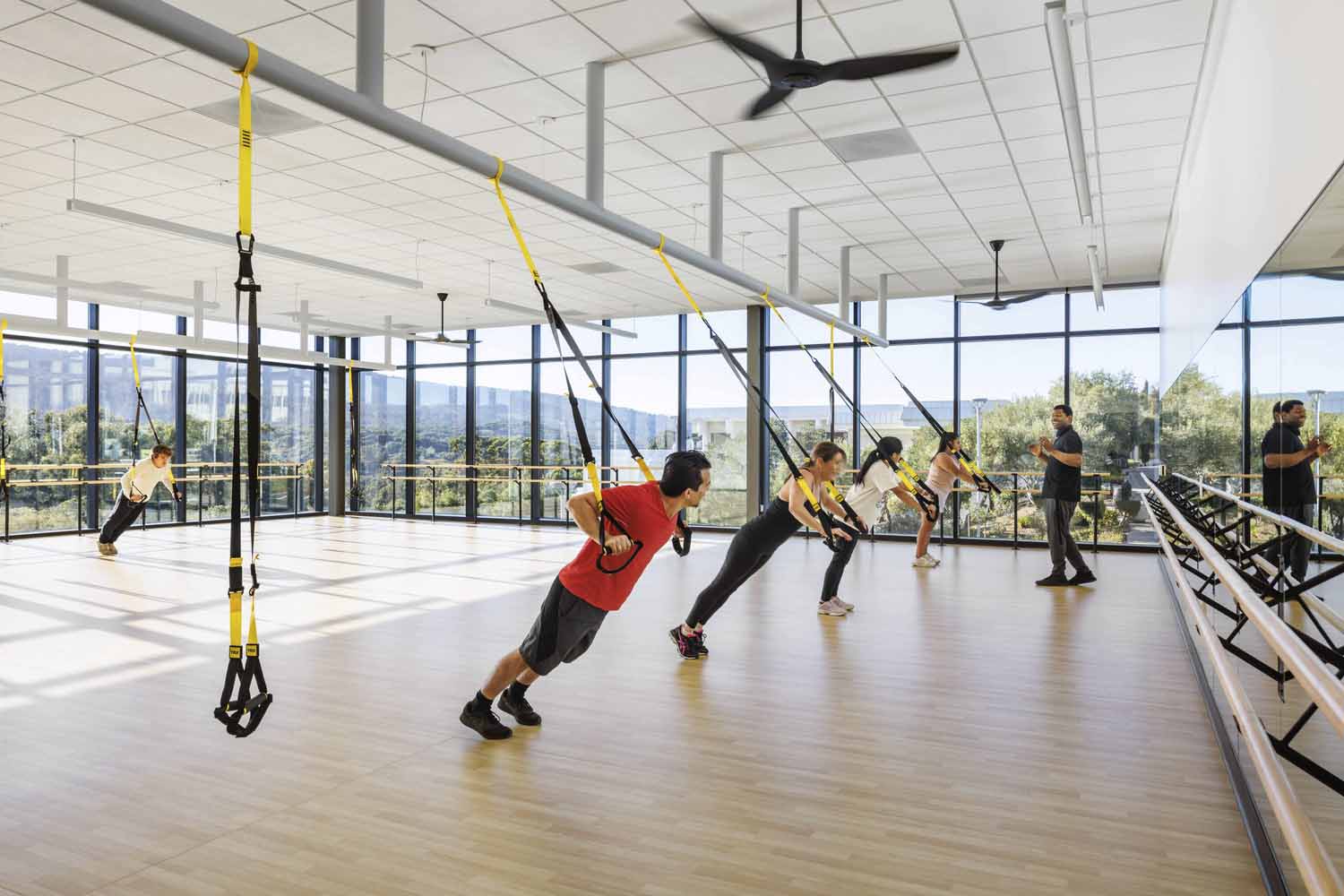
Even with careful siting, south and west façades couldn’t avoid solar exposure and sub-optimal heat gain. Extending second-floor structure and roof canopy creates shade, reducing cooling needs by reducing heat gain and glare. Automated shades improve operating costs, glare, thermal/visual comfort. Modeling determined solar-gain/glare-resistant glazing, guided lightbox’s materiality (a primary daylighting/energy-saving element). Light-colored pavers reduce heat-island effect. Ceiling fans reduce energy use in workout areas, supporting occupant comfort. Off-site renewable energy purchase agreement, from Schneider Electric, measures 642 mwh annually for two years, supplying 70.11% of electricity use.
Measure 7: Design for Well-Being
Building augments wellbeing by advancing the health and happiness of students and citizens. Amid stunning natural surroundings, design uses extensive exterior glazing offering ample daylighting and expansive views across the hills and over the town of Woodside. Panoramic views surround the roof’s running track and yoga space. Given the body heat generated by hundreds of people in strenuous workouts, designers maintained thermal comfort by ensuring sufficiently circulating air movement throughout the space, minimizing stuffiness. Maximizing air changes (surpassing ASHRAE standards by 30%) gives healthier interiors, timely concerns in the Covid era. Interiors specify low-VOC materials.
Measure 8: Design for Resources
By bringing activities to the roof space, designers moved those uses away from indoor conditioned spaces, affordable extra square footage and helping to lower the overall carbon footprint. Following demo of an existing building on the same site, the team reused its concrete as the new building’s base material and in the surface of adjacent parking lots. Demolition and construction debris were recycled, enabling 95% landfill diversion overall. A high percentage of materials were locally sourced. Project includes bicycle parking (with changing rooms inside the building) and EV parking. A drought-tolerant landscape is consistent with campus plan.
Measure 9: Design for Change
This project, practically atop the San Andreas Fault, faces significant seismic risks. Its activated roof introduced structural challenges, necessitating minimal drift during earthquakes. The steel superstructure combines moment-resisting frames where views matter and braced frames where they do not. Heat exposure is mitigated by a roof canopy and shading from the second floor, plus interior shades on western windows. Designed for wildfire resilience in a fire-prone Wildland-Urban Interface, fire-resistant materials—concrete, steel, glass, and stone—were used. Infrared sensors detect wildfire heat, triggering sprinklers to protect the polycarbonate lightbox. This innovation helped the project meet WUI requirements effectively.
Measure 10: Design for Discovery
Among the many economic boosts provided by this project, a nutrition bar is staffed by students and is a favorite gathering spot. A larger economic driver comes through the public memberships being sold, which helps subsidize operations and sports team activities. This highly unusual public-private hybrid revenue model could foretell a beneficial new trend for colleges. Based on findings from post-occupancy evaluations, design team is now weatherizing building’s front entry by adding glass canopies and windscreens.
Skip to content