
200 W Ocean

W Ocean dpi copy feature

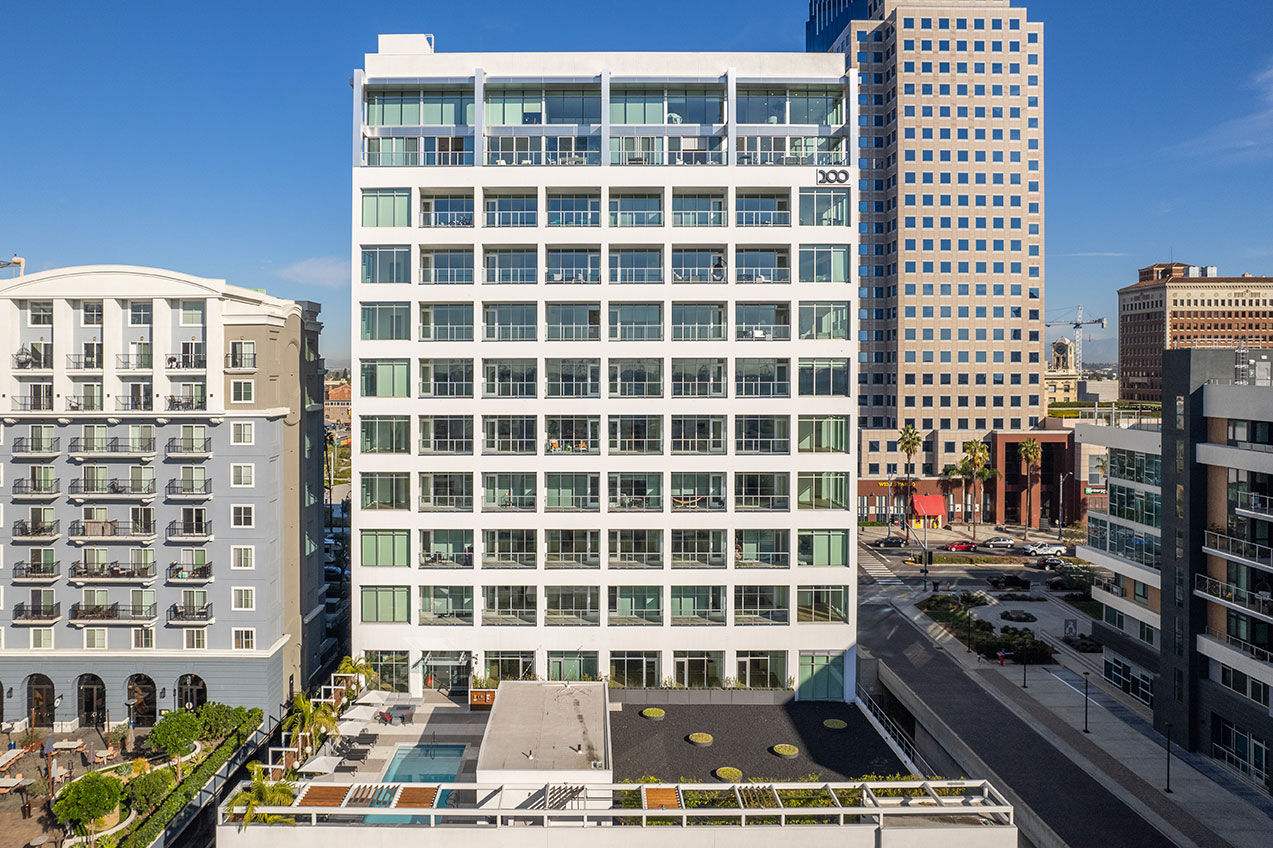
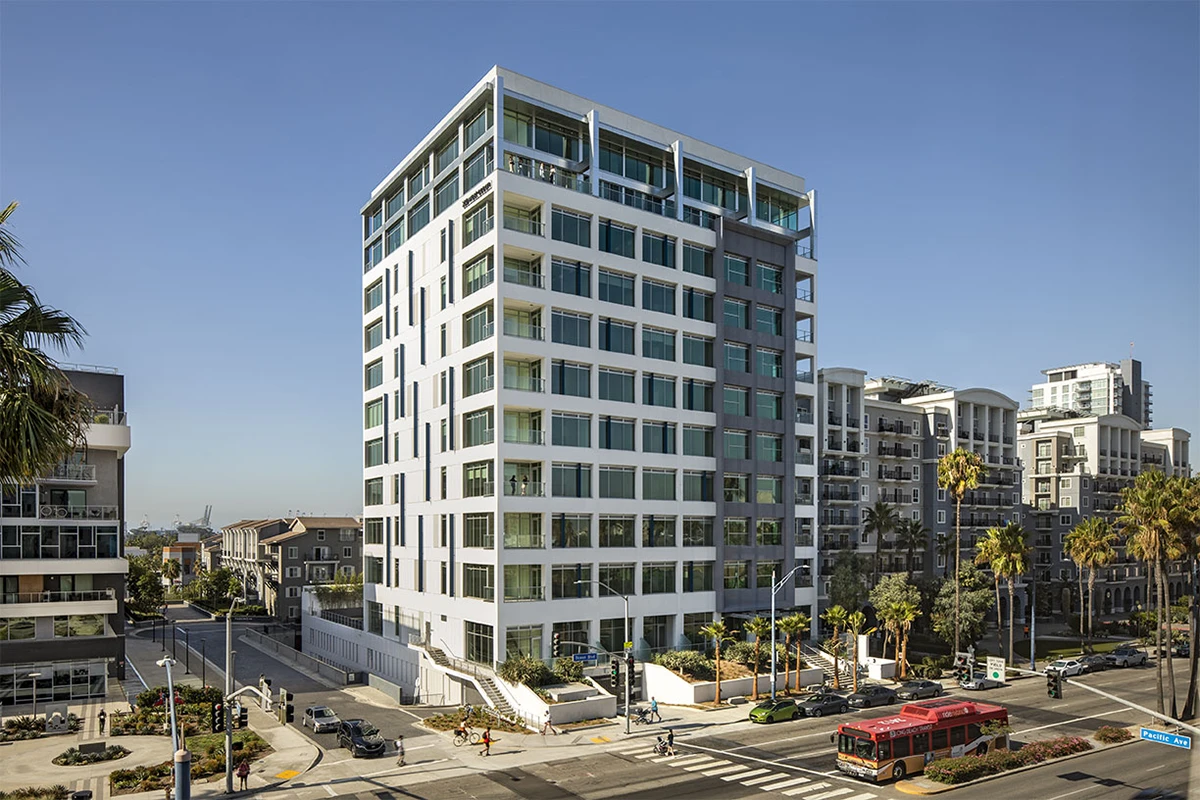
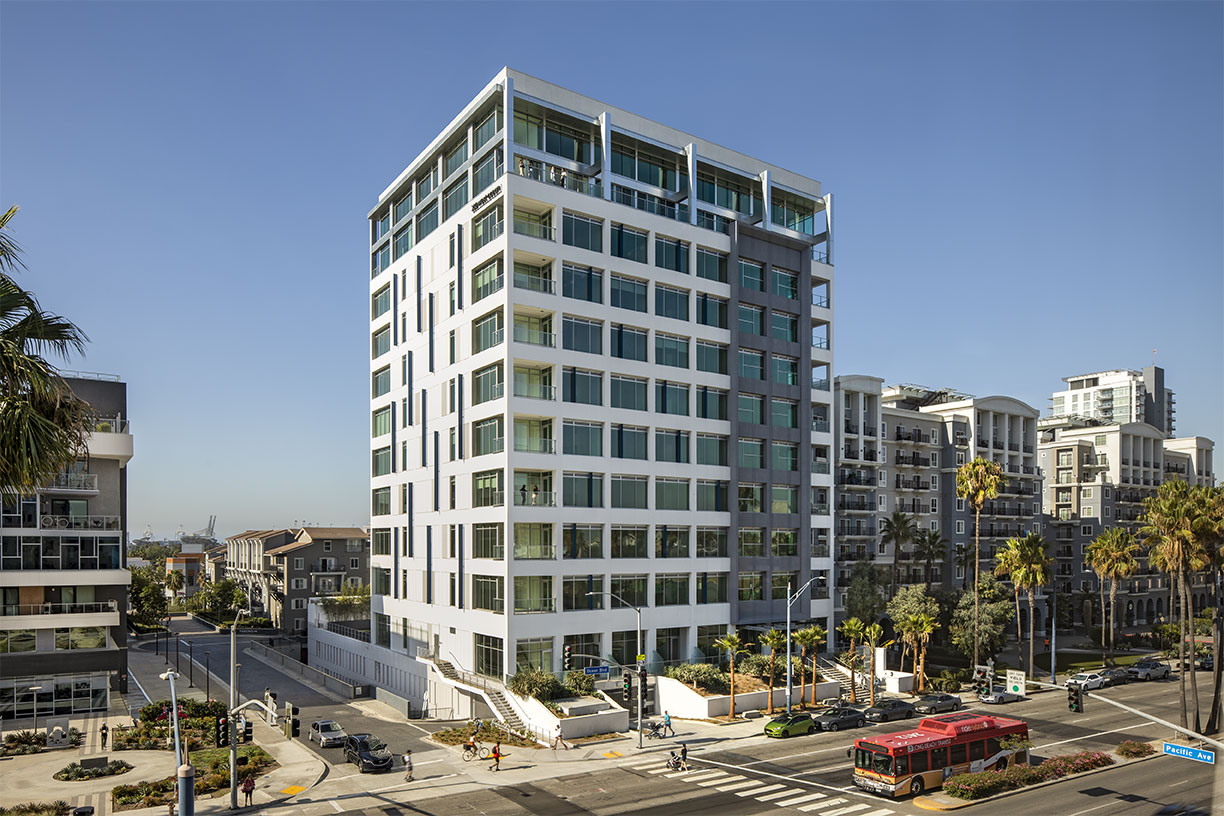
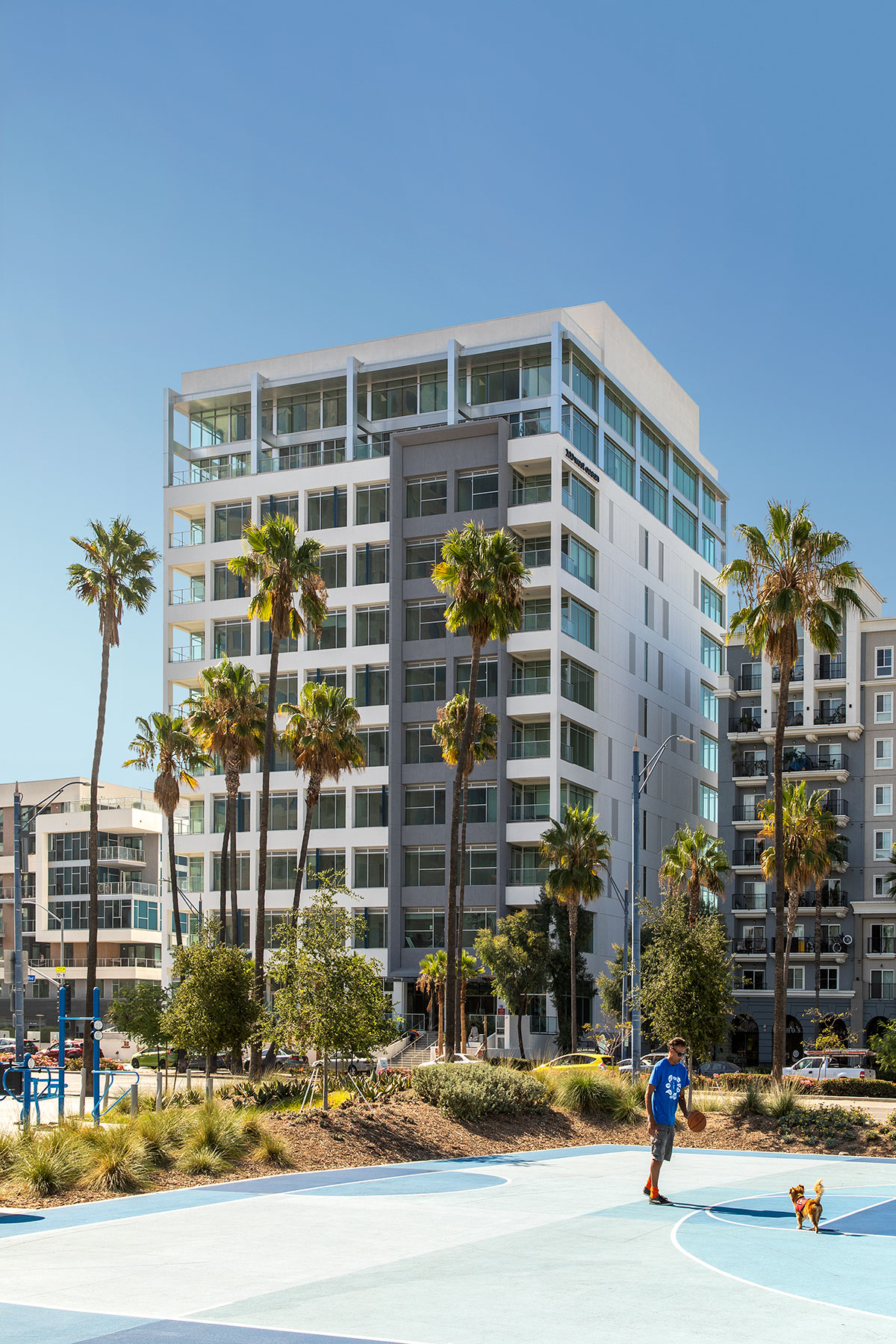
Originally designed in 1967 by AC Martin and Associates for the General Telephone Company of California, this Class B building served as the headquarters for the southern region. Recently repurposed as market-rate housing, the renovation maintains its mid-century architectural heritage while infusing contemporary vibrancy. The design aims to open up the previously insular structure to its urban surroundings, enhancing views and connectivity. A gray vertical frame accents the building’s Ocean Boulevard presence, while doubling window sizes and cutting slots in the concrete bulkhead maximize natural light and views. Two new stories and the removal of outdated rooftop equipment give the building an iconic downtown presence.

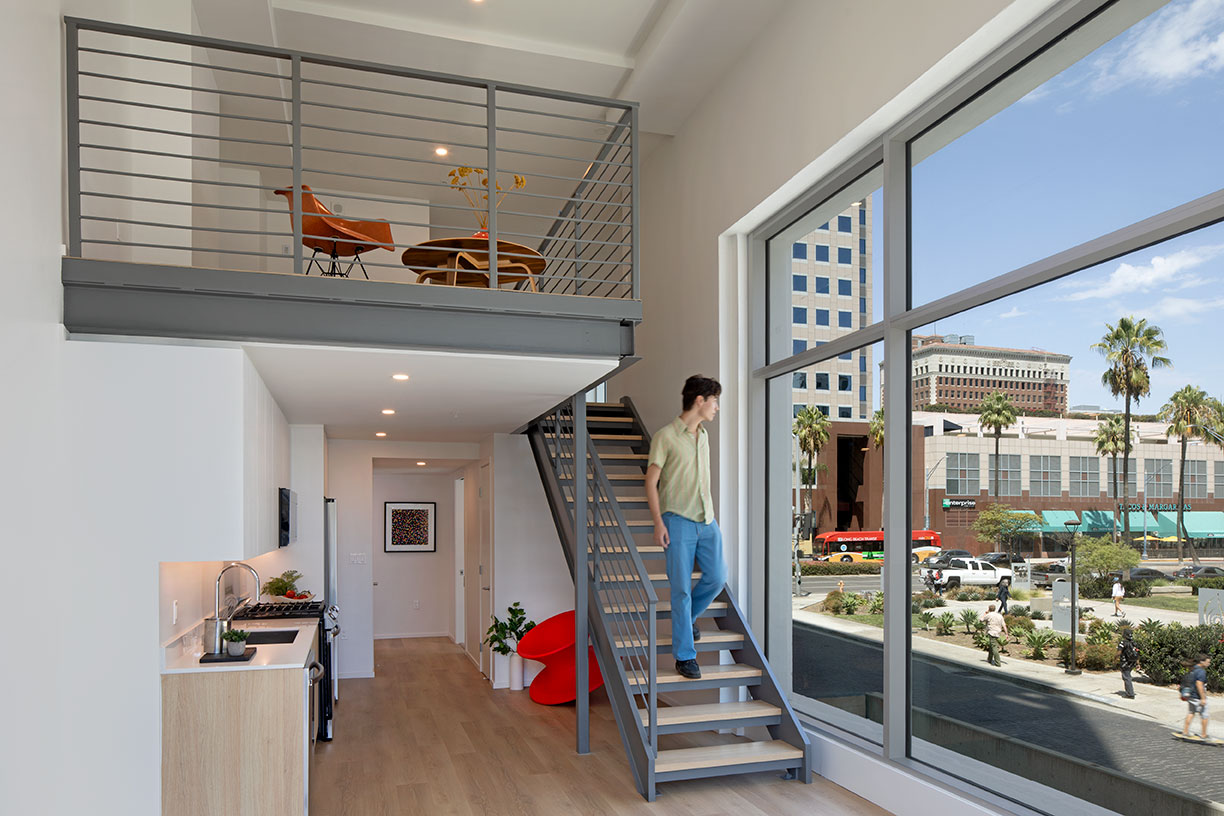
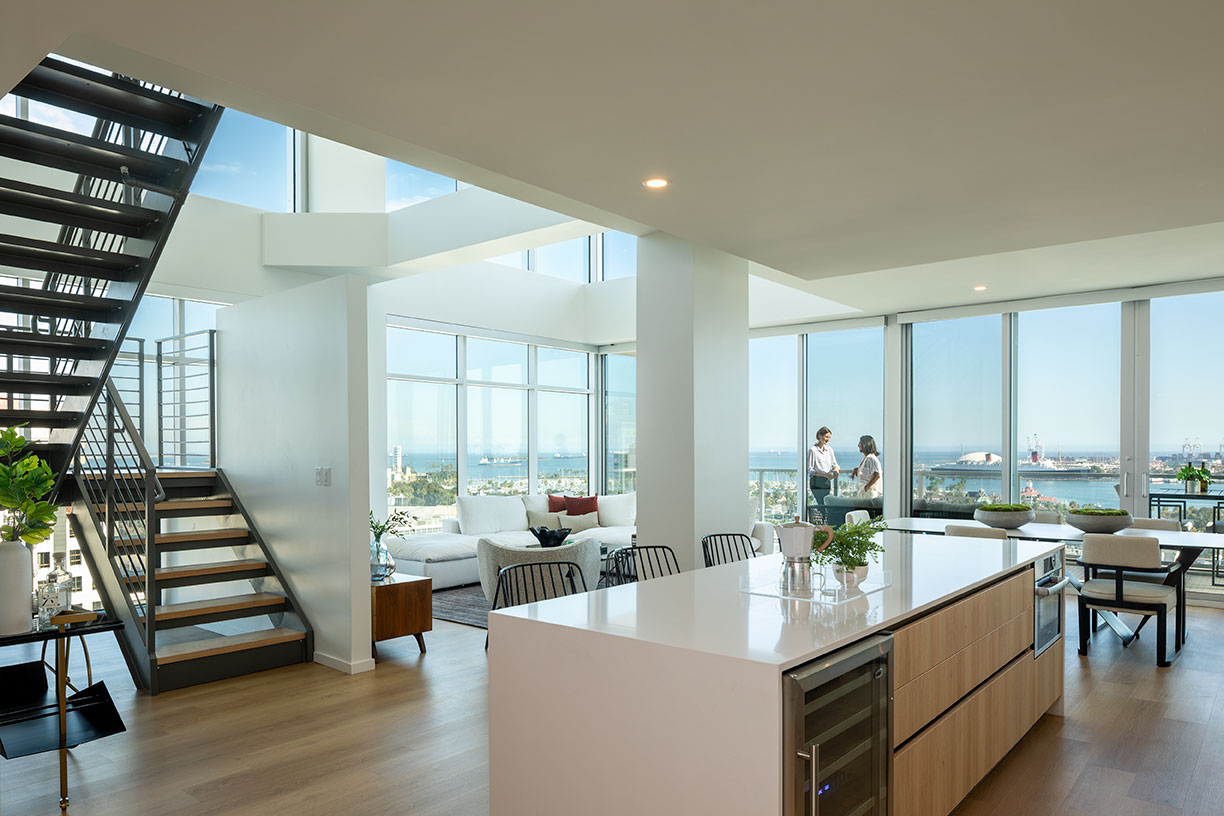
The redesign focuses on creating spacious, light-filled units with outdoor access. Lower units connect to the street, while upper units offer panoramic views. Ground-floor lofts utilize original retail space with double-height ceilings and floor-to-ceiling windows. Upper townhome units feature interior atriums for natural light and ventilation. Residents enjoy unobstructed views from the fourth floor upward. Strengthening the parking structure roof allows for an expansive ground-floor amenity deck, including a pool, spa, community rooms, and barbecue area. This adaptive reuse model significantly reduces the carbon footprint, exemplifying sustainability while addressing the need for housing in the downtown core amidst declining office demand.

//jury comments

Despite the hype about office to residential conversion, it’s not an easy feat to do it successfully. This project navigates those waters gracefully and has converted what was a nondescript, Class B office tower into a successful, welcoming residential community with some interesting units and community building amenity spaces, and reactivates the urbanism at the street frontage in Long Beach along the way as well.
//framework for design excellence measures
Measure 1: Design for Integration
This project prioritizes sustainability through adaptive reuse, significantly reducing environmental impact while enhancing livability. By retaining the façade, tower structure, and three levels of underground parking, the design minimizes material waste and embodied carbon. Two new floors replace a demolished portion of the roof, maximizing efficiency while preserving key structural elements. Upgraded glazing improves thermal performance and optimizes views for residential use. Southern façade balcony insets provide passive solar shading, reducing heat gain and improving comfort. Seismic strengthening—including thickened shear walls and foundation enhancements ensures long-term resilience. As compared to a similar new construction project, these efforts cut embodied carbon by 69%, avoiding 3.1 million kg of emissions—equivalent to taking 687 cars off the road for a year or powering 401 homes annually. Additionally, 26 million pounds of material—or 867 full garbage trucks—were diverted from landfills. By repurposing an underutilized structure, the project creates high-performance living spaces while supporting Long Beach’s sustainability goals. It exemplifies how thoughtful design can positively impact the community and environment.
Measure 2: Design for Equitable Communities
The project was available for public input and comment during the City’s Entitlement Process, and was required to obtain majority approval from the City’s Planning Commission, ultimately the project received unanimous approval. We learned through this process how well received adaptive re-use projects are to the population of Long Beach, and Southern California overall with so many underutilized office buildings dotting the landscape. The project fielded many positive comments and notes of appreciation from residents and the general public for the transformation the project has made to this urban intersection, directly adjacent the City’s Civic Center.
Measure 3: Design for Ecosystems
Several of the plants installed with the project are considered pollinator-friendly, attracting bees, butterflies, and other beneficial pollinators. Here are a few from the project that are known to support pollinators: Peppermint Geranium, Creeping Rosemary and Cup of Gold Vine. The project adhered to the City of Long Beach Bird Safe Design standards. While not recognized in the ABC Bird-Friendly Building Design Existing Ordinances List, the design requirements are similar. Residents have unobstructed views of the ocean to the south, mountains to the north, and harbor to the west providing a connection to the uniqueness of Long Beach.
Measure 4: Design for Water
The building storm water is diverted into a natural biofiltration system along Ocean Blvd. prior to exiting into the public storm drain system. The filtration system is integrated into the landscape design. Drip irrigation was utilized for water efficiency and plant species were selected for hardiness, architectural character, ability to attract pollinators, and their ability to thrive only on natural rainfall after establishment. Organic compost and mulch were incorporated to improve soil health, reduce evaporative water loss, minimize weeds, and support overall plant health. All plumbing fixtures on the project are water efficient fixtures.
Measure 5: Design for Economy
By resuing all of the existing structure, and most of the exterior enclosure, project cost was significantly reduced to $358/sf vs. $750/sf for a new project of similar scale. This also reduced the construction timeline by approximately one year. Amenity spaces were designed with flexibility and adaptation to new uses in mind by avoiding the use of specialized equiment, and furnishings. For instance the yoga room when not in use also serves as an alternative workspace. The community room can host events, co-working or meeting space, and private events. Brings new units to a region experiencing housing shortage.
Measure 6: Design for Energy
North and south facing glazing specified differently according to solar exposure for performance and visible light transmittance, most south facing glazing is deeply inset from the building face by using exterior balconies to self-shade the façade. All south facing units have direct access to operable openings and natural ventilation capturing ocean breezes in the warmer months. Over 50% of the electrical demand for the project is provided by non-GHG producing and renewable sources.
Measure 7: Design for Well-Being
The majority of units have access to natural ventilation and the outdoors via private balconies. Public amenities such as the community room and gymnasium have operable openings to leverage natural ventilation. The project is adjacent a major pedestrian corridor, the Walk of 1000 Lights, and the beach bike path connecting residents to the Long Beach waterfront. One block to the north, lies the Long Beach Transit Hub linking residents to the entire LA and SoCal. Lincoln Park, across Ocean Blvd, also provides opportunity for residents to access exercise equipment, basketball, and skate and dog parks.
Measure 8: Design for Resources
An existing 1960’s office tower and a three-level parking structure was adaptively re-used with the exsiting structure retained in place, strategic seismic retrofit strategies miminize new materials. The exit stairs, shafts, elevator cabs and core were also retained. To minimize demolition, one elevator shaft was converted to a trash chute. An outdoor atrium was added to the penthouses allowing for cross ventilation through the unit. Flooring for the gym is primarily made from recycled content, finish materials in common areas were reduced by exposing strucutral finishes. Constructed of steel and concrete with a life expectancy of 100 years.
Measure 9: Design for Change
Self shading on the south façade is provided by recessing glass storefronts eight feet from the building face. Operable openings on most units allows natural ventilation if mechanical systems fail. Building has been seismically retrofitted and no crucial systems are located at the lower level of the garage to accomodate potential sea level rise over the next one hundred years. Ownership opportunities are built into the project through condominium mapping for future sale.
Measure 10: Design for Discovery
Residents are receptive to operable openings, units without these attributes are at a disadvantage from a leasing perspective. Post-Covid, residents have expressed a need for more work areas outside their units. In terms of discovery/delight, residents enjoy the exposed concrete shear wall located at each floor in the corridor. A large window was added to elevator lobbies for residents to enjoy views while waiting. A local photographer’s artful images of the downtown area were installed providing an understanding of the local context and instilling community pride. The project serves as an adaptive re-use proof of concept precedednt for the region.
Skip to content