
Isla Intersections Supportive Housing & Paseo

Eric Staudenmaier Isla copy feature

In 2018, the City of Los Angeles made over 1,700 city-owned parcels available to affordable housing developers. Many of these sites lie along heavy traffic corridors or next to freeways—difficult, often overlooked land. In other cases, they’re awkwardly assembled parcels left untouched for decades. It’s in these liminal, ambiguous spaces that we see opportunity—and a meaningful next step for housing in the City.

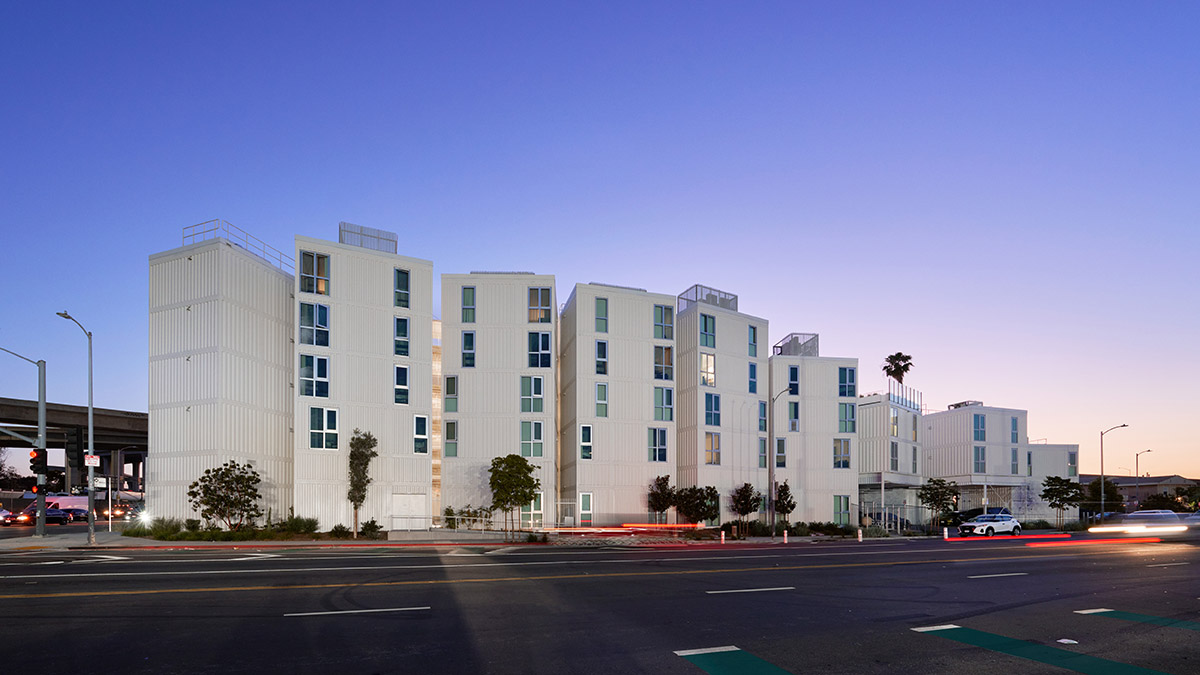
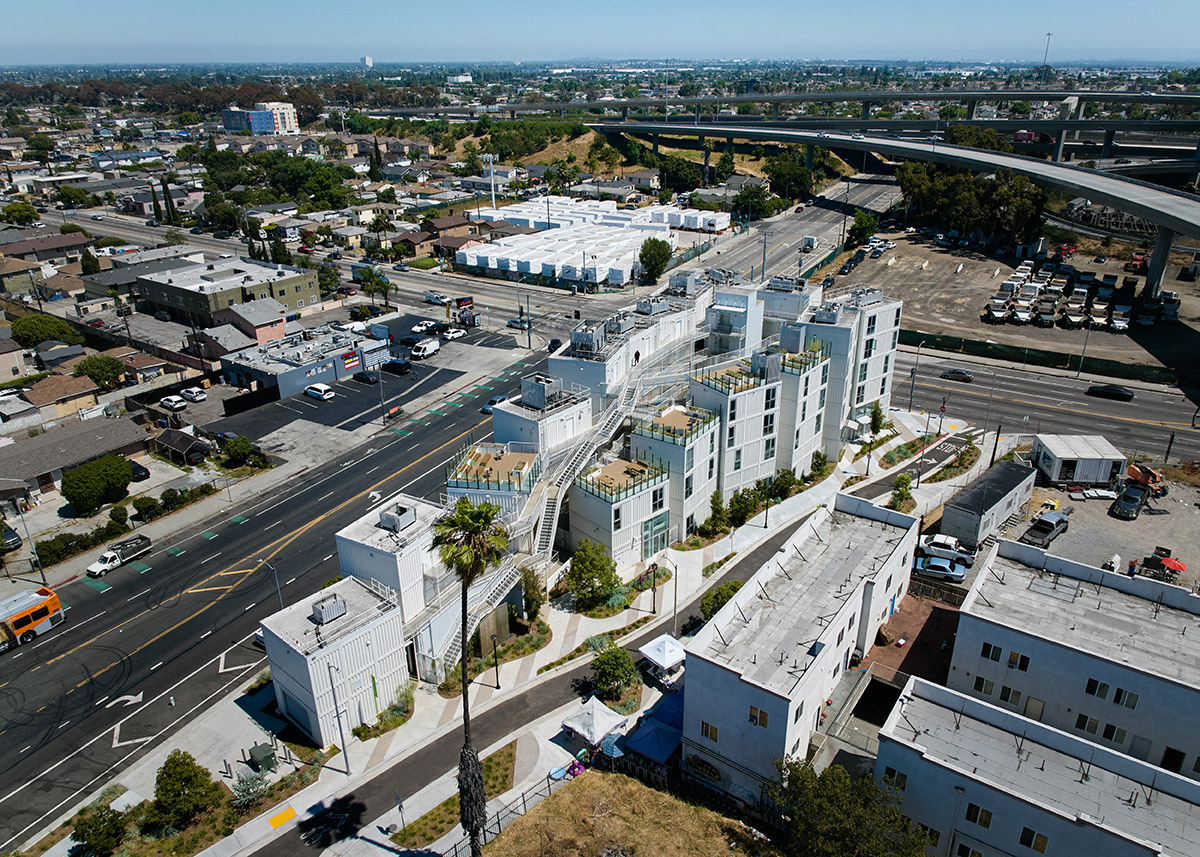
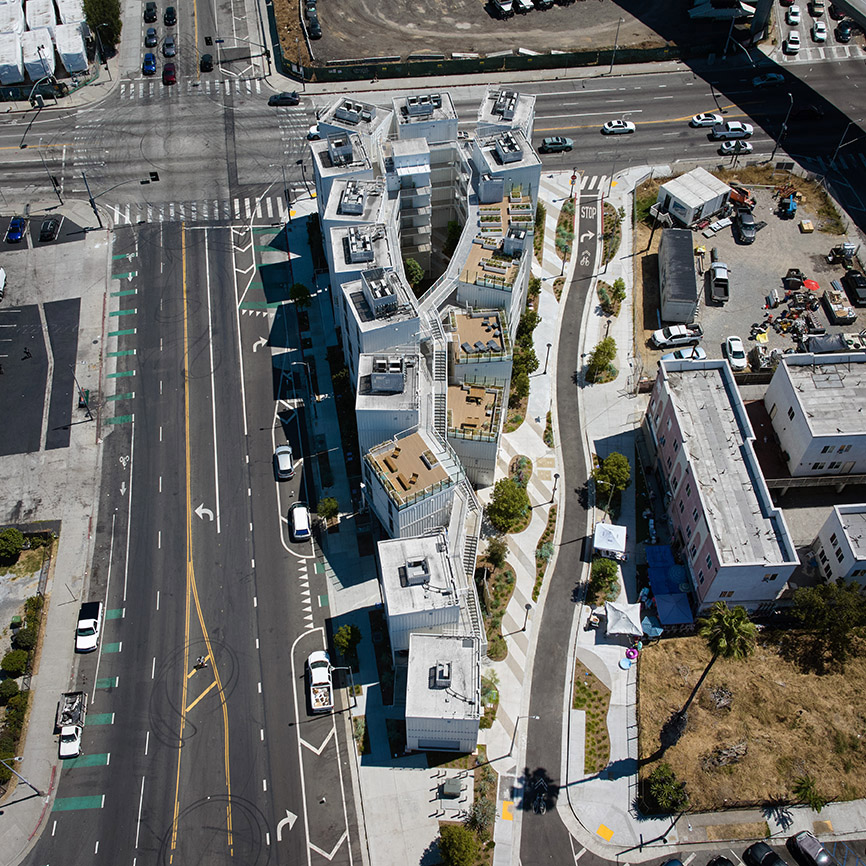
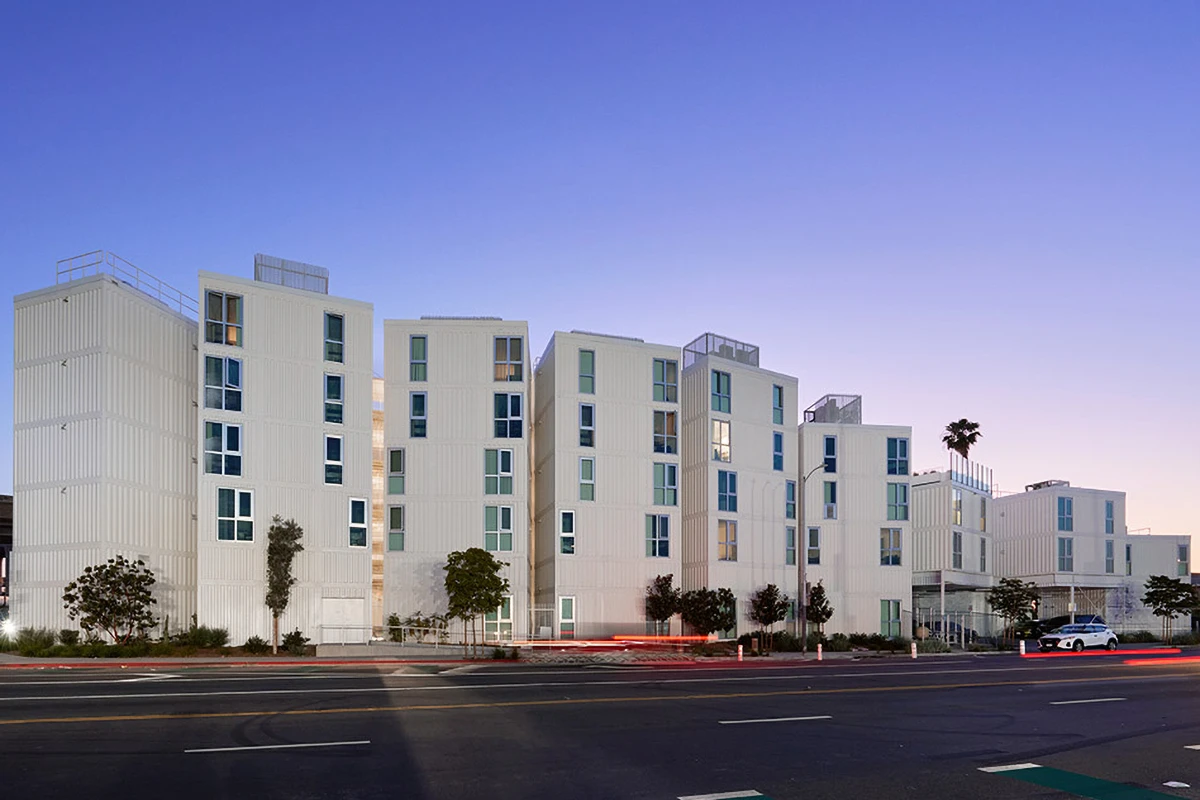
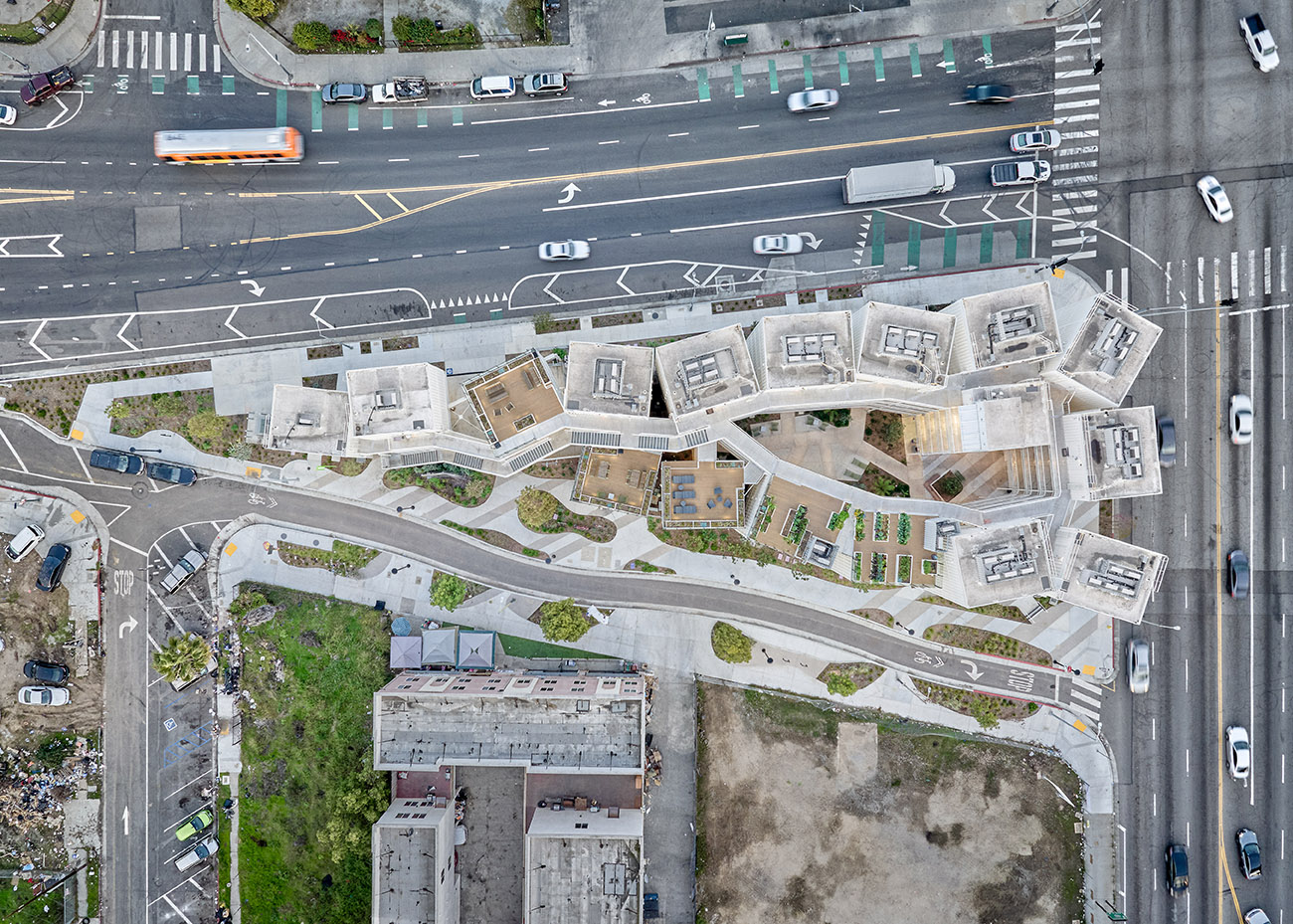
Our second collaboration with non-profit developer Holos Communities, Isla Intersections, embraces this challenge. The 54-unit, 35,000-square-foot project occupies a 19,814-square-foot triangular site formed by a traffic island and a former railroad right of way, adjacent to the massive 110/105 freeway interchange.

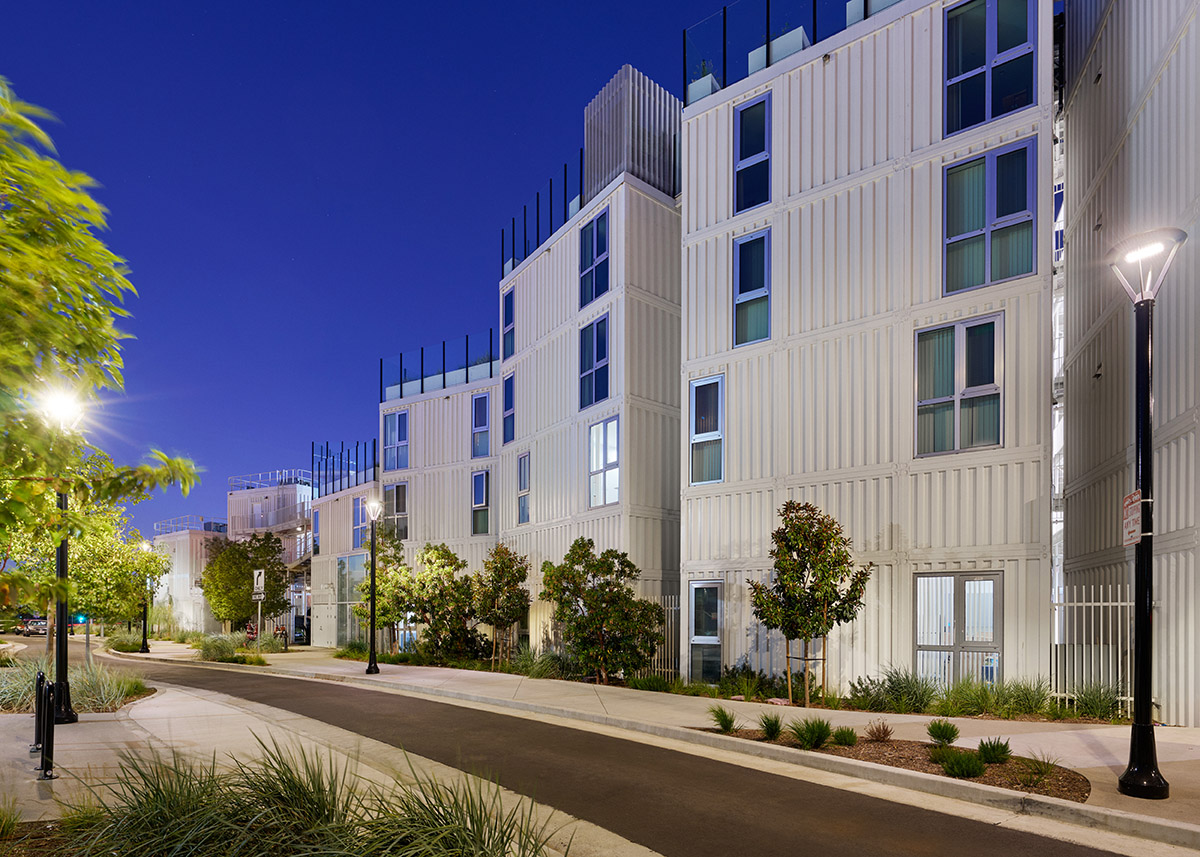
The building consists of sixteen staggered towers made from modular recycled-steel shipping containers—three per unit—each 480 square feet. The compact homes feature open plans with ADA kitchens, bathrooms, and living spaces. Organized along Broadway Street, the towers are connected by elevated walkways and arranged to frame communal outdoor courtyards and a series of pocket parks.

The design shifts in height from five to two stories along the west edge, responding to the nearby single-family neighborhood and creating a more human-scale relationship to Athens Way and the newly designed Annenberg Paseo. This “slow space” prioritizes pedestrians and bikers, while the ground level hosts storefronts for retail, job training, and support services.

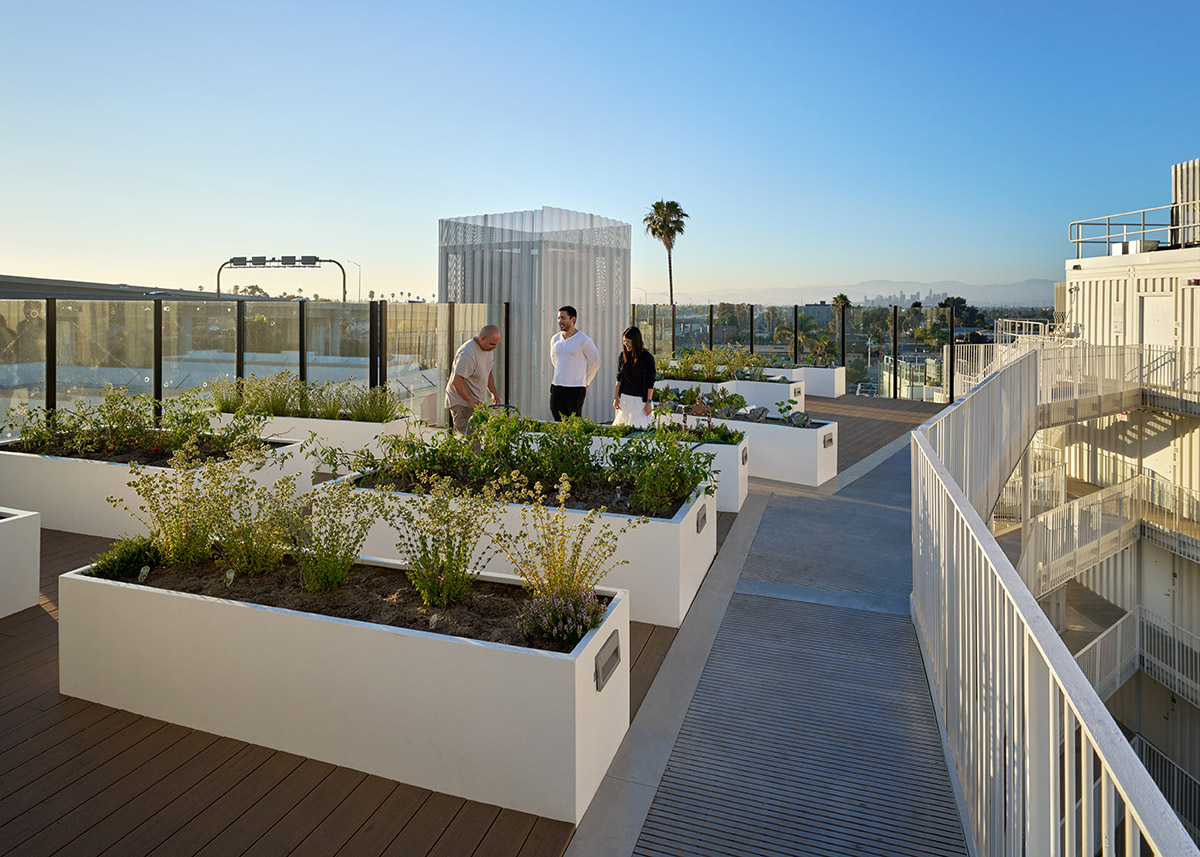
The paseo and marketplace also function as a “living lung,” filtering air pollutants with site-specific trees, vines, and shrubs. Rooftop gardens will supply produce for popup markets and help expand a growing network of urban farms in South LA—including the Stanford Avalon Community Garden just a mile away.

In a time when LA seeks bold housing solutions, Isla demonstrates how overlooked spaces can become catalytic—redefining how we live, work, and grow in the city.

//jury comments

A beautiful, inventive use of shipping containers in a playful, gestural way that relates to its unusually shaped site with the highways in the background. It creates an inviting place for people to live, and a sense of community.
//framework for design excellence measures
Measure 1: Design for Integration
Our aim was to create something that was compartmental but solid, strong enough to withstand the demands of the project’s location but porous enough to engage the residents on a human scale with outdoor activities and places to work and socialize. We are living in a time where the City is willing to embrace these kinds of forgotten spaces and the ideas that they give birth to. And at a time when the city is desperate for answers to the housing crisis, we as architects can have a say in how things play out over the next decade.
Measure 2: Design for Equitable Communities
We hosted a public event at the site early on in the design process to make the neighborhood aware of this new project, and hosted an another block party for its grand opening. This site was previously a completely unused triangle of concrete in the middle of an intersection, and we did look to improve and incorporate the neighborhood utility in this design. Since construction, neighboring businesses have enjoyed erecting stands and tents for small businesses along the paseo.
Measure 3: Design for Ecosystems
Isla Intersections provides a rooftop edible garden to residents, and the slow paseo along the West is landscaped with local flora to filter air of pollution and particulate. Both are irrigated with greywater.
Measure 4: Design for Water
Isla Intersections is projected to recycle 278k gallons of water annually. Greywater is recycled to irrigate landscape. Upper level does incorporate potable for irrigation to solve the issue of pumping graywater upward.
Measure 5: Design for Economy
The most important facet of Isla’s utilization of space is that it is an urban infill project that repurposes a previously unusable triangular sliver of land in the middle of an intersection. The modular nature of this project saved time in construction, allowing for grading work to be done while the containers were being manufactured offsite.
Measure 6: Design for Energy
All appliances in-line with California standards for efficiency. Gas usage limited to water-heater and laundry dryers; HVAC split system
Measure 7: Design for Well-Being
Isla Intersections provides residents with outdoor gathering and landing space, with a central courtyard, several roof decks, and the slow space paseo and marketplace. Our design makes a previously inhospitable concrete site in an intersection into a more livable and comfortable space for living and promoting neighborhood movement and interactions.
Measure 8: Design for Resources
Making use out of shipping containers, Isla Intersections was constructed efficiently. Isla Intersections is an urban infill project that most notably utilized a challenging site, a small triangle in the center of an intersection adjacent to two major highways, and brought a new life for the site.
Measure 9: Design for Change
The client for Isla Intersections spearheads retail incubator programming in its projects. As part of their focus on small business resiliency, Isla features two commercial spaces that will act as a gateway between Isla, its residents, and the greater community. These small commercial spaces will be leased to local small businesses catering to neighborhood needs.
Measure 10: Design for Discovery
We have a continued relationship with these affordable housing developers, who are represented on-site in a property-management capacity. In our continued work with them, we are able to implement improved strategies across a number of projects.
Skip to content