
Intuit Dome

Intuit Dome AECOM Photo by Tim Griffith copy feature

Our design for the LA Clippers’ new arena redefines traditional sports architecture, offering a multidimensional experience shaped by site, climate and program. 

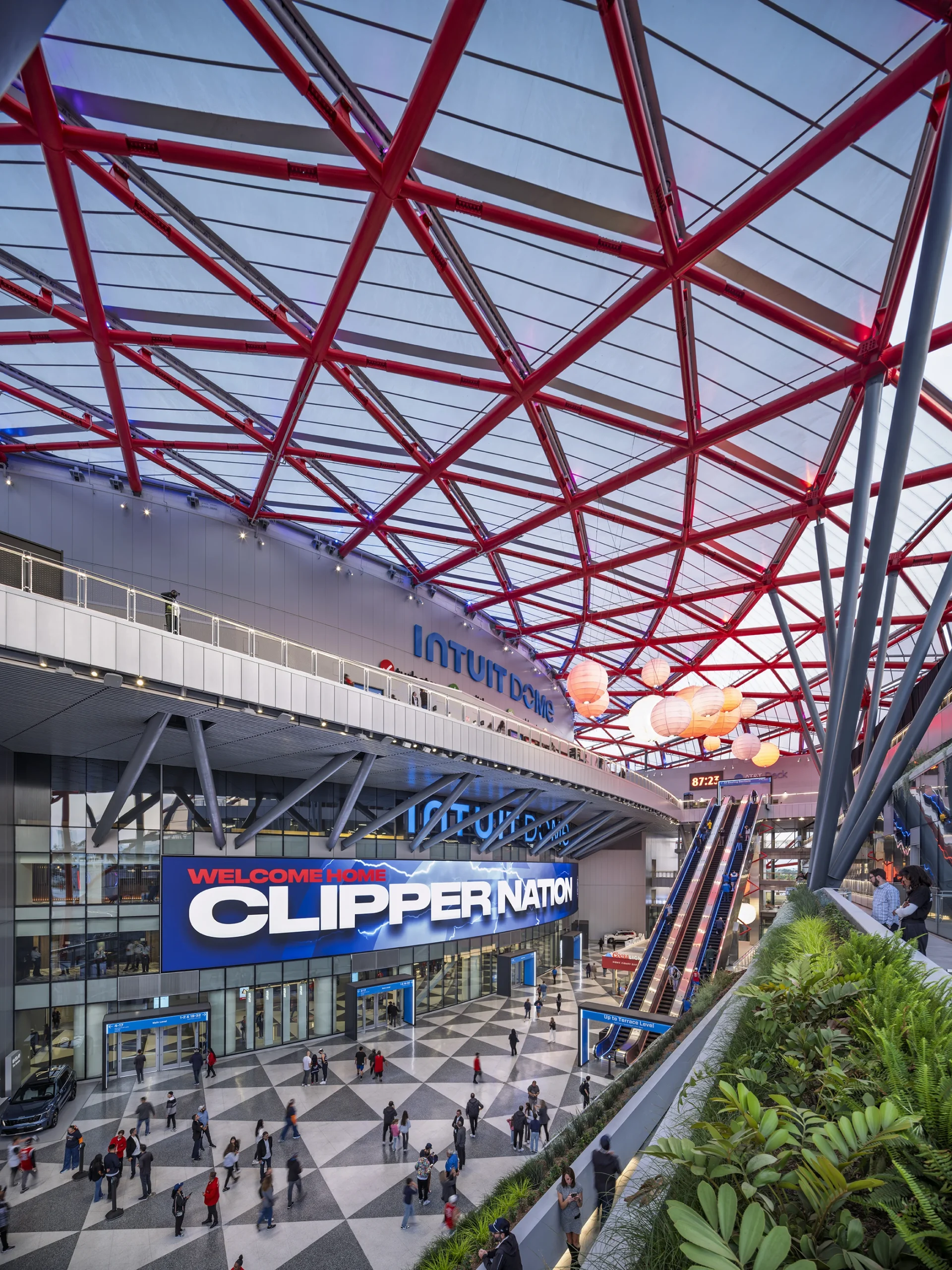
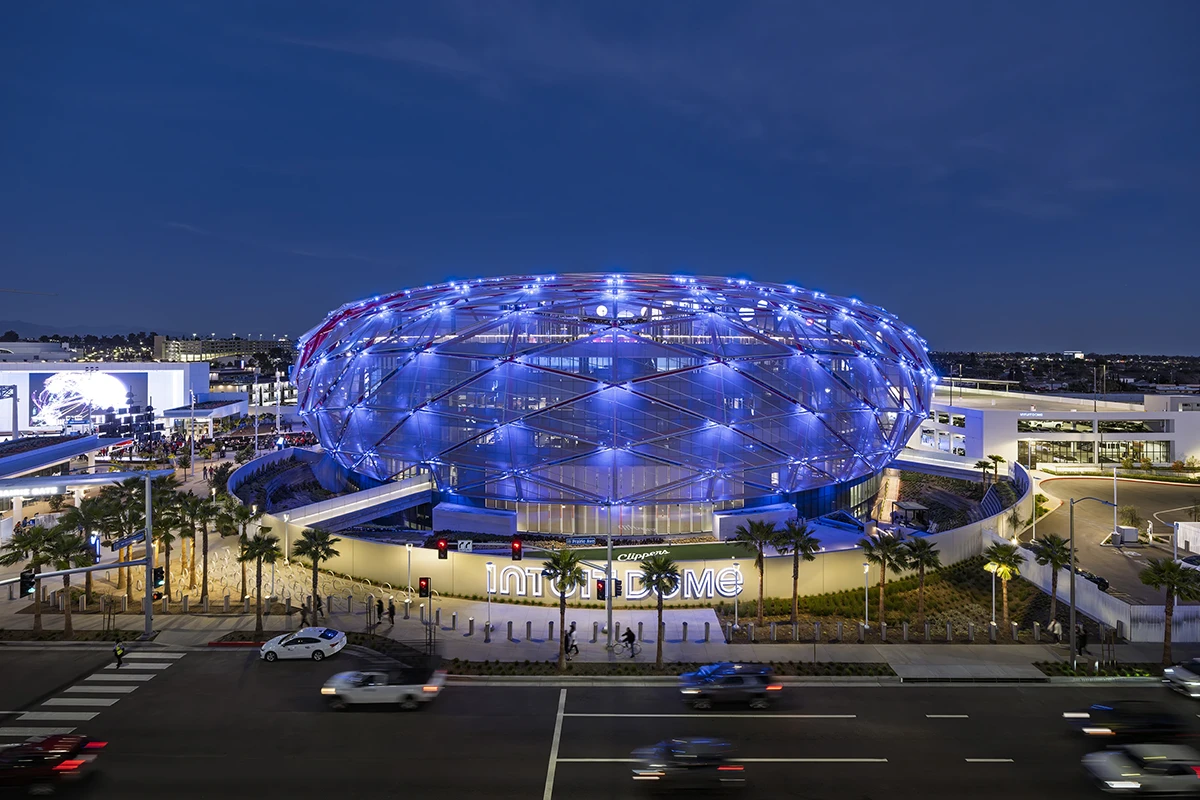
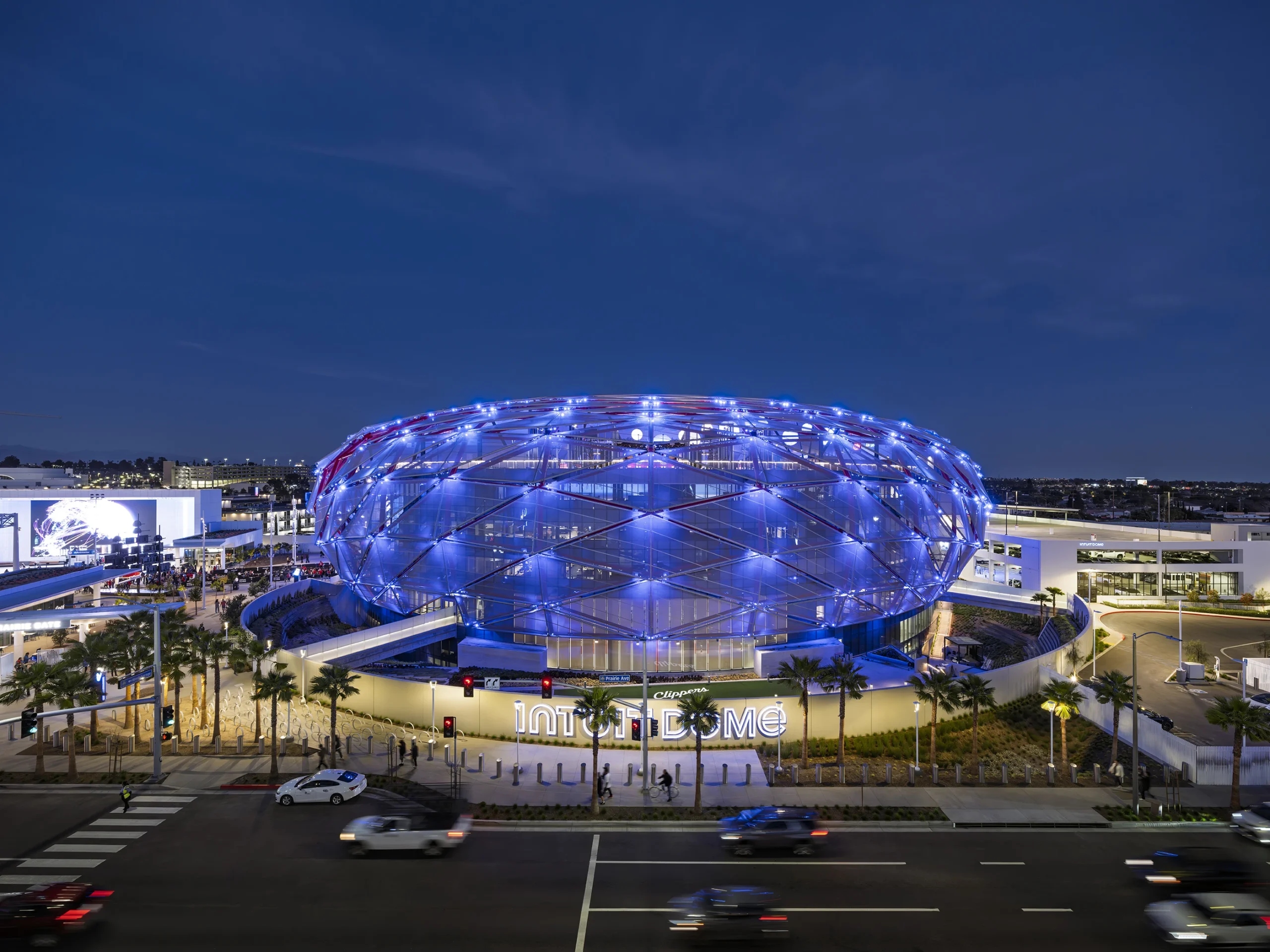
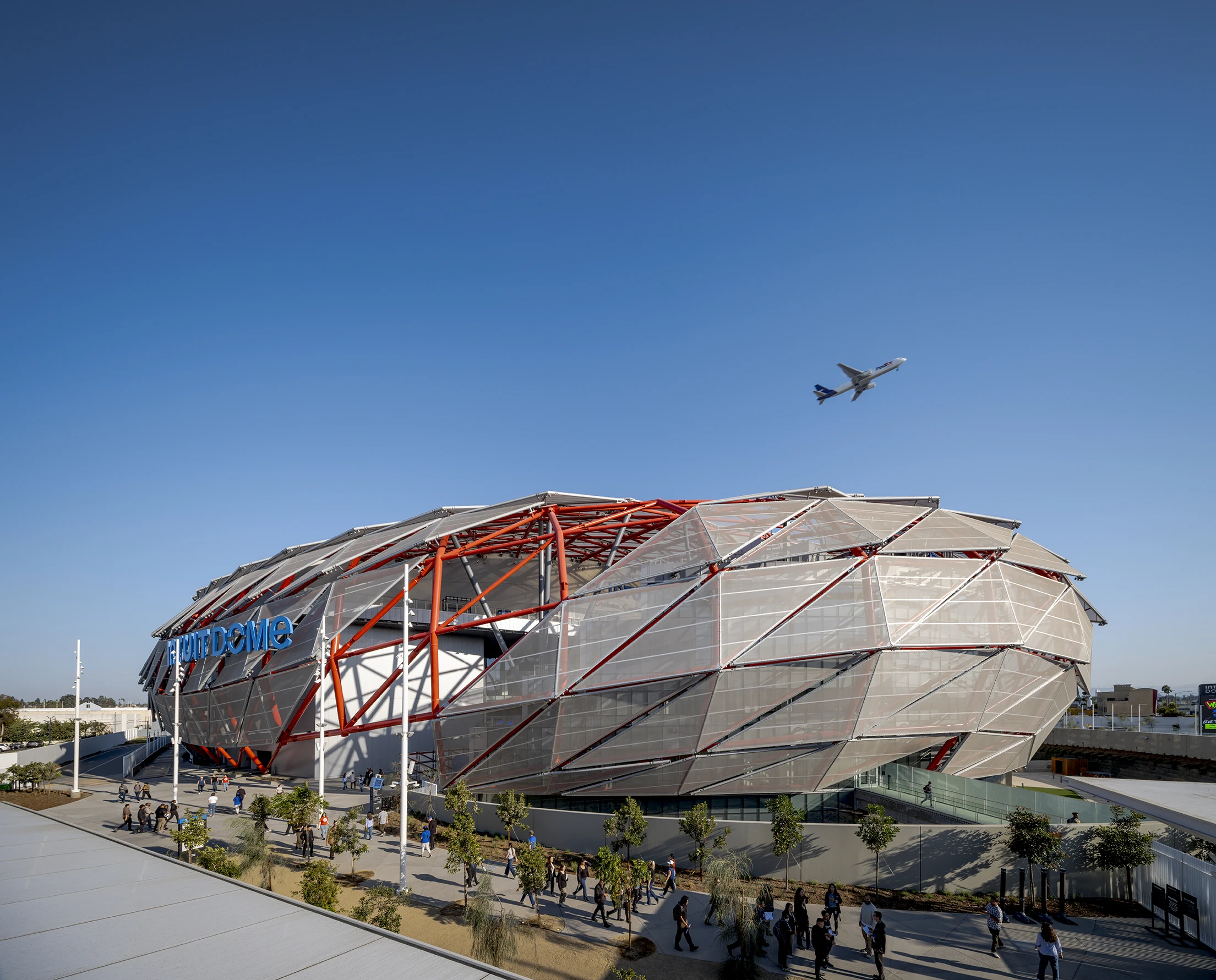
At the heart of the design is a striking structural gridshell that envelops the entire facility. This gridshell, with its innovative “loose fit” to the conditioned interior program, creates a network of informal spaces that redefine how people engage with the venue. The gridshell carries a system of lightweight panels that modulate wind, sun and rain. Panels clad in ETFE, PTFE and laminated PTFE provide protection from rain for the informal spaces while also allowing for fresh air flow and solar glare control. The orientation of the panels has been digitally optimized for their performance and form a dynamic, nature-inspired pattern that evokes growth and movement. 

Each level of the arena features informal terraces and gardens that elevate the guest experience while connecting users to the surrounding landscape. These spaces provide daylight, fresh air and opportunities for spontaneous cross-department interactions, enhancing comfort and creativity for staff, fans, athletes and coaches. Thoughtfully integrated furniture and planting make these zones inviting and usable year-round.

Visually, the gridshell transforms the arena’s outward identity. With primary spaces acoustically insulated, informal areas remain open—revealing interior activity and catching colored LED illumination. From a distance, the arena radiates a dynamic, glowing presence.

Intuit Dome is poised to become the first carbon-neutral arena, setting a new standard for sustainability in sports + entertainment design.

//jury comments

This project sets the tone for the next generation of this kind of high performance in a typology that has often not seen that kind of performance as well as kind of user experience.
//framework for design excellence measures
Measure 1: Design for Integration
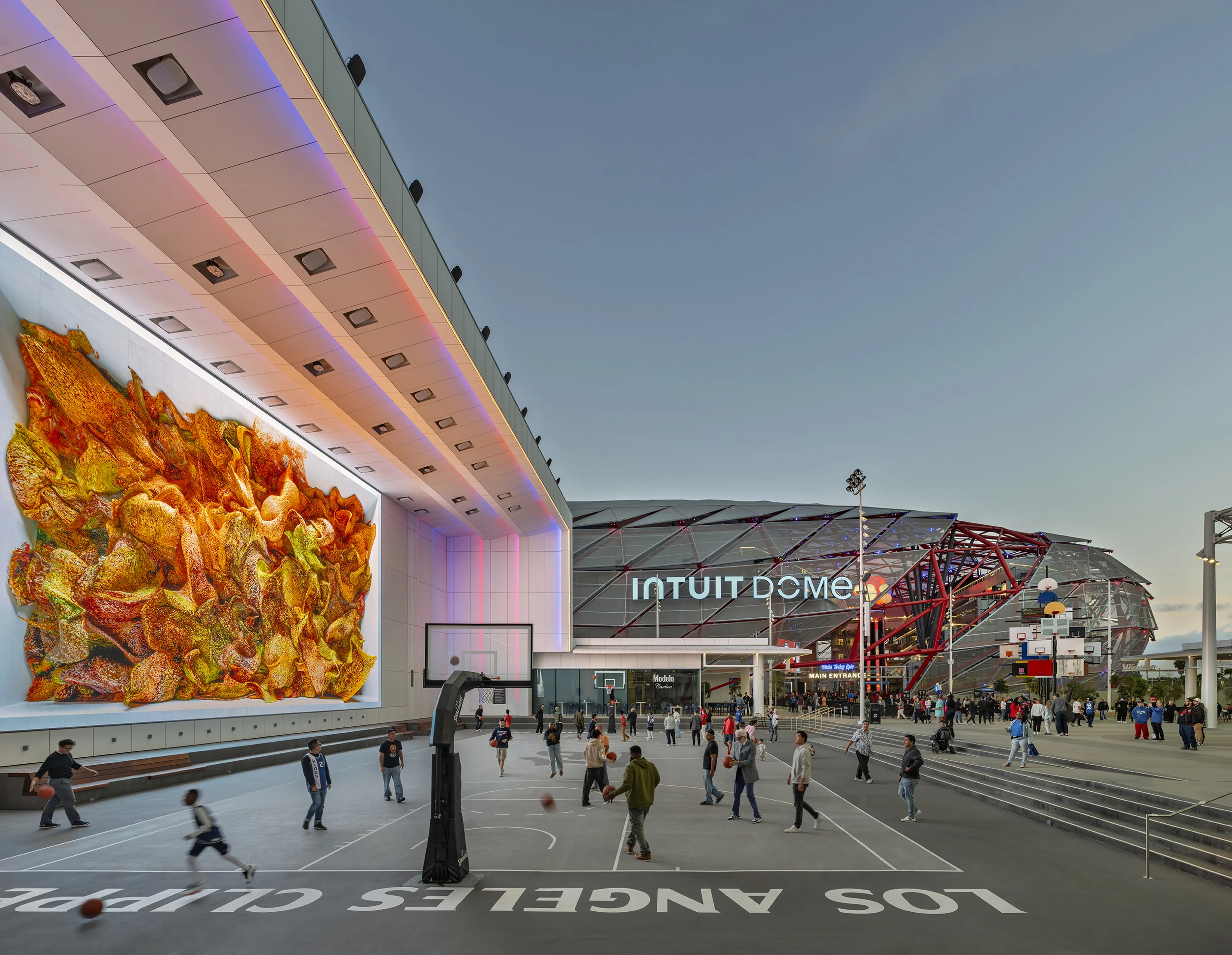
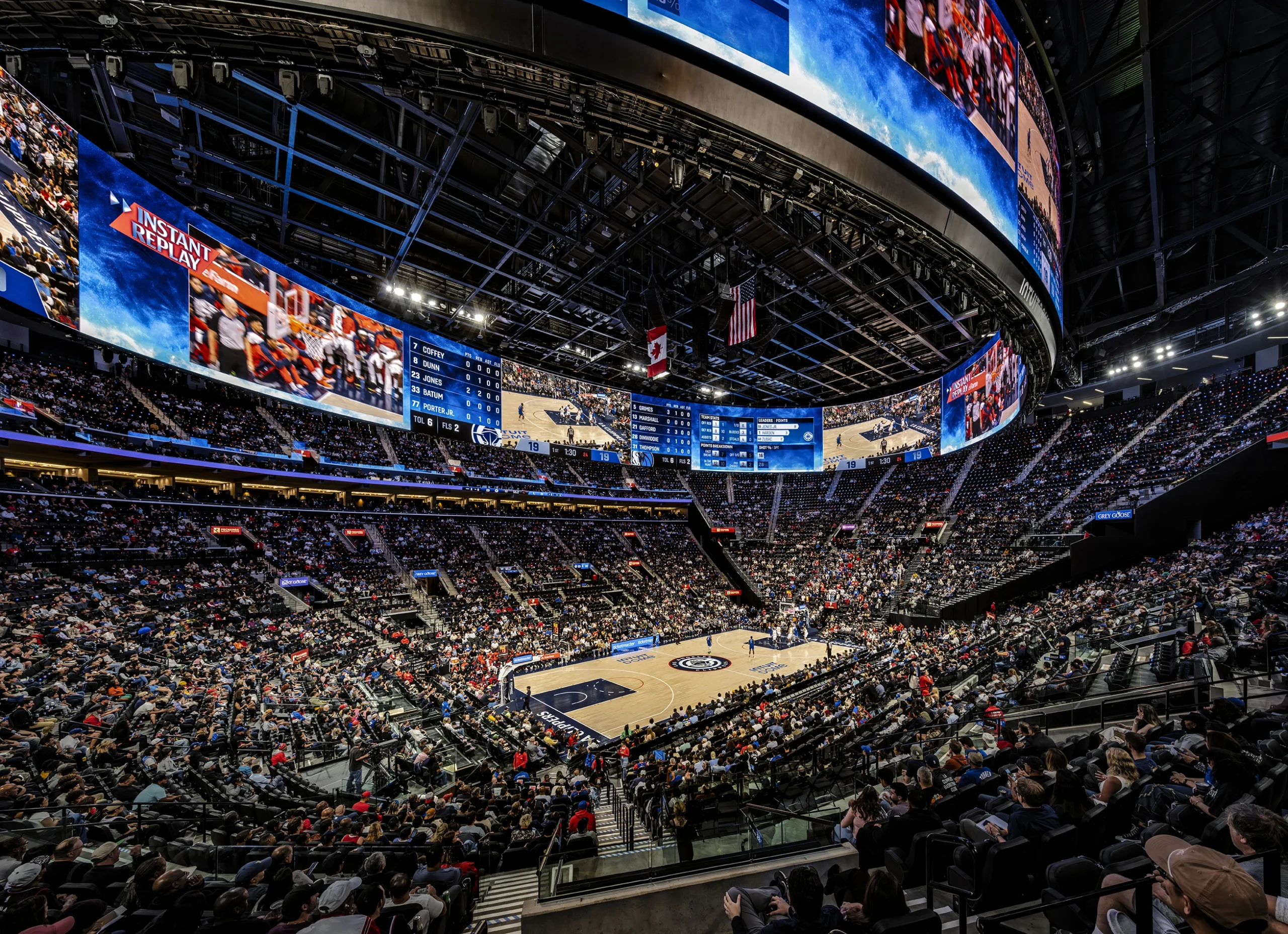
Intuit Dome exemplifies design excellence by seamlessly integrating sustainability, innovation, and community engagement. Designed to be the first climate-positive arena in the world and operate 100% carbon-free from day one, it has earned LEED Platinum certification. The visually dynamic gridshell enhances environmental performance with an indoor-outdoor approach, allowing natural ventilation and daylight. Its PTFE and ETFE membrane panels modulate wind, sun, and rain, while 100% outdoor air in the arena bowl reduces energy use and improves thermal comfort. Inside, the 18,000-seat arena redefines sports architecture with optimal fan accessibility and comfort. The unique halo-shaped LED scoreboard offers an immersive experience, while “The Wall” amplifies home-court energy. Nearly 5,500 solar panels generate over 40% of annual energy use, while low-carbon concrete and high-recycled-content steel cut embodied emissions by 10%. Water innovation reduces potable water use by 95% through reclaimed water systems and ultra-low flow fixtures. Connection to the surrounding neighborhood was critical, both socially and sustainably. The Clippers worked with the city on a $100 million benefits package, supporting schools, housing, infrastructure, and job opportunities. The new arena is designed to have a positive local impact, featuring a public plaza with a basketball court and an art program showcasing local talent.
Measure 2: Design for Equitable Communities
Although an extraordinary level of innovation and attention to detail has informed the design of the internal aspects of the Intuit Dome program, its connection to the surrounding neighborhood was also critical, both socially and sustainably. The LA Clippers worked with the City of Inglewood on a far-reaching benefits package — funding for schools, housing, infrastructure and jobs have all been part of the commitment to develop an arena with positive community impact. Intuit Dome naming rights partner Intuit is committed to making the arena a hub for programs that power economic prosperity and benefit the community.
Measure 3: Design for Ecosystems
Intuit Dome sits on 26 acres in Inglewood, CA, within an emerging sports and entertainment district. Its height was limited due to its location under LAX’s flight path, requiring FAA coordination. The primary entrance, at Prairie and Century, connects to a public park and plaza, while service areas are below grade to maximize pedestrian access. The park features indigenous species and over 100 trees added to support the ecosystem. Bird safety was a priority, earning LEED’s Bird Collision Deterrence credit. Night lighting systems were designed, and most of the exterior cladding uses ETFE/PTFE materials to minimize risks to migrating birds.
Measure 4: Design for Water
Intuit Dome integrates robust design strategies to address the Los Angeles basin’s water shortage. Limited rainfall is managed by directing water to landscaped areas for irrigation and aquifer absorption. Inside, potable water use is minimized, saving 95% annually—over 7.5 million gallons, enough to support 20,000 Californians. To serve 18,000 occupants, the building includes numerous toilets and urinals with low-flush fixtures 40% more efficient than typical. All toilets, urinals, and cooling towers operate with 100% reclaimed water. The site features extensive landscaping, including native drought-tolerant species, enhancing urban relief and requiring less water. All landscape irrigation relies on reclaimed water.
Measure 5: Design for Economy
Intuit Dome is an ambitious sports and entertainment project with a budget consistent with similar venues. The design exceeded the client’s initial brief by creating enclosed, non-conditioned spaces. The mild Los Angeles climate supported landscaped terraces for casual meetings, individual work, or breaks during events. The large lobby, designed for independent events, remains non-conditioned for long-term energy savings. Lightweight ETFE and PTFE membranes, stretched over prefabricated tubular steel frames, provide daylight control, water protection, and airflow to keep spaces cool. Thoughtfully designed, these materials prioritize efficiency, maintenance, and user comfort, enhancing the project’s sustainability and functionality.
Measure 6: Design for Energy
Energy efficiency is prioritized through passive and active design strategies. The building form, skin and layout optimize performance, while its indoor-outdoor configuration enables passive ventilation. A 2.4 MW solar array supplies over 40% of annual energy, while an 11.5 mWh battery-storage system provides peak load shedding and blackout resilience. Carbon neutrality is achieved through embodied carbon mitigation and operational reduction, using Carbon Cure concrete and recycled steel. Fully electrified, it runs on renewables, with a heat recovery system repurposing waste heat. As the first professional sports venue to earn LEED BD+C v4/4.1 Platinum, it is designed to be net-zero carbon.
Measure 7: Design for Well-Being
Intuit Dome prioritizes health and well-being with state-of-the-art sports medical equipment, an outdoor pool, and training area. Practice courts feature daylight and landscape views, while dining areas focus on nutrition. The player facility and offices receive 100% fresh air, as does the arena bowl, which boasts smartphone-controlled airflow. Spaces maximize daylight with landscaped terraces for work and relaxation. Open stairs near elevators encourage movement, and lounge areas support all users. Flooring, ceilings, and insulation were chosen to minimize exposure to toxic materials, achieving over 90% compliance with low or non-emitting volatile organic compounds. Comfort and accessibility drive every design choice.
Measure 8: Design for Resources
Careful use of resources informed Intuit Dome’s design, focusing on structural systems, exterior cladding, and interior finishes while controlling waste and carbon. Structural elements used recycled steel and in-situ concrete with Carbon Cure, type 1L cement, and Orca aggregate. Lightweight ETFE and PTFE cladding reduced steel dimensions, minimizing carbon. Durable terrazzo floors incorporate recycled aggregate, and concourse walls use reclaimed basketball court wood. Construction emphasized carbon reduction, employing no-idling protocols, electric equipment, LED lighting, and strict waste separation. Local materials and manufacturers were prioritized, with initiatives like a carpet take-back program and reusable joint compound packaging to reduce waste.
Measure 9: Design for Change
Sports venues are often static in function, but Intuit Dome integrates flexibility. The program includes a team practice facility, offices, and community spaces, ensuring activity on non-event days and during the off-season. Of its 1 million square feet program, 200,000 square feet is dedicated to office, retail, and food services, with adaptable storefronts and high ceilings for market shifts. The building enclosure uses removable lightweight PTFE fabric, optimized for current climate conditions. A significant portion operates without air conditioning, reducing costs and providing passive survivability in power disruptions. These design choices enhance resiliency, ensuring long-term adaptability for evolving needs.
Measure 10: Design for Discovery
Intuit Dome achieved LEED Platinum and supports future certifications like LEED Zero and TrueWaste Zero. Sensors throughout the facility monitor and enhance operations, measuring HVAC performance, adjusting conditioned airflow, and optimizing irrigation based on weather and plant growth. Smart lighting minimizes waste by dimming when spaces are unoccupied, or daylight is available. “Fan forward conditioning” allows arena occupants to adjust temperatures via a smartphone app. Contactless concession technology tracks demand for efficient restocking. The data collected on HVAC, lighting, water, and concessions helps optimize long-term operations, ensuring sustainability and adaptability to scale.
Skip to content