
Mosaic at Embarcadero Center

HIPSF Mosaic at Embarcadero Center copy feature

While the Embarcadero Center office towers have continued to thrive beyond the pandemic, their labyrinthine podium has long been beset with retail vacancies. The objective of the project was to reinvigorate the podium experience while providing an attractive tenant amenity.

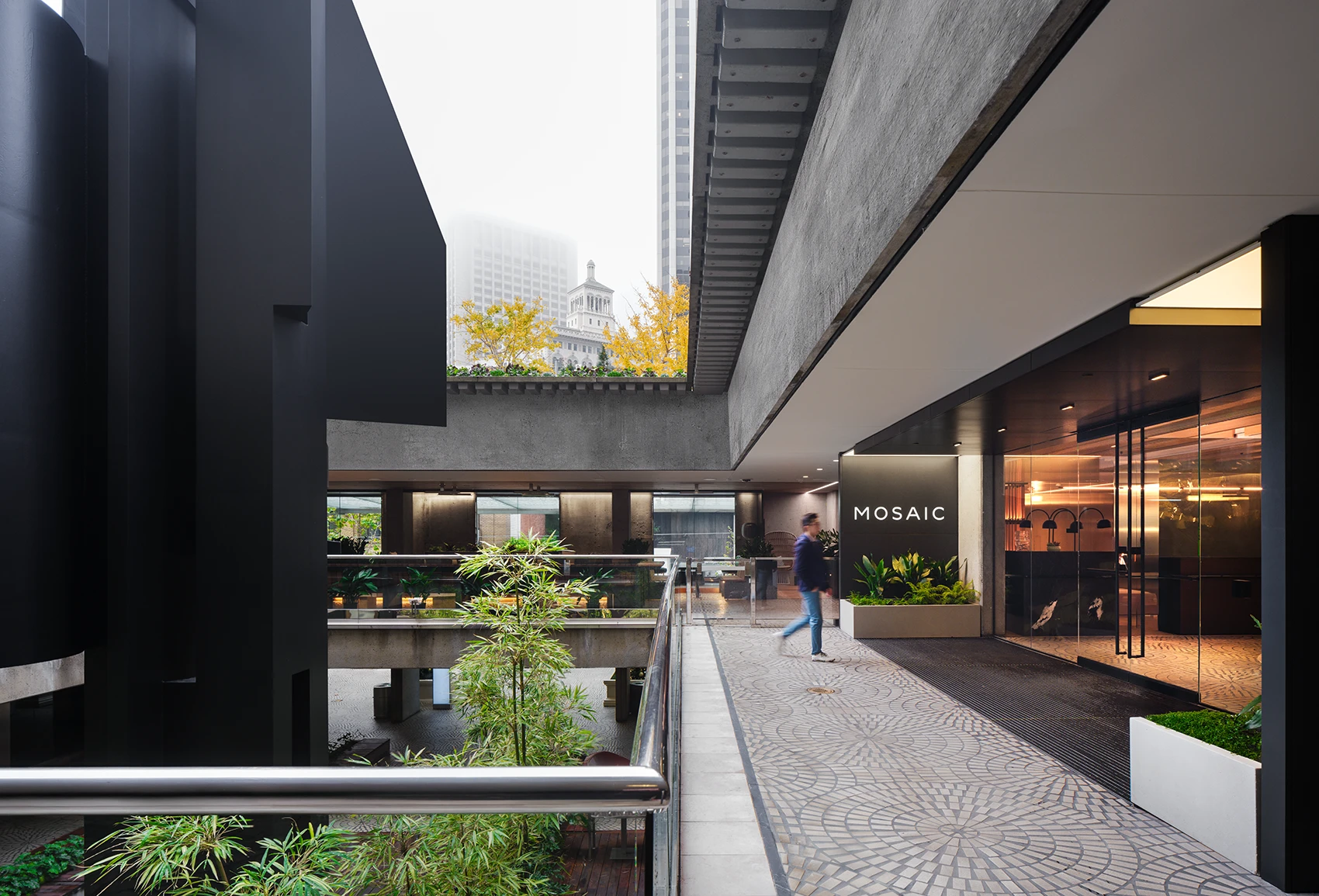
The resulting space, Mosaic, is literally and figuratively a meeting point. Its function is a conference center, but it’s also the intersection of public and private. The design focused on creating spaces that promote an exchange between the energy and creativity happening in the office tower above with the urban fabric below. The architecture’s materiality and form reflect that dialogue: sumptuous textures against stark swaths of concrete; soft, billowing forms meet clean lines; diffused daylight contrasts soft, shifting shadows.

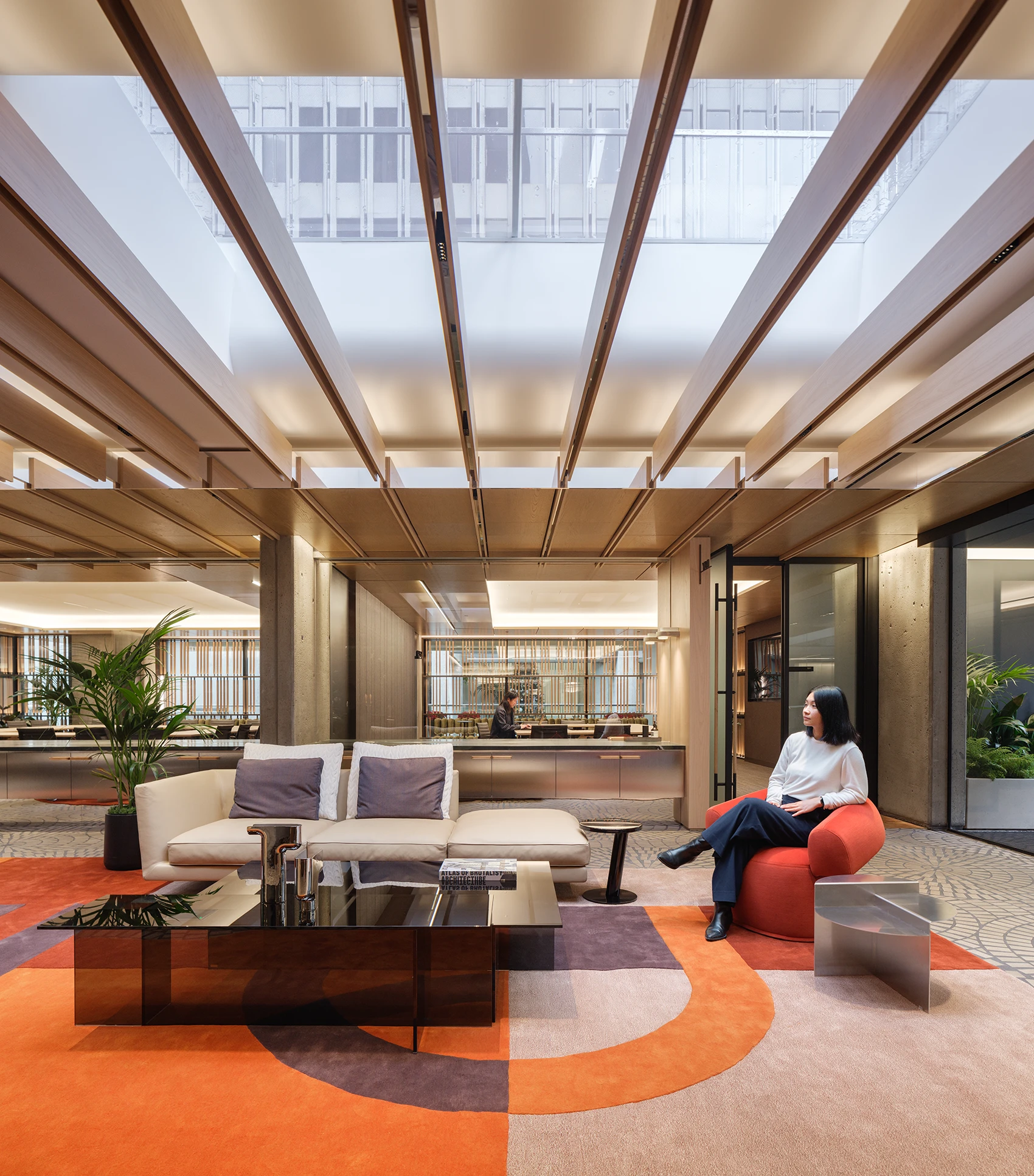
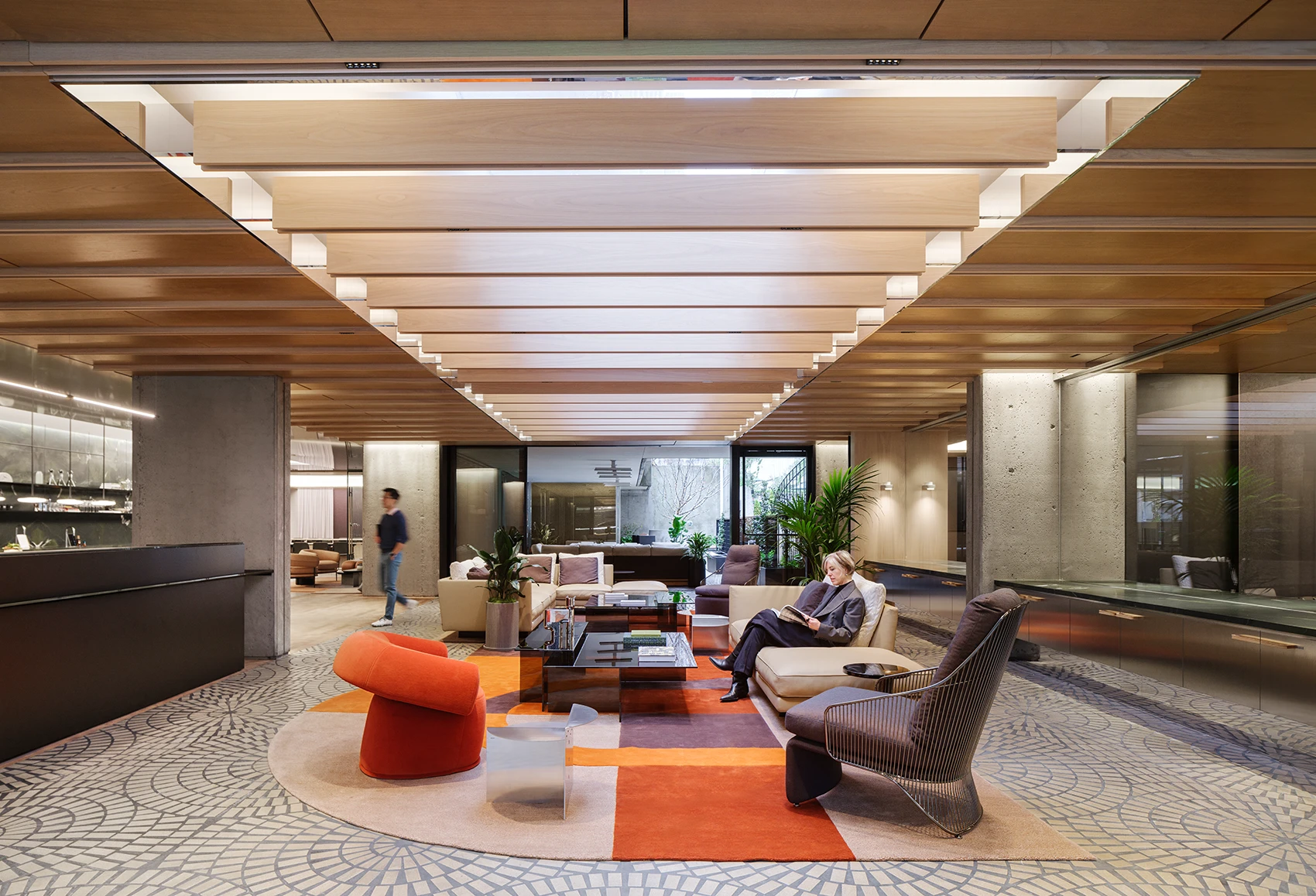
A prime example is the entrance, known as the “Atrium.” Formerly an open breezeway between two retail suites, it’s now enclosed to connect the multiple spaces and functions.  From the low iron glazing at the entry, one can see straight through to the operable glass partition that leads to the lush private garden. Overhead, daylight floods in from a new 20’ skylight that offers views of the towers above. The light is diffused by custom millwork slats spanning the opening. The form of these slats recalls the office tower’s precast façade which contrasts the soft, radiused GFRC soffit beyond.

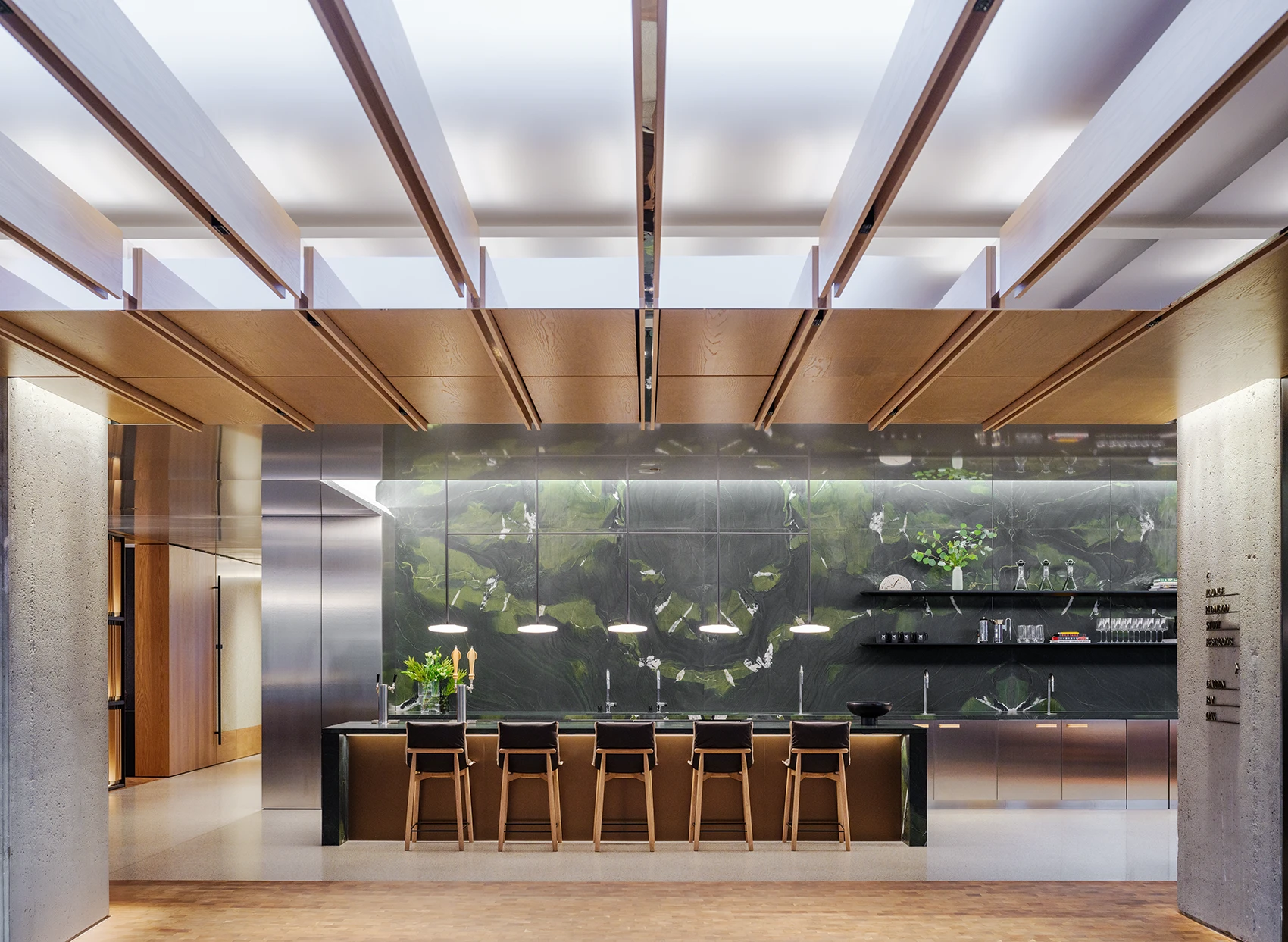
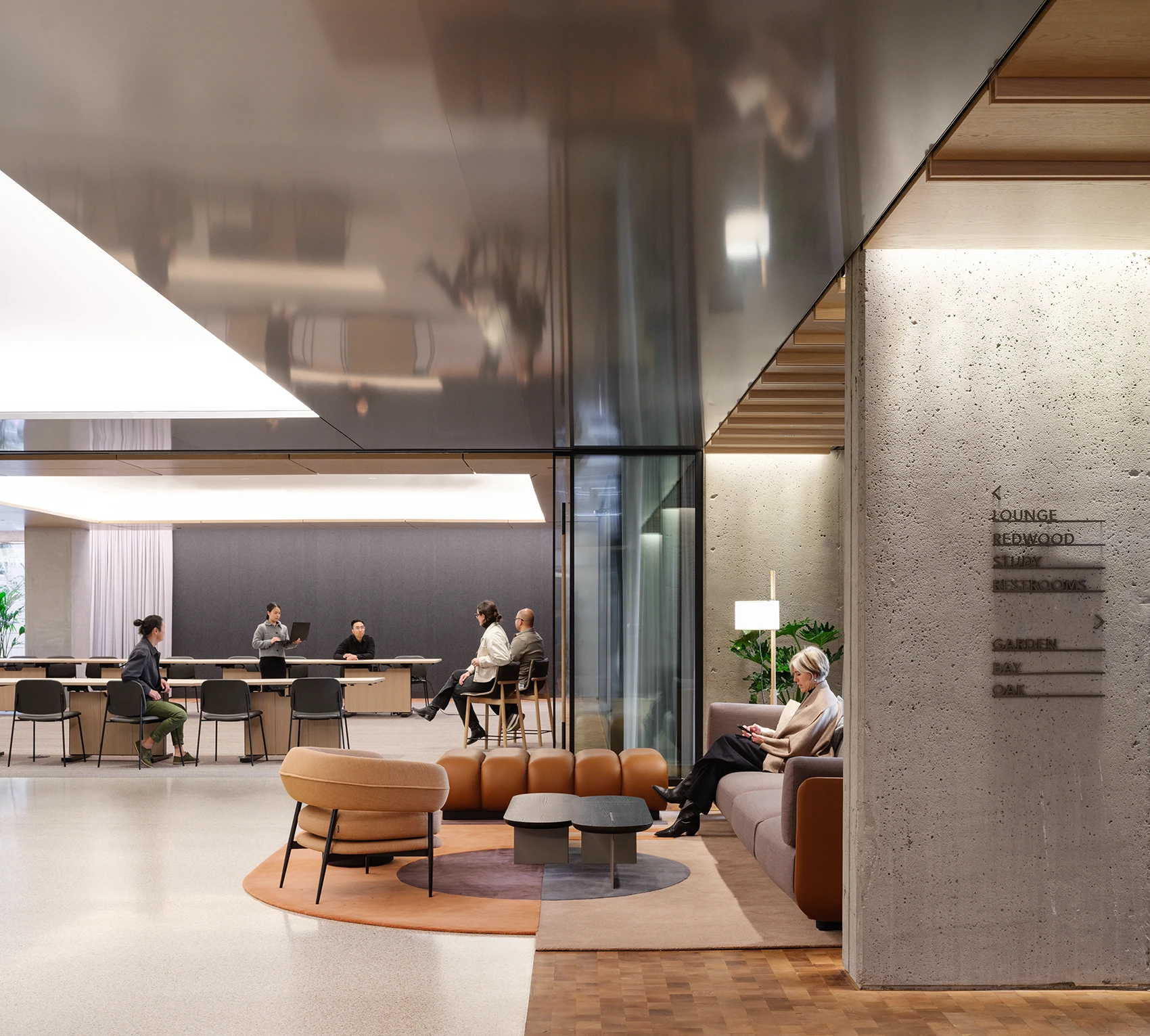
To one side of the Atrium are two executive conference rooms that offer flexible seating arrangements accommodating 25-40 guests. Opposite the atrium is the social hub, a hospitality inspired pre-function space, the backdrop of which is a dramatic wall of Avocatus quartzite.  This space also serves as the conduit between two functions: the “great hall” a large multipurpose room with state-of-the-art conferencing technology and the “terrace,” an outdoor space overlooking Sacramento St. that offers a variety of casual seating.

//jury comments

Absolutely beautiful and flawlessly executed update of these sadly underutilized retail spaces. These renovations are perfect examples of creating harmony with the spirit and architectural language of the existing building while updating and elevating the spaces to contemporary and innovative ideas for re-use.
//framework for design excellence measures
Measure 1: Design for Integration
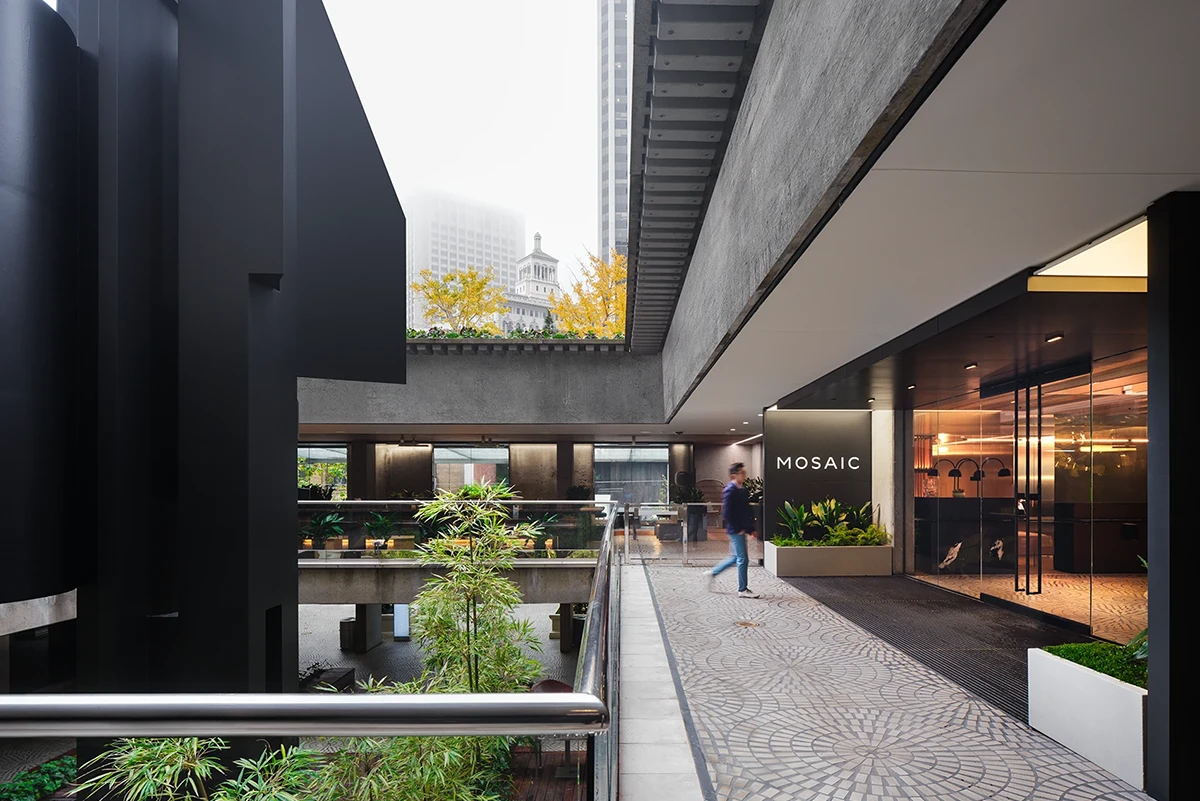
The design not only leverages the existing elements of the site, but also elevates them. Within the two vacant retail suites, existing concrete battered walls were restored and used as finished partitions and existing glazing previously hidden behind retail displays were exposed to bring in daylight. Existing radial mall tile, a character defining feature of the historial resource towers, are featured as a floor finish in the breezeway that was captured to create the “Atrium.” Where existing building elements required replacment, choices were made with long term resilience and energy efficiency in mind. End grain wood and terrazzo flooring were installed where floors were not salvagable, insulated glass units were installed at new storefronts, and a VRF mechanical system was selected to replace the existing four-pipe system. The result is a reactivation of a key resource for the client and the local community that involved minimal demolition and site work, retaining the architectural language of John Portman’s work.
Measure 2: Design for Equitable Communities
While tenant feedback was taken into account during programming, the owner proceeded with their specific vision for the space as a publicly facing resource. Stakeholders including property management, security, marketing teams, and project managers were all actively engaged in different phases of the project, regularly attending meetings and design presentations.
Measure 3: Design for Ecosystems
The site is an existing office building podium so most of these prompts do not apply; however, it should be noted that great pains were taken to reuse as many of the existing building elements as possible while also increasing site vegetation to promote wellness through biophilia.
Measure 4: Design for Water
Low flow plumbing fixtures are specified. A VRF system was installed for the HVAC to replace an existing four-pipe system; the VRF system only requires minimal water usage for condensation management, while the four-pipe system relies on the continuous circulation of hot and cold water. The new energy efficient envelope and operable openings means active cooling and heating is required far less often than previously. The water reduction in the HVAC system is greater than 95%.
Measure 5: Design for Economy
Local economy: Mosaic breathes new life into long vacant retail suites that were challenging to lease and while contributing to the reactivation of four blocks of the urban fabric. The space also encourages the return to office, positively benefiting the local economy. Durability: Resilient finishes such as end grain wood flooring and terrazzo are paired with the existing radial mall tile and concrete walls, allowing costs to be amortized over a longer life span. Flexibility: Multiple uses can be facilitated in Mosaic, allowing for potential future operation as traditional office space, coworking, or educational training center, ensuring future utility.
Measure 6: Design for Energy
The existing HVAC system was a hydronic four-pipe system, which was replaced with an electric VRF system. In addition to the water savings previously described, the VRF system allows for additional zoning for more precise control, delivering only the required refrigerant flow to areas of demand. Energy efficient double glazing was used for the new envelope to mitigate solar heat-gain. Operable partitions were strategically located to promote cross-ventilation to allow for passive cooling on a vast majority of days in the temperate San Francisco climate. This further reduces demand on a significantly more efficient HVAC system.
Measure 7: Design for Well-Being
Mosaic features a direct connection to the exterior through operable glass partitions which contributes to users’ wellbeing and control of their thermal comfort. The space primarily relies on diffused daylight rather than artificial light, reducing glare and strain on users’ eyes. Mosaic also offers multiple space types and postures to support use for neurodivergent users.
Measure 8: Design for Resources
A conscientious approach to reusing the existing structure and finishes are evident in final material choices: -The existing historically significant floor tile was reused wherever possible (more than1300sf of floor tile was repurposed) -The existing structural concrete was patched and repaired for use as wall finish throughout the space -PVC-free wallcovering from Momentum is a healthier material choice than more commonly used PVC substrate -Kaswell Oak Strip Block flooring – wood is domestically grown in Tennessee and Kentucky. End grain is durable and can be refinished over and over, making it a long-lasting product choice -Low VOC paints -FSC Certified woods throughout
Measure 9: Design for Change
Mosaic can be reconfigured to meet different needs and uses, such as interior operable partitions that allow the main conferencing area to be connected with other spaces for larger gatherings and alternative uses. It is also designed for a variety of potential future operations, from traditional office space to coworking to educational training, ensuring long-term utility.
Measure 10: Design for Discovery
Mosaic is designed as a critical connection point designed for to long-term use and discovery. Multiple seating postures and reconfigurable spaces invite exploration for users to find their optimal environment depending on needs, from gathering to events. An indoor/outdoor connection is built by bringing natural light into the space, with operable glass partitions blurring the lines between interior and exterior. Reflective architectural materials create the illusion of light, crossing together to reinforce the design theme of intersections. Resulting from a client relationship cultivated over 7-8 years, Mosaic is the latest project to advance a common goal of revitalizing San Francisco.
Skip to content