
Big Sur House

Joe Fletcher LR copy feature

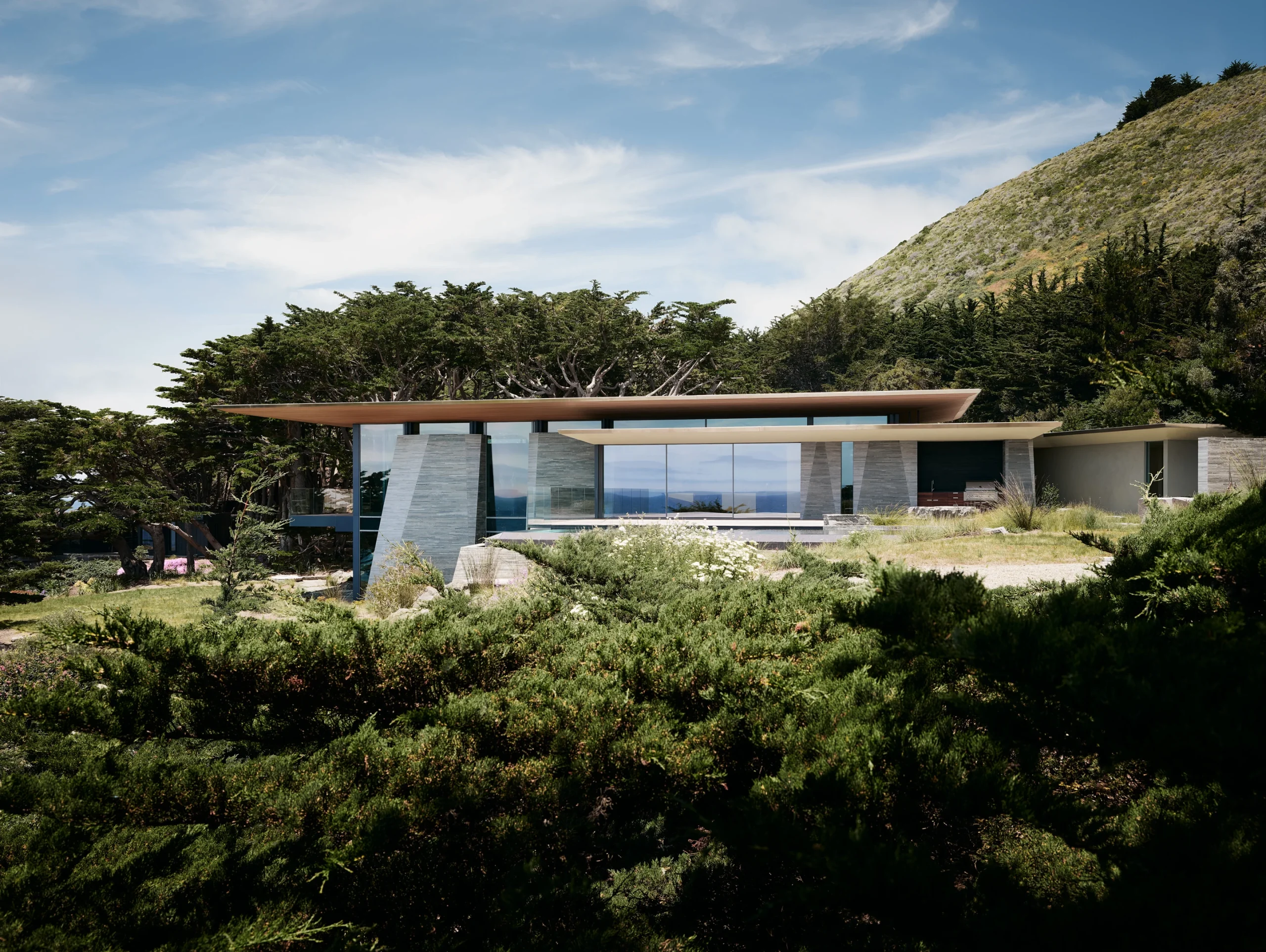
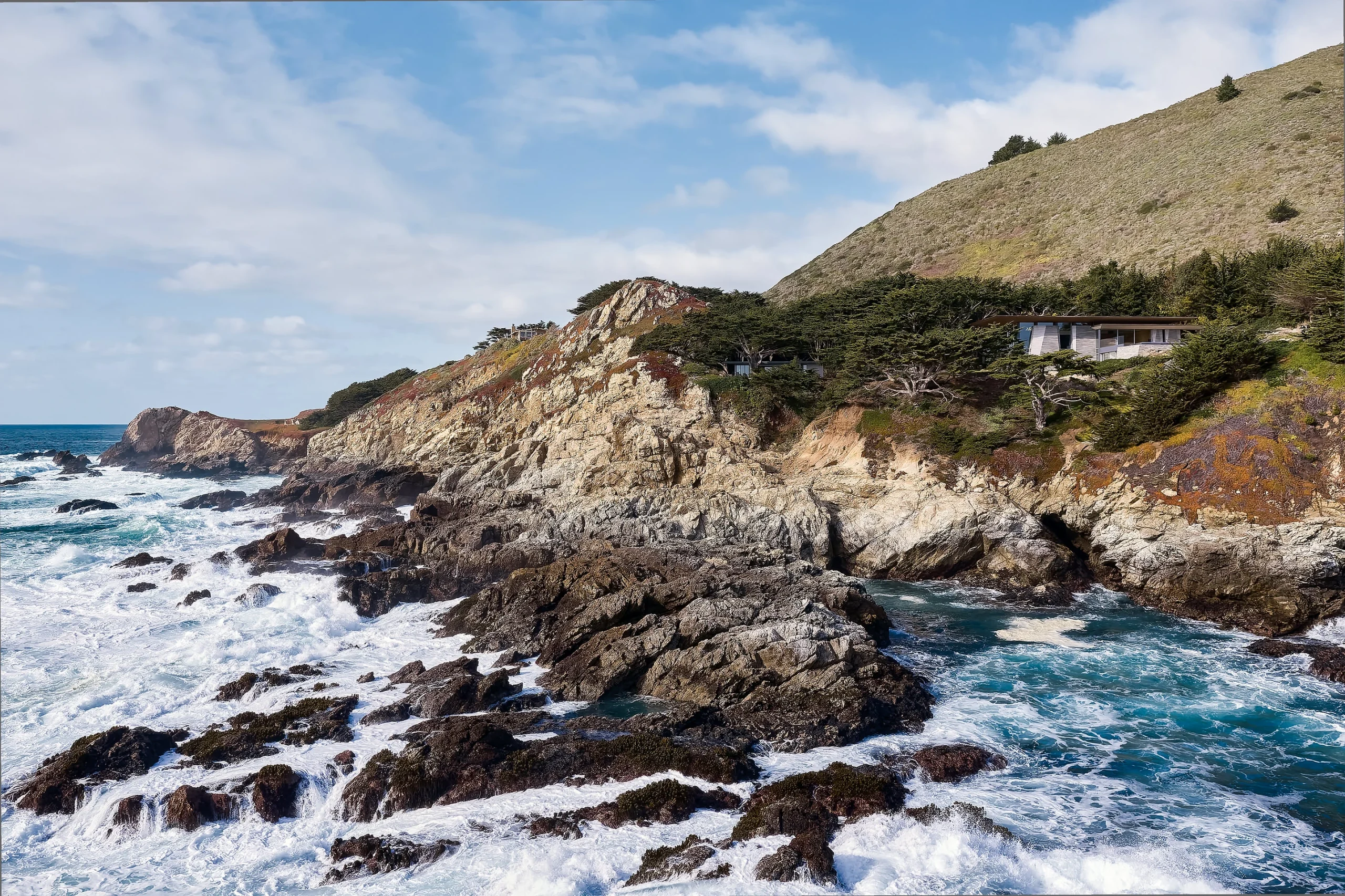
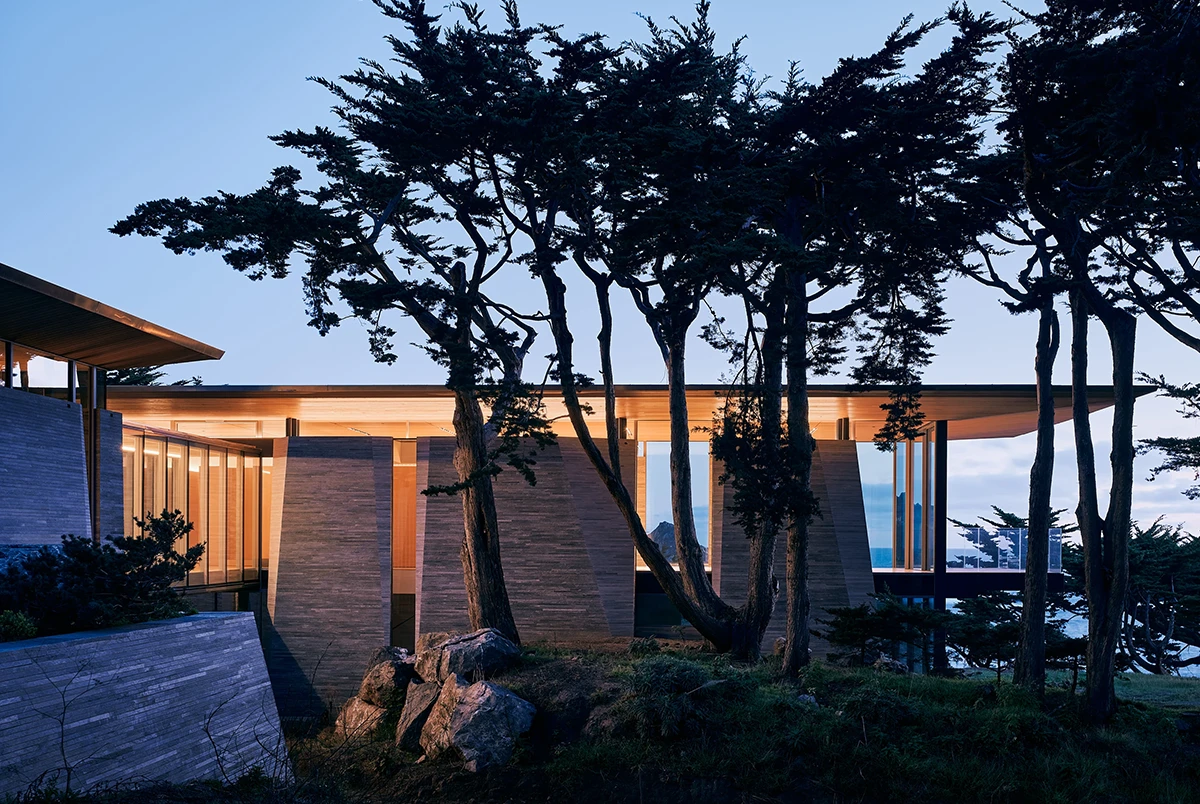
Situated on the California coast between the Santa Lucia mountains and the Big Sur cliffs, the home’s complex site presented an opportunity for a deep exploration of site geology and hydrology. Surveys revealed that the apparently flat site was in fact an infilled ravine housing a seasonal waterway. This discovery provided us with a new understanding of the topography and ecology of the site. No longer a plateau, the site had revealed itself to be a ravine.

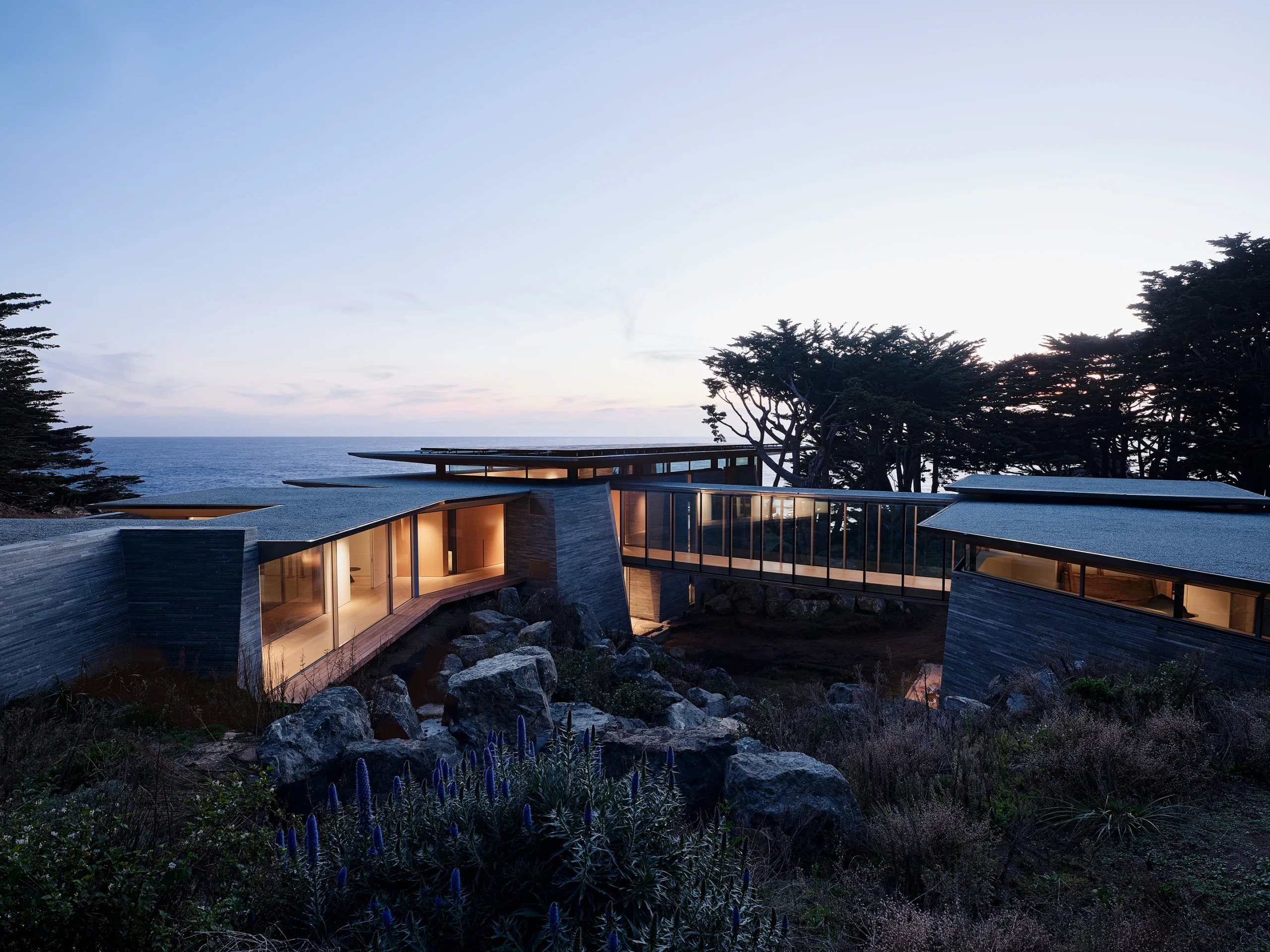
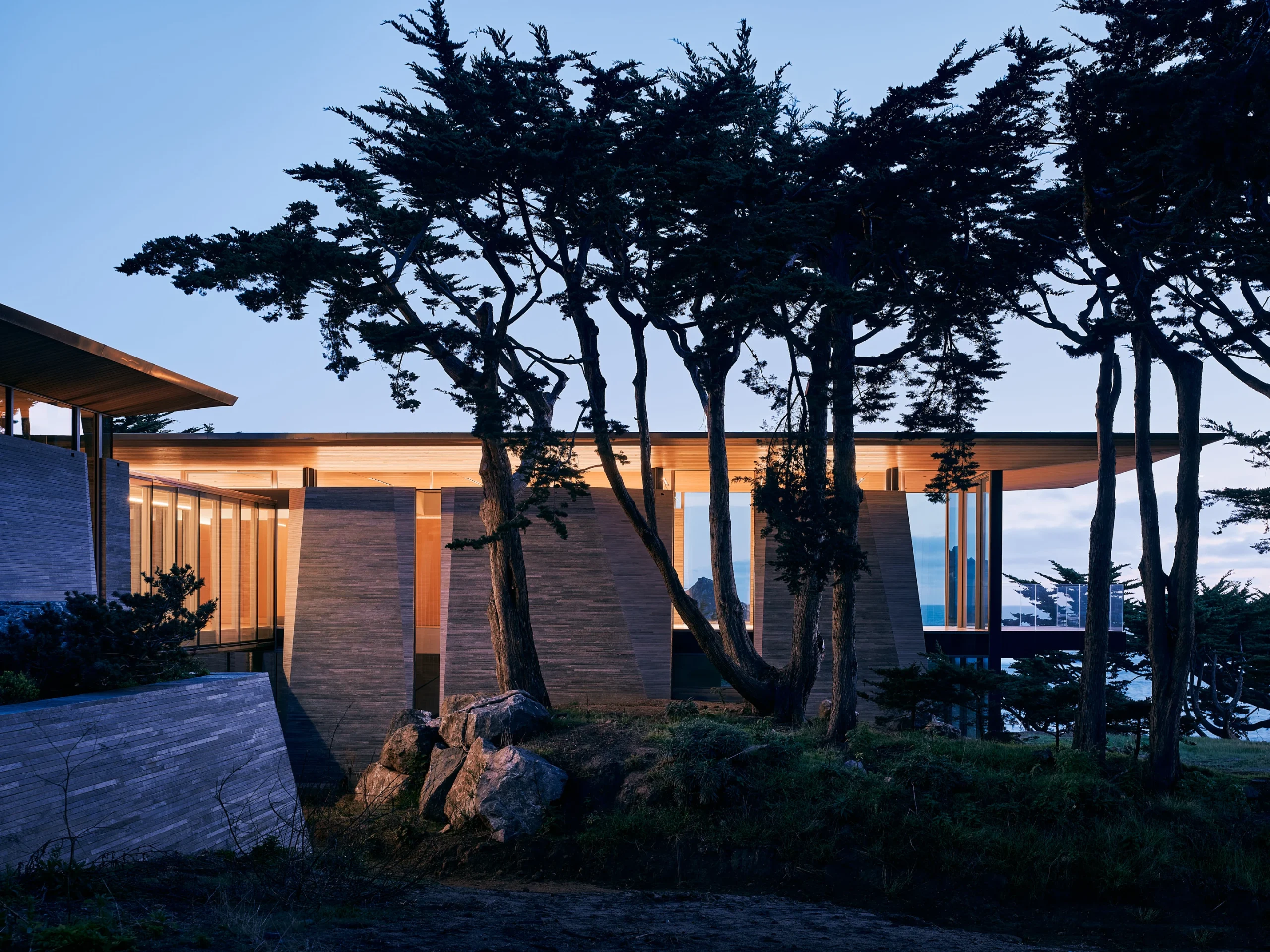
From this point on, the guiding principle of the development of the site was the remediation of the watershed traveling through it. The building’s form is bifurcated by the ravine, linked with a bridge that provides visual connection to the restored intermittent coastal stream. Stringent fire-resistant measures were incorporated into the structure: ignition resistant, noncombustible wall materials, non-vented soffits, and class A roof with rock ballast.

The project fundamentally pushes for greater depth and understanding of site analysis, offering a forward-thinking approach to the analysis process that centralizes watershed health and in so doing, promotes long term ecological restoration as part of a symbiotic relationship with the architecture. The architecture protects the restoration of its site and ensures the long-term health of this watershed.

//jury comments

A truly exceptional project with an exemplary approach to site, massing, materiality, tectonic expression, and spatial choreography. The geometric organization in plan and section is well-crafted and the bifurcated pavilions beautifully allow for the passage of the coastal stream from the hillside to the ocean. The ambition to thoroughly bridge climate, ecology, and design result in a beautiful, architecturally significant home. The site is addressed beautifully.
//framework for design excellence measures
Measure 1: Design for Integration
The discovery of a debris-filled ravine that had previously carried a seasonal stream at the center of the site was the primary driver for the project’s design, pushing the team to locate the main mass of the building on either side of the ravine to provide for the restoration of the stream, a native habitat for plant and animal communities. Prior development on the site was further mitigated by the conversion of a driveway into a bluff side path using coastal scrub and maritime chaparral plantings. While the house is situated among this landscape, it treads lightly upon it. Inhabitants are immersed within it and can access it through generous apertures, but the footprint of the building avoids ecologically sensitive areas. Optimized shading, along with the thermal mass of the large stone walls, clerestory venting, and a large solar array on the roof reduce energy consumption. Exterior materials that can endure solar, wind, saline, and fire exposure furthermore increase the building’s durability and longevity. These interlocking strategies allow the home to operate in concert with seasonal cycles and in a wide range of environmental conditions while simultaneously providing comfort, refuge, and shelter for its inhabitants.
Measure 2: Design for Equitable Communities
The owner and design team were committed to incorporating the work of emerging female artists into the home, providing the work with dedicated art niches in many instances. Several of the pieces incorporate impressions of wave forms from the shoreline below the house, bringing a direct index of the landscape into the home.
Measure 3: Design for Ecosystems
The unique site straddles the transition from coastal plant communities to those that populate the mountains to the east. Woodland forest, coastal scrub, maritime chaparral, and a cypress grove are braided together on the site in loose, overlapping bands. The openness of the building’s footprint allows for these landscape threads to weave between the two pavilions and wrap around the building. Frogs and other aquatic fauna have begun to repopulate the restored seasonal stream at the center of the project. The owners enjoy easy access to this complex local ecology through an abundance of apertures and access points.
Measure 4: Design for Water
At the center of the project is the restoration of a seasonal waterway that brings rainwater from the Santa Lucia mountains westward to the Pacific Ocean. Clearing infill from this waterway allowed for the replanting of a native riparian vegetation and the reestablishment of a connection with regional plant communities. As central components of a fragile coastal ecology, healthy watersheds are crucial to ecosystem and soil health, naturally filtering water. By rewilding and restoring the ecological function of the watershed, the project positively impacts the landscape and allows for seasonal water cycles to foster biodiverse native plant and animal communities.
Measure 5: Design for Economy
The house is designed to serve the family across a range of functions: from intimate gatherings to more inclusive periodic climate action events. The footprint of the building is broken up by the organization of the building as two pavilions connected by a bridge. The resulting scale and massing of the building is reduced and allows a greater integration with the surrounding landscape. The room configuration includes spaces that are designed for flexible use and future adaptation as the needs of the family change and evolve.
Measure 6: Design for Energy
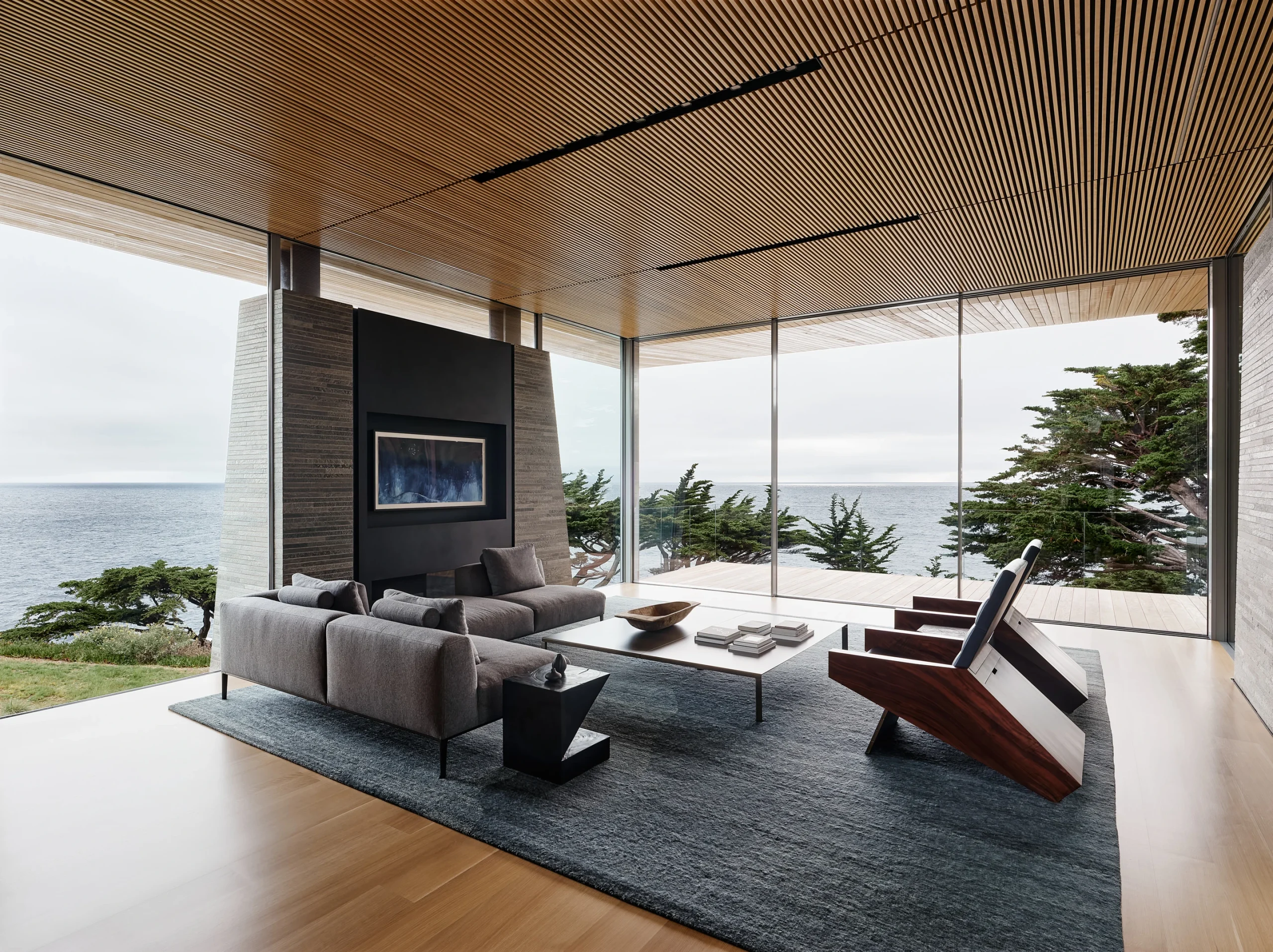
The building design employs comprehensive passive strategies, reducing heating and cooling demand by moderating temperature extremes. Deep roof overhangs minimize solar heat gain in the summer and maximize it in the winter. The high thermal mass of the building’s massive stone walls evens out diurnal temperature swings. Clerestory venting and large operable windows allow for high air circulation and cooling on hot days. A portion of the lower level is earth-bermed, providing additional insulation. The minimal energy needed is provided principally by the building’s photovoltaic system and pool solar hot water; both are integrated into the roof out of sight.
Measure 7: Design for Well-Being
Both solar orientation and shading were modeled and calibrated to optimize the depth of the overhangs and provide ample interior daylighting. The building’s design provides abundant visual and physical points of connection to the surrounding landscape through operable glazing. Interior spaces furthermore are mirrored by outdoor “rooms” that contain landscape elements such as steppingstones, wooden and stone benches that emerge from the ground or are nestled within it. The rhythm of these spaces encourages the inhabitants to seamlessly move between indoors and out, supporting their mental and physical well-being as a result.
Measure 8: Design for Resources
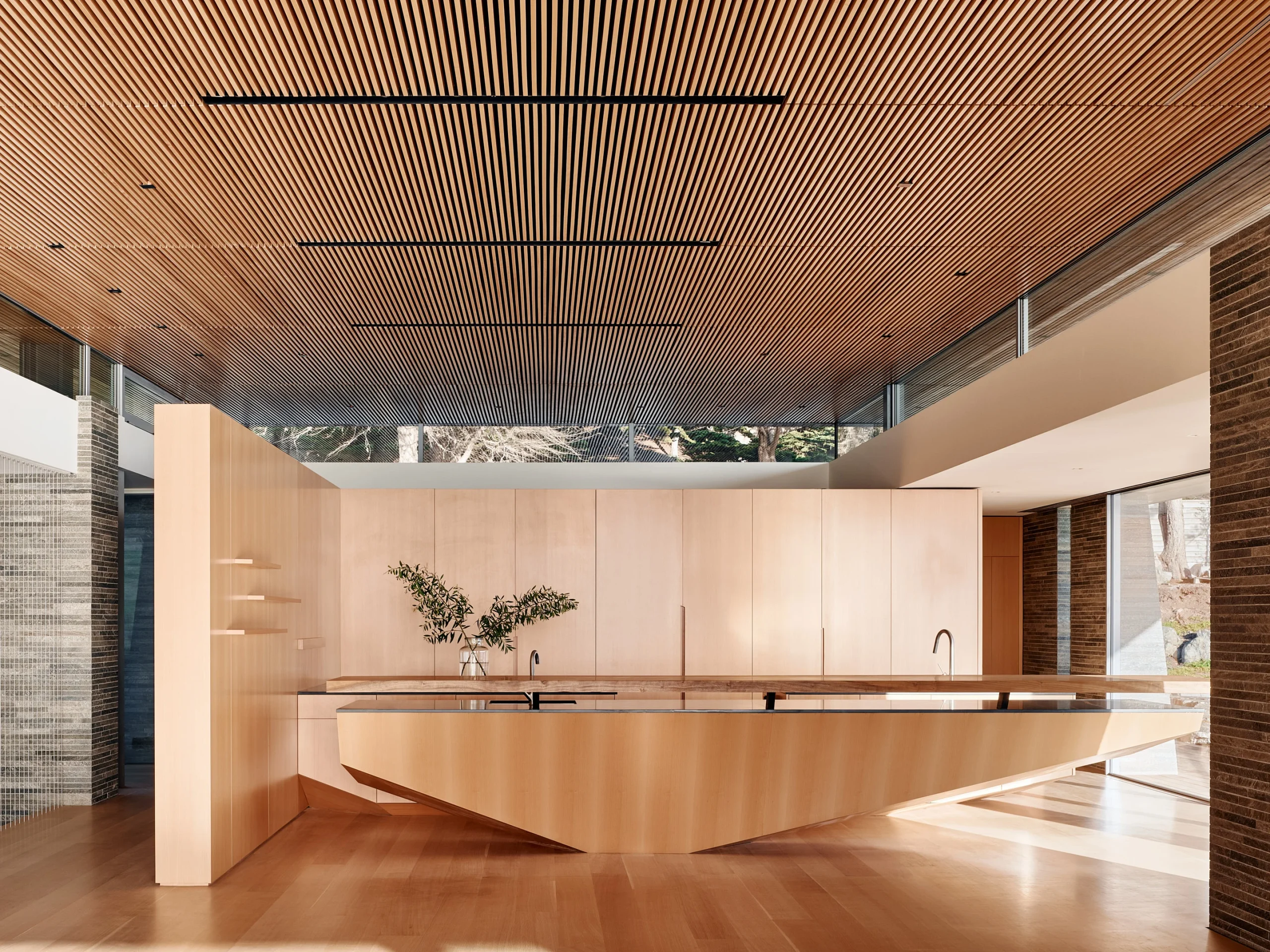
The fundamental approach to resources aims to minimize life-cycle carbon by designing for longevity. The stone walls of the building are designed to withstand the harsh coastal conditions and consistent threat of wildfire. All structural timber is FSC certified, the majority of which is recycled, engineered timber. All structural steel has large recycled steel content. The comprehensive ecology restoration of the site significantly outweighs the embodied building carbon, calculated at approximately negative 40 metric tons.
Measure 9: Design for Change
By reusing a previously developed site, we minimized consumption of resources and open land. Passive ventilation, solar array, and backup battery systems contribute to livability in power outages. Onsite septic system eliminate waste, recycle water, and naturally replenish water tables. The ravine restoration minimized soil runoff and sediment tracking into the ocean. This was supported by extensive planting of native and drought resistant species throughout. The improved site drainage minimizes the annual coastal erosion (~30 cm) and, along with the durable materials used for the building’s exterior, will provide a bulwark to ever more extreme fire, storm, and temperature events.
Measure 10: Design for Discovery
We aim to establish a culture of partnership between the designers, owners, and builders for the realization of an ambitious project vision. This team has been following up consistently since project completion in order to optimize performance and ensure that all project goals were met. The central design ambition was to reorient the development of the site to the natural seasonal rhythms of the local ecosystem. Rather than lean on a singular strategy, we conceived of all of the architectural elements as adaptations to the site which reveal and celebrate its unique ecological function and character.
Skip to content