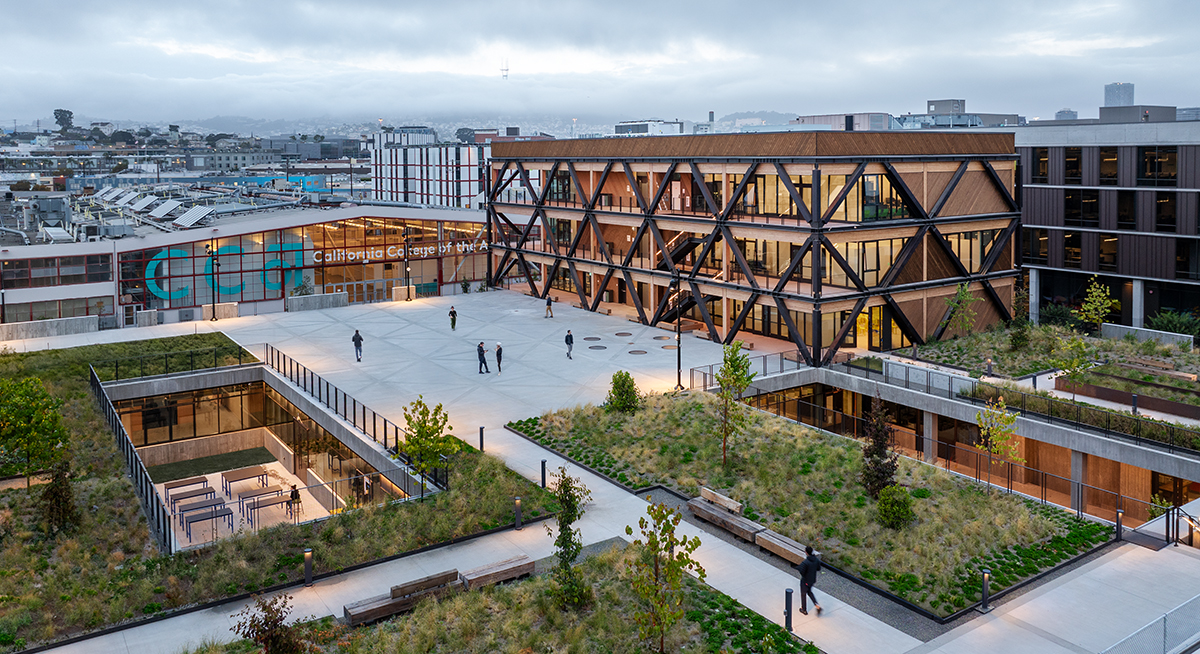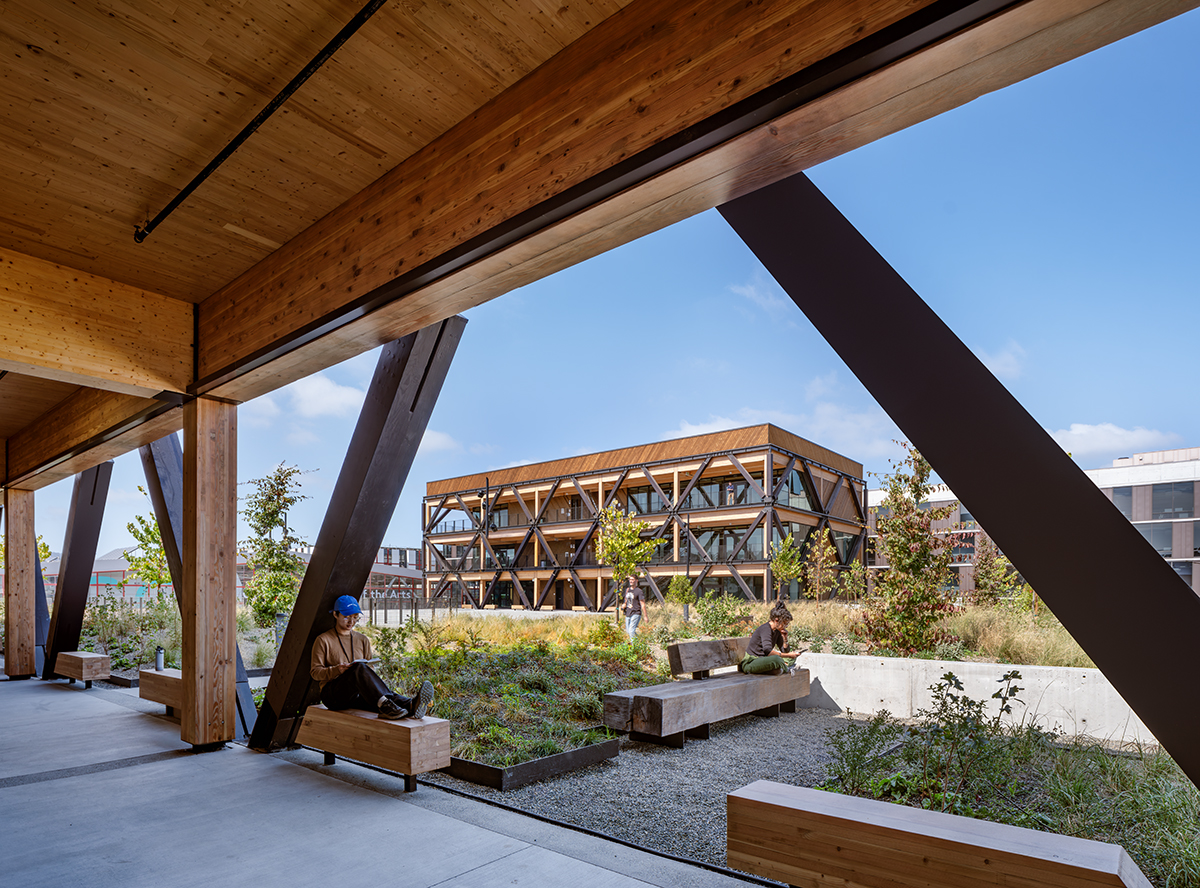

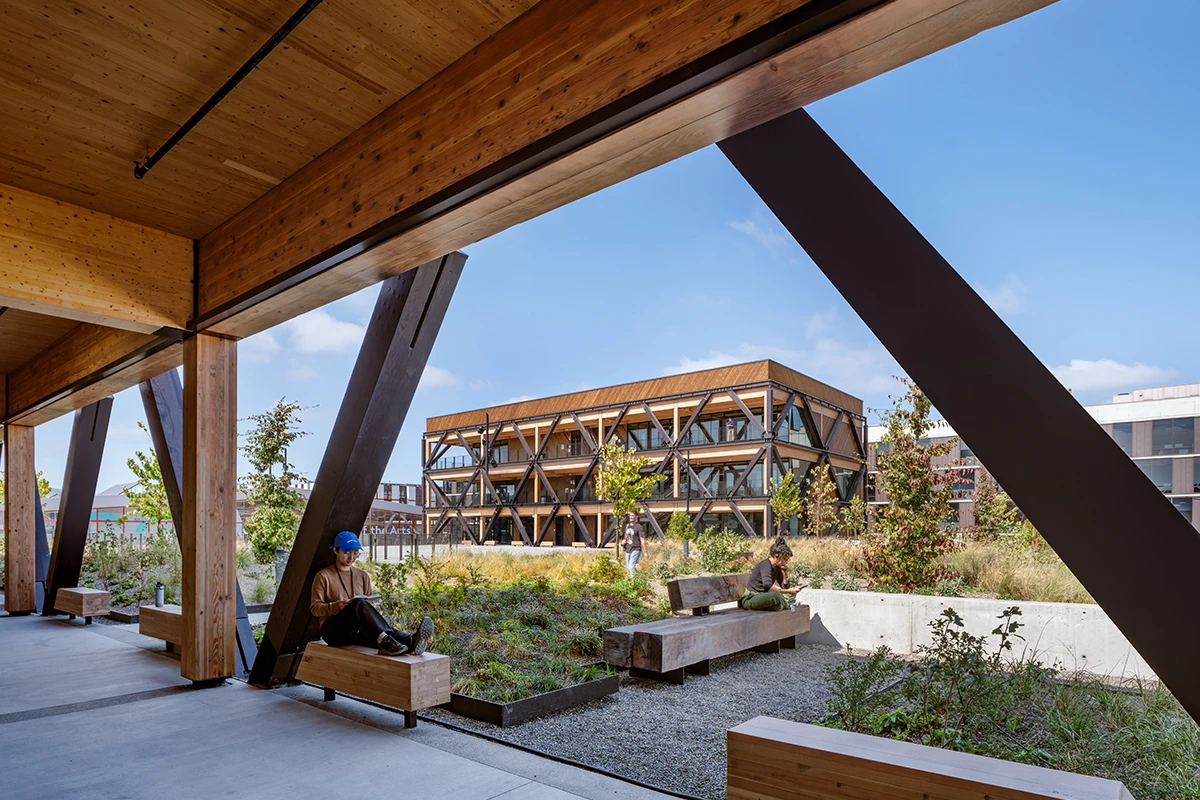
The new addition at the California College of the Arts (CCA) expands on the school’s San Francisco campus, establishing a vibrant indoor-outdoor environment for learning and making that strengthens relationships among varied people, ideas, and creative practices.
Founded during the Arts and Crafts movement at the turn of the 20th century, CCA has grown to encompass 34 art and design disciplines, from jewelry, ceramics, and textiles to metal arts, architecture, and animation. Conceived as a creative ecosystem where different disciplines can productively interact and overlap, the building physically extends from CCA’s existing main academic building, providing new art-making facilities, learning spaces, and green spaces that support its diverse community.
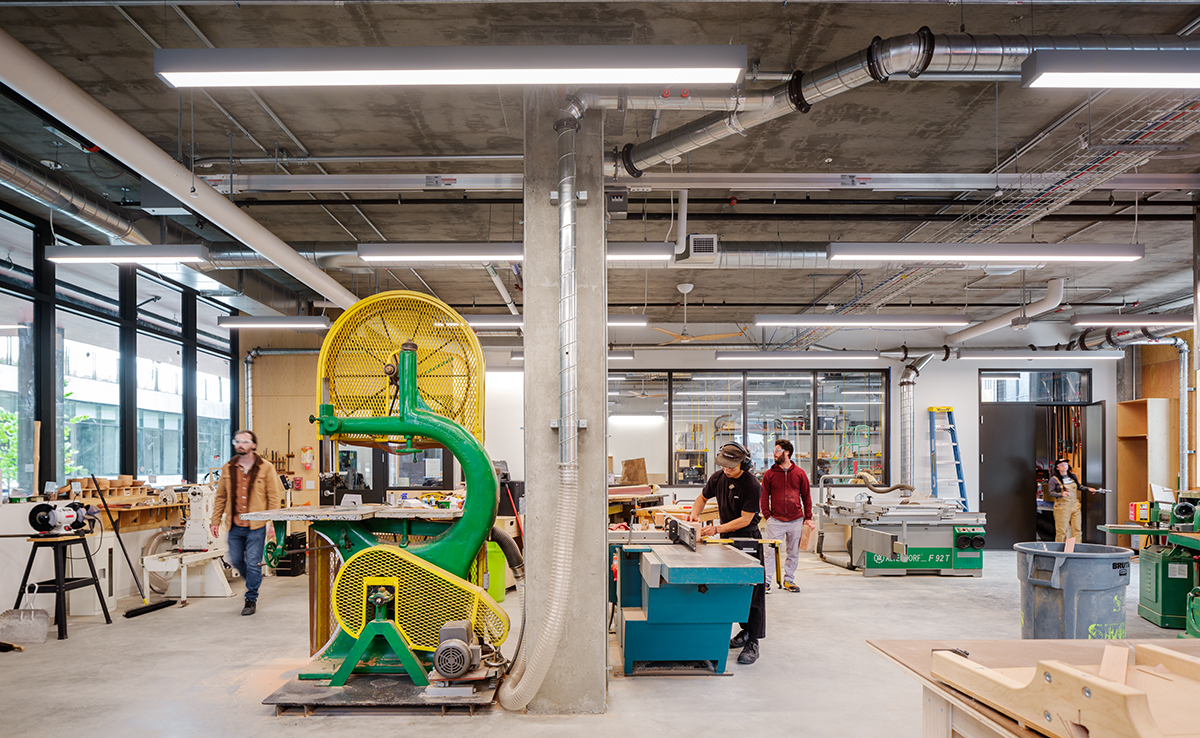
The building’s concrete ground level is a hub of indoor-outdoor workshops for more physically intensive art-making practices and fabrication. Organized around shared materials and equipment, this level’s open, flexible plan makes the different programs easily visible and accessible to one another, promoting interdisciplinary interaction and providing adaptability as new needs, mediums, and technologies develop.
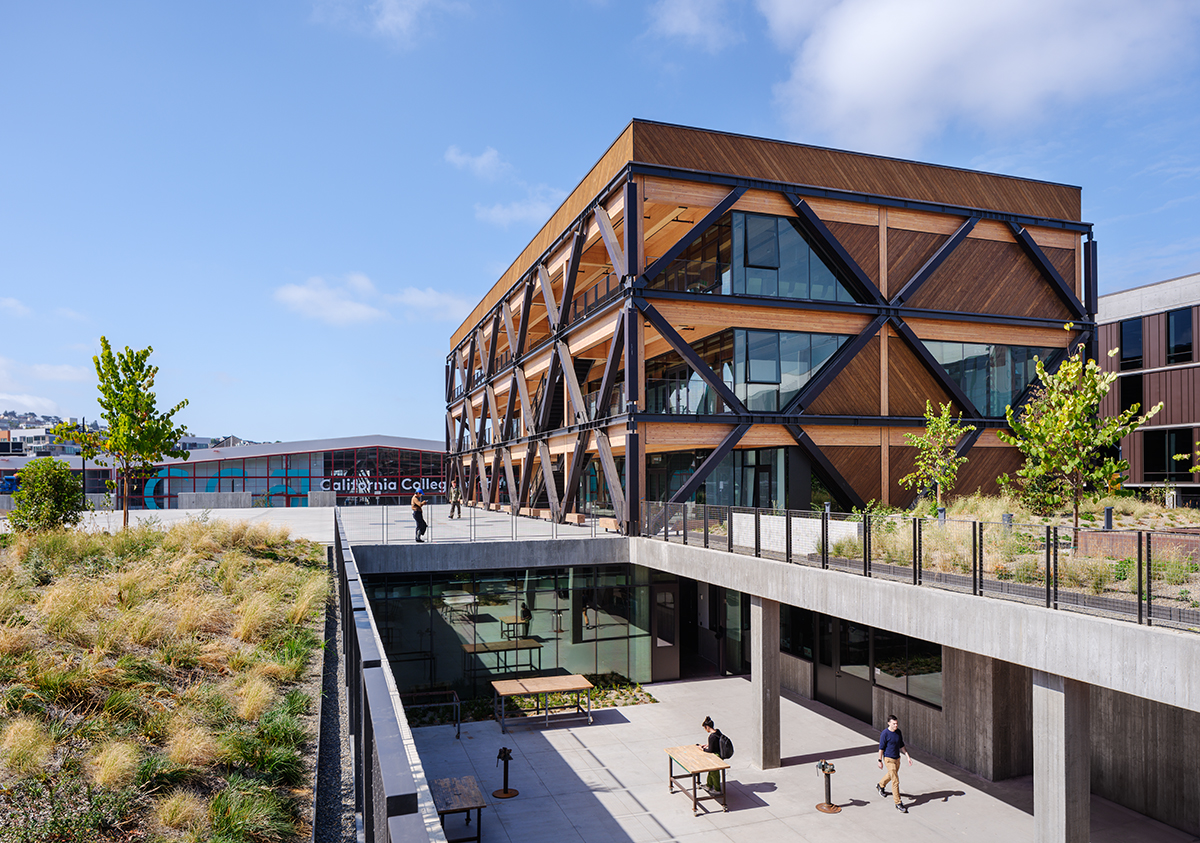
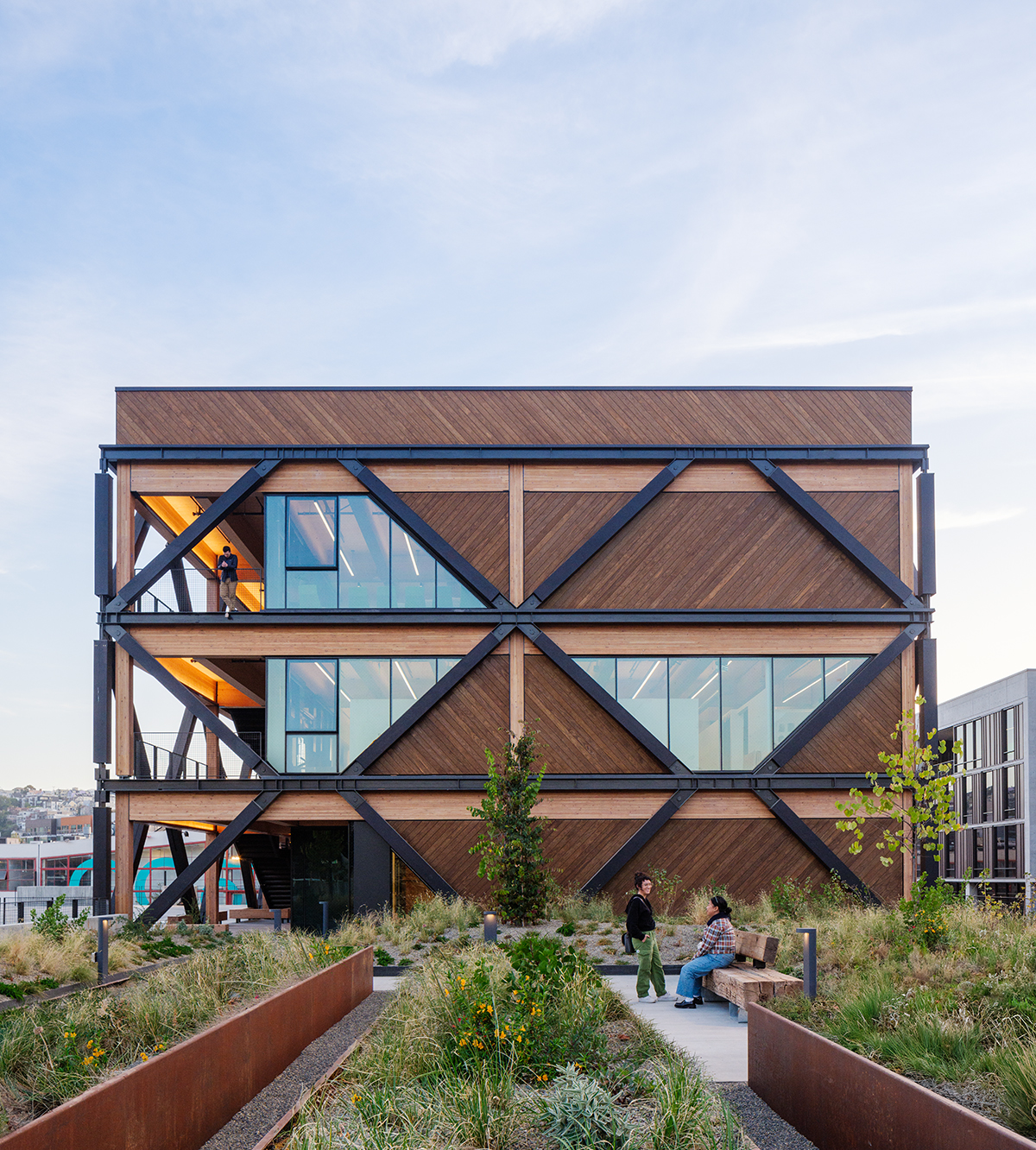
Emerging from the building’s base, two mass timber pavilions house classrooms, art studios, and exhibition galleries. Both pavilions lead onto a green terraced landscape that unites the building’s lower and upper levels. Their deep balconies enable exterior circulation as well as informal learning, working, and social spaces where the CCA community can enjoy San Francisco’s mild climate. Their structures, which are among the first exposed mass timber structures in California and include a one-of-a-kind eccentric braced frame system, allow their natural materiality and lateral and gravity loads to be visible.
Through a welcoming new streetscape and programs that seek to increase the impact of art in the wider community, the new building enhances CCA’s connection to San Francisco’s design and innovation district as well as the wider Bay Area and its environmental, entrepreneurial, and creative cultures.
This is an exemplary project across all criteria. Clear program and concept, beautiful and innovative tectonics, rich materials, wonderful spatial variety, and clearly organized plan. This project sets a very high bar for excellence in academic architecture and sets the stage for future growth and upgrades for this institution’s next 100 years. Innovative mass timber structure and passive systems continue the trajectory of CCA’s cutting edge sustainability program.