
Brunson Terrace

Pico asm ArchLenz copy

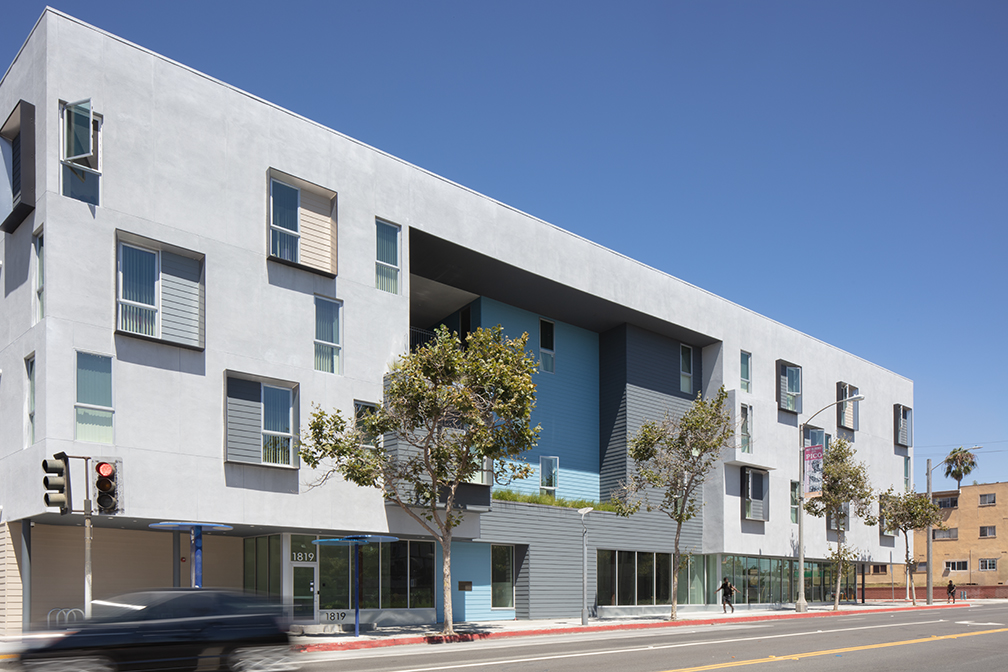
This totally electric “Net Zero” 100% affordable housing project is certified LEED Platinum and has an astounding pEUI of 6.6, more than 8x more efficient than typical similar buildings who average 59 pEUI.

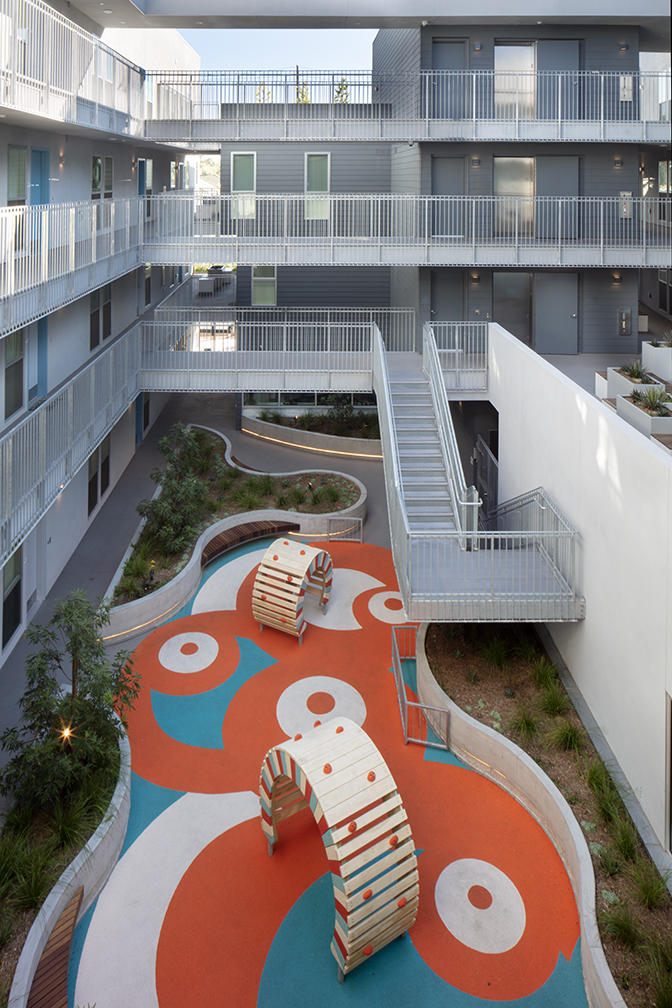
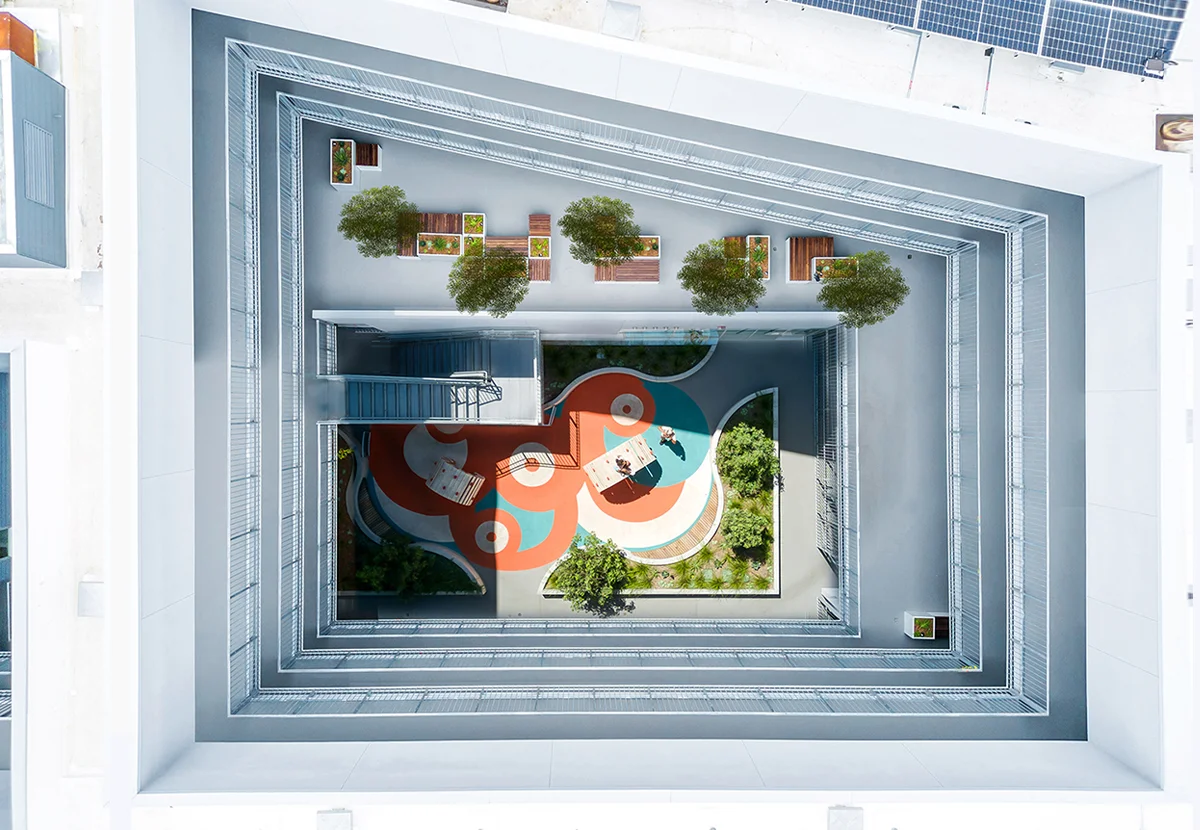
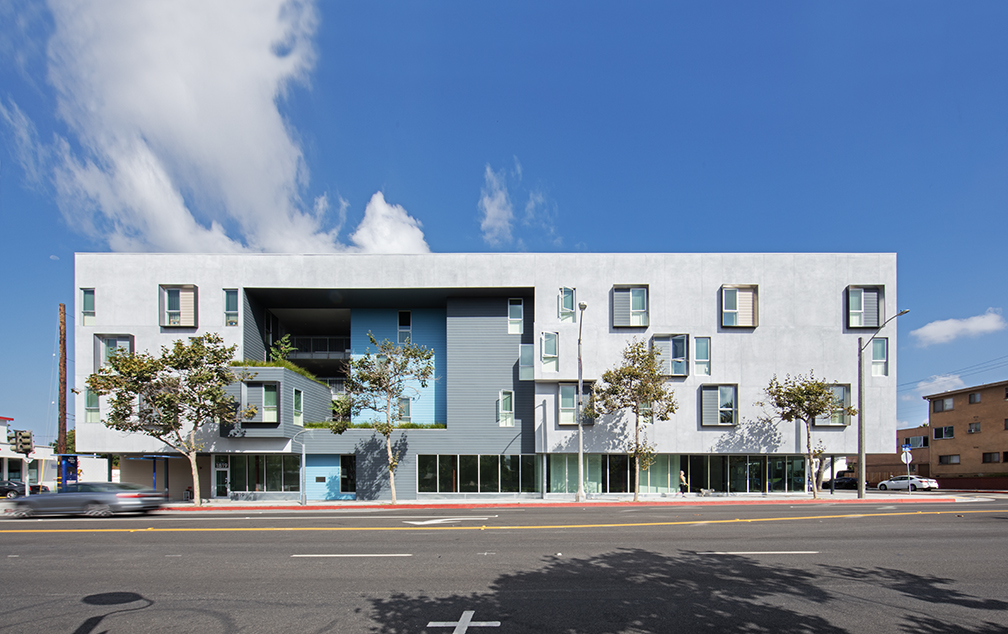
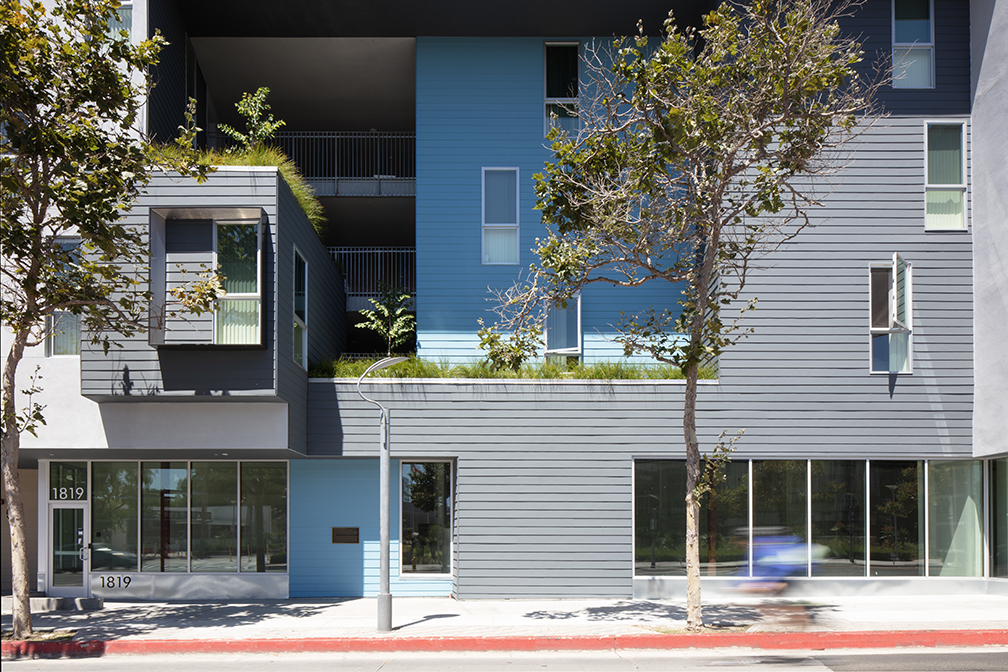
Offering shelter and comfort, 1819 Pico eschews the typical neighborhood defensive apartment buildings with solid walls and fences in favor of a carved-out cube, a beacon in the neighborhood that celebrates social space by de-emphasizing private space. Strategically placed windows, purposeful exterior circulation and units that wrap the outer-most edges, orient the 48 apartments to social spaces that are spatially apart, yet visually connected to each other and the street below.

Courtyard apartments have a rich history throughout southern California ranging from Irving Gill’s 1918 Horatio Court to the classic post-World War ll Spanish Colonial Revival Ambrose Gardens. According to Ken Bernstein, director of preservation issues at the Los Angeles Conservancy, a lot of the courtyard apartments build during this time, especially in Hollywood and West Hollywood, was part of a search for indigenous architecture,” he says, as much as an attempt to create neighborliness. More than any other multi-dwelling housing, courtyard apartments, “make you feel like you belong to a place.” For people living around the courtyard, the space provides a sense of safety and privacy; the courtyard is a quasi-public space that mediates between the home and the street. For the city at large, the courtyard is an urbane housing type that fits well into neighborhoods.

//comments

A sensible, innovative, and a fresh vision of how humans can live in a mixed-use apartment. The architectural moves are highly thought out with massing that allows the courtyard to be porous in view to and from the public. The jury commends the developer for respecting how important it is for tenants to live comfortably and without a compromised building. 100 % net zero, LEED Platinum is impressive for affordable housing.
//framework for design excellence measures
Measure 1: Design for Integration
This project included four public community meetings, two meetings with the city council and a host of small group meetings with various community groups and stakeholders. It was a rigorous process that included many modifications to the design to get the necessary approvals to construct the project. Thru community workshops a neighborhood non-profit market and food incubator space was added to the ground floor along the street across from Santa Monica College.
Measure 2: Design for Equitable Communities
The project’s location is urban and the previous site was one large 100% impermeable surface lot with a small single story Church building. ‘Flow-through’ planters which act like swales. It incorporates more planting than most urban buildings. Drought tolerant plants and gravel provide storm water retention and habitats for animals. All impermeable surfaces are directed to the ‘flow-through’ infiltration planters and all exterior lights are shielded.
Measure 3: Design for Ecosystems
The project’s location is urban and the previous site was one large 100% impermeable surface lot with a small single story Church building. ‘Flow-through’ planters which act like swales. It incorporates more planting than most urban buildings. Drought tolerant plants and gravel provide storm water retention and habitats for animals. All impermeable surfaces are directed to the ‘flow-through’ infiltration planters and all exterior lights are shielded.
Measure 4: Design for Water
A Stormwater Management Plan was implemented to promote infiltration, capture and treat stormwater runoff from 90% of the average annual rainfall, using best management practices. Brunson Terrace has been designed such that over 30% of the site consists of vegetative landscaping or permeable surfaces. Impermeable surfaces are directed to on-site infiltration planters, which retain and clean storm water. This results in a site in which over 100% of the surfaces capture storm water in some way. Water savings of approx. 38% above average.
Measure 5: Design for Economy
We prioritized both first and long-term costs for our non-profit client due to the tight budgets of housing and the need to have no or low maintenance costs for the future of the building. The building envelope utilizes low-cost passive strategies to reduce energy use including increased insulation in the walls/roof, natural cross ventilation and a white roof. Framing efficiencies were utilized: prefab detailed cut list and lumber order, open-web floor/roof trusses spaced more than 16″ and panelized construction. Floor plates, building volumes and shear walls stack vertically, reducing cost and construction waste.
Measure 6: Design for Energy
Line 189 does not appear to have appropriate choices for the question. This is an all electric building designed to be over 50% better than California’s Title 24 Energy Efficiency standards. Project includeds EV charging, living and green cool roofs, 100% stormwarter retention and all energy star appliances.
Measure 7: Design for Well-Being
“Good design supports health and well-being for all people, considering physical, mental, and emotional effects on occupants and the surrounding community. The design encourages positive informal social interaction among neighbors, acquaintances, and visitors. By welcoming and bringing together the client, designers, and the community during the design process, it deepened our collective understanding of context, purpose, and unique perspectives to positively influence the human experience throughout the Pico neighborhood communities.
Measure 8: Design for Resources
During construction 99% of waste was diverted from the landfill. Materials were selected for their modest first cost and also their no or low-maintenance qualities. Strategies were developed to address durability issues, air quality issues and moisture control. Major materials have HPD certifications, all materials meet the City of Santa Monica Green Building Code, the California Air Resources Board and the South Coast Air Quality Management District’s criteria.
Measure 9: Design for Change
It is designed to last a minimum of 60 years, which runs with the affordability covenants that are required. The design incorporates passive survive-ability. It minimizes vehicular space in favor of living space and provides multiple transportation options: vehicular, pedestrian, bicycle and electric vehicle.
Measure 10: Design for Discovery
The project was designed to foster a long-term relationship between the designer, users, and operator to ensure design intentions are realized and the project performance can improve over time and remains easy to maintain. The fundamental basis of the design was meant to promote a sense of discovery and delight. Performance data and experiential stories were shared between the designer and client, even when the findings fell short of the vision. We give tours of our completed buildings to professional organizations (such as the AIA), students, lenders and other interested people to share lessons learned.
Skip to content