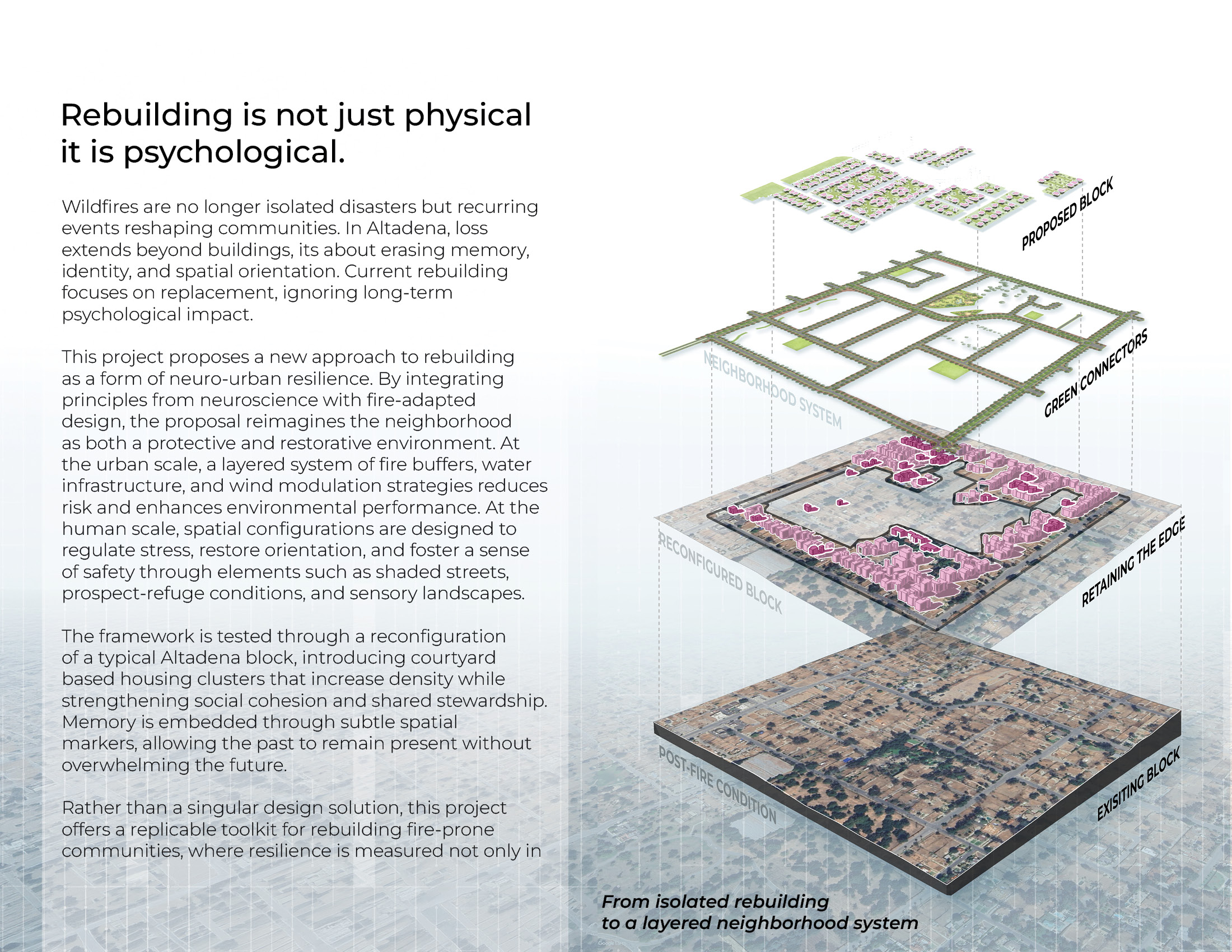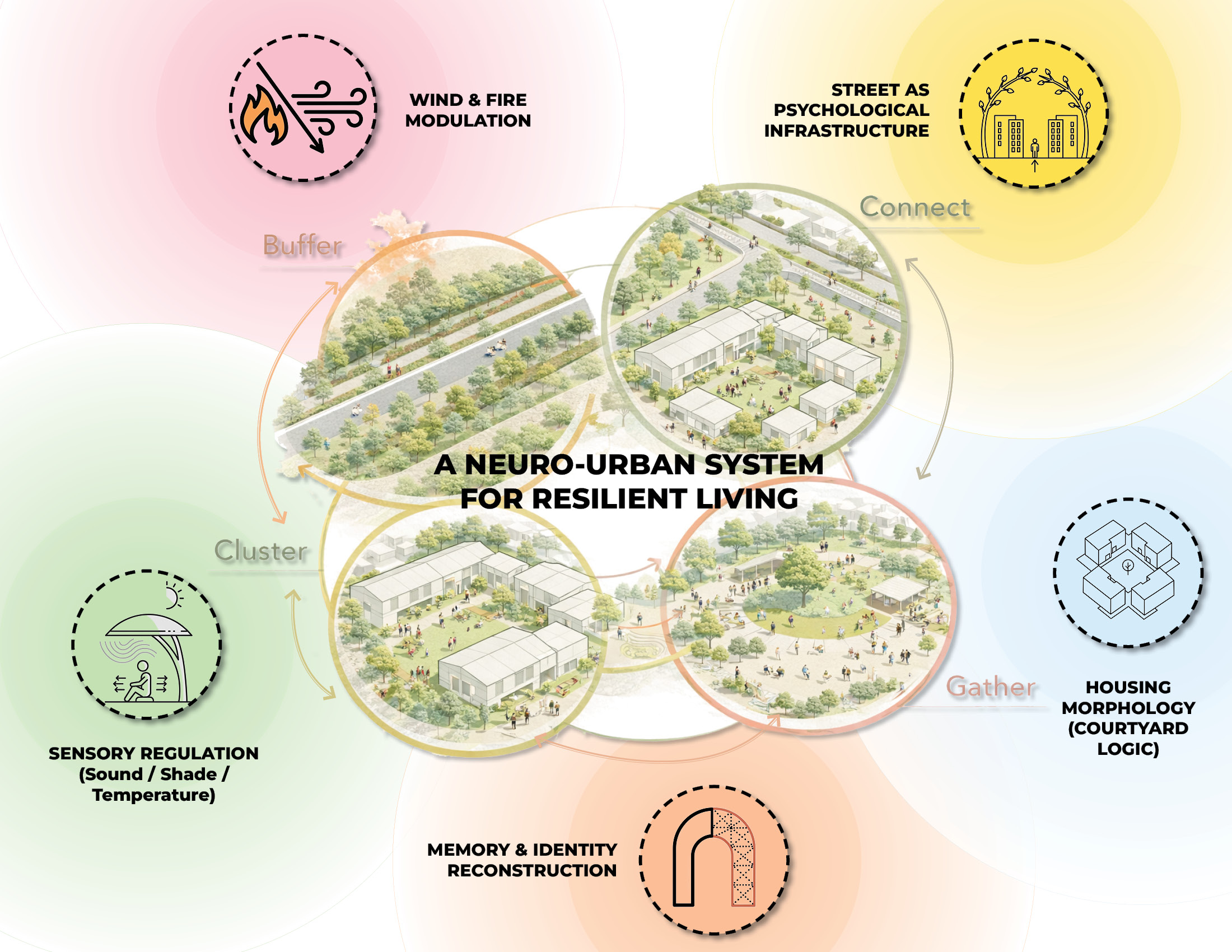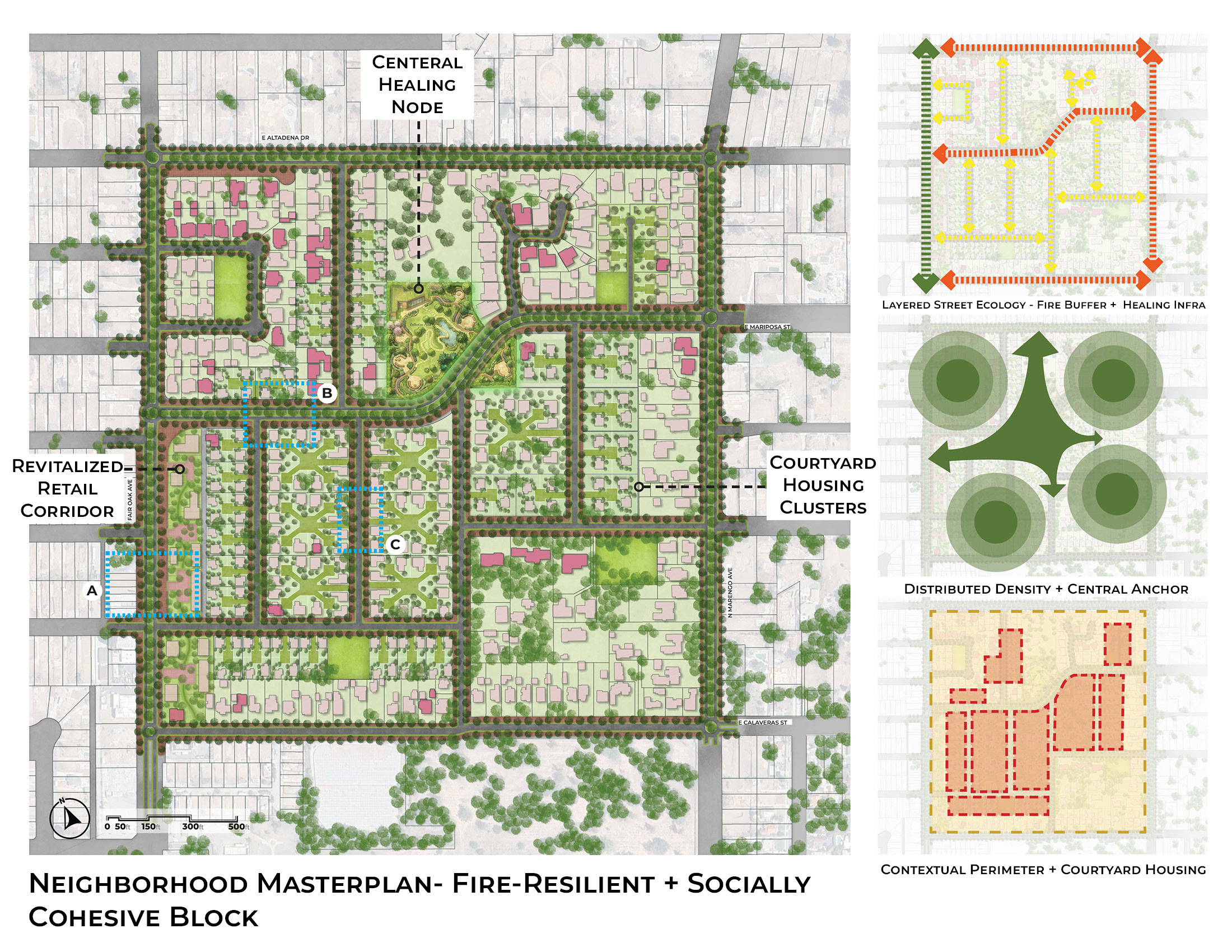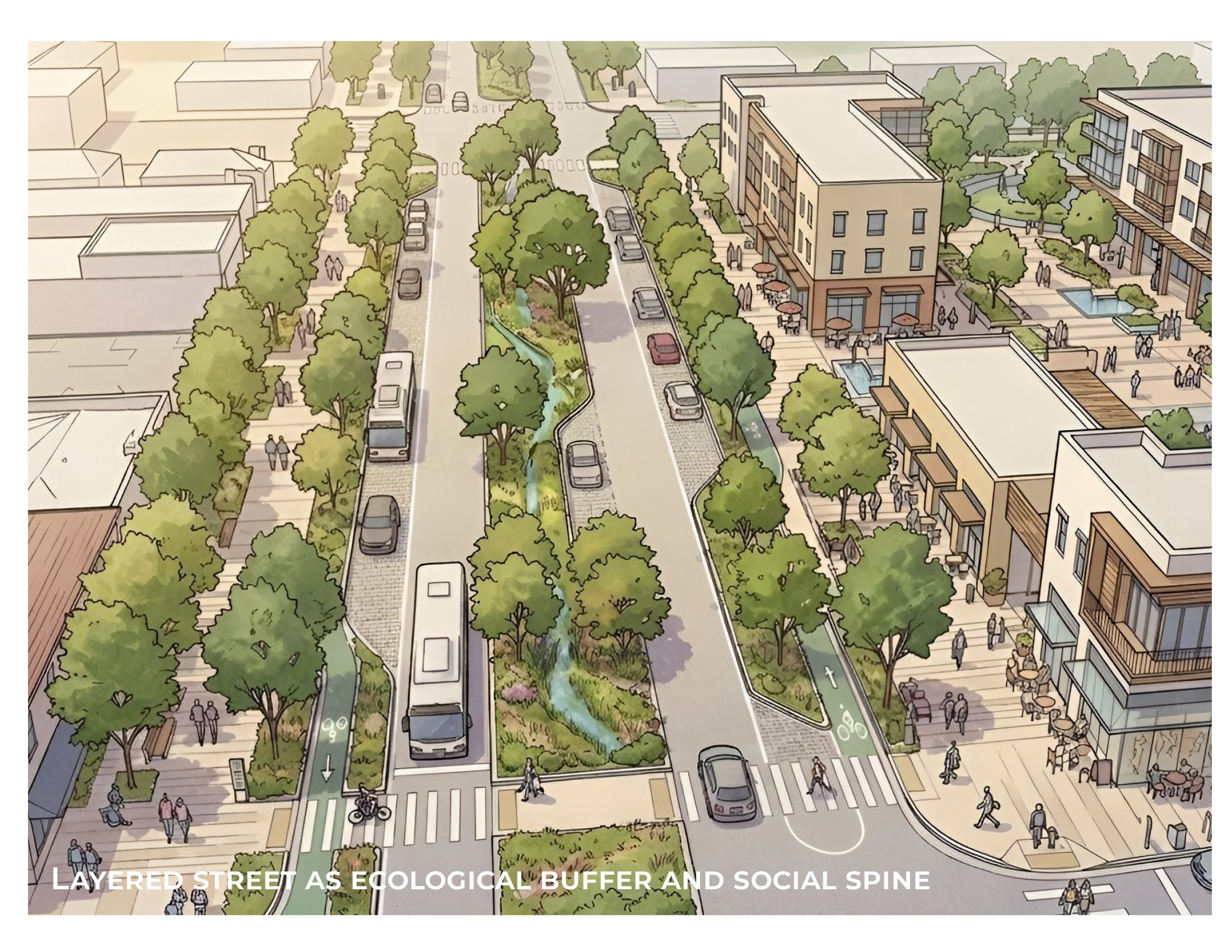

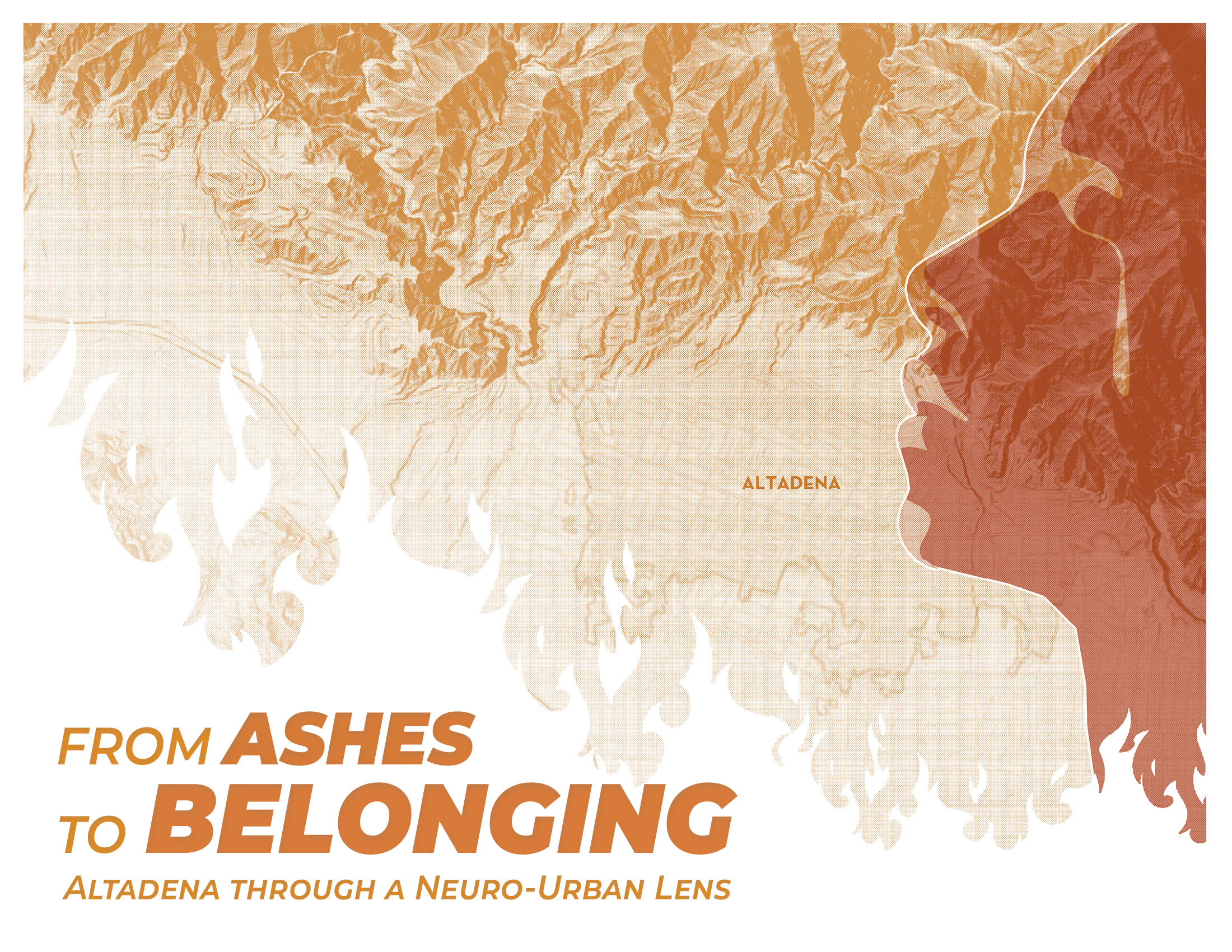
Wildfires are no longer isolated disasters but recurring events reshaping communities. In Altadena, loss extends beyond buildings; it’s about erasing memory, identity, and spatial orientation. Current rebuilding focuses on replacement, ignoring long-term psychological impact. This project proposes a new approach to rebuilding as a form of neuro-urban resilience. By integrating principles from neuroscience with fire-adapted design, the proposal reimagines the neighborhood as both a protective and restorative environment. At the urban scale, a layered system of fire buffers, water infrastructure, and wind modulation strategies reduces risk and enhances environmental performance. At the human scale, spatial configurations are designed to regulate stress, restore orientation, and foster a sense of safety through elements such as shaded streets, prospect-refuge conditions, and sensory landscapes. The framework is tested through a reconfiguration of a typical Altadena block, introducing courtyard-based housing clusters that increase density while strengthening social cohesion and shared stewardship. Memory is embedded through subtle spatial markers, allowing the past to remain present without overwhelming the future. Rather than a singular design solution, this project offers a replicable toolkit for rebuilding fire-prone communities, where resilience is measured not only in survival, but in the capacity to heal, adapt, and thrive.
Mentor Project Advisors:
1. Harrison S. Fraker
2. John G. Ellis, FAIA, RIBA
The project addresses a critical issue in terms of how to heal damaged landscapes.
The jury admires how it fully embraces design and urban scale, including its complexity and relationship with the context. There’s a sincere attempt to express the intangible, to embed the psychological impact in the physical—and they executed it really well. It’s thoughtful on all levels, not a one-liner.