2026 Urban Design Awards Recipients Announced by AIA California
Five transformative projects rekindle former baseball stadiums, reconceive civic space bifurcated by vehicular transportation, and more are recognized. Student work is honored for the fourth year.
(June 9, 2026. Sacramento, California)Against the background of an era in which the built environment and civic space is more precious, and the need for a sense of community through urban design is heightened, the American Institute of Architects California (AIA California) announced the recipients of its 2026 Urban Design Awards.
Recipients offered thoughtful solutions to the challenges of rekindling an abandoned stadium; bay side space once assaulted by a busy motorway; a neighborhood adjacent to an industrialized port; a new community originating from a mass transit station; and, what once seemed impossible – mass transit in Los Angeles.
“Each of the projects honored by AIA California, demonstrates the value architects can bring to the communities they serve,” said 2026 AIA California President Ginger Thompson, AIA. “Delivering opportunities for connection in highly complex, large-scale programs, through big ideas and the understanding of the human element of space.” 2026 also sees the continuation of AIA California’s Student Awards division in the Urban Design Awards Program, an opportunity to enrich the experience of students and initiate pathways within the profession.
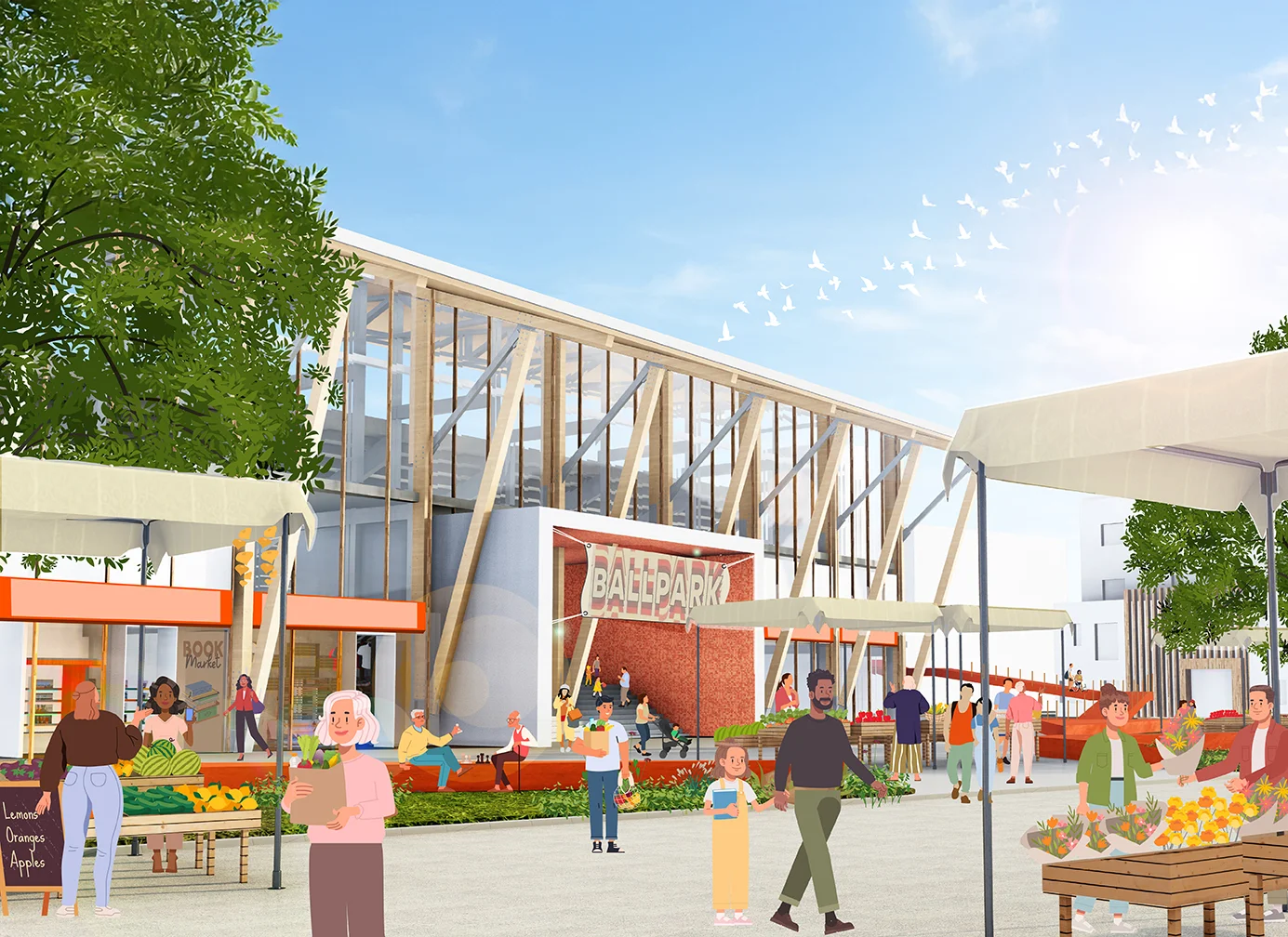
Ballpark NEXT Community Design Plan Perkins&Will A surprise, that’s both very creative and very sensitive in the way it involves and engages with the community, including meeting community needs.
The jury admires the way it deals in a very innovative way with an existing stadium, which are becoming underutilized and mostly demolished. Preserving a portion of the stadium keeps an important piece of neighborhood identity intact while giving it new purpose as an anchor for further development. The decision to daylight historic creeks alongside the redevelopment speaks to a holistic approach that repairs ecological and neighborhood fabric simultaneously. The community-led process shows—this feels like a neighborhood people actually want to live in.
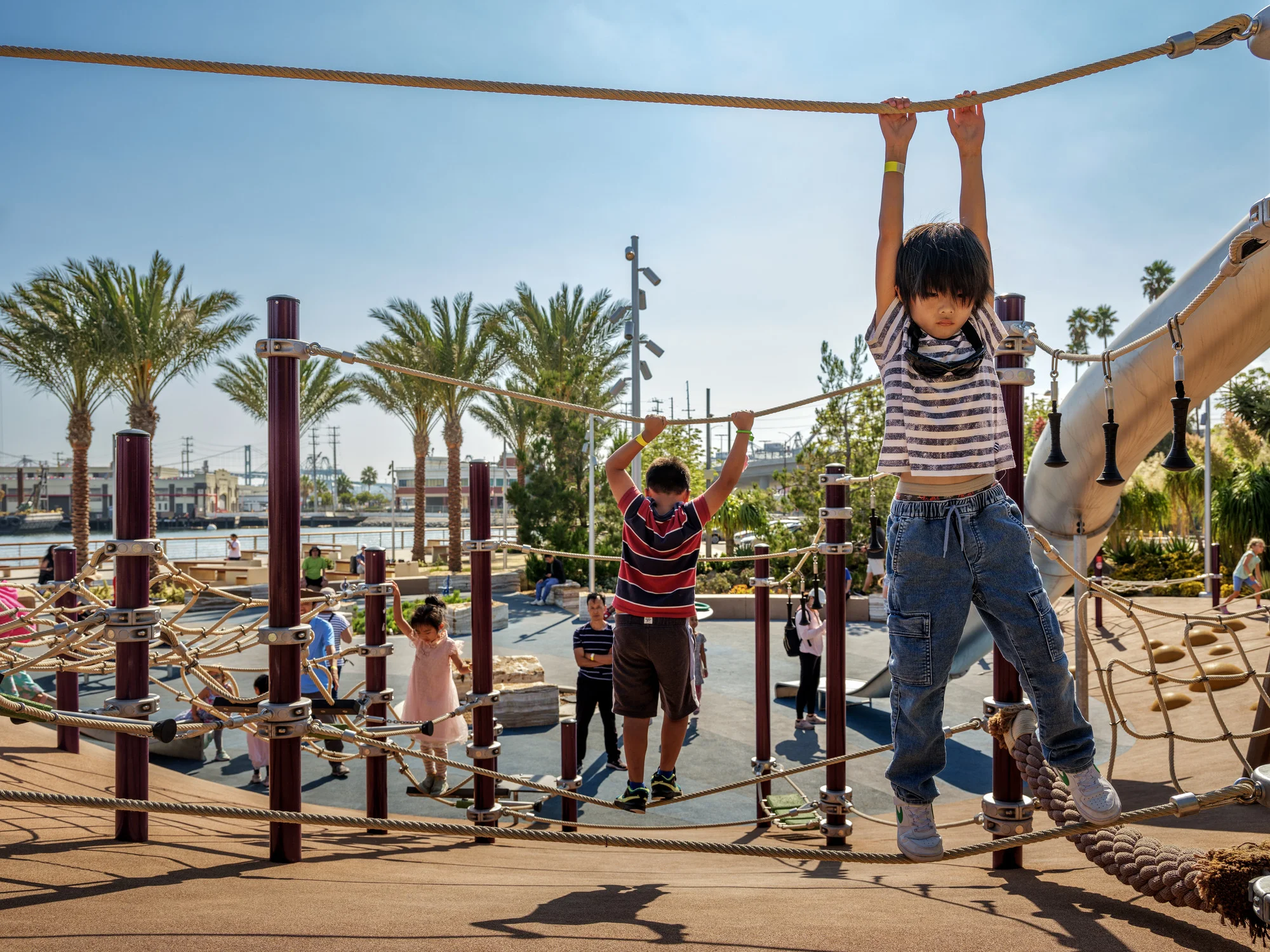
Port of Los Angeles Wilmington Waterfront Promenade Sasaki It’s a jewel in the middle of the port which is beautiful on its own but a catalyst for further projects. The project is an effective implementation of an overall master plan that stands on its own as a contributing venue for the community and neighborhood, and will be critical in the eventual completion of the plan’s implementation.
It brings back to Wilmington residents a part of their community that has been taken over by industrialization for generations with a beautiful installation that works within exacting site and locational constraints while creating its own destinational character and experience.
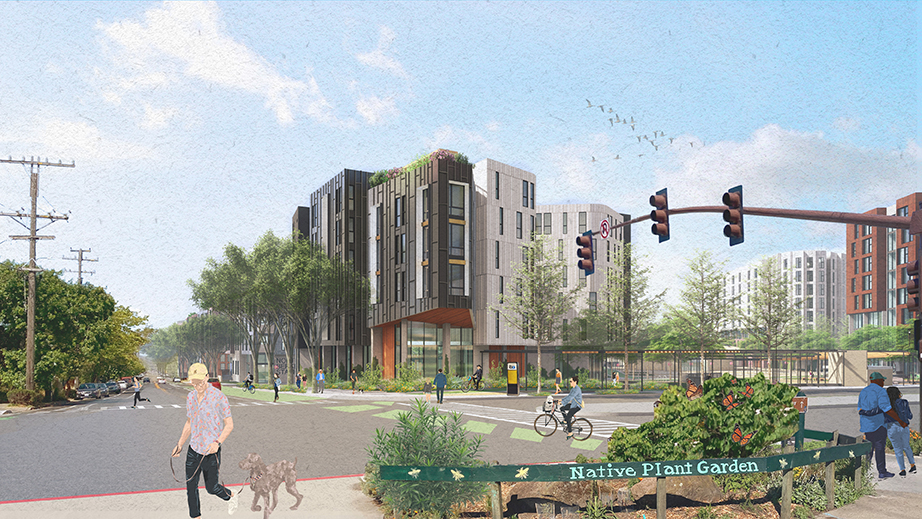
North Berkeley BART Transit-Oriented Development Plan David Baker Architects, Einwiller Kuehl, and Yes Community Architects An inspiring, human-centered design.
The jury applauds the reuse of the transit structure. At the same time, the project creates a sense of place—a neighborhood which is engaged—through a wonderfully expressive design that reconciles the Transit Oriented program with the existing surroundings in a way that not only receives the BART users but also establishes a strong connective corridor to the neighborhoods and Ohlone Greenway. It demonstrates a robust community engagement process and use of an accelerated planning model that sounds novel and innovative.
Clients: EBALDC (lead developer) with Avalon Bay and Insight Housing (co-developers)
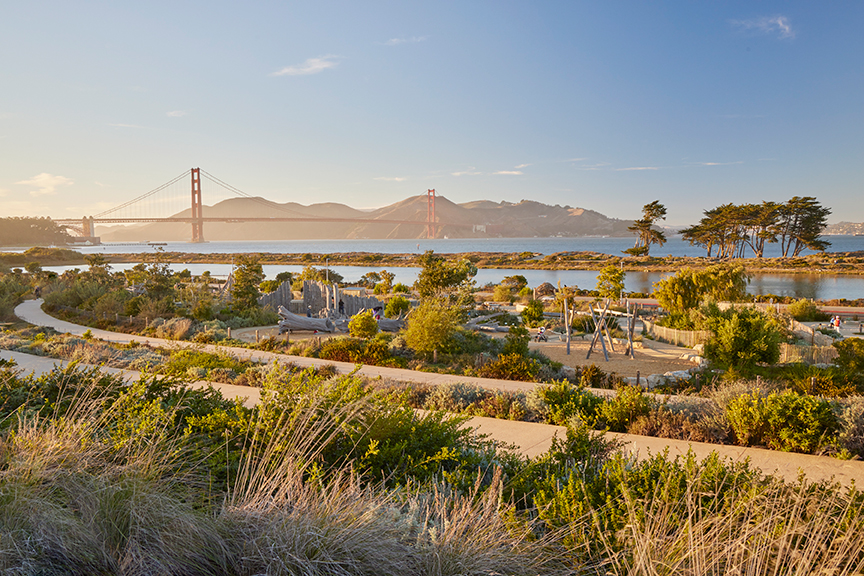
Presidio Tunnel Tops Field Operations It’s a remarkable example of infrastructure redeemed and landscape that feels both inventive and inevitable. Urban design at its best! It resolves a larger community issue that is being seen in cities: how do we green and connect urban spaces which vehicular transportation has bifurcated. You don’t even realize you are on top of the tunnel; the reconnection to the Bay is seamless and engaging. The community is drastically improved and expanded.
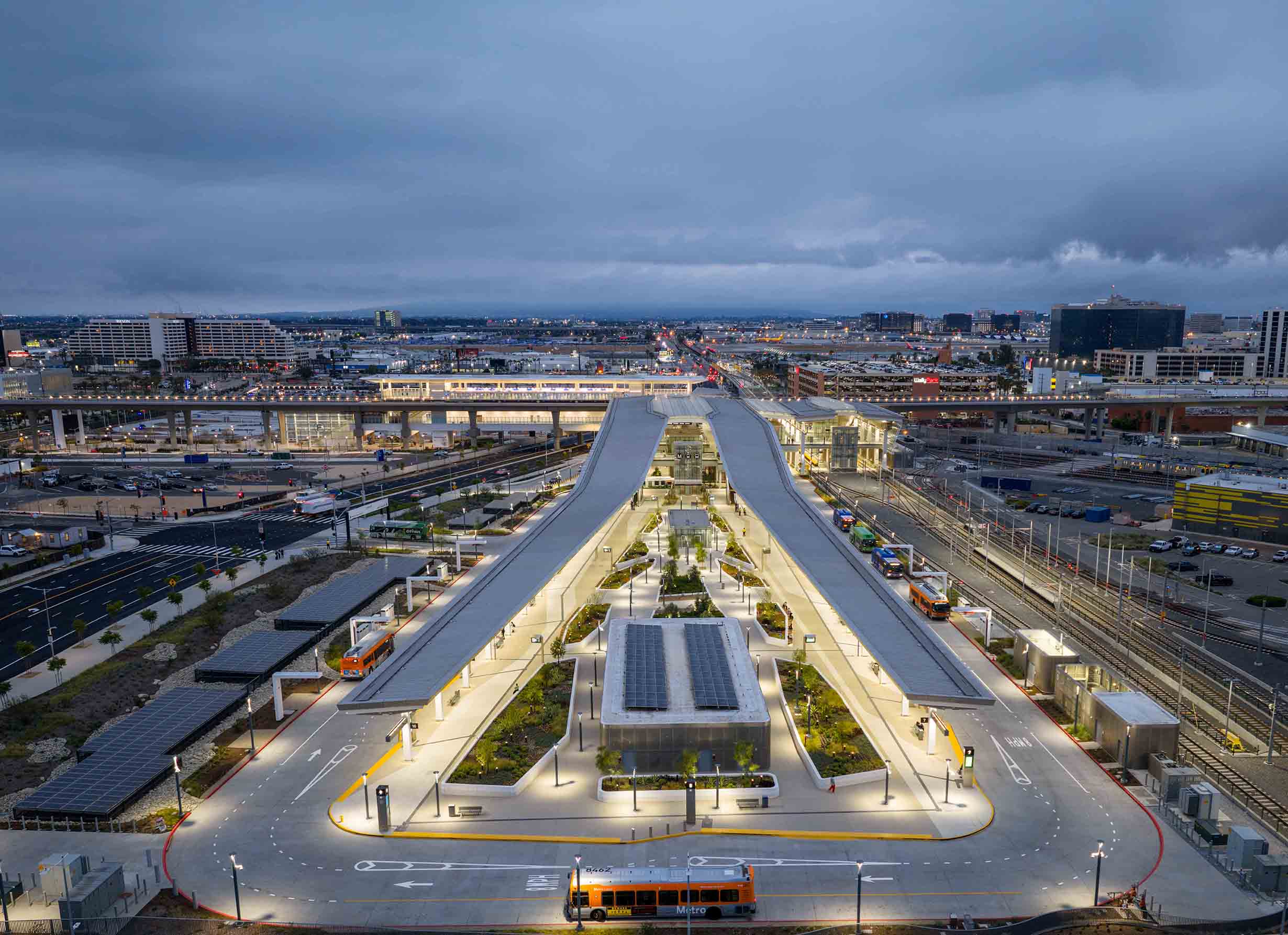
LAX/Metro Transit Center Station Gruen Associates/Grimshaw Quite an admirable accomplishment for Los Angeles, which has been a long time in the coming, the fact that it’s not only designed in a pedestrian-oriented way, but it’s actually built. This project successfully transforms what is typically a hostile infrastructure condition into a civic space that is immediately legible. Getting mobility to LAX will have a drastic positive impact on the entire city.
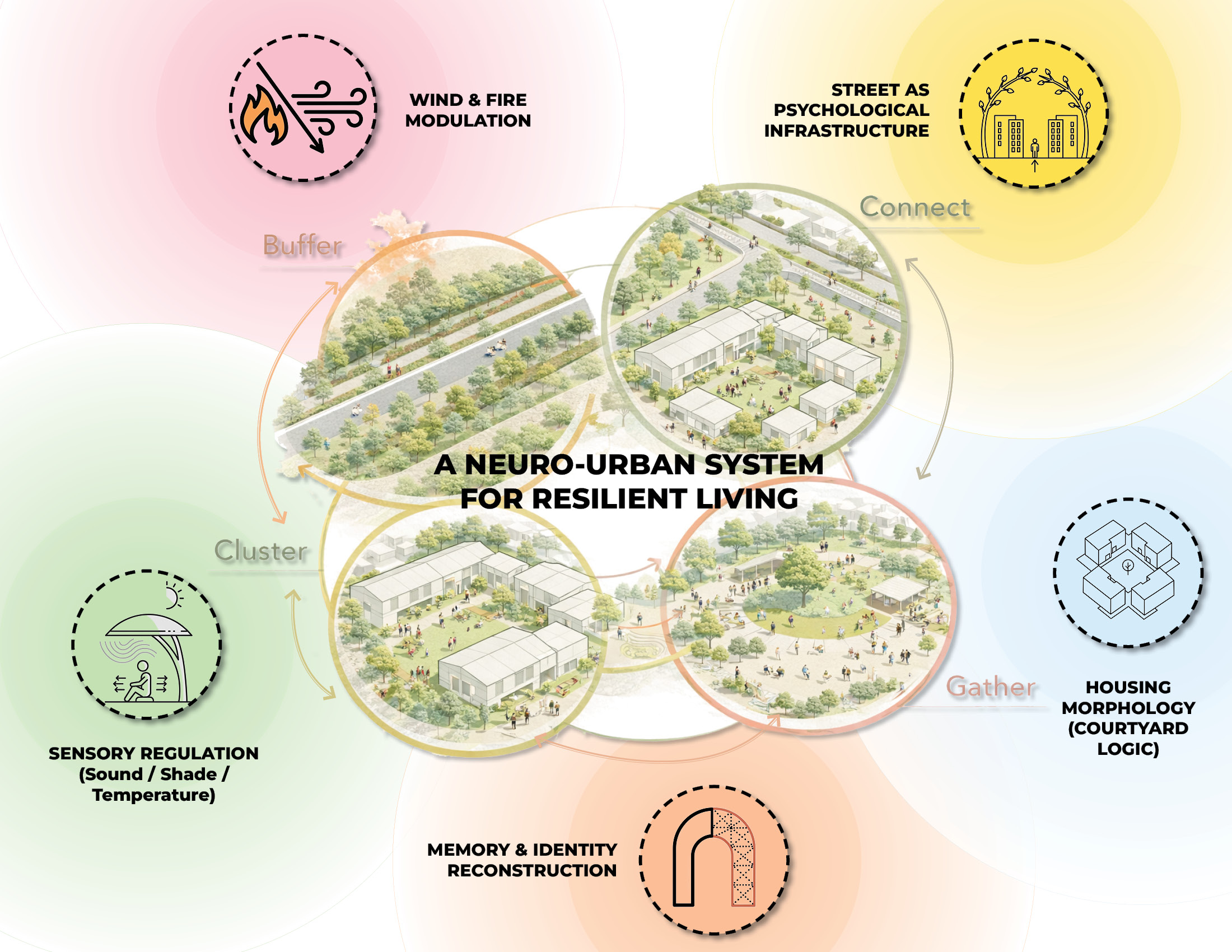
From Ashes to Belonging – Altadena through a Neuro-Urban Lens Vedant Acharya (University of California, Berkeley [College of Environmental Design]) The project addresses a critical issue in terms of how to heal damaged landscapes.
The jury admires how it fully embraces design and urban scale, including its complexity and relationship with the context. There’s a sincere attempt to express the intangible, to embed the psychological impact in the physical—and they executed it really well. It’s thoughtful on all levels, not a one-liner.
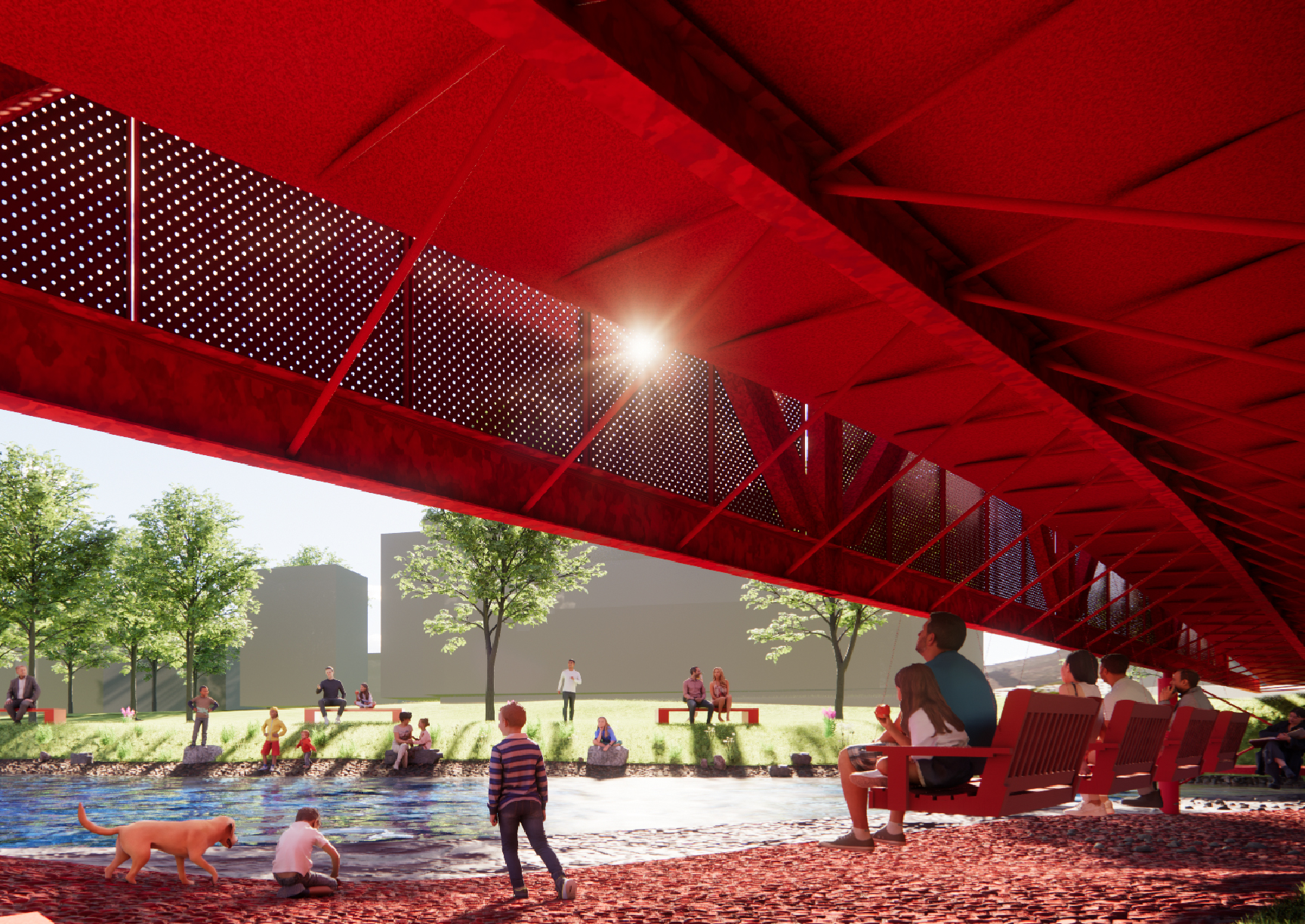
DAYLIT SAUSAL CREEK SOCIO-ECOLOGICAL INFRASTRUCTURE Daniel Junyoung Choi (Academy of Art University) The jury admires how the designers used very strategic interventions to improve the usability of small urban open spaces that are critical to communities. The design is eloquently intentional, specific to and forming from all of the sustainability and resiliency goals, and it addresses human comfort and the importance of shade in an interesting and compelling way. They did a great job at listening to the site and existing buildings, expressing innovative ideas on integrating community, equity and sustainability with long term resiliency.
About the American Institute of Architects California (AIA CA) AIA California is dedicated to serving its members, and uniting all architecture professionals in the design of a more just, equitable, and resilient future through advocacy, education, and political action. The organization represents the interests of more than 11,000 architects and allied professionals in California. Founded in 1944, the AIA CA is the largest component of the national AIA organization. For more information, visit www.aiacalifornia.org